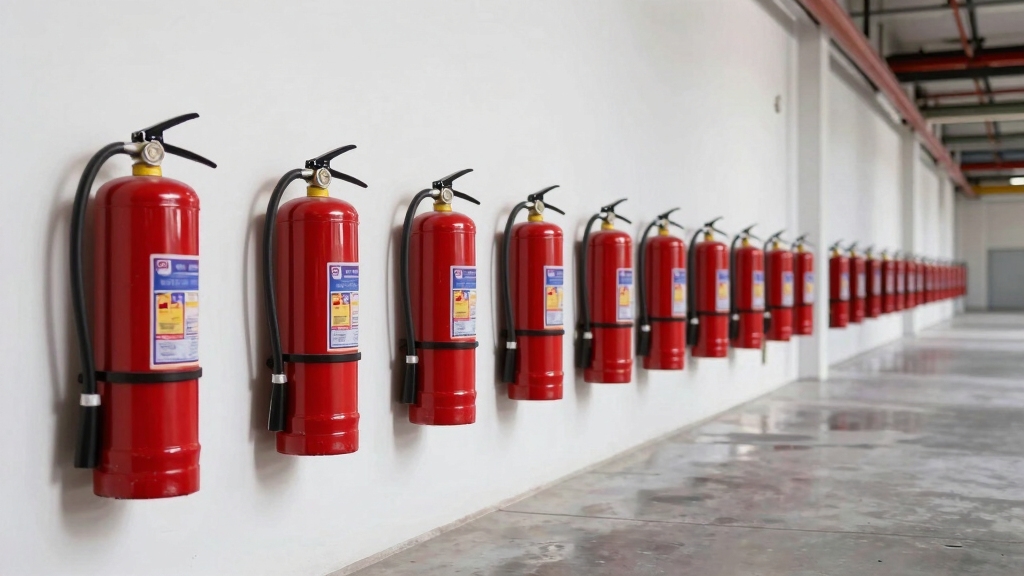

You must position fire extinguishers within maximum travel distances specific to fire classes to guarantee compliance and safety.
For Class A and D hazards, the limit is 75 feet. Class B hazards require 30 to 50 feet depending on hazard severity and extinguisher rating, with 30 feet for high hazards.
Class K extinguishers in kitchens must be within 30 feet. Measure distances along actual walking paths, accounting for obstructions.
Proper mounting height and visibility are essential. Explore these details to optimize extinguisher placement and regulatory adherence.
Key Takeaways
- Maximum travel distance to fire extinguishers varies by hazard class, ranging from 30 to 75 feet based on fire risk and extinguisher rating.
- Class A and Class D hazards allow up to 75 feet maximum travel distance for extinguisher placement.
- Class B moderate hazards require extinguishers within 50 feet, while high hazards or higher ratings reduce maximum distance to 30 feet.
- Class K extinguishers, used in commercial kitchens, have a maximum travel distance of 30 feet.
- Travel distance must be measured along the shortest navigable walking path, accounting for all obstructions and clear access routes.
Overview of Fire Extinguisher Placement and Travel Distances
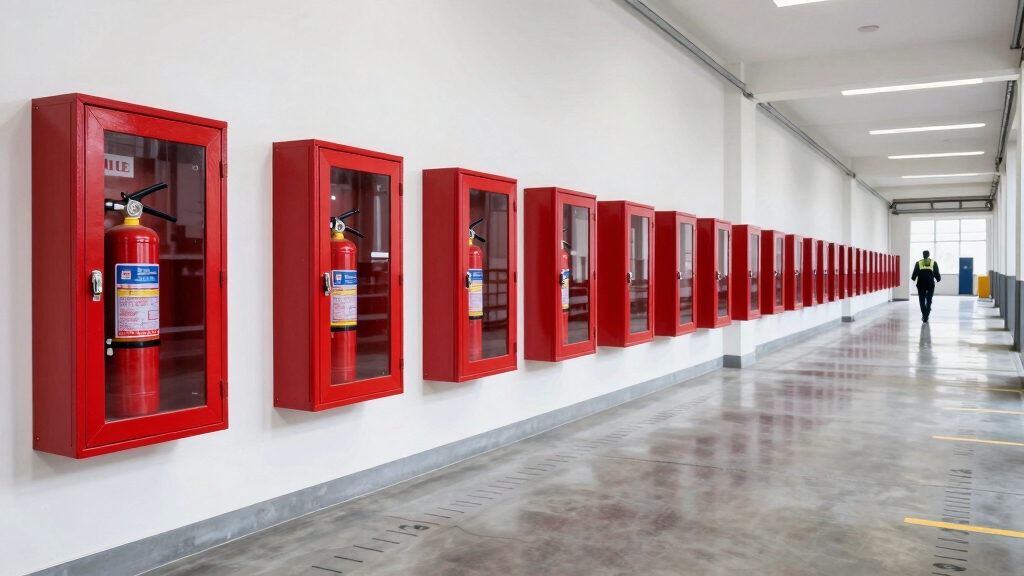
When you place fire extinguishers, you must follow specific maximum travel distances to guarantee quick access during emergencies.
These distances vary by hazard class, regulated under OSHA 1910.157 and NFPA 10.
Travel distance requirements differ by hazard class, governed by OSHA 1910.157 and NFPA 10 standards.
For Class A and D hazards, the maximum travel distance is 75 feet.
Class B hazards have stricter limits: 50 feet for moderate hazards and 30 feet for high hazards or higher extinguisher ratings.
Class C follows the distances of associated Class A or B hazards, as it doesn’t have a standalone rating.
Class K, relevant to commercial kitchens with combustible cooking oils, requires a maximum travel distance of 30 feet.
You must measure travel distances along actual walking paths, considering obstacle avoidance, per regulatory standards to ensure compliance and safety.
Regular inspection and maintenance of fire extinguishers are essential to ensure their reliability when needed.
Measuring Travel Distance Around Obstructions
When measuring travel distance, it’s important to follow the actual walking path, especially when there are obstructions in the way. You know, things like walls, equipment, or even furniture can make the route longer than it seems.
This is crucial because these obstructions can impact how well we comply with the maximum travel distances set by OSHA and NFPA standards.
So, why is this important? Well, ensuring that pathways are clear and maneuverable helps us maintain easy access to fire extinguishers within the required limits.
If someone needs to grab an extinguisher in an emergency, we want to make sure they can get to it without any unnecessary delays.
Clear walkways and unobstructed routes are essential for safe evacuation and emergency response compliance.
Pathway Navigation Standards
Although it may seem straightforward, measuring travel distance to fire extinguishers requires negotiating around physical obstructions rather than a direct line. You have to make certain the pathway complies with OSHA and NFPA standards, which mandate the actual walking route, not a straight-line measurement.
Here’s how you should approach pathway navigation standards:
- Identify all physical obstructions (furniture, equipment, walls) that affect direct access and measure the walking path around them.
- Make certain the travel distance from any point to the nearest extinguisher doesn’t exceed the maximum allowed for the hazard class (e.g., 75 feet for Class A or D, 50 feet for Class B moderate hazards).
- Maintain clear, unobstructed pathways consistent with safety regulations, allowing quick, safe access during emergencies.
This precision makes certain regulatory compliance and occupant safety.
Obstruction Impact on Distance
Because fire extinguisher travel distances must reflect actual walking routes, measuring around obstructions is critical to compliance. You need to account for walls, machinery, furniture, or other barriers that affect the path.
The measurement can’t be a straight line; it must follow the shortest navigable route around these obstacles to guarantee accurate distance calculation per NFPA 10 and OSHA 1910.157 standards.
| Hazard Class | Max Travel Distance (ft) | Measurement Note |
|---|---|---|
| Class A/D | 75 | Around obstructions mandatory |
| Class B | 30–50 | Adjust for hazard severity |
| Class K | 30 | Critical in kitchen environments |
Always verify that the actual walking path meets or is less than these distances. This ensures extinguisher accessibility and regulatory compliance. Additionally, keeping a Class K extinguisher within reach in kitchen environments is essential for effectively managing grease fires.
Class A Fire Extinguisher Maximum Distance Requirements
When positioning Class A fire extinguishers, you must guarantee the maximum travel distance doesn’t exceed 75 feet (22.8 meters).
This regulation assures quick access to extinguishers for ordinary combustible fires, aligning with OSHA 1910.157 and NFPA 10 standards.
Measure the travel path around obstructions, not as a straight line, to maintain compliance. Keep in mind:
- Place extinguishers so the walking path to the device never surpasses 75 feet.
- Assure extinguishers are mounted between 4 inches and 5 feet off the floor, depending on weight.
- Verify extinguisher placement covers all ordinary combustible hazards within the designated area.
Adhering to these requirements improves safety and meets regulatory demands for Class A fire hazards. Additionally, regular inspection and maintenance of extinguishers, including their pressure relief valves, are essential to ensure reliable operation during emergencies.
Class B Fire Extinguisher Travel Distances and Ratings
Sure! Here’s a more conversational version of your text:
—
When it comes to placing Class B fire extinguishers, it’s important to pay attention to the travel distances based on the hazard level. For moderate hazards, you should make sure they’re within 50 feet. But if you’re dealing with high hazards or higher ratings, that distance shortens to 30 feet.
These guidelines come from OSHA 1910.157(d)(4), and they really hinge on the extinguisher’s rating as well as the specific flammable liquid risks you have in your area. Keeping these criteria in mind not only helps you stay compliant with safety regulations but also ensures you have effective fire protection in place.
It’s also crucial to remember that water should not be used on grease or oil fires due to the risk of dangerous splattering, which can worsen the situation.
Travel Distance Requirements
Typically, Class B fire extinguishers must be placed so that the maximum travel distance doesn’t exceed 50 feet for moderate hazards and 30 feet for high hazards or higher extinguisher ratings.
You need to measure travel distance along the actual walking path, accounting for obstructions. OSHA 1910.157(d)(4) mandates these distances to guarantee quick access during emergencies.
When determining placement, consider these key points:
- Extinguisher ratings dictate required travel distances; higher ratings reduce maximum travel distance.
- Measure travel routes precisely around walls, equipment, or obstacles, not as a straight line.
- Assure extinguishers are mounted within regulatory height limits, typically between 4 inches and 5 feet depending on unit weight.
Following these travel distance requirements complies with NFPA 10 and OSHA standards and maximizes safety.
Hazard Levels Impact
Understanding how hazard levels influence Class B fire extinguisher placement is key to meeting OSHA 1910.157(d)(4) requirements and ensuring effective fire response. You need to adjust extinguisher travel distances based on the hazard severity to guarantee safe and timely access during emergencies.
Moderate hazards require a maximum travel distance of 50 feet, while high hazards or higher ratings demand a reduced distance of 30 feet.
| Hazard Level | Maximum Travel Distance |
|---|---|
| Moderate Hazard | 50 feet (15.2 m) |
| High Hazard | 30 feet (9.1 m) |
| Flammable Liquids | Applies to both levels |
| OSHA Reference | 1910.157(d)(4) |
| Path Measurement | Around obstructions |
For environments where combustible metals are present, specialized Class D fire extinguishers are essential as standard extinguishers may be ineffective or hazardous.
Adhering strictly to these parameters secures regulatory compliance and optimal fire safety.
Extinguisher Rating Criteria
Determine Class B fire extinguisher placement by carefully evaluating the extinguisher’s rating in relation to the specific hazard level present.
The rating directly influences the maximum allowable travel distance, ensuring compliance with OSHA 1910.157(d)(4) and NFPA 10 standards.
You must consider these factors:
- Moderate hazards require extinguishers placed within 50 feet of travel distance.
- High hazards or extinguishers with higher ratings demand a reduced maximum travel distance of 30 feet.
- The travel path must be measured along the actual walking route, accounting for obstructions.
Additionally, always position extinguishers with a clear exit behind to allow for a quick escape, following proper fire safety practices.
Why Class C Fire Extinguishers Follow A or B Distances?
Because Class C fires involve energized electrical equipment, their extinguishers don’t have a separate travel distance requirement. Instead, you follow the distances set for the associated Class A or Class B hazards present.
This approach guarantees compliance with OSHA 1910.157 and NFPA 10 standards while avoiding redundant placements. The extinguisher placement is based on the actual hazards nearby, measured by travel path around obstructions.
To ensure continuous safety during power outages, hardwired smoke detectors should always have a battery backup to maintain functionality.
Here’s a summary:
| Fire Class | Maximum Travel Distance | Applicable Hazard Type |
|---|---|---|
| Class A | 75 feet (22.8m) | Ordinary combustibles |
| Class B | 30-50 feet (9.1-15.2m) | Flammable liquids, oils |
| Class C | Follows A or B | Energized electrical equipment |
Placement and Distance Rules for Class D Fire Extinguishers
When placing Class D fire extinguishers, ensure the maximum travel distance doesn’t exceed 75 feet. This is consistent with OSHA 1910.157(d)(6) and NFPA 10 standards.
Place Class D fire extinguishers within 75 feet, meeting OSHA and NFPA 10 safety standards.
This distance applies to hazards involving combustible metals and matches the travel requirements for Class A hazards. Measure the travel path around obstructions to guarantee compliance. Additionally, proper mounting height is critical for accessibility.
Follow these placement rules for Class D extinguishers:
- Mount extinguishers at least 4 inches off the ground but no higher than 5 feet for units over 40 pounds.
- Ensure the travel path remains clear of physical obstructions to maintain the 75-foot maximum distance.
- Position extinguishers near potential combustible metal hazard areas for rapid access during emergencies.
For small, straightforward properties, consider integrating a zone-based detection system to enhance safety coordination without complexity.
Maximum Travel Distance for Class K Kitchen Fire Extinguishers
Although Class K fire extinguishers address a unique hazard involving cooking oils in commercial kitchens, you must ensure their maximum travel distance doesn’t exceed 30 feet to comply with NFPA 10 Section 6.6 guidelines.
This 30-foot limit is the shortest among extinguisher classes, reflecting the rapid spread and high risk of kitchen grease fires.
When locating Class K units, measure travel distance along the actual walking path, accounting for obstacles and kitchen layout.
Make sure extinguishers are positioned near cooking appliances that use combustible oils or fats.
Adhering strictly to this maximum travel distance enhances safety and regulatory compliance, enabling quick access during emergencies.
Regular inspection and maintenance of these extinguishers ensures they function properly when needed.
Height and Mounting Requirements for Fire Extinguishers
When it comes to mounting fire extinguishers, it’s really important to keep accessibility and compliance in mind. For instance, if you have a unit that weighs over 40 pounds, you should install it no higher than 5 feet from the floor. That way, it’s easier for everyone to reach in case of an emergency.
On the flip side, if your fire extinguisher is under 40 pounds, it shouldn’t be mounted higher than 3.5 feet. This makes it more manageable for anyone to grab it quickly when needed.
Also, don’t forget to leave at least 4 inches of clearance above the floor. This helps prevent any obstructions and makes it much easier to remove the extinguisher when the time comes. Keeping these guidelines in mind will ensure that your fire extinguishers are both accessible and compliant!
Mounting Height Limits
Regarding fire extinguisher mounting height, ensure units over 40 pounds are installed no higher than 5 feet from the floor. Units under 40 pounds should be mounted at a maximum height of 3.5 feet. These requirements guarantee accessibility and compliance with NFPA 10 and OSHA 1910.157 standards.
When mounting extinguishers, keep in mind:
- The top of the extinguisher mustn’t exceed the specified height limits based on weight.
- Mount extinguishers so that the carrying handle is at or below the maximum height.
- Assure extinguishers are securely fastened to prevent falling or obstruction.
Adhering to these mounting height limits maintains safety, accessibility, and regulatory compliance during emergency response.
Clearance From Floor
Making sure proper clearance from the floor when mounting fire extinguishers plays an essential role in maintaining accessibility and compliance with safety standards. You must mount extinguishers at least 4 inches above the floor to prevent moisture damage and guarantee easy access.
For units weighing 40 pounds or less, place the top no higher than 3.5 feet above the floor. Heavier units require a maximum mounting height of 5 feet. These height limits adhere to NFPA 10 and OSHA 1910.157 regulations, assuring ergonomic reach during emergencies.
Proper clearance minimizes obstruction and facilitates quick retrieval. Always verify that the extinguisher is securely mounted and visible along the designated travel path. By following these precise mounting requirements, you maintain regulatory compliance and enhance fire safety readiness.
OSHA and NFPA Standards for Fire Extinguisher Spacing
Although fire extinguisher placement varies by hazard class, OSHA and NFPA standards set clear maximum travel distances and mounting requirements to guarantee accessibility during emergencies. You must adhere to these precise regulations to assure compliance and safety.
Fire extinguisher placement varies by hazard class but must follow OSHA and NFPA standards for safety and compliance.
Key standards include:
- Maximum travel distances range from 30 feet for Class K hazards to 75 feet for Class A and D. This is measured along the actual walking path, avoiding obstructions (OSHA 1910.157, NFPA 10).
- Mount extinguishers at heights no lower than 4 inches and no higher than 5 feet for units over 40 pounds. Lighter units must be within 3.5 feet (NFPA 10).
- Class C hazards follow travel distances set for Classes A or B, based on associated risks. This ensures consistent placement protocols.
Following these standards guarantees extinguishers are accessible and effective during emergencies.
Tips to Avoid Obstructions and Ensure Quick Fire Extinguisher Access
When you position fire extinguishers, keep travel paths clear of obstructions such as furniture, equipment, or storage materials to meet OSHA and NFPA requirements.
Make certain extinguishers remain fully visible and accessible within the maximum travel distances specified for each hazard class. Avoid placing units behind doors, shelving, or machinery that could delay retrieval.
Maintain a minimum clearance of 4 inches from the floor and mount extinguishers at proper heights: no higher than 5 feet for heavy units and 3.5 feet for lighter ones.
Regularly inspect pathways to confirm they’re unobstructed, accounting for temporary or permanent changes in layout.
Always measure travel distance along actual walking routes, not straight lines, and plan placements to minimize travel time during emergencies while complying with OSHA 1910.157 and NFPA 10 standards.
Frequently Asked Questions
How Often Should Fire Extinguishers Be Inspected and Maintained?
You might think frequent inspections are a hassle, but you need to check fire extinguishers monthly to make certain they’re ready.
OSHA and NFPA 10 require monthly visual inspections and annual maintenance by a professional.
Plus, hydrostatic testing happens every 5-12 years, depending on type.
Staying on top of these prevents failures during emergencies and keeps you compliant with regulations, ensuring safety and avoiding costly violations.
What Training Is Required for Employees to Use Fire Extinguishers?
You must make certain employees receive formal training before using fire extinguishers. This includes instruction on extinguisher types, proper operation, and limitations following OSHA 1910.157(g).
Hands-on practice is required to build competence. Training should cover hazard recognition, evacuation procedures, and when to attempt extinguishing versus evacuating.
Annual refresher training keeps skills current, assuring compliance and safety. Document all training sessions to meet regulatory standards.
Can Fire Extinguishers Be Placed Outdoors or in Extreme Temperatures?
You can’t just toss fire extinguishers outdoors in a blizzard or desert sun and hope they’ll work!
Extinguishers require protection from extreme temperatures. Too hot or cold can damage their effectiveness.
OSHA and NFPA 10 recommend placing them where temperatures stay within manufacturer limits, often between 40°F and 120°F.
If outdoor placement is unavoidable, use weatherproof cabinets or enclosures to safeguard the extinguisher’s reliability and compliance.
Are There Specific Extinguisher Types for Electrical Fires Beyond Class C?
You won’t find extinguishers labeled solely for Class C fires since electrical hazards follow Class A or B distance requirements.
For electrical fires, you use extinguishers rated for Class C, typically dry chemical or CO2 types.
These extinguishers safely extinguish energized equipment without conducting electricity.
Always select extinguishers that meet Class C standards.
Guarantee placement complies with OSHA 1910.157 and NFPA 10 guidelines for associated hazard classes.
What Are the Penalties for Non-Compliance With Extinguisher Placement Rules?
Imagine a warehouse fined $10,000 after a fire inspection revealed extinguishers were improperly spaced, delaying response time.
You face hefty penalties, including fines up to thousands per violation and possible shutdown orders for non-compliance with extinguisher placement rules under OSHA 1910.157 and NFPA 10.
These regulations guarantee safety; ignoring them risks legal action, increased liability, and endangers lives.
Stay compliant to avoid costly consequences.
Safety Starts with Smart Fire Extinguisher Placement
You might think strict fire extinguisher spacing rules are excessive, but they’re essential for safety and compliance.
Ensuring maximum travel distances, whether Class A, B, or K, means you can quickly access extinguishers during an emergency, minimizing risk.
Following OSHA and NFPA standards isn’t just about regulations; it’s about protecting lives and property.
By mounting extinguishers properly and avoiding obstructions, you guarantee reliable, timely access when seconds matter most.