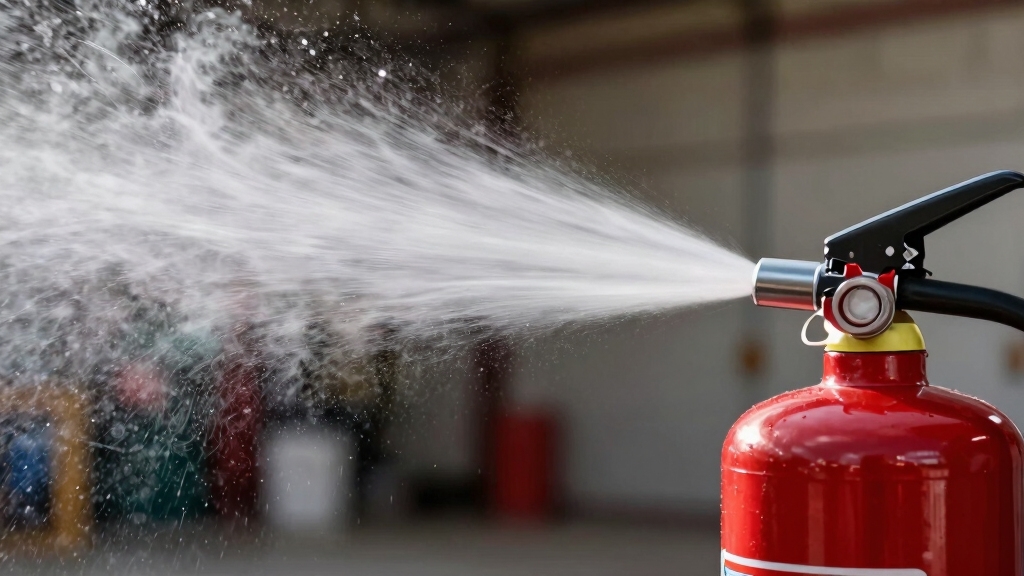

You can expect a fire extinguisher to spray continuously for about 20 to 25 seconds when you hold the trigger steadily. This varies by type and size.
Dry chemical models typically last 14–25 seconds, CO2 units 8–30 seconds, and water extinguishers up to 40 seconds. Factors like internal pressure, maintenance, and partial use influence spray consistency and duration.
Understanding these variables helps guarantee effective fire response. Explore the details that affect performance and longevity.
Key Takeaways
- Typical continuous spray time for most fire extinguishers is around 21 seconds with steady trigger engagement.
- Dry chemical extinguishers usually discharge continuously for 14 to 25 seconds.
- CO2 extinguishers provide a steady spray for approximately 8 to 30 seconds depending on size.
- Larger extinguisher models can exceed the standard spray duration due to higher agent capacity.
- Proper maintenance and full pressure ensure consistent spray duration close to manufacturer specifications.
How Long Does a Fire Extinguisher Spray Last?
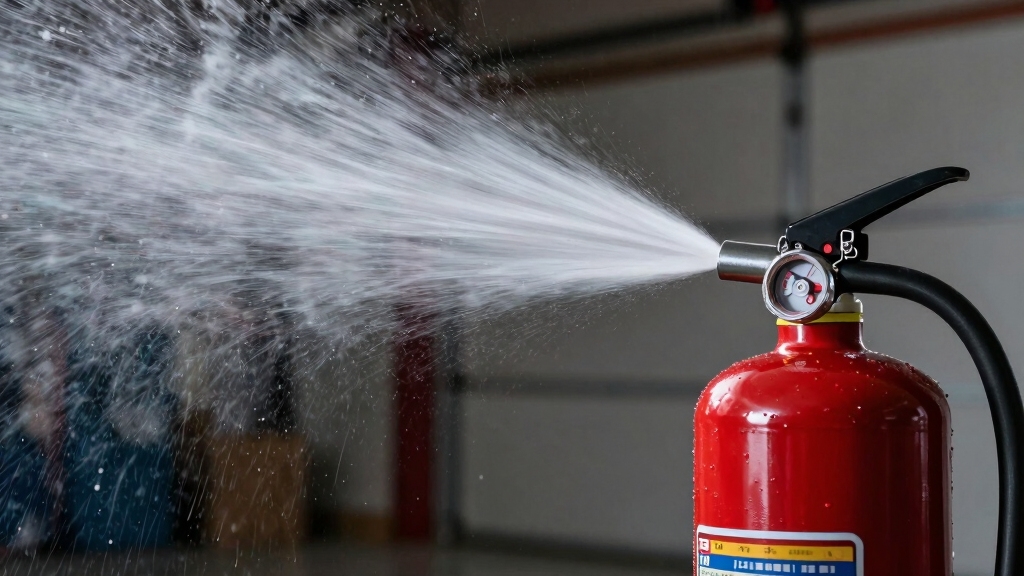
When you activate a fire extinguisher, its spray typically lasts around 21 seconds, depending on the model, size, and type. This duration assumes you hold the trigger continuously without interruption, ensuring a consistent discharge.
Activating a fire extinguisher usually provides about 21 seconds of continuous spray, varying by model and size.
The spray time is based on standard demonstrations and verified by video evidence showing a steady stream throughout. While this timeframe applies broadly, actual discharge time depends on how you use the extinguisher and maintain internal pressure.
After use, even if partially discharged, you should spray the remaining contents on embers to prevent reignition. Remember, one extinguisher is generally sufficient for small fires, but larger incidents may require multiple units.
Proper handling during activation maximizes the extinguisher’s effectiveness within its designed spray duration. Selecting the correct extinguisher type is crucial, as different models use various methods such as cooling, smothering, starving, or chemical interruption to stop fires effectively.
Factors That Affect Fire Extinguisher Spray Duration
Understanding the typical spray duration of about 21 seconds helps set expectations. However, several factors can influence how long your fire extinguisher actually sprays.
The extinguisher’s size and internal pressure directly affect discharge time. Larger tanks with higher pressure provide longer spray.
Your activation technique matters too. Maintaining a full, steady trigger pull guarantees continuous flow, while intermittent squeezing shortens duration.
Ambient temperature impacts internal pressure and spray consistency. Extreme cold can potentially reduce performance.
Maintenance and storage conditions also play roles. Poorly maintained or corroded units may leak pressure, decreasing spray time.
Finally, partial use before full discharge means remaining content sprays for a shorter interval.
You should regularly inspect and service your extinguisher to guarantee optimal performance during emergencies.
Modern extinguishers include pressure relief valves that help manage internal pressure and prevent sudden bursts, contributing to consistent spray duration.
Typical Fire Extinguisher Discharge Time by Type
You know, the discharge duration of fire extinguishers can really vary depending on the type you’re using. It’s not just about how big they are; factors like pressure and the kind of agent they contain play a big role too.
Dry chemical extinguishers operate by releasing pressurized powder that quickly suppresses flames through interrupting fire chemistry.
Discharge Duration Overview
Although discharge times vary by model, size, and extinguisher type, most standard fire extinguishers spray continuously for about 21 seconds when you hold the trigger fully. This duration assumes uninterrupted trigger pressure, delivering a consistent stream.
Smaller or specialized extinguishers may discharge faster or slower depending on design and content.
| Extinguisher Type | Typical Discharge Time (seconds) | Primary Use |
|---|---|---|
| Dry Chemical | 14–25 | Class A, B, C fires |
| CO2 | 8–30 | Class B, electrical fires |
| Water | 20–40 | Class A fires |
Knowing these durations helps you plan fire suppression efforts efficiently and secures proper extinguisher choice for specific fire classes. Regular maintenance and inspection ensure that extinguishers discharge effectively and safely when needed.
Factors Affecting Spray Time
The discharge time of a fire extinguisher depends on several factors including its type, size, and internal pressure. You’ll notice spray duration varies due to these variables, impacting how long the extinguisher can deliver a consistent stream.
Key factors affecting spray time include:
- Extinguisher size: Larger tanks hold more agent, extending spray duration.
- Internal pressure: Higher pressure maintains steady discharge longer.
- Discharge mechanism: Continuous trigger hold provides constant flow. Intermittent use reduces total spray time.
- Agent type and density: Some extinguishing agents flow faster or slower, influencing spray length.
- Maintenance status: Properly maintained units retain pressure better, ensuring consistent spray duration.
Understanding these factors helps you anticipate the effective operational time during fire emergencies. It is also important to use protective gear and ensure proper ventilation to minimize health risks during discharge.
Variations by Extinguisher Type
Since fire extinguishers come in various types designed for specific fire classes, their discharge times can differ markedly based on their construction and agent characteristics.
For example, Class A extinguishers, which handle ordinary combustibles like wood and paper, typically discharge around 20 to 25 seconds.
Class B models, designed for flammable liquids, often use foam or dry chemical agents, offering similar discharge durations but sometimes shorter due to agent density.
Class C extinguishers for electrical fires rely on non-conductive agents with comparable spray times.
Class D extinguishers, specialized for metal fires, vary widely and usually have shorter discharge times due to compact agent quantity.
Rechargeable extinguishers often provide more consistent pressure maintenance, while disposable units may have slightly shorter durations.
Always check manufacturer specifications for precise discharge times based on extinguisher type and size.
Class D extinguishers require specialized dry powders that smother metal fires by isolating the fuel from oxygen, which also influences their discharge characteristics.
Impact of Partial Use on Fire Extinguisher Performance
When you partially use a fire extinguisher, its performance can decline markedly, making it less effective in future emergencies.
The remaining contents may lose pressure or degrade, reducing discharge efficiency and spray duration.
You should never rely on a partially used extinguisher without proper servicing.
Key impacts include:
- Reduced internal pressure affecting spray force
- Potential contamination or moisture ingress compromising agent quality
- Shortened discharge time compared to full capacity
- Necessity for professional recharging or replacement
- Risk of incomplete fire suppression during subsequent use
Always empty and clean the extinguisher after partial use, then recharge it through certified dealers to restore full operational readiness.
Neglecting this compromises safety and violates maintenance standards.
Additionally, maintaining consistent pressure is crucial for ensuring effective cooling and steam production during discharge.
Fire Extinguisher Shelf Life and Spray Duration
Although fire extinguishers don’t have a universal expiration date, you should replace or service them based on shelf life standards and manufacturer guidelines to assure peak performance.
Unused fire extinguishers generally require replacement every 3 to 5 years, aligning with ANSI/UL requirements for pressure retention and NFPA’s recommendation of a 12-year maximum lifespan for disposables.
Rechargeable models need recharging every 6 years. The standard discharge time for a full extinguisher is approximately 21 seconds, assuming continuous trigger engagement.
This duration varies by model, size, and type but remains consistent during proper use. After any use, you must replace or fully service the extinguisher to certify reliability.
Adhering to these shelf life and spray duration parameters assures your fire extinguisher functions effectively when needed. For comprehensive safety, consider integrating your fire extinguisher system with professional monitoring services to ensure prompt emergency response.
How Maintenance Influences Spray Consistency?
To keep your spray system performing at its best, regular inspections are a must.
You really want to ensure that the pressure levels stay just right for a consistent spray. If the pressure dips or components start to wear out, you might notice longer discharge times and a drop in spray effectiveness.
So, what can you do? Well, making sure that seals, gauges, and valves are all in good shape is key.
By staying on top of maintenance, you can prevent those pesky failures that mess with your spray consistency when you’re in the middle of using it.
It’s all about keeping everything running smoothly!
Remember to check the pressure gauge monthly to ensure it stays within the operable range for optimal performance.
Regular Inspection Importance
Regularly inspecting your fire extinguisher guarantees its spray consistency remains reliable during emergencies. Consistent maintenance prevents pressure loss, corrosion, or mechanical faults that degrade spray performance.
You should perform monthly visual checks and look for:
- Proper pressure gauge reading within the recommended range
- Absence of physical damage or corrosion on the cylinder and nozzle
- Intact safety seals and tamper indicators
- Clear, legible manufacturer labels and inspection tags
- No visible leaks or dents compromising structural integrity
Neglecting inspections can cause unpredictable spray duration and reduced extinguishing effectiveness. Timely detection of issues allows you to recharge or replace the extinguisher before performance drops.
This proactive approach makes certain that when you activate the extinguisher, the spray duration and pressure remain stable.
This maximizes fire suppression capability. Additionally, knowing how to use the extinguisher correctly by following the PASS method ensures effective fire control during emergencies.
Impact of Pressure Levels
Since pressure levels directly affect the extinguisher’s spray consistency, maintaining peak pressure is critical for effective fire suppression.
You need to perform regular pressure checks using the gauge, assuring it stays within the ideal green zone. Pressure loss reduces spray force, shortening discharge time and compromising fire control.
During maintenance, inspect for leaks or corrosion that could cause pressure drops. Rechargeable extinguishers require recharging every 6 years or immediately after use to restore proper pressure.
Disposable units must be replaced when gauges indicate charge loss or after their 12-year lifespan. Consistent pressure guarantees a steady spray, maximizing extinguishing agent expulsion over the rated 21-second duration.
Effects of Component Wear
Maintaining proper pressure is just one factor in ensuring consistent spray performance. The condition of internal components plays an equally important role. When components wear or corrode, spray duration and consistency degrade, reducing extinguishing effectiveness.
You must inspect and maintain parts regularly to prevent failures. Key maintenance considerations include:
- Checking seals and O-rings for cracks or brittleness
- Inspecting nozzle integrity for clogs or deformation
- Monitoring valve function to ensure smooth operation
- Examining pressure gauges for accuracy and damage
- Evaluating corrosion or wear on metal components
Neglecting these checks can cause leaks, pressure loss, or uneven spray patterns. This compromises performance. Timely replacement or refurbishment restores ideal function, maintaining consistent spray time and fire suppression reliability.
When to Replace or Recharge Your Fire Extinguisher?
Knowing when to replace or recharge your fire extinguisher is essential for guaranteeing peak performance during emergencies.
Replace it immediately after any use, even partial discharge, to maintain full effectiveness. Regularly check the pressure gauge; a loss signals the need for recharging or replacement.
Follow manufacturer guidelines, typically replacing disposable extinguishers every 12 years and recharging rechargeable ones every 6 years.
Perform monthly inspections for corrosion, damage, or pressure loss.
| Condition | Action |
|---|---|
| After any discharge | Replace or recharge immediately |
| Pressure gauge low | Recharge or replace |
| Manufacturer date expired | Replace |
| Visible damage or corrosion | Replace |
Timely replacement and recharging guarantee your extinguisher performs reliably when you need it most.
How to Use Multiple Fire Sprays for Bigger Fires?
Tackle larger fires effectively by deploying multiple fire sprays in succession. A single spray generally suffices only for small fires. When confronting a bigger fire, you need to maintain control and avoid premature extinguisher depletion.
Follow these steps to maximize effectiveness:
Start by aiming at the fire’s base, sweeping side to side. Use each extinguisher fully to guarantee maximum discharge. After one extinguisher empties, immediately switch to the next. Monitor for any reignition and apply remaining spray if needed. Prioritize your safety and call emergency services promptly.
Using multiple sprays systematically prevents fire spread and maximizes suppression. Always have additional extinguishers ready in areas with higher fire risk to guarantee continuous response capability.
Why Fire Extinguisher Spray Duration Varies Between Models?
Although all fire extinguishers serve the same fundamental purpose, their spray durations can differ markedly due to variations in model design, size, and type.
When you select a fire extinguisher, note that larger models hold more extinguishing agent, extending spray times beyond the standard 21 seconds seen in smaller units.
The type of extinguishing material, such as dry chemical, CO2, or foam, also influences discharge rate and duration because each uses different pressure and nozzle designs.
Rechargeable units may maintain pressure longer than disposables, affecting spray consistency.
Additionally, your usage technique, including how steadily you hold the trigger, impacts discharge time.
Understanding these variables guarantees you choose a model suitable for your fire risks and maintenance capabilities, optimizing performance during emergencies.
Frequently Asked Questions
How Do Different Extinguishing Agents Affect Spray Temperature?
Different extinguishing agents affect spray temperature based on their chemical and physical properties.
You’ll find CO2 sprays feel extremely cold due to rapid gas expansion causing frostbite risk.
Dry chemical powders typically discharge at ambient temperature.
Water-based agents may release slightly cooler sprays from evaporation.
You need to account for agent type for safety and effectiveness.
Temperature impacts handling, discharge distance, and potential damage to sensitive equipment during firefighting.
Can Environmental Conditions Impact Spray Pressure Consistency?
Of course, environmental conditions have absolutely no impact on spray pressure consistency if you live in a perfect vacuum.
In reality, temperature fluctuations can alter the internal pressure of your extinguisher, affecting spray force.
Cold temps may reduce pressure, weakening the discharge, while heat can increase it.
Humidity and altitude also play roles.
You need to store and maintain your extinguisher properly to guarantee reliable, consistent spray performance when it counts.
What Safety Precautions Should Be Taken During Extinguisher Discharge?
When discharging an extinguisher, stand upwind to avoid smoke and fumes.
Hold the extinguisher upright, maintain a firm grip, and aim low at the fire’s base.
Keep a safe distance, typically 6-8 feet, and approach cautiously as the fire diminishes.
Avoid inhaling chemicals by breathing shallowly or using a mask.
Secure a clear escape route behind you.
After use, ventilate the area and check for reignition before leaving.
How Does Extinguisher Nozzle Design Influence Spray Pattern?
The extinguisher nozzle is your fire hose’s maestro, orchestrating spray patterns to maximize efficiency. Its shape and size control the discharge’s angle, reach, and droplet dispersion, affecting coverage and penetration.
A wide-angle nozzle creates a broad spray for surface fires, while a narrow jet targets deep flames. Understanding this helps you select the right extinguisher and aim precisely. This ensures you smother flames quickly and minimize fire spread.
Are There Training Recommendations for Optimal Spray Duration Control?
Yes, training recommends you control spray duration by applying short, controlled bursts rather than continuous spraying.
This approach conserves extinguishing agent and maximizes effectiveness. You should practice maintaining a steady aim while releasing the spray for about 3–5 seconds per burst.
Then reassess the fire’s status. This technique improves safety and ensures you don’t exhaust the extinguisher prematurely, especially during larger or prolonged fire events.
Every Second Counts: Mastering Fire Extinguisher Efficiency
When using a fire extinguisher, you’ll notice the spray lasts anywhere from 8 to 30 seconds, depending on the type and maintenance.
Remember, every second counts. Using multiple sprays may be necessary for larger fires.
Regular checks and timely recharges guarantee consistent performance. Understanding these factors helps you act swiftly and effectively when seconds mean the difference between control and catastrophe.