
You should test non-supervised alarm systems at least every two months to comply with OSHA standards and ensure functional emergency alerts.
Conducting monthly tests is even better, as it helps detect faults early and confirms that sensors, sirens, and communication channels work properly.
During tests, verify all components, document results meticulously, and schedule professional inspections quarterly or annually.
Skipping tests risks system failures and delayed emergency responses. Explore how thorough testing intervals and procedures keep your system reliable and compliant.
Key Takeaways
- OSHA mandates testing non-supervised employee alarm systems every two months (bi-monthly) to ensure functionality and compliance.
- Monthly testing is recommended to detect faults early and maintain system reliability beyond OSHA’s minimum requirements.
- Tests should verify sensor response, siren audibility, communication signals, and backup power status.
- Detailed documentation of each test is essential for regulatory compliance and audit readiness.
- Professional inspections and recalibrations are advised quarterly or after major events to prevent undetected system failures.
How Often Must Non-Supervised Alarm Systems Be Tested by OSHA Standards?
OSHA requires you to test non-supervised employee alarm systems every two months to assure their reliability and compliance with federal safety standards.
OSHA mandates testing non-supervised employee alarm systems every two months to ensure safety and compliance.
This bi-monthly testing is mandated under 29 CFR 1910.165(d)(2) to verify that alarm systems function correctly and provide adequate warning in emergencies.
You must schedule and conduct tests on this timeline, guaranteeing every component performs as intended.
Testing includes activating alarms to check audibility, sensor responsiveness, and overall system integrity.
Additionally, you’re responsible for maintaining detailed documentation of each test, which supports compliance audits and regulatory reviews.
Failing to meet this testing frequency can result in OSHA citations and increased workplace risk.
Adhering strictly to these requirements guarantees your alarm system remains a dependable safety measure for your employees.
Before testing, it is critical to contact authorities and notify the central monitoring station to place the system in test mode, preventing unnecessary emergency responses.
Why Is Monthly Alarm System Testing Crucial?
While bi-monthly testing meets OSHA’s minimum standards for non-supervised employee alarm systems, monthly testing offers a more proactive approach to maintaining system integrity.
By testing monthly, you guarantee early detection of faults, which reduces the risk of system failure during emergencies. It also verifies that all sensors and alert mechanisms remain fully operational and compliant with safety regulations.
Monthly testing is vital because it:
- Detects sensor malfunctions before they escalate.
- Confirms proper operation of sirens and notification devices.
- Identifies communication issues within the alarm network.
- Maintains up-to-date documentation for regulatory compliance.
This rigorous schedule helps you maintain a reliable alarm system, minimizing downtime and enhancing workplace safety consistently. Regular testing also aids in recognizing trouble codes early, enabling targeted troubleshooting and timely repairs.
What to Check During Your Monthly Alarm System Tests?
Regularly conducting thorough monthly tests guarantees your alarm system performs reliably when it matters most.
During these tests, you should verify that all sensors, including motion detectors, door/window contacts, glass break, and shock sensors, respond correctly when triggered.
Arm and disarm the system to confirm control panel functionality. Test sirens and visual alerts to make certain they activate audibly and visibly.
Check battery status and backup power sources to prevent failures during outages. Confirm that communication elements, such as signal transmission to monitoring centers, operate without interruption.
Additionally, inspect for any physical damage or environmental factors that might affect sensor sensitivity.
Document all findings meticulously to maintain compliance with OSHA requirements and to track system performance over time. This enables early detection of potential malfunctions.
If a sensor consistently faults during testing, consider using the bypass zone feature temporarily while scheduling professional service to restore full security.
How Quarterly Professional Inspections Keep Your Alarm System Reliable?
Quarterly professional inspections play a vital role in maintaining the reliability of your alarm system by thoroughly evaluating its wiring, hardware, and communication functions.
These scheduled check-ups guarantee your system operates optimally and reduces the risk of undetected faults.
During these inspections, trained technicians focus on key areas:
- Examining wiring integrity and hardware condition to prevent failures.
- Testing communication links with monitoring centers for uninterrupted alerts.
- Performing firmware and software updates to maintain system security and functionality.
- Calibrating and adjusting sensors to preserve accurate detection performance.
Proper maintenance and optimized sensor settings are essential to minimize false alarms, ensuring reliable protection without unnecessary disruptions.
Which Alarm System Components Need Special Attention During Testing?
When testing your alarm system, you need to zero in on components that are particularly sensitive or prone to failure.
Motion sensors demand special attention due to their sensitivity to positioning. Even slight misalignment can cause false alarms or missed detections.
Door and window contacts require verification to guarantee proper operation, preventing unauthorized entry.
Glass break sensors should be tested using a simulator to confirm responsiveness.
Shock sensors also need routine checks to maintain reliability.
Don’t overlook sirens; you must confirm they activate audibly during tests to alert occupants and responders effectively.
Focusing on these critical components during your testing routine helps maintain system integrity. This guarantees timely detection and response, which are essential for compliance and safety.
Regularly testing sensors by opening and closing windows and doors multiple times ensures proper alignment and functionality of magnetic contact sensors.
When Should You Test Your Alarm System After Power Outages or Renovations?
Testing key components like motion sensors and sirens guarantees your alarm system functions correctly under normal conditions.
After power outages or renovations, you must test your system promptly to ensure reliable operation.
These events can disrupt wiring, sensor calibration, or communication signals.
Follow these steps:
- Inspect and test all sensors and contacts for proper activation.
- Verify sirens, lights, and alerts respond correctly to triggers.
- Confirm system communication with monitoring services remains uninterrupted.
- Recalibrate any components affected by environmental changes or construction work.
Additionally, observing flashing indicator lights during testing can help pinpoint any malfunctioning units or alert signals accurately.
How Does Fire Alarm Testing Differ Under NFPA 72?
You need to schedule annual professional testing for your fire alarm systems to stay in line with NFPA 72 standards. It’s pretty important! This means you’ll have to conduct sensitivity testing for smoke detectors when you first install them and then every other year after that.
Don’t forget about those weekly visual inspections, either! It’s crucial to check for any obstructions that might block the detectors.
Oh, and there’s more. You’ll also need semiannual inspections by certified technicians. They’ll verify that your control panels, notification appliances, and batteries are all functioning correctly. Keeping everything in check will help ensure safety!
Regular maintenance is essential, especially for zone-based detection systems, to prevent faults and ensure reliable operation.
Annual Professional Testing
Typically, fire alarm systems require annual testing by licensed professionals in accordance with NFPA 72 standards. This testing guarantees compliance, system reliability, and occupant safety.
Unlike routine monthly or quarterly checks, annual professional testing involves exhaustive inspections and calibrations. Here’s what you can expect:
- Detailed examination of control panels, wiring, and notification appliances.
- Sensitivity testing of smoke detectors to verify proper response thresholds.
- Functional verification of duct detectors, batteries, and power supplies.
- Documentation of all findings and corrective actions for regulatory compliance.
These yearly tests go beyond basic operation checks, focusing on precise calibration and system integrity. By following NFPA 72 requirements, you maintain your fire alarm’s effectiveness, reducing false alarms and ensuring rapid response during emergencies.
Regular inspection and maintenance are necessary to ensure advanced alarms function reliably when needed.
Sensitivity Testing Schedule
Fire alarm sensitivity undergoes a structured evaluation schedule under NFPA 72, differing markedly from routine operational tests. Unlike monthly or quarterly functional checks, sensitivity testing specifically measures a smoke detector’s responsiveness to ensure it activates within designated parameters.
Upon installation, you must perform an initial sensitivity test, followed by annual tests, then every other year if results remain within acceptable ranges. This process involves calibrated instruments to quantify detector response, confirming compliance with NFPA 72’s sensitivity limits.
Maintaining this schedule helps prevent both nuisance alarms and insufficient sensitivity that could delay fire detection. If two consecutive tests show detectors within range, you can extend intervals up to five years.
Sensitivity testing is a critical complement to operational tests. It ensures life safety through precise detection performance rather than basic functionality.
It is also important to ensure that detectors have a reliable battery backup to maintain operation during power outages, as required by building codes and safety standards.
Visual And Semiannual Inspections
Regularly inspecting fire alarm systems visually and conducting semiannual checks plays a crucial role in maintaining compliance with NFPA 72 standards.
You need to perform weekly visual inspections to identify obstructions, dust, or damage that could impair detector function.
Semiannual inspections must be carried out by certified technicians, focusing on control panels, notification appliances, duct detectors, and batteries.
These thorough checks guarantee system reliability and timely detection of faults.
Key points include:
- Weekly visual assessments for physical condition and accessibility
- Semiannual technical inspections of critical components
- Verification of battery health and control panel status
- Documentation of findings to support compliance and maintenance planning
Maintaining consistent grading and exact distances during installation of related safety systems helps avoid long-term operational problems and ensures overall property protection.
Why Do Motion Sensors and Glass Break Detectors Need Extra Care?
You really need to handle motion sensors and glass break detectors with care. Why? Well, their sensitivity relies a lot on how precisely they’re positioned. Just a small shift can throw them off.
Plus, these devices need some specialized testing methods to ensure they’re working correctly. For example, using glass break simulators is a must to check their functionality accurately.
And don’t forget about environmental changes! Things like rearranging furniture or making window repairs can impact their performance. That’s why regular checks are super important. Keeping an eye on them helps ensure they’ll do their job when you need them most!
Sensitivity To Positioning
Motion sensors and glass break detectors often demand extra care due to their high sensitivity to positioning. If these devices aren’t properly aligned or mounted, their effectiveness diminishes, increasing false alarms or missed detections.
You must understand key factors affecting their performance:
- Field of View: ensure motion sensors cover the intended area without obstructions.
- Mounting Height: position sensors at manufacturer-recommended heights for peak detection range.
- Environmental Interference: avoid placing detectors near HVAC vents or reflective surfaces that distort signals.
- Angle and Orientation: glass break detectors require precise angles to detect sound waves accurately.
Specialized Testing Methods
Requiring precise calibration and alignment, motion sensors and glass break detectors demand specialized testing methods to guarantee peak functionality.
You must test motion sensors by verifying their detection zones and sensitivity to confirm accurate motion recognition without false alarms.
Glass break detectors require simulation using approved glass break simulators that replicate the frequency and pattern of breaking glass sounds.
This approach confirms the sensor’s ability to detect real break-ins rather than environmental noise.
Both devices need periodic recalibration by trained technicians to maintain peak responsiveness.
Neglecting these methods can lead to undetected breaches or frequent false alarms, compromising system reliability.
Consequently, you should incorporate these specialized procedures into routine and professional inspections to uphold compliance and secure your non-supervised alarm system performs effectively.
Impact Of Environmental Changes
Although motion sensors and glass break detectors are designed for sensitive detection, environmental changes can markedly affect their performance, necessitating extra care.
You must understand how factors like temperature fluctuations, humidity, and physical obstructions impact these devices to maintain reliability.
- Temperature shifts can cause sensor drift, leading to false alarms or missed detections.
- Humidity and dust accumulation degrade sensor accuracy, requiring frequent cleaning and recalibration.
- Physical changes such as furniture rearrangement or new walls can obstruct sensor fields, reducing coverage.
- Construction vibrations and noise may interfere with glass break detectors, necessitating retesting after renovations.
How to Document Your Alarm System Tests for Compliance?
Since regulatory compliance hinges on accurate records, you should meticulously document every alarm system test you perform.
Record the test date, system components tested, and outcomes, noting any discrepancies or corrective actions.
Use standardized forms or digital logs to guarantee consistency and ease of retrieval during audits.
Retain documentation for the required period, typically several years, to satisfy OSHA and other regulatory agencies.
| Test Date | Components Tested | Test Result |
|---|---|---|
| 2024-04-01 | Motion sensors, sirens | All functional |
| 2024-06-01 | Door contacts, glass break sensor | One sensor replaced |
| 2024-08-01 | Full system check | Passed, no issues |
This structured approach minimizes compliance risk and facilitates timely maintenance decisions.
What Are the Risks of Skipping Regular Alarm System Testing?
If you skip regular testing of your alarm system, you risk undetected malfunctions that compromise safety and security. Without scheduled checks, sensor failures or communication issues can go unnoticed, leaving your premises vulnerable.
Here are key risks you face:
- System Failures: Critical components like sirens or sensors may stop working, reducing alert effectiveness.
- Regulatory Non-Compliance: You could violate OSHA or NFPA standards, risking fines and legal consequences.
- Delayed Emergency Response: Faulty alarms may not notify monitoring centers promptly, increasing hazard exposure.
- Increased Repair Costs: Minor issues left unchecked often escalate into expensive system failures.
Regular testing guarantees reliability, compliance, and rapid incident response. This safeguards personnel and property effectively.
Frequently Asked Questions
Can Non-Supervised Alarm Systems Be Tested by Employees or Require Professionals?
You can test non-supervised alarm systems yourself as an employee, since OSHA requires testing every two months but doesn’t mandate professional-only inspections.
However, you must make certain all sensors and components work properly during these tests and document the results for compliance.
For more thorough checks, like wiring or software updates, professionals should handle quarterly inspections.
Balancing your routine tests with professional visits helps maintain system reliability and regulatory adherence.
What Tools Are Needed for Effective Monthly Alarm System Testing?
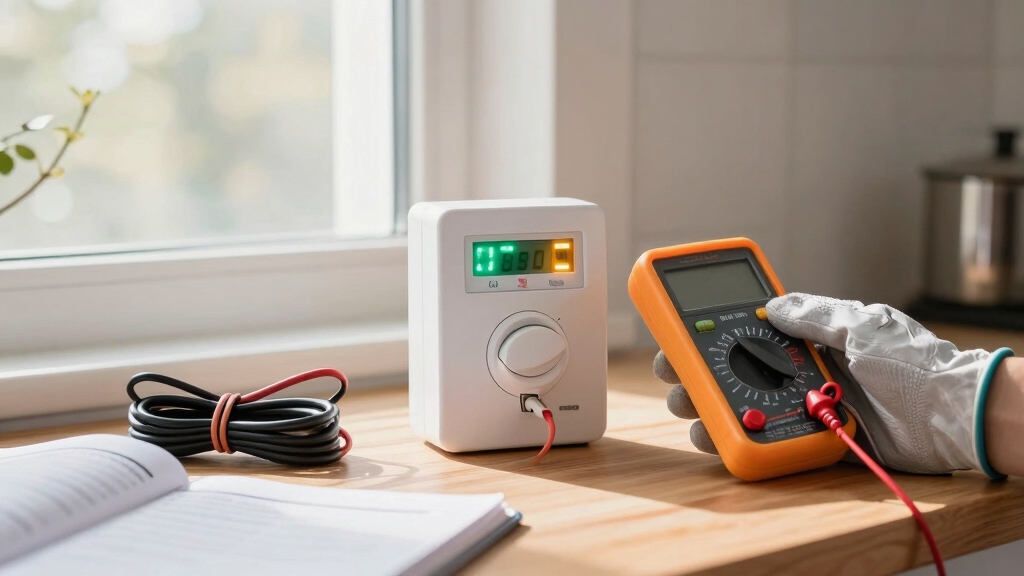
You’ll need a toolbox of precision gadgets. Think a glass break simulator, motion sensor tester, and multimeter to conduct effective monthly alarm system testing.
Don’t forget a handheld remote for arming and disarming and a checklist app to log results meticulously.
Sirens and lights require direct activation tools, while door and window contacts demand contact simulators.
These tools guarantee you catch every glitch early, keeping your system flawless and compliant without a hitch.
How Do Environmental Factors Like Humidity Affect Alarm System Performance?
Humidity can cause corrosion or moisture buildup inside alarm components, leading to false alarms or sensor failures. You’ll want to monitor and control humidity levels to guarantee reliable operation.
Excess moisture can degrade wiring insulation and affect motion or glass break sensors’ sensitivity. Maintaining proper ventilation and sealing entry points helps reduce these risks.
Regular testing after environmental changes guarantees your system stays accurate and responsive despite humidity fluctuations.
Are There Penalties for Failing to Document Alarm System Tests Properly?
Yes, skipping proper paperwork poses serious penalties.
OSHA insists you meticulously maintain and manage testing documentation for non-supervised alarm systems.
Failure to file accurate records can lead to fines, citations, and legal liabilities.
These documented details demonstrate compliance with federal standards, proving your system’s reliability and safety readiness.
Keep consistent, clear, and complete logs to avoid costly consequences and ensure your workplace stays within regulatory requirements.
Can Testing Schedules Be Adjusted for Low-Risk Workplace Environments?
You generally can’t adjust testing schedules for low-risk workplaces because OSHA mandates non-supervised alarm systems be tested every two months to ensure safety.
While you might consider less frequent checks, regulatory compliance requires adherence to these intervals regardless of risk level.
However, you can supplement mandatory testing with additional inspections if needed.
Always maintain thorough documentation to demonstrate compliance and support any risk-based decisions during audits or inspections.
From Compliance to Confidence: The Value of Regular Inspections
You might think skipping your monthly alarm tests saves time, but coincidentally, that’s when unnoticed faults can turn into costly failures. Regular testing, especially with quarterly professional inspections, guarantees every component, from motion sensors to glass break detectors, works flawlessly.
By documenting each check, you stay compliant with OSHA and NFPA 72 standards, avoiding severe risks. Don’t let convenience compromise safety; consistent testing is the technical safeguard your system demands.