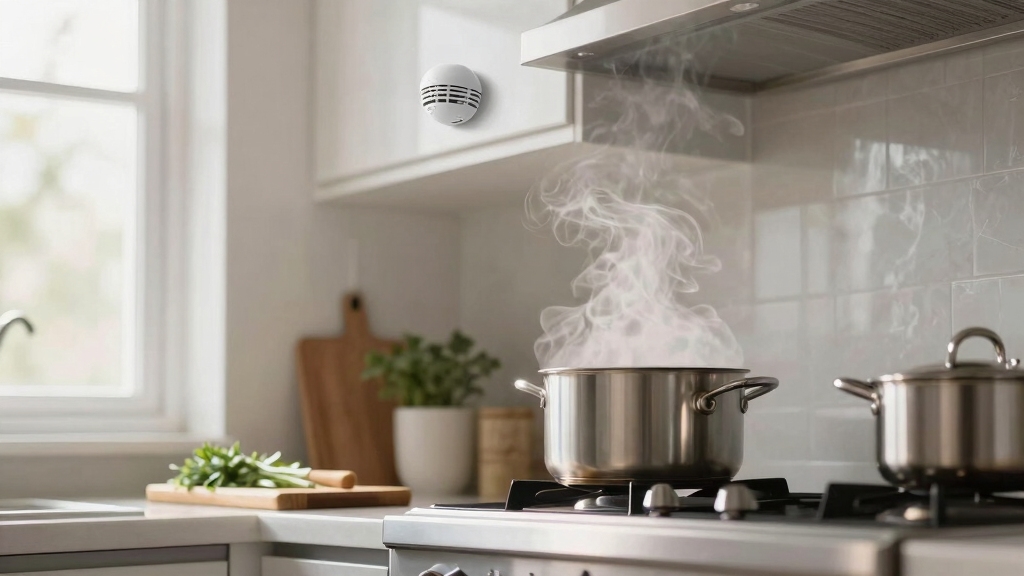

You’re generally not required to install standard smoke detectors directly in kitchens due to frequent false alarms from cooking smoke. Codes like NFPA 72 often mandate heat detectors or specialized alarms near stoves, especially in commercial or federally regulated settings.
When smoke alarms are nearby, they must have false-alarm-reduction features like photoelectric sensors or temporary silencing. Proper placement is critical; avoid mounting directly above cooking appliances.
To understand your specific options and requirements, there’s more to contemplate about detector types, placement, and code compliance.
Key Takeaways
- Smoke detectors are generally discouraged directly in kitchens to prevent frequent false alarms from cooking smoke.
- NFPA 72 and local codes often require heat detectors or specialized alarms instead of smoke detectors in kitchens.
- Kitchen smoke alarms must have false-alarm-reduction features like photoelectric sensors or temporary silencing.
- Detectors should be placed at least 10 feet away from cooking appliances to minimize nuisance alarms.
- Smoke detectors may be required in adjacent dining or storage areas, depending on occupancy and fire code requirements.
Smoke Detector Requirements for Kitchens?
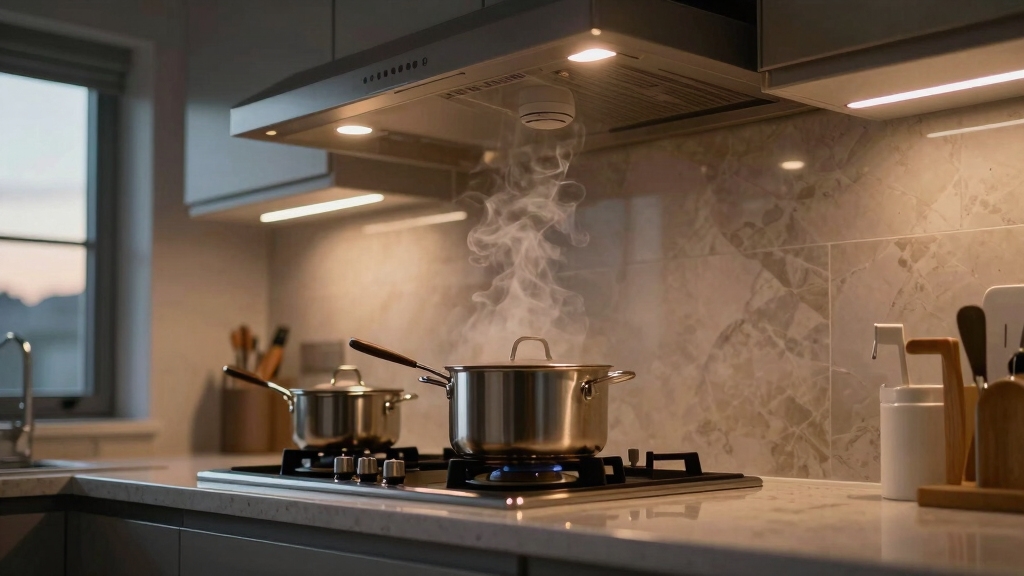
When setting up smoke detectors in kitchens, you need to follow specific regulations to guarantee both safety and functionality.
Codes like NFPA 72 and the Florida Fire Prevention Code mandate smoke alarms in kitchens for commercial and residential settings, with requirements to reduce false alarms.
NFPA 72 and Florida Fire Prevention Code require kitchen smoke alarms designed to minimize false alarms.
You must install photoelectric or dual-sensor detectors at least 10 feet from cooking appliances to avoid nuisance triggers caused by steam or smoke from cooking.
Temporary silencing features are essential for managing brief cooking-related alarms without disabling protection.
In federal housing, smoke alarms within 20 feet of stoves must have these features or use photoelectric technology.
Proper adherence secures reliable detection without frequent false alarms, maintaining occupant safety while accommodating kitchen environments.
For optimal performance, detectors should be mounted on ceilings away from corners, vents, and drafts to ensure faster detection and minimize false alarms.
Building Code Rules for Smoke Detector Placement Near Kitchens
When it comes to installing smoke detectors, you’ll want to keep them at least 10 feet away from cooking appliances. This helps minimize those annoying false alarms that can happen due to steam or smoke from your everyday cooking.
Now, when you’re choosing a smoke detector, consider going for photoelectric or dual-sensor models. These tend to perform better near kitchens because ionization detectors can often trigger unnecessarily.
Placement is key, too! Make sure to install your detectors on ceilings or high up on walls, sticking to the code distance requirements. This way, you ensure effective detection without interference from your routine cooking activities.
Proper ventilation and maintaining good airflow near detectors also reduce the risk of steam-induced false alarms.
Distance Requirements Near Appliances
Although smoke detectors play a vital role in kitchen safety, placing them too close to cooking appliances can cause frequent false alarms.
To prevent unnecessary triggers and safeguard reliable operation, you must follow strict distance requirements when installing detectors near kitchens.
Building codes and standards require:
- Install smoke detectors at least 10 feet away from cooking appliances to reduce false alarms caused by steam and cooking smoke.
- Maintain a horizontal distance of 20 feet under federal regulations for smoke alarms with temporary silencing features or photoelectric sensors near cooking zones.
- Avoid mounting detectors directly above stoves or ovens, as this location exposes them to frequent false signals from routine cooking activities.
Following these guidelines helps you balance safety with functionality. This minimizes nuisance alarms while maximizing fire detection efficiency. It is also important to prioritize placement within 10 feet of bedrooms and away from kitchens to ensure alarm audibility and reduce nuisance activations.
Detector Types And Placement
Since kitchens produce steam, smoke, and cooking odors that can trigger false alarms, selecting the right type of smoke detector and placing it correctly is essential for maintaining both safety and functionality.
You should use photoelectric or dual-sensor detectors near kitchens, as they reduce false alarms caused by regular cooking activities. Avoid ionization detectors, which are prone to nuisance alarms in these environments.
Place smoke detectors at least 10 feet away from cooking appliances, mounted high on ceilings or walls. Ceiling units should be over 4 inches from walls, and wall units 4 to 12 inches below the ceiling to guarantee reliable smoke detection.
In commercial kitchens, heat detectors or specialized alarms replace smoke detectors due to frequent steam and smoke exposure. Always follow local codes and NFPA 72 guidelines for compliant installation.
Photoelectric smoke detectors are especially valuable near kitchens because their sensitivity to large smoke particles helps minimize false alarms from cooking fumes while providing early warnings for smoldering fires.
Why You Should Keep Smoke Detectors Away From Cooking Appliances?
It’s a good idea to install smoke detectors at least 10 feet away from cooking appliances. This helps cut down on those annoying false alarms that can happen when you’re just making dinner and some smoke or steam gets in the air.
When you place your detectors properly, they’re better at responding to actual fire threats without all those pesky interruptions.
Installing photoelectric smoke alarms near kitchens can further reduce false alarms caused by cooking steam.
False Alarm Reduction
Frequently, smoke detectors placed too close to cooking appliances trigger false alarms, disrupting daily routines and causing unnecessary stress. You want to avoid this by positioning detectors properly to guarantee reliable alerts without nuisance triggers. False alarms often result from steam, smoke, and normal cooking activities near the detector.
To reduce false alarms effectively, consider these key points:
- Install smoke detectors at least 10 feet away from cooking appliances to minimize interference from cooking aerosols.
- Use photoelectric or dual-sensor smoke detectors that better differentiate between actual fires and cooking smoke.
- Choose units with temporary silencing features, allowing you to quickly mute brief cooking-related alarms without disabling protection.
Additionally, heat-induced air currents from cooking can carry steam or dust into the detector, increasing the chance of false alarms.
Optimal Detector Placement
Reducing false alarms starts with recognizing how proximity affects smoke detector performance. You should install smoke detectors at least 10 feet away from cooking appliances to avoid nuisance alarms triggered by routine cooking smoke and steam.
Placing detectors directly above stoves or ovens exposes them to false triggers, undermining their reliability. Instead, mount detectors on ceilings or high on walls in adjacent areas like hallways or living rooms, where smoke can still be detected promptly without frequent interference.
Consider photoelectric or dual-sensor detectors, as they better tolerate kitchen environments and reduce false alarms. Following these placement guidelines guarantees your smoke detector functions ideally, complies with safety codes, and maintains readiness to alert you to genuine fire hazards while minimizing disruptive false alerts.
Additionally, avoid spraying aerosols near the unit and ensure proper placement away from kitchens and bathrooms to further reduce false alarms caused by environmental triggers.
What Types of Smoke Detectors Work Best in Kitchens?
Which smoke detector type suits kitchen environments best depends largely on minimizing false alarms while guaranteeing early fire detection.
You’ll want to select detectors that balance sensitivity with reliability, given kitchen-specific challenges like steam and cooking smoke.
- Photoelectric detectors excel in kitchens by detecting smoldering fires promptly and reducing false alarms caused by cooking smoke.
- Dual-sensor detectors, combining photoelectric and ionization technologies, offer superior performance by distinguishing between real threats and routine cooking particles.
- Heat detectors serve as effective alternatives where smoke detectors may trigger frequent false alarms, responding specifically to temperature rises rather than smoke.
Choosing among these options guarantees compliance with safety standards and practical functionality.
This protects your kitchen without frequent nuisance alerts.
Additionally, placing heat detectors specifically in kitchens helps avoid false alarms from steam and cooking fumes, enhancing overall alarm reliability.
Mounting Smoke Detectors on Ceilings and Walls in Kitchens
Because smoke rises, you should mount smoke detectors high on walls or ceilings to guarantee early fire detection in kitchens.
When installing on ceilings, position the detector at least 4 inches away from any wall to avoid dead air pockets that delay smoke reaching the sensor.
Install ceiling smoke detectors at least 4 inches from walls to prevent dead air pockets and ensure timely smoke detection.
For wall-mounted units, place the top edge between 4 and 12 inches below the ceiling to secure optimal smoke flow detection.
Avoid installing detectors directly above cooking appliances to minimize false alarms caused by steam and normal cooking smoke.
Safeguard detectors maintain a minimum distance of 10 feet from stoves or ovens where possible.
Follow spacing guidelines, typically covering 30 feet per detector, to achieve thorough coverage.
Proper mounting height and placement are critical to effective kitchen smoke detection and compliance with fire safety codes.
Additionally, hardwired smoke detectors should always have a battery backup to ensure continuous operation during power outages.
How to Avoid False Alarms From Kitchen Smoke Detectors?
Although kitchens are high-risk areas for smoke detector triggers, you can markedly minimize false alarms by selecting the right detector type and placing it strategically.
Choose photoelectric or dual-sensor detectors, as they better distinguish real fires from cooking smoke compared to ionization models.
Avoid placing detectors directly above stoves or cooking appliances. Maintain at least a 10-foot distance horizontally to reduce nuisance alarms caused by steam and routine cooking activities.
To avoid false alarms:
- Install detectors at least 10 feet away from cooking appliances.
- Use smoke detectors with temporary silencing features for brief cooking smoke.
- Prefer photoelectric or dual-sensor detectors over ionization types in kitchen areas.
Following these steps guarantees reliable protection without frequent false alarms. Additionally, regular cleaning and maintenance of detectors help prevent sensitivity degradation caused by residue buildup from cooking aerosols.
Smoke Detector and Fire Alarm Rules for Commercial Restaurants
When you manage a commercial restaurant, adhering to NFPA 72 standards is critical for fire safety compliance.
In kitchens, NFPA 72 mandates using heat detectors or specialized alarm devices instead of standard smoke detectors to prevent false alarms from cooking smoke.
Dining areas may require smoke detectors based on occupant load and square footage.
Storage rooms holding flammable materials must have smoke detection installed or strongly recommended.
High-ceiling or exposed beam spaces also need additional detectors for adequate coverage.
Your fire alarm system must integrate manual pull stations and be designed to cover all areas efficiently.
Proper placement, detector type, and system integration guarantee compliance, minimize false alarms, and maintain occupant safety in your commercial restaurant environment.
When Heat Detectors Are Better Than Smoke Detectors in Kitchens?
Standard smoke detectors often struggle with the unique conditions present in kitchens, where steam, smoke from routine cooking, and airborne grease can trigger frequent false alarms.
That’s why heat detectors often outperform smoke detectors in these environments, especially in commercial kitchens.
You should consider heat detectors when:
- You need to avoid nuisance alarms caused by cooking smoke or steam.
- Local codes, like NFPA 72, require heat detectors in kitchen areas instead of smoke detectors.
- Your kitchen has high ceilings or exposed beams where smoke may disperse unevenly.
Heat detectors respond to temperature changes rather than airborne particles, providing reliable fire detection without the false alarms standard smoke detectors might generate in kitchens.
This makes them a practical and code-compliant choice for many cooking environments.
Frequently Asked Questions
How Often Should Kitchen Smoke Detectors Be Tested and Maintained?
You should test your kitchen smoke detectors monthly to make sure they function properly.
Replace batteries at least once a year or immediately if the low-battery warning sounds.
Clean the detectors every six months to remove dust and debris that can cause false alarms.
Follow manufacturer instructions for maintenance and replace the entire unit every 10 years to maintain reliable performance and meet safety standards effectively.
Can Smoke Detectors in Kitchens Detect Carbon Monoxide?
You’d need a superhero detector to catch both smoke and carbon monoxide at once!
Regular smoke detectors can’t detect carbon monoxide; they’re designed solely for smoke.
To protect against CO, you must install combination smoke and carbon monoxide alarms certified to UL 217 and UL 2034 standards.
These devices provide dual protection, ensuring you’re alerted to both invisible, deadly CO gas and visible smoke hazards in your kitchen or home.
Are Wireless Smoke Detectors Effective in Kitchen Environments?
Wireless smoke detectors can be effective in kitchen environments if you choose models with photoelectric or dual-sensor technology to reduce false alarms from cooking smoke.
Make sure they’ve temporary silencing features and install them at least 10 feet away from cooking appliances.
Avoid ionization-only detectors near kitchens, as they’re prone to nuisance alarms.
Proper placement and advanced sensing guarantee reliable performance and compliance with safety standards.
What Are the Consequences of Not Installing Smoke Detectors Near Kitchens?
If you don’t install smoke detectors near kitchens, you risk delayed fire detection, increasing injury, property damage, and potential loss of life.
Cooking fires often start unnoticed, so lacking nearby alarms means you won’t get timely warnings.
Additionally, absence of compliant detectors can violate fire codes, leading to fines or insurance issues.
Proper placement guarantees early alerts, reducing false alarms through strategic distance and technology choice, ultimately enhancing safety and code compliance.
How Do Smoke Detectors in Kitchens Integrate With Home Automation Systems?
You’ll want to know that nearly 60% of home fire deaths happen where smoke detectors fail or are absent.
When integrating kitchen smoke detectors with home automation systems, you gain real-time alerts on your phone, remote silencing features, and automated lighting or ventilation activation.
Photoelectric or dual-sensor detectors work best here, reducing false alarms while keeping you informed.
This integration enhances safety, convenience, and quick response during emergencies.
The Perfect Balance Between Safety and Convenience
When it comes to kitchens, you’ll want to strike a careful balance between safety and convenience. While smoke detectors play a critical role in early warning, placing them too close to cooking areas can invite unnecessary interruptions.
Opting for heat detectors or properly positioned smoke alarms guarantees you stay protected without the hassle of false alerts. By following building codes and best practices, you create a kitchen environment that’s both secure and smoothly functional.