You can secure concealed doors using hidden lock mechanisms like push latches, magnetic catches, or RFID-enabled electronic locks that eliminate visible hardware. Mechanical options include cam or traditional keyed latches combined with reinforced frames for durability.
Mirror and picture frame locks integrate discreet hinges and biometric or RFID triggers, maintaining camouflage while ensuring access control. Electronic systems often feature battery backup and encrypted authentication.
Understanding installation nuances and integration with automation will help optimize both security and seamless operation.
Key Takeaways
- Hidden door locks use push latches, magnetic catches, or RFID-activated mechanisms to keep entry points invisible and secure behind panels or frames.
- Mirror and bookshelf door locks integrate concealed hinges and electronic triggers like fingerprint readers or key fobs for seamless, camouflaged access.
- Electronic systems combine biometric authentication, encrypted RFID tags, and battery-backed electromagnets to prevent unauthorized entry and cloning attempts.
- Installation requires precise alignment, reinforced frames, tamper-resistant hardware, and secure mounting within structural framing for durability and safety.
- Mechanical reinforcements such as hardened steel plates, spool-pin cylinders, and multi-factor access controls enhance physical and cyber security of hidden locks.
Types of Hidden Door Lock Mechanisms
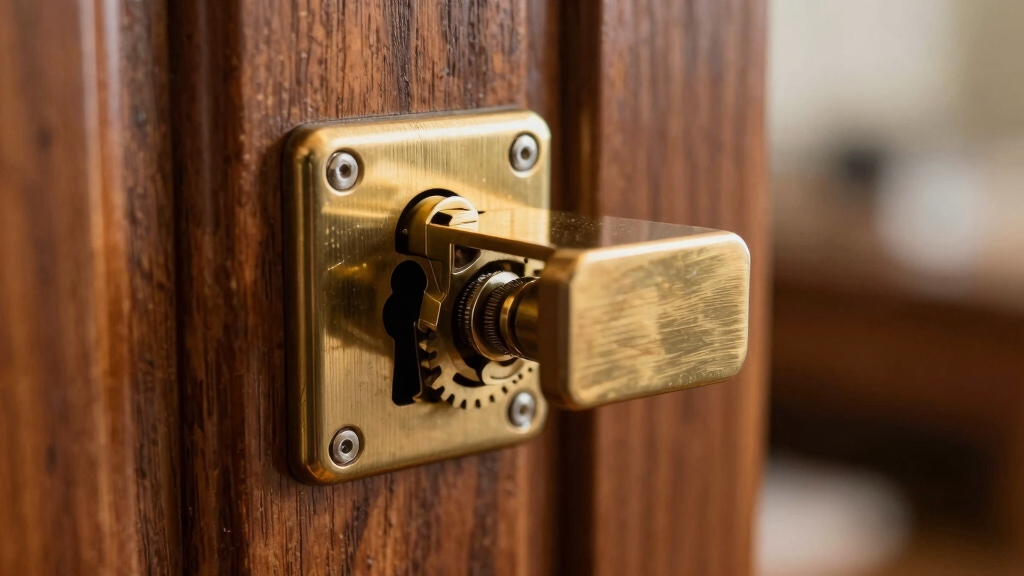
When selecting a hidden door lock mechanism, you’ll find several distinct types designed to balance security with seamless concealment.
Push latch mechanisms engage by pushing the door closed, eliminating visible handles and using friction to resist forceful impacts.
Push latch mechanisms secure doors through friction, removing visible handles for a clean, impact-resistant design.
Magnetic catch systems invisibly bond door and frame, releasing through RFID disruption or biometric triggers, often with battery-backed electromagnets.
Mirror and picture frame locks utilize hidden hinges and magnetic or spring-loaded components, activated discreetly via key fob or fingerprint reader, maintaining decorative camouflage.
Electronic and RFID locks operate on 13.56 MHz or Bluetooth, integrating biometric access and remote control without visible entry points.
Cam and traditional mechanical latches offer durable rotating cams or keyed tumbler locks, though the latter risk revealing keyholes.
Each type prioritizes hidden operation while varying in security features and installation complexity.
Integrating these mechanisms with multi-point locking systems can significantly enhance resistance to forced entry while preserving concealment.
Bookshelf Door Locks and Installation Techniques
When it comes to locking up your bookshelf doors, there are a few concealed lock types that you might want to consider. You’ve got options like push latches, magnetic catches, and even book-activated latches. Each of these offers its own blend of security and invisibility, which is pretty neat, right?
Now, installing these mechanisms isn’t just a matter of slapping them on. It requires some precise alignment and secure mounting. You’ll often find that they’re cleverly hidden behind the bookshelf facing or tucked away within the frame.
If you follow a step-by-step guide, you can ensure that everything operates smoothly and maintains that seamless look you’re going for with your door. So, are you ready to dive into the installation process?
For metal bookshelf doors, using BI-metal drill bits is recommended to ensure durability and precision during installation.
Concealed Lock Types
Although concealed bookshelf door locks prioritize seamless integration, they employ a variety of mechanisms tailored for security and discretion.
You’ll find push latches hidden within the door frame, activated by a simple press to release the latch without visible hardware.
Hidden magnetic catches offer silent, secure closure using magnets embedded in door and frame, preserving clean aesthetics.
For enhanced security, mechanical key locks and electromagnetic locks with wireless key fobs or biometric scanners provide advanced access control options.
These systems maintain the bookshelf’s appearance while resisting tampering through self-latching bolts and clutch lever handles.
Compatibility with remote, RFID, and battery backup systems guarantees reliability.
Selecting the appropriate concealed lock type depends on your security needs and desired concealment level.
Some concealed locks may incorporate reverse peephole viewers to discreetly observe the area beyond the door without revealing the viewer’s position.
Installation Step Guide
Since proper installation guarantees both security and seamless concealment, you must begin by preparing the site and verifying rough opening dimensions match the door and hardware specifications.
Confirm the wall framing is structurally sound and free of obstructions like utilities. Remove existing doors and trim, clearing debris for flush jamb seating.
Next, set and level the door jamb using shims, securing it firmly into studs. Install the pivot hardware per template, adjusting for uniform gaps, typically 1/32″ to 1/16″, to ensure smooth swing.
Mount bookshelf panels flush with the door frame, maintaining consistent shelf spacing to avoid interference with pivots or locks.
Finally, install the mechanical latch and locking components precisely, routing linkages securely and testing engagement repeatedly to ensure reliable operation without binding or misalignment. For optimal durability and safety, it is also essential to verify that any door closing mechanisms are adjusted to provide a controlled closing speed in the recommended 7–9 second range.
Mirror-Based Concealed Lock Systems
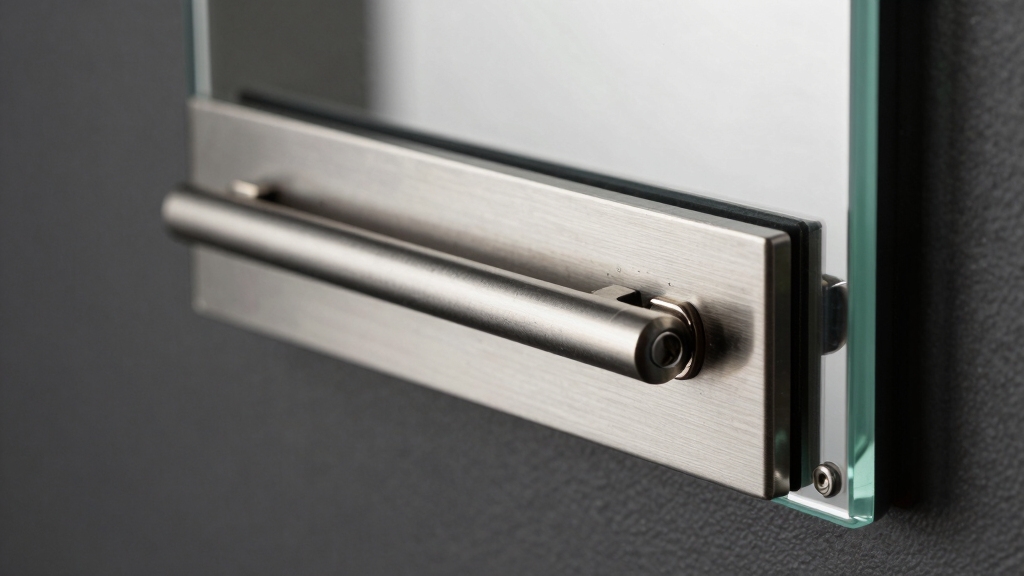
Mirror-based concealed lock systems blend sophisticated hardware with seamless design to secure hidden spaces without drawing attention.
Sophisticated hardware meets seamless design to discreetly secure hidden spaces with mirror-based concealed lock systems.
You’ll find full-length mirror panels mounted on ball-bearing slides or hidden hinges, allowing smooth swinging or sliding access while maintaining flawless disguise.
Locking mechanisms include mechanical hidden latches reinforced with armored plates, electromagnetic solenoids, and hybrid deadlatch-electronic triggers that secure the door both mechanically and electronically.
For access control, you can integrate RFID, keypad, or biometric readers, enabling rapid, discrete entry. To guarantee security, use heavy-duty concealed hinges and reinforce frames to resist forced entry.
Motorized lift/slide mirrors add automation with manual failsafes, enhancing convenience without compromising safety.
Proper installation anchored into structural framing is critical to maximize resistance against pry attacks and maintain the integrity of the concealed locking system.
Incorporating heavy-duty materials and robust hardware similar to those used in tactical gear can significantly enhance the durability and security of concealed lock systems.
Picture Frame Locks for Discreet Security
Picture frame locks offer a clever way to hide secure entries behind artwork or photos, making them ideal for smaller spaces like safe boxes or narrow passageways.
You can mount the frame on hinges or brackets, using a slide bolt or fingerprint reader for access. These locks blend seamlessly as wall decor while securing valuables in home offices or studios.
Consider these key factors:
- Installation: Use push-to-open or spring-loaded mechanisms with T-head security screws for tamper resistance.
- Hardware: Choose from cam locks, deadbolts, and security mounting brackets for enhanced protection.
- Space Efficiency: Fit slim RFID locks within 1.5-inch clearance behind the frame.
- Customization: Opt for wooden finishes and foam-lined compartments to protect valuables discreetly.
This approach offers robust, concealed security without compromising aesthetics. For optimal security, regular maintenance and inspection of locks are recommended to ensure consistent functionality.
RFID and Electronic Hidden Locks
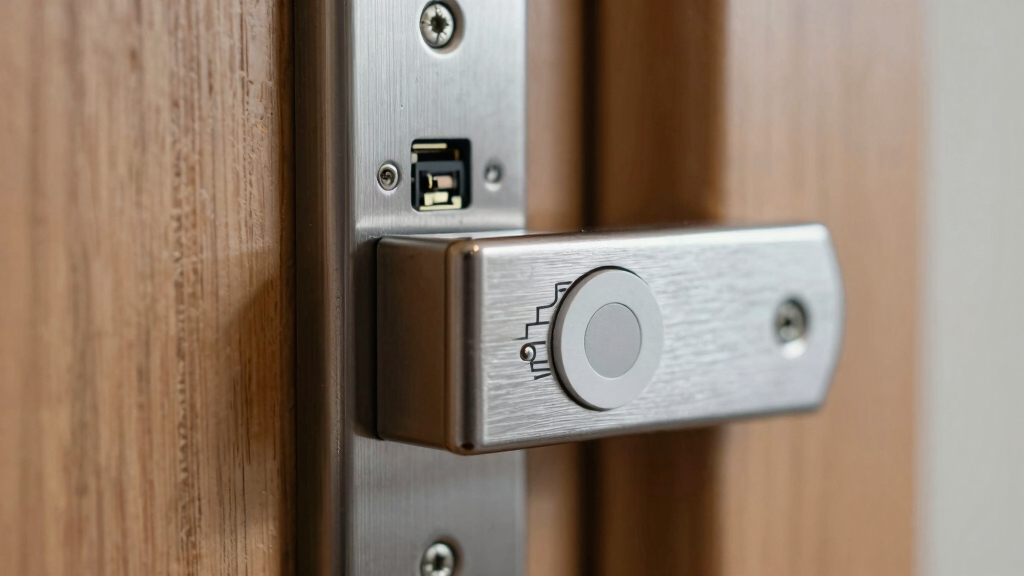
Building on discreet mechanical solutions like picture frame locks, RFID and electronic hidden locks elevate security by integrating advanced access control technologies within concealed architectures.
You use embedded RFID readers and antennas hidden in door frames or facades to keep hardware invisible. These systems rely on passive or active RFID tags communicating via electromagnetic fields at frequencies like 13.56 MHz for short-range authentication.
The controller validates credentials, actuating motorized latches, solenoids, or magnetic locks concealed from view. You must consider fail-secure versus fail-safe operation based on safety requirements and guarantee reliable power, often combining mains with battery backup.
To mitigate cloning, relay, and tampering risks, use cryptographically secure tags, mutual authentication, tamper sensors, and careful antenna placement. Audit integration and emergency overrides complete a robust, concealed electronic locking solution.
Additionally, ensuring proper lighting and concealment around access points enhances security and privacy, similar to how a peephole cover prevents unwanted visibility and tampering.
Comparing Electronic and Traditional Lock Features
When you’re looking into hidden door locks, it’s important to think about a few key factors like reliability, how much maintenance they need, and the level of security they provide. So, let’s break it down a bit.
On one hand, you’ve got electronic locks. These guys are pretty cool because they come with advanced access features, like multi-factor authentication. It’s all about convenience! But, you do need to keep in mind that they require ongoing power and you might’ve to manage firmware updates from time to time.
Now, on the flip side, we’ve traditional mechanical locks. They’re known for providing passive security and they don’t require much upkeep, which is a big plus!
However, they don’t have the same dynamic security features or flexibility that electronic locks offer. So, it really just comes down to what you need in terms of security and convenience!
Additionally, just like how photoelectric smoke alarms rely on carefully designed components and power sources to maintain reliable performance, hidden door locks must balance security features with dependable operation.
Reliability and Maintenance
Reliability and maintenance considerations frequently determine the suitability of electronic versus traditional locks for your security needs.
Traditional locks excel in power outage independence and physical durability, often lasting decades with minimal upkeep. In contrast, smart locks demand regular software updates and battery replacements every 6–12 months, with an expected lifespan of 5–7 years due to component wear.
Environmental factors impact both, causing rust or electronic degradation. Consider these key points:
- Traditional locks require lubrication 1–2 times yearly; smart locks need frequent software updates and battery changes.
- Power independence favors traditional locks, while smart locks offer low-battery alerts and emergency power options.
- Durability: ANSI Grade 1 deadbolts outlast smart locks under extreme conditions.
- Failure mitigation relies on simple design for traditional locks; smart locks depend on layered safeguards and user vigilance.
Additionally, just as proper surface preparation is essential for paint adhesion on materials like PVC pipe, ensuring correct maintenance procedures is critical to prevent degradation and ensure long-term reliability in lock mechanisms, emphasizing the importance of environmental impact.
Security Enhancements
Security enhancements in locks hinge on their ability to resist physical and electronic attacks, a factor that often outweighs maintenance concerns once a system is installed.
You’ll find mechanical deadbolts rated for 250–350 ft·lb torque resistance. Reinforced electronic deadbolts exceed these through steel bolts and strike plates.
Hardened steel anti-drill plates and spool-pin cylinders further thwart physical bypass. Electronically, strong AES-128 encryption, on-device biometric storage, and signed firmware updates markedly reduce cyber vulnerabilities.
Multi-factor electronic access adds layers of defense, lowering unauthorized access risk. Concealment strategies such as invisible keyways and low-profile actuators minimize attack surfaces and exposure.
Combining redundant mechanical and electronic barriers exponentially increases time-to-compromise. This makes electronic locks with robust physical reinforcements superior in all-around security enhancement.
Additionally, proper maintenance schedule and routine inspections ensure continued reliability and security performance over time.
Access Convenience
Although traditional locks offer straightforward mechanical operation, electronic locking systems deliver markedly enhanced access convenience through diverse user methods and streamlined management.
With electronic locks, you gain flexible entry options such as keypad PINs, biometric scans, mobile app control, and mechanical key overrides. You can swiftly update access rights without physical rekeying, supporting multiple users and scheduled credentials.
Additionally, features like auto-locking, remote control, and audit logs improve operational efficiency and security tracking.
- Multiple user authentication options: PIN, biometrics, app, mechanical key
- Rapid access management: remote code changes, user profiles, scheduled permissions
- Enhanced usability: illuminated keypads, auto-lock, remote lock/unlock
- Reliability safeguards: battery alerts, mechanical overrides, offline code changes
These capabilities markedly optimize convenience compared to traditional mechanical locks.
Automation Technologies in Hidden Door Locks
Automation technologies in hidden door locks combine advanced motorized mechanisms, electronic access controls, and smart integration to achieve seamless, secure, and user-friendly operation.
You’ll find brushless DC motors with precision geartrains delivering silent actuation under 60 dB, supporting loads typical of bookcase doors (50–150 kg). Safety features like IR sensors and current-sensing motor stalls prevent accidents by detecting obstructions.
Electronic locks, ranging from electromagnetic maglocks to biometric and Bluetooth-enabled deadbolts, ensure concealed, keyless access.
Integration with smart-home hubs using Z-Wave or Zigbee protocols enables remote management, geofenced release, and voice commands, alongside real-time audit logging.
Battery backups and fail-safe mechanical latches guarantee operation during power outages.
However, you must balance cloud connectivity’s convenience against potential security risks by opting for local authentication modes when privacy is paramount.
Frequently Asked Questions
How Do Hidden Door Locks Affect Home Insurance Policies?
Hidden door locks can complicate your home insurance. Insurers often scrutinize these mechanisms due to unclear forced entry signs and potential audit trail gaps.
If your lock lacks certification or tamper evidence, your claim risks denial. To avoid this, you must align hidden locks with insurer standards, document installations thoroughly, and guarantee supplementary security measures. This minimizes claim disputes and preserves your coverage integrity.
Can Hidden Locks Be Integrated With Home Security Systems?
Yes, you can integrate hidden locks with home security systems via Wi-Fi, Bluetooth, Z-Wave, or proprietary protocols.
This enables remote control, automation, and activity logging. Concealed sensors can report lock status without revealing hardware, preserving secrecy.
Make certain compatibility with your ecosystem, consider wireless range, and plan for firmware updates. Proper installation is essential to maintain security and reliability while leveraging the benefits of integrated access control and monitoring.
What Maintenance Is Required for Electronic Hidden Locks?
You might think maintaining electronic hidden locks is complicated, but it’s straightforward if you stay consistent.
You’ll need to monitor battery levels closely, replacing batteries at the first low-battery alert to avoid lockouts. Clean sensors gently without harsh chemicals, and update firmware regularly for peak performance.
Don’t forget to lubricate mechanical parts with dry powdered graphite and perform routine checks on alignment and operation. Periodic professional inspections can catch hidden issues early.
Are Hidden Door Locks Childproof or Safe for Families?
Yes, hidden door locks can be childproof and family-safe if designed properly. You’ll want concealed activation methods, like RFID swipes or push latches, to prevent accidental access by children.
Fail-safe features guarantee quick exit during emergencies, avoiding lock-ins. However, you must guarantee mechanical overrides and battery backups are functional.
Keep in mind, hidden keyholes can reduce childproofing and increase tampering risks, so opt for fully electronic, discreet systems.
How Do Hidden Locks Impact Emergency Exit Accessibility?
Imagine trying to find a hidden switch in a smoke-filled room. That’s how hidden locks can hinder emergency exit accessibility.
You’ll face delays and confusion during evacuation since these locks reduce discoverability for unfamiliar occupants. Without clear signage or training, you risk slower egress or trapped situations.
To guarantee safety, hidden locks must integrate manual overrides, comply with egress codes, and provide intuitive release mechanisms. This is especially crucial under low visibility or stress.
Engineering Complexity Beneath Simplicity
You might think hiding a door lock means sacrificing security for secrecy, but ironically, these concealed mechanisms often enhance both. Whether it’s a bookshelf lock or an RFID system, you’re not just disguising entry; you’re engineering complexity beneath simplicity.
So, while your hidden lock remains invisible to the casual eye, its intricate design makes certain that only the technically savvy gain access. This proves that sometimes, what’s out of sight is your most sophisticated safeguard.