
To secure your patio sliding door, upgrade to a multipoint locking system that bolts at several points, enhancing resistance to prying and forced entry.
Reinforce the door frame and tracks with steel plates and heavy-duty screws. Install interior anti-slide barriers or security bars to block panel movement.
Strengthen glass with laminated or shatterproof film and add sensors for intrusion detection. Combine these with bright motion-activated lighting and strategic landscaping for an all-encompassing defense.
Keep going to discover more advanced enhancements and installation tips.
Key Takeaways
- Install a multipoint locking system with hooks and deadbolts to secure the sliding door at multiple points along the door edge.
- Reinforce door jambs and frames using steel armor plates and long security screws anchored into structural framing.
- Upgrade rollers and tracks to ball-bearing types and add anti-lift devices to prevent door lift-off and improve smooth operation.
- Use interior security bars or adjustable anti-slide barriers to block sliding motion and resist forced entry.
- Apply shatterproof security film on glass panels to hold shards together and deter break-ins.
Upgrade to Multipoint Locking Systems
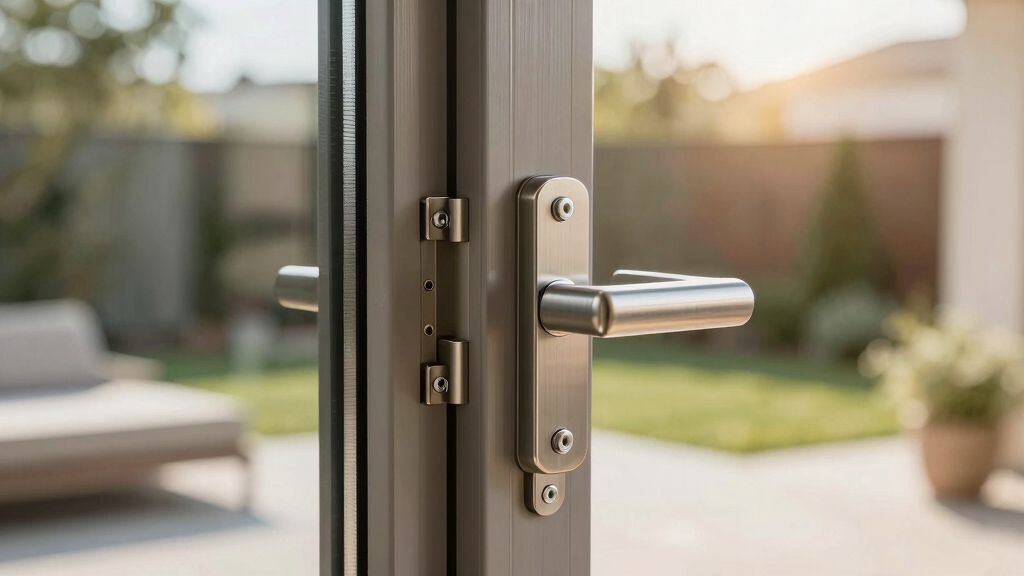
When you upgrade to a multipoint locking system on your patio sliding door, you markedly boost its resistance to forced entry by securing it at multiple points along the door edge instead of relying on a single latch.
These systems engage two to five locking points, typically combining a central deadbolt or latch with hook bolts and top/bottom compression bolts to resist prying, racking, and lever attacks.
You’ll find options with automatic engagement upon closing or semi-automatic modes requiring handle lift before key turn.
Compatibility matters: verify backset, faceplate length, and handle trim to match your door’s material and dimensions. Reinforce strike plates and frame where the bolts engage for maximum security.
This upgrade increases door stiffness, improves weather sealing, and markedly reduces vulnerability to forced entry attempts.
For optimal protection, ensure the installation includes a steel-reinforced frame to maintain door alignment and prevent hinge or frame failure under attack.
Install Interior Anti-Slide Barriers
First, let’s get into the installation of your security bar kit. Start by making sure that the rotating bracket and saddle align perfectly with your door’s dimensions. This step is crucial, so take your time to measure and adjust as needed.
Once you have everything lined up, it’s time to use the anti-lift pin. This little guy will really help secure the sliding panel against any upward force, boosting its resistance to an impressive 300 pounds. Isn’t that reassuring?
Now, pay attention to the positioning and secure mounting of all these components. When done right, you’ll create a solid interior barrier that effectively prevents any sliding or lifting attempts on your door. It’s all about making your space safer and more secure!
For added security, consider installing a wide-angle peephole to improve your ability to identify visitors before opening the door.
Security Bar Installation
Begin the security bar installation by thoroughly preparing the sliding door area to guarantee precise measurements and proper placement.
Close and lock the door, then measure the opening width to select the appropriate adjustable bar. Gather tools: 1/8-inch drill bit, screwdriver, level, pencil, and safety glasses.
Position the rotating bracket on the inside of the fixed door frame, mark two holes, drill shallowly, and secure with #8 x 1/2-inch screws.
Extend the bar to the sliding panel, ensuring level alignment, then mark and drill three holes for the saddle bracket. Fasten the saddle bracket securely.
Install the nylon cap on the bar end and engage the anti-lift lock. Test the bar’s stability by verifying the sliding panel remains immobile when the bar is extended and locked in place.
For enhanced security, consider installing a solid brass peephole viewer on the adjacent door to allow safe identification of visitors before opening.
Sliding Door Braces
Install sliding door braces to enhance security by preventing the door from sliding open. These interior anti-slide barriers fit within the door track, blocking sliding motion and resisting up to 300 pounds of force.
To install, first measure your door width, guaranteeing it fits the adjustable 24.75 to 47.5-inch length range. Then, identify the appropriate saddle placement on the fixed or sliding panel’s back edge.
Follow these key steps:
- Mount the rotating bracket inside the door jamb, drilling 1/8-inch holes for screws.
- Secure the saddle against the panel’s back edge, avoiding glass penetration by drilling shallow holes.
- Attach the anti-lift lock and guarantee the bar rotates smoothly from stored to locked position.
This setup provides robust, tool-free sliding door security. Proper adjustment and maintenance of door hardware, including closing speed controls, are essential to ensure reliable door operation and safety.
Anti-Lift Pin Usage
While sliding door braces prevent horizontal movement, anti-lift pins address vertical vulnerabilities by blocking the head track where panels interlock.
You install these blocks or brackets inside the frame after seating the panel fully open. This blocks panel lift-outs and improves weather sealing.
Choose from vinyl snap-ins, metal brackets, or adjustable plates based on your door system. Proper alignment with the closed panel guarantees effectiveness.
Secure pins with screws if required, sealing exposed heads against moisture. Remember, anti-lift pins supplement locks and strike plates but don’t replace them.
Regularly inspecting and routine maintenance of these components ensures long-lasting security and optimal performance.
| Type | Material | Installation Method |
|---|---|---|
| Snap-in Block | Vinyl/Plastic | Clip into head track |
| Metal Bracket | Steel/Aluminum | Screw-mounted |
| Adjustable Plate | Metal | Screw-mounted, adjustable |
| Removable Insert | Various | Snap or screw-in |
| Integrated Feature | Multi-material | Built into locking system |
Reinforce Glass and Improve Glazing
Because patio sliding doors often feature large glass panels vulnerable to forced entry, reinforcing the glass and improving glazing is critical for security.
You can enhance protection by choosing from several effective options:
- Apply security or shatterproof film inside the glass to hold shards together upon impact. This deters quick break-ins while providing UV protection and privacy.
- Upgrade to laminated glass, which sandwiches a plastic interlayer between two glass layers. This greatly increases resistance to penetration and reduces noise.
- Consider impact-resistant or shatter-resistant glass that withstands heavy blows without fracturing. This notably raises the difficulty of forced entry.
Each method improves glass resilience, with varying costs and installation complexity. This allows you to tailor security upgrades precisely to your sliding door’s specifications and threat level. Additionally, using materials with enhanced impact resistance can provide long-term durability against environmental factors and attempted break-ins.
Strengthen Frames, Tracks, and Hardware
To effectively resist forced entry, it’s crucial to reinforce your door jambs. One great way to do this is by adding steel plates and using heavy-duty screws. This extra support makes a big difference!
Another important step is upgrading the rollers and tracks. By doing this, you can reduce door movement and make it harder for anyone to lift the door off its hinges. It really enhances your overall security.
And don’t forget about the hardware! Installing tamper-resistant fasteners ensures that everything stays firmly anchored. This makes it much more difficult for anyone to compromise your door hardware. Overall, these upgrades go a long way in keeping your space secure!
Additionally, selecting hardware components with high tensile strength can greatly improve the durability and safety of your door security system.
Reinforce Door Jambs
To greatly enhance the security of your patio sliding door, start by reinforcing the door jambs with robust steel jamb armor. This armor resists kick-in forces by distributing impact loads across the full door edge, including top and bottom, into solid framing.
Before installation, inspect and replace any rotted jamb wood to make certain secure anchoring. Use long (3″ or longer) security screws to fasten armor directly into structural framing, converting surface plates into strong frame-to-stud connections.
Focus on:
- Installing heavy-duty, full-length strike plates that cover and reinforce lock pockets.
- Using multiple long security screws to anchor strike plates deeply.
- Adding tamper-resistant anti-lift devices to prevent vertical panel movement.
These measures greatly bolster your door’s resistance against forced entry attempts. Additionally, just as peepholes provide a limited but effective view of visitors for door security, incorporating visual security features in your door setup can enhance overall safety awareness.
Upgrade Rollers and Tracks
Reinforcing door jambs greatly strengthens your patio sliding door’s resistance to forced entry. Security also relies on the integrity of rollers, tracks, and associated hardware.
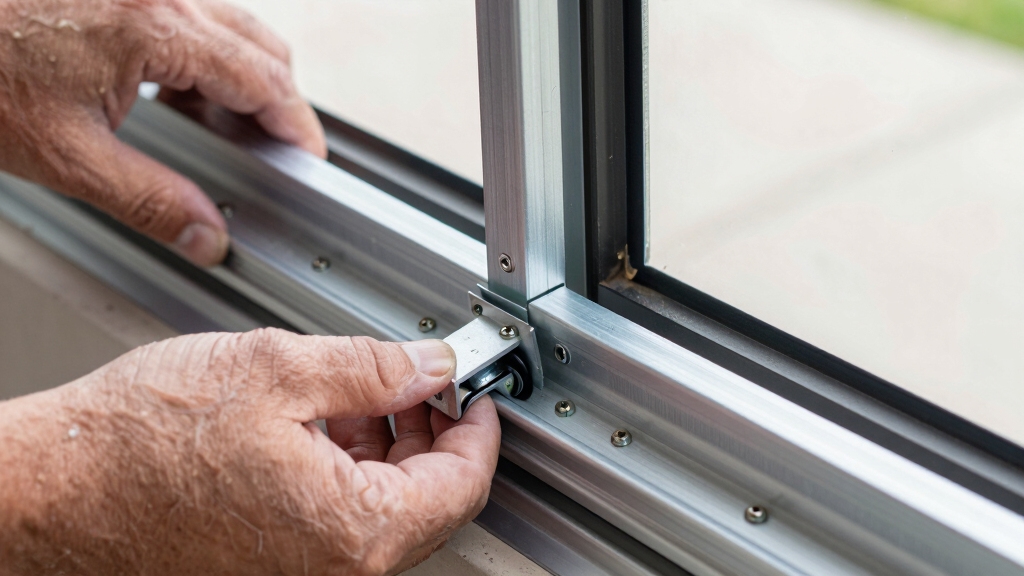
Upgrade to ball-bearing rollers that match your track’s diameter and mounting type to guarantee smooth, secure operation and minimize lateral play. Replace rollers in pairs along with worn housings and mounting clips to maintain factory tolerances and reduce gaps vulnerable to forced entry.
Clean and inspect tracks thoroughly. Remove debris, correct warping, and replace damaged sections to restore consistent roller engagement. Apply corrosion-resistant coatings where needed to extend service life.
Install anti-lift devices and adjust roller height precisely to prevent sash displacement. Finally, reinforce roller housings and hardware with heavy-duty components and longer, hardened screws to resist deformation and pull-out under attack.
For additional security, consider installing a reverse peephole viewer to safely observe the outside area and identify visitors before opening the door.
Use Tamper-Resistant Fasteners
Enhance the security of your patio sliding door by installing tamper-resistant fasteners, which markedly deter forced entry attempts on frames, tracks, and hardware.
Choose fasteners like one-way screws for fixed plates, two-way security screws for authorized removal, and shear-head bolts for low-profile strike plate protection. Use stainless steel or hardened alloys for corrosion resistance and mechanical strength.
Proper placement is essential:
- Secure strike plates and lock housings with long tamper-resistant screws anchoring into studs or masonry.
- Fasten reinforcement plates and meeting rails with security screws or shear bolts to prevent prying.
- Anchor frame-to-wall connections and anti-lift devices with tamper-resistant bolts to block frame displacement.
Use manufacturer-specified drivers and correct torque to ensure fastener integrity and optimal load distribution. For enhanced outdoor security and energy efficiency, consider integrating dusk to dawn lighting near entry points to deter intruders after dark.
Integrate Alarms and Detection Sensors
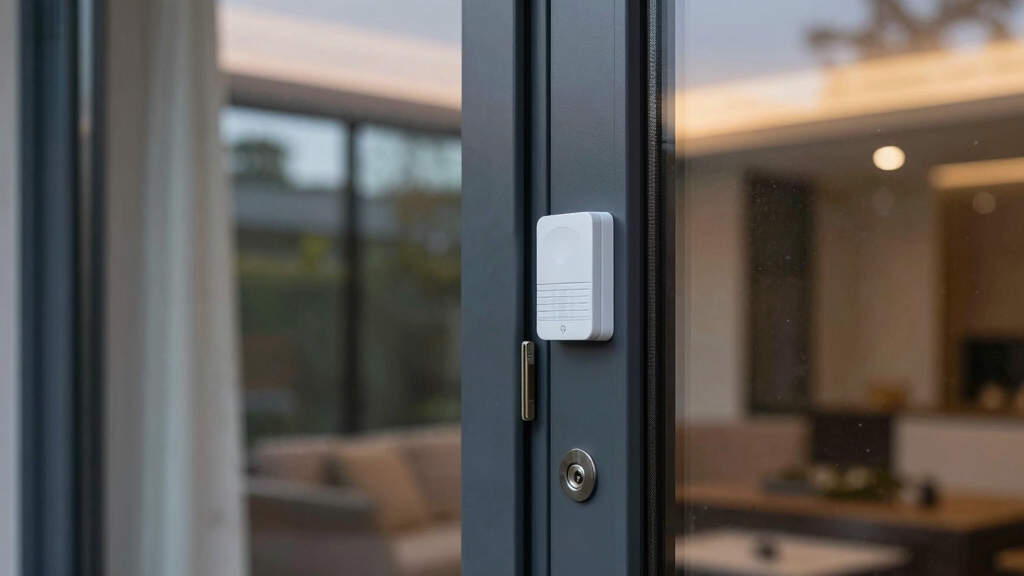
When you integrate alarms and detection sensors into your patio sliding door, you create a multi-layered defense that promptly identifies intrusion attempts.
Start with magnetic/contact sensors mounted on the door and frame; these detect door openings and trigger instant alerts via smart hubs compatible with Zigbee, Z-Wave, or Wi-Fi.
Add acoustic glass-break and vibration sensors for impact detection, which identify forced entry attempts faster by sensing shattering glass or prying vibrations.
Incorporate anti-lift tamper sensors near rollers or the door top to detect panel removal attempts, sending immediate notifications. Complement electronic detection with mechanical anti-lift pins.
Finally, install integrated alarm units or local sirens that produce high-decibel alerts to deter intruders. Test all sensors post-installation and configure entry delays and tamper zones to minimize false alarms and guarantee reliable monitoring.
Enhance Outdoor Lighting and Surveillance
Properly designed outdoor lighting and surveillance greatly improve the security of your patio sliding door by deterring intruders and enhancing visibility for monitoring systems.
To optimize protection, focus on three critical aspects:
- Strategic Placement: Install motion-activated floodlights and spotlights above and around sliding doors. Illuminate walkways and patio perimeters to eliminate concealment zones.
- Lighting Technology: Utilize LED fixtures with motion sensors and photocell technology for energy-efficient, automatic activation during low light. This conserves power while maintaining consistent coverage.
- Surveillance Integration: Pair well-lit areas with security cameras and motion-triggered alerts. This assures clear video capture and immediate notification of suspicious activity.
Implementing these measures enhances deterrence, improves monitoring accuracy, and guarantees energy-efficient operation. This establishes a robust defense for your patio sliding door.
Optimize Landscaping and Visual Deterrents
By strategically selecting and placing plants and hardscape elements around your patio sliding door, you create effective physical and visual barriers that deter intruders without compromising aesthetics or door functionality.
Plant thorny shrubs like holly or barberry 3-4 feet from the door to impede access. Position dense hedges and fast-growing evergreens to block visibility and prevent ladder placement.
Maintain medium-height bushes and prune tree branches 6-8 feet high to eliminate climbing points. Use gravel mulch under plants to detect footsteps.
Incorporate tall ornamental grasses, bamboo screens, or vertical garden panels to obscure sightlines. Border the patio with raised planters containing thorny succulents and place boulders weighing 50-100 pounds to resist movement.
Regularly trim shrubs to 3 feet, remove deadwood, and refresh mulch to sustain barrier effectiveness.
Frequently Asked Questions
Can Sliding Door Security Measures Affect Emergency Exit Accessibility?
Yes, sliding door security measures can affect emergency exit accessibility.
If you install bars, locks, or screens that require tools or complex actions to disengage, you risk blocking rapid egress during emergencies.
You should choose quick-release mechanisms or single-motion locks to comply with safety codes and maintain unobstructed exits.
Prioritize solutions that balance security and fire-safety requirements to avoid legal and insurance complications while ensuring swift evacuation.
How Often Should Sliding Door Locks Be Professionally Inspected or Serviced?
You should have sliding door locks professionally inspected and serviced at least once a year to guarantee peak security and functionality.
In high-traffic or harsh environments, increase the frequency to every six months.
Regular professional checks help detect wear, misalignment, or mechanical failure early.
Technicians will assess lock integrity, lubricate moving parts, and verify that safety features operate correctly.
This prevents costly repairs and maintains compliance with safety standards.
Are Pet Doors Compatible With Enhanced Sliding Door Security Features?
Imagine your patio door as a fortress, yet welcoming your pet through a smart gateway. Yes, pet doors can sync with enhanced sliding door security features.
Systems like Wayzn use encrypted access and act as security bars, while Security Boss inserts brace doors against forced entry.
You’ll find pet doors with locking mechanisms and alarm integrations that maintain security without sacrificing convenience. This ensures both your home and pet stay protected seamlessly.
What Maintenance Is Required for Security Films on Sliding Door Glass?
You should clean security films monthly with mild detergent and water, using a soft cloth or squeegee. Avoid ammonia and abrasives.
Inspect edges for bubbles, lifting, or damage, documenting changes for warranty purposes. Prevent moisture intrusion and prolonged heat exposure to preserve adhesive integrity.
Address minor edge lifts by re-squeegeeing; larger issues need professional repair. Keep humidity controlled and avoid sharp impacts.
Annual adhesion checks guarantee continued security performance and compliance.
Can Smart Home Systems Remotely Control Sliding Door Locks?
You can definitely keep your sliding door’s security at your fingertips with smart home systems.
By using Wi-Fi, Bluetooth, or hub-based locks designed specifically for sliding doors, you gain remote locking capabilities through apps or home hubs.
These systems blend convenience with robust protocols, but remember to balance connectivity with strong authentication and fallback manual options to guarantee reliable, secure control without exposing yourself to network vulnerabilities or device failures.
Turn Your Patio Door from Easy Target to Secure Barrier
You might think a simple lock is enough to secure your patio sliding door, but thieves don’t share that opinion. By upgrading to multipoint locks, reinforcing glass, and integrating sensors, you turn a vulnerable entry into a fortress.
Ignoring these steps leaves you relying on hope, and hope isn’t a security strategy. Take control with proven measures, because when it comes to protecting your home, complacency is the easiest way to invite trouble.