
If your septic tank backs up, immediately stop all water use to reduce strain. Next, clean the effluent filter located at the outlet pipe by removing solids buildup.
Check and clear clogged inlet or outlet pipes using a drain snake or hydro-jetting, avoiding harsh chemicals. Schedule professional pumping every 1–3 years to remove sludge before it accumulates.
Also, inspect for root intrusion or drain field issues that may cause blockages. Taking these steps now can save costly repairs and keep your system functioning properly.
Key Takeaways
- Stop all water use immediately to reduce system strain and prevent further backup inside the home.
- Inspect and clear any blockages in inlet pipes using a drain snake or hydro-jetting, avoiding harsh chemicals.
- Clean the effluent filter located at the tank’s outlet every 6–12 months to prevent solids from clogging the drain field.
- Schedule septic tank pumping every 1 to 3 years before solids exceed 30–50% of tank capacity.
- Call a septic professional for persistent backups, root intrusion, or drain field failures requiring specialized repairs.
How to Spot a Septic Tank Backup Early?
You can often spot a septic tank backup early by paying close attention to subtle signs in your plumbing system and yard.
Check for slow drains or gurgling sounds in toilets and sinks, which indicate wastewater isn’t flowing properly.
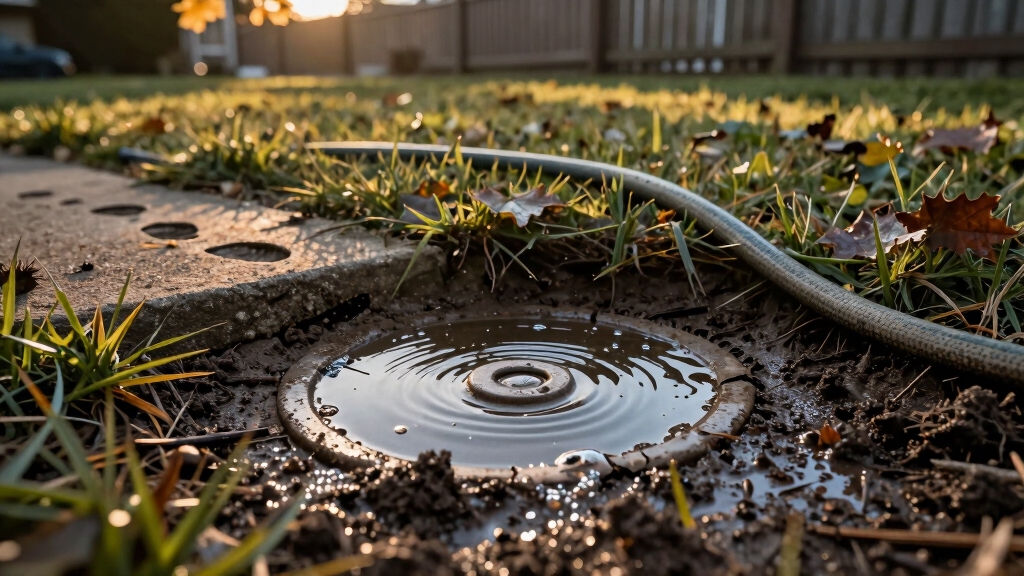
Look for wet, soggy patches or unpleasant odors near your septic tank or drain field; these are signs of effluent surfacing due to blockages or drain field failure.
Inspect plumbing cleanouts and access points for resistance when opening, which may signal solids buildup.
Also, be alert to backups during heavy water use, a clue that your system is overloaded or clogged.
Recognizing these technical indicators early allows you to act before damage worsens, ensuring effective septic maintenance and preventing costly repairs.
Using yard indicators and visual signs can help you locate the septic tank and assess potential problem areas early on.
Stop Using Water Right Away to Prevent Damage
At the first sign of a septic backup, cut off all water usage immediately to prevent further strain on the system and reduce the risk of solids entering and clogging the plumbing.
Continuing water flow can overwhelm the tank and push solids into pipes, worsening blockages. To minimize damage, follow these critical steps:
Stop running appliances like dishwashers, washing machines, and showers to avoid excess inflow. Avoid flushing toilets or drains, as this adds pressure and can force sewage into your home.
Shut off the main water supply if possible, ensuring no accidental water use occurs.
Proper septic tank maintenance and timely inspections are essential to prevent backups and extend system lifespan, as recommended every 3 to 5 years for most tanks inspection frequency.
Clean Your Septic Tank’s Effluent Filter
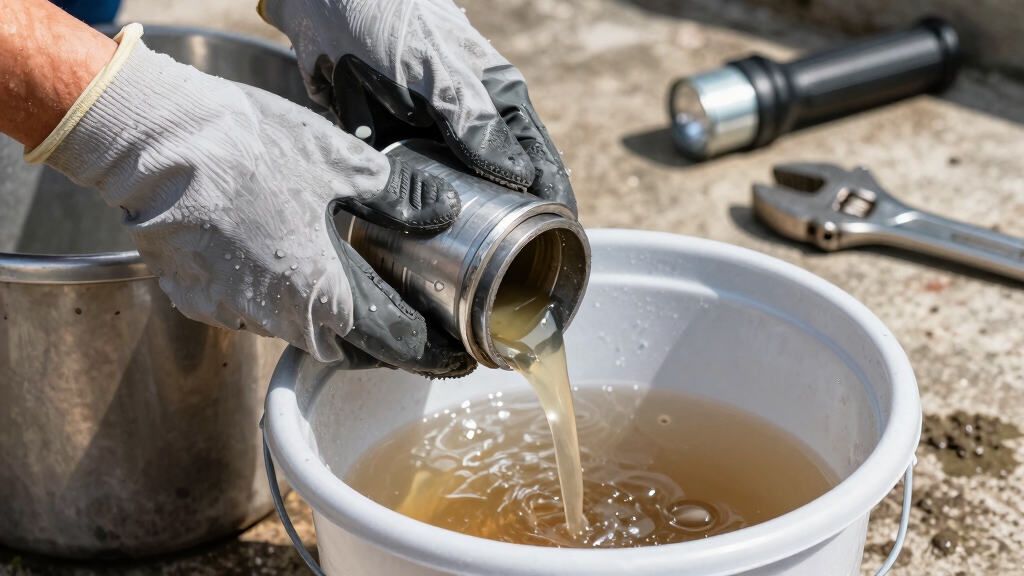
Hey there! So, let’s talk about your septic tank’s effluent filter. You’ll find it hanging out at the outlet pipe inside your tank. Its job? To catch any solids that might sneak through before the wastewater makes its way to the drain field.
Now, when it comes to cleaning this filter, it’s pretty straightforward. First things first, go ahead and turn off your water. Then, carefully pop open the access port. Once you have that open, you can remove the filter. Give it a good rinse with a hose to wash off any gunk that’s built up over time.
Oh, and here’s a handy tip: try to do this cleaning every 6 to 12 months. Keeping up with it will help prevent clogging and keep your entire system running smoothly. Trust me, your septic system will thank you!
Regular maintenance like this is crucial since routine maintenance practices can significantly extend the life and efficiency of your entire septic and pump system.
Effluent Filter Location
The effluent filter, typically located at the outlet pipe of the septic tank, plays a critical role in preventing solids from entering the drain field. You’ll find it inside the tank’s outlet baffle or tee, designed to trap suspended solids while allowing clear effluent to flow out. Knowing its exact location helps you access it for inspection and maintenance.
When locating the effluent filter, keep these points in mind: It’s positioned just before the wastewater exits the tank, usually at the outlet pipe’s end. The filter is housed in a protective casing or screen that can be lifted for cleaning. Access is typically through a riser or manhole cover above the outlet tee, providing direct reach without tank excavation.
Proper identification of the filter’s location guarantees timely upkeep and prevents backups. Regular cleaning of the effluent filter every 3–5 years during tank pumping is essential to prevent drainfield clogging and maintain system performance.
Cleaning Procedure Steps
Since effluent filters trap solids that could clog your drain field, cleaning them regularly is essential to maintain system function.
Begin by locating the filter access lid, usually near the septic tank outlet. Carefully remove the cover, taking care to avoid disturbing tank sludge.
Use a garden hose to rinse the filter, removing accumulated solids and debris. For stubborn buildup, gently scrub the filter with a soft brush.
Inspect the filter for damage or cracks and replace if necessary. After cleaning, securely reinstall the filter and cover to prevent leaks or odors.
Always wear protective gloves and eye protection during this process. Avoid flushing harsh chemicals afterward, as they can disrupt bacterial action.
Regular and thorough cleaning prevents backups and prolongs your septic system’s lifespan.
Consider that using washable and reusable filters can reduce waste and provide a sustainable alternative to single-use filters in your septic system maintenance.
Maintenance Frequency Tips
Regularly cleaning your septic tank’s effluent filter is essential to prevent solids from clogging the drain field and causing system backups.
You should inspect and clean the filter every 6 to 12 months, depending on your household size and water usage. Neglecting this maintenance lets solids accumulate, restricting effluent flow and stressing the system.
Here’s how to keep on schedule:
Check the filter quarterly if you have a large family or use water heavily. Clean the filter during each septic tank pumping, usually every 1 to 3 years.
Increase inspection frequency if you notice slow drains or foul odors, signaling possible clogging.
Sticking to these intervals guarantees your septic system runs efficiently and reduces costly repairs.
Clear Clogged Pipes Between Your House and Tank
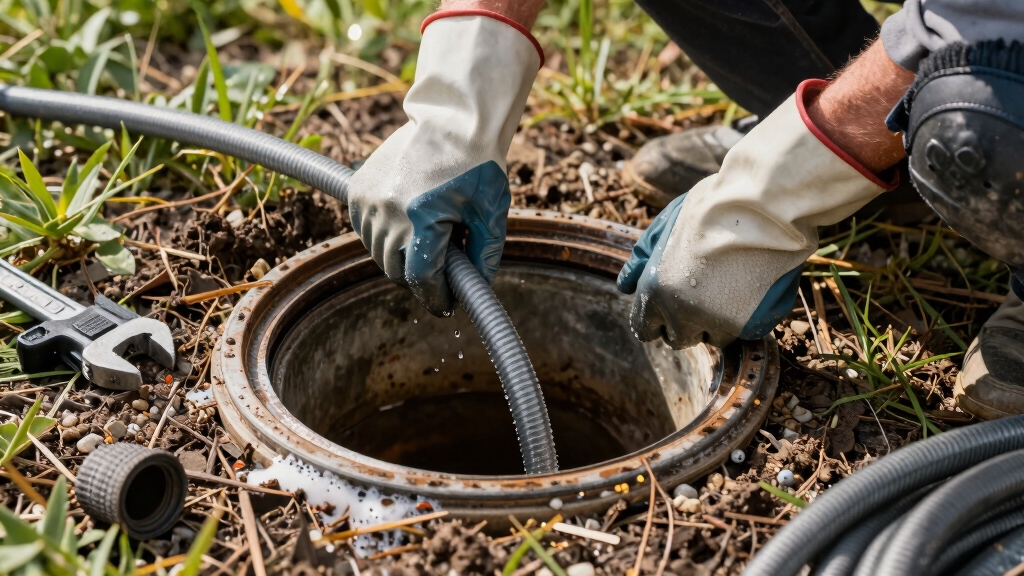
To clear clogged pipes between your house and tank, the first step is to check for any blockages.
Start by examining the slope of the inlet pipe and look for access points where solids might’ve built up or where roots could be intruding.
Once you’ve done that, you can use specialized drain snakes or high-pressure water jets to effectively clear any clogs.
Just be careful while using these tools to avoid damaging your pipes. If you find that the blockages are still there after trying these methods, it might be time to call in the professionals.
They can conduct a camera inspection to help locate and resolve any hidden obstructions that you mightn’t be able to see on your own.
Always remember to take immediate safety measures before attempting any repair work to prevent further damage or risk.
Identifying Pipe Blockages
Inspect the pipe connecting your house to the septic tank carefully, as blockages here are a common cause of backups.
Pay close attention to signs like slow draining fixtures or gurgling sounds, which often indicate an inlet pipe clog.
Use visual inspection where possible, checking for sagging pipe sections or roots intruding the line. Keep in mind these common blockage indicators:
- Pipe pitch irregularities causing wastewater pooling and debris buildup
- Accumulated solids from inadequate septic pumping or improper flushing
- Tree root penetration that can completely block flow
Confirming the blockage location early helps avoid misdiagnosis. Focus on the inlet pipe between your house and the septic tank before exploring other system parts to make certain targeted, effective repair.
Methods To Unclog Pipes
Once you’ve pinpointed a clog in the pipe between your house and septic tank, the next step involves applying targeted methods to clear the obstruction effectively.
Start by using a manual or motorized auger designed for sewer pipes to break up and extract compacted solids or root intrusions.
Avoid chemical drain cleaners, as they can harm the septic system’s bacterial balance.
If roots cause the clog, a root saw attachment can cut through them.
For minor blockages, a high-pressure water jet (hydro-jetting) can flush debris efficiently.
Always inspect the pipe’s pitch and condition during clearing to prevent recurring blockages.
If you’re unable to remove the clog fully, consult a septic professional promptly to avoid tank overflows or system damage.
When and How to Pump Your Septic Tank?
Regularly pumping your septic tank is essential to prevent solids buildup that can block wastewater flow and cause backups. You should pump your tank every 1 to 3 years, depending on household size and water usage.
Delaying pumping leads to sludge accumulation, which clogs inlet and outlet pipes and stresses the drain field. To pump your septic tank effectively:
Schedule pumping before solids exceed 30-50% of tank capacity to maintain system balance. Hire a licensed professional with the right equipment to completely remove sludge and scum layers. Inspect the tank during pumping for structural damage or abnormal sludge levels.
Following this routine minimizes backups and extends your septic system’s lifespan by ensuring optimal-quality solids removal and flow continuity.
How Tree Roots Cause Septic Backup Blockages?
While pumping your septic tank helps prevent solids buildup, another common cause of backup blockages involves tree roots infiltrating your system. Tree roots naturally seek moisture and nutrients, making your underground pipes and tank an attractive target.
They can penetrate small cracks or joints, expanding inside pipes and obstructing wastewater flow. This intrusion often begins in inlet pipes, where roots exploit weak points, causing partial or complete blockages.
If roots invade the septic tank itself, they complicate maintenance and can damage the tank structure. To address this, you’ll need to schedule professional root removal, which may involve mechanical cutting or chemical treatments.
Prevent future invasions by removing nearby trees or installing root barriers. Regular inspections help detect root intrusion early, minimizing costly repairs and preventing septic backups.
Signs of a Failing Septic Drain Field and How to Fix It
Frequently, homeowners overlook early signs that their septic drain field is failing, which can lead to costly damage and system failure.
You should watch for persistent pooling water, foul odors near the drain field, and unusually lush vegetation growth caused by untreated effluent surfacing.
These indicators reveal that your drain field isn’t absorbing wastewater properly due to soil saturation or pipe damage. To fix a failing drain field, consider:
- Reducing water usage immediately to prevent overload.
- Inspecting and repairing damaged pipes or clogged inlet/outlet connections.
- Consulting a septic professional to evaluate and restore or replace the drain field, especially if soil compaction or root intrusion is involved.
Prompt action preserves your system’s function and avoids expensive replacements.
Prevent Future Septic Tank Backups With Smart Water and Waste Habits
Consistently managing your water and waste habits plays a critical role in preventing septic tank backups.
You should spread out water usage, especially laundry loads, to avoid overloading the system.
Fix leaks promptly to reduce unnecessary water entering the tank.
Avoid flushing non-biodegradable items or using garbage disposals, as they increase solids accumulation.
Use water-saving appliances to limit inflow volume.
Regularly clean the effluent filter to prevent clogs that hinder effluent flow.
Divert surface and groundwater away from your tank and drain field to prevent saturation and soil compaction.
Additionally, maintaining proper ventilation around your septic system components helps prevent issues related to gas buildup and system malfunction.
When to Call a Professional Septic Service for Help?
If you notice persistent slow drains, foul odors, or sewage backups despite your efforts to manage water use and clear minor clogs, it’s time to call a professional septic service.
These symptoms often indicate deeper issues such as clogged inlet or outlet pipes, a failing drain field, or root intrusion. Professionals have the tools to diagnose and address these problems efficiently.
Call a septic expert when you encounter repeated backups after pumping or minor repairs. Look for signs of drain field saturation or soil compaction.
Also, seek help if you have difficulty locating or clearing blockages in pipes or filters. Prompt professional intervention prevents costly damage, restores proper flow, and guarantees your system’s longevity.
Frequently Asked Questions
How Do Harsh Chemicals Affect My Septic System’s Bacteria?
Harsh chemicals kill the beneficial bacteria in your septic system that break down solids and maintain balance.
When these bacteria die, solids accumulate faster, leading to clogs and system failure.
You’ll notice slower drainage and potential backups. Avoid using strong bleach, drain cleaners, or antibacterial products excessively.
Instead, use septic-safe cleaners to protect bacterial populations and guarantee your system effectively treats wastewater.
This will prevent costly repairs and maintain proper function.
Can Heavy Vehicles Damage My Septic Drain Field?
Yes, heavy vehicles can seriously damage your septic drain field.
Their weight compacts the soil, reducing its porosity and preventing proper wastewater absorption.
This soil compaction disrupts the natural filtration process, leading to system failure.
To protect your drain field, avoid driving or parking heavy machinery over it.
If unavoidable, reinforce the area with gravel or install protective mats designed to distribute weight evenly and minimize soil compression.
What Non-Biodegradable Items Should Never Be Flushed?
Imagine your septic system as a delicate filter.
Flushing non-biodegradable items like wipes, feminine products, paper towels, plastics, and dental floss clogs this filter, just like a sieve clogged with sticky debris.
These materials don’t break down, causing blockages and backups.
Stick to toilet paper only, and avoid anything synthetic or bulky.
This practice protects your pipes, prevents costly repairs, and maintains efficient wastewater flow throughout your septic system.
How Often Should Effluent Filters Be Cleaned?
You should clean effluent filters at least once a year to prevent clogs and backups.
If your household uses the septic system heavily or you notice slow drainage, check and clean the filter every six months.
Regular cleaning stops solids from reaching the drain field, preserving its function.
Always turn off water usage before removing the filter, then rinse it thoroughly with a hose to remove accumulated debris.
What Role Does Soil Compaction Play in Septic Failures?
Think of soil compaction as squeezing a sponge until it can’t absorb water.
When soil around your septic system gets compacted, it loses its ability to soak up wastewater properly.
This creates a bottleneck, causing backups and failures in your drain field.
Heavy machinery or frequent foot traffic often cause this.
To prevent septic failure, you should avoid compressing the soil and make certain proper drainage to keep the system functioning efficiently.
Act Fast: Protect Your Home Before Septic Trouble Escalates
If your septic tank backs up, acting quickly can save you costly repairs. Imagine Sarah, who ignored early signs and faced sewage flooding her basement. By spotting backups early, stopping water use, and cleaning filters promptly, you can avoid this nightmare.
Regular pumping and root control keep systems flowing smoothly. Remember, if problems persist, calling a professional secures thorough diagnostics and repair, protecting your home’s health and your peace of mind.