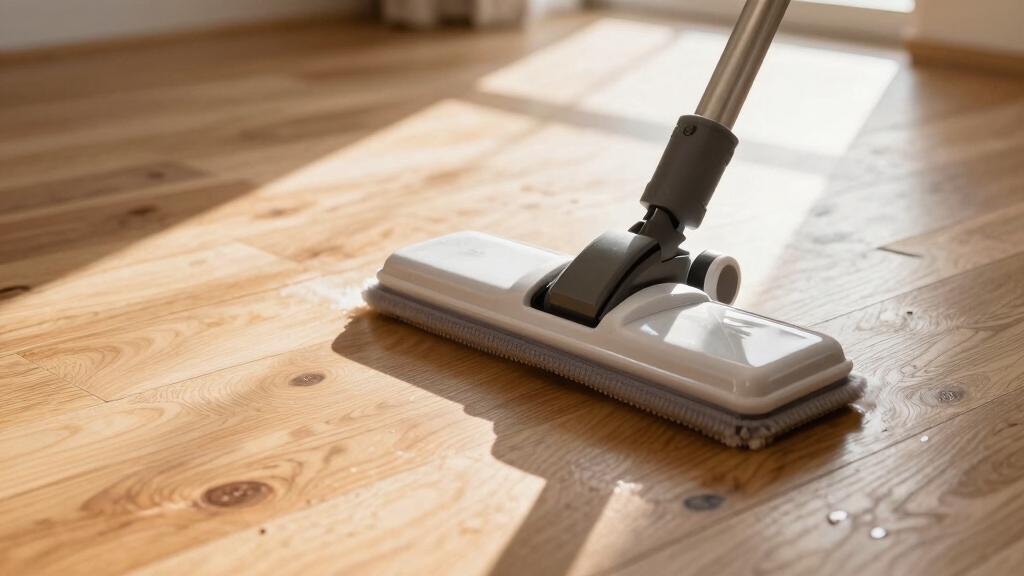

You can use a steam mop on sealed hardwood floors, but only with extreme caution. Excess moisture and heat can penetrate seals, causing warping, finish damage, and voided warranties.
Make certain your floor’s seal is intact, use the lowest steam setting, and attach a thick microfiber pad to absorb moisture. Keep the mop moving steadily to avoid damage. Unsealed or laminate floors should be avoided altogether.
Understanding these precautions will help protect your wood floors and maintain their quality over time.
Key Takeaways
- Steam mops can damage wood floors by causing warping, finish stripping, and structural issues due to excess moisture and heat.
- Only use steam mops on sealed hardwood floors with intact coatings to prevent steam penetration and wood damage.
- Always attach a thick microfiber cloth and use the lowest steam setting to minimize moisture exposure on wood floors.
- Avoid steam mopping unsealed or recently waxed wood floors, as it can soften wax and void manufacturer warranties.
- Safer cleaning alternatives include damp mopping, specialized hardwood cleaners, and dry microfiber dusting to protect wood floors.
Is It Safe to Use a Steam Mop on Wood Floors?
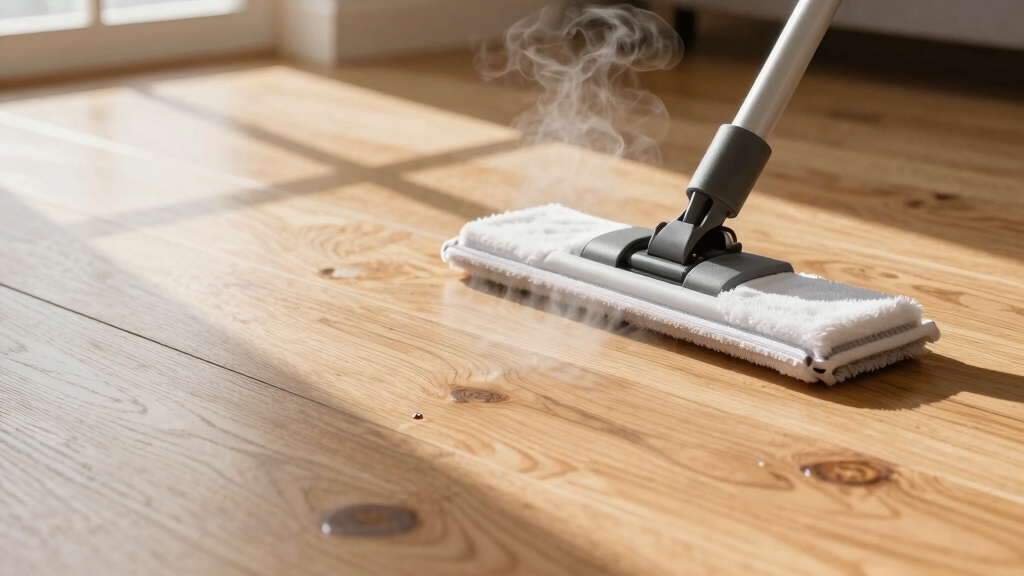
Although steam mops offer chemical-free sanitation, you should exercise caution when using them on wood floors. Excess moisture and heat can penetrate sealed surfaces and cause warping, buckling, and finish damage.
Use steam mops cautiously on wood floors to avoid moisture damage and protect the finish.
You must verify the condition of the wood’s sealer before considering steam cleaning, as unsealed wood prohibits use entirely. Steam’s microscopic water vapor can seep into cracks beneath the sealer more readily than liquid water, increasing risk.
Using the lowest steam setting paired with a thick microfiber cloth to trap moisture reduces exposure but doesn’t eliminate it. Vacuuming debris beforehand prevents steam from pushing dirt deeper into grooves.
Manufacturer guidelines often void warranties if steam mops are applied to hardwood or laminate floors. Consequently, you should approach steam mopping wood floors with stringent precautions and confirm compatibility beforehand.
What Are the Risks of Steam Mopping Wood Floors?
When you use a steam mop on wood floors, the primary risk stems from excess moisture penetrating the wood fibers. This can cause warping, buckling, and irreversible structural damage.
Steam’s high temperature and moisture easily infiltrate cracks beneath sealers, accelerating deterioration and potentially stripping finishes. Wood’s porous nature absorbs this moisture, promoting swelling and rot over time.
Additionally, rapid temperature shifts from steam exposure disrupt wood’s cellular structure, leading to deformation. Manufacturers explicitly void warranties for hardwood floors exposed to steam mopping, emphasizing the damage potential.
Experts caution that steam not only risks physical damage but also pushes dirt deeper into wood grain, undermining cleaning effectiveness. Given these technical hazards, steam mopping wood floors demands careful consideration. Misuse results in costly, permanent harm to your flooring investment.
How to Prepare and Protect Wood Floors Before Steam Mopping?
Understanding the risks of steam mopping wood floors highlights the need for meticulous preparation and protection before use.
First, verify your floor’s sealer is intact and fully cured; unsealed or damaged surfaces must never be steamed.
Thoroughly vacuum to remove dust and grit that steam can embed deeper into wood grooves.
Attach a thick microfiber cloth to the mop head to insulate the floor from direct moisture and heat.
Avoid steaming recently waxed floors, as wax softens under heat], leading to finish damage.
Use the lowest steam setting and keep the mop moving steadily to prevent moisture accumulation.
Finally, make certain room temperature is stable to reduce thermal shock risks.
These steps minimize moisture penetration and protect your wood flooring’s structural integrity.
Additionally, just as light behavior impacts visibility through peepholes, understanding how moisture and heat interact with surfaces can help prevent damage when steam mopping.
Best Practices for Steam Mopping Sealed Hardwood Floors
Carefully following best practices guarantees you can safely steam mop sealed hardwood floors without compromising their finish or structure. Always verify your floor’s seal integrity, use the lowest steam setting, and attach a thick microfiber pad to minimize moisture exposure.
Move the mop steadily to avoid heat buildup and never let steam dwell on one area.
| Step | Action | Purpose |
|---|---|---|
| Verify seal | Inspect floor coating | Prevents steam penetration |
| Set steam level | Use lowest setting | Limits moisture and heat damage |
| Use microfiber pad | Attach thick cloth to mop head | Absorbs excess moisture |
| Mop technique | Move steadily, avoid hovering | Prevents warping and finish damage |
Proper moisture management is essential to maintain indoor air quality and prevent damage related to excess humidity.
Safer Alternatives to Steam Mopping for Wood and Laminate Floors
Choose safer cleaning methods to protect your wood and laminate floors from moisture and heat damage associated with steam mopping.
Instead of steam, opt for a damp mop or microfiber cloth with minimal water to prevent warping and delamination. Use specialized hardwood floor cleaners designed to preserve finishes and avoid stripping sealants.
For routine maintenance, a dry microfiber cloth efficiently removes dust without moisture risk. Laminate floors require especially cautious care; avoid steam entirely to maintain warranty coverage and structural integrity.
When cleaning, vacuum first to eliminate abrasive debris, and never apply excessive water or harsh chemicals. These alternatives minimize heat and moisture exposure, safeguarding your floors’ longevity and appearance while ensuring compliance with manufacturer guidelines and expert recommendations against steam use.
Proper surface preparation and compatibility considerations are just as important in cleaning materials as they are in painting PVC, ensuring long-term durability and protection from damage such as moisture exposure.
Frequently Asked Questions
How Often Can I Steam Mop Sealed Hardwood Floors Safely?
You can safely steam mop sealed hardwood floors infrequently, ideally no more than once every two weeks. Using dry steam with less than 5% moisture content and the lowest steam setting minimizes risk.
Always vacuum first, attach a thick microfiber cloth, and avoid lingering on one spot. Overuse increases moisture exposure, risking warping or finish damage.
For routine cleaning, stick to dry mopping or specialized hardwood cleaners to preserve your floor’s integrity.
Does Steam Mopping Remove Allergens From Wood Floors?
You know what they say: “The proof is in the pudding.” Steam mopping can remove allergens from wood floors by sanitizing surfaces with heat, killing dust mites and bacteria.
However, excessive moisture risks wood damage and pushes dirt into grooves. To minimize harm, use low steam, a thick microfiber cloth, and vacuum first.
While effective allergen reduction is achievable, balance cleaning benefits against potential structural risks for wood floors.
Can Steam Mops Be Used on Engineered Wood Flooring?
You shouldn’t use a steam mop on engineered wood flooring unless the manufacturer explicitly approves it.
Steam penetrates seams and cracks beneath the surface, risking warping, delamination, and voiding warranties.
If you do steam, make certain the floor is sealed perfectly and use the lowest steam setting with a microfiber pad to minimize moisture.
However, damp mopping with specialized cleaners remains the safest method to preserve engineered wood’s integrity and finish.
What Are the Best Steam Mop Brands for Hardwood Floors?
If you insist on steam mopping sealed hardwood, brands like Bissell, Shark, and PurSteam offer models with adjustable steam settings and microfiber pads that minimize moisture.
Look for units featuring low steam output (under 5% water content) and quick temperature control to reduce damage risk. Always verify your floor’s sealer condition before use.
How Long Should Wood Floors Dry After Steam Mopping?
Think of drying time like a slow sunset—it takes patience. After steam mopping, wood floors typically need 30 minutes to 2 hours to dry completely, depending on humidity and ventilation.
You’ll want to make sure no moisture seeps in, as prolonged dampness can warp wood fibers.
Use fans or open windows to speed evaporation, but avoid direct sunlight or heat, which can cause cracking. Always monitor dryness before placing furniture back.
Think Before You Steam: Protecting Hardwood the Right Way
You might think steam mopping wood floors is a miracle cleaner, but it’s actually a risky endeavor that can cause irreversible damage if not done correctly. Always make certain your floors are properly sealed and follow precise preparation steps to avoid warping or discoloration.
If you want to preserve your hardwood’s integrity, consider safer alternatives like microfiber mops or specialized cleaners. Protecting your investment means choosing methods that respect the delicate nature of wood.