
To stop a fire, you need to remove one of its essentials: heat, oxygen, fuel, or the chemical reaction fueling it. You can cool flames by applying water or turning off heat sources. Smother them with a fire blanket or CO2 extinguisher to cut off oxygen.
Starve the fire by removing flammable materials or shutting off gas supplies. Chemical agents like dry powder disrupt the fire’s chain reaction. Knowing these methods helps you act quickly and effectively in emergencies.
Key Takeaways
- Remove heat by cooling the fire with water or turning off heat sources to lower temperature below ignition point.
- Cut off oxygen supply by smothering with fire blankets, foam, CO2, or lids to suffocate flames.
- Eliminate fuel by shutting off gas, clearing combustibles, or creating firebreaks to prevent fire spread.
- Interrupt the chemical chain reaction using dry chemical, halon, or halogenated agents to halt combustion.
- Always aim extinguisher nozzles at the fire base to maximize effectiveness in extinguishing flames.
What Fires Need to Start and Keep Burning?
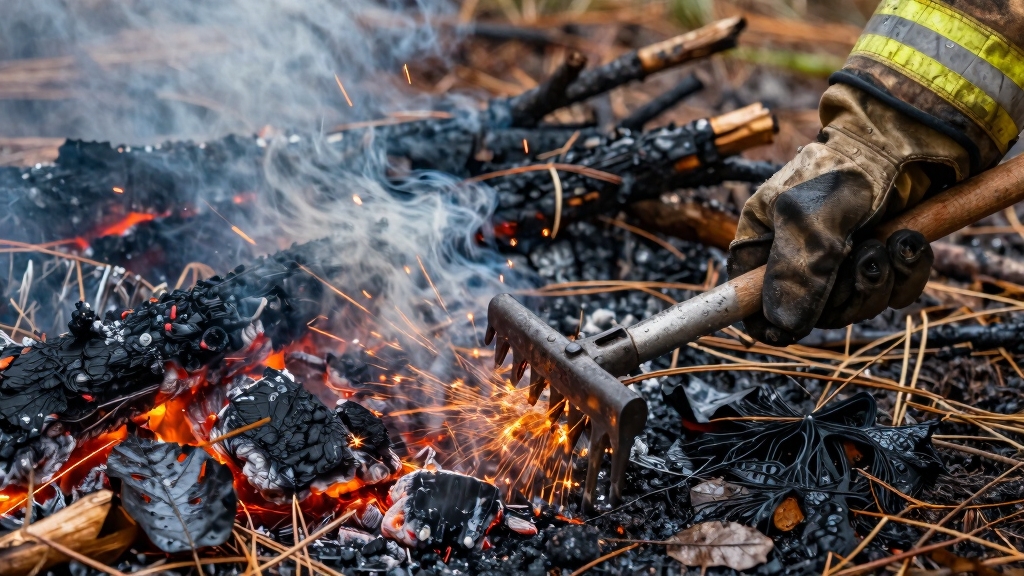
Although it might seem straightforward, understanding what fires need to start and keep burning is essential for effective fire control.
Fire requires three key elements: oxygen, fuel, and heat. Without any one of these, combustion can’t continue.
Oxygen, fuel, and heat form the essential trio for fire; remove one, and the flame dies.
Oxygen supports the chemical reactions, fuel provides the material to burn, and heat raises the fuel to its ignition temperature.
You can stop a fire by removing or interrupting any of these components. Additionally, the combustion process relies on a self-sustaining chain reaction. Interrupting this chemical chain also halts the fire.
Knowing these basics helps you anticipate how to respond quickly and choose the right method to extinguish a fire safely and efficiently.
Mastering this foundation is the first step toward effective fire prevention and control. One effective way to interrupt the fire’s chemical chain is by using dry chemical powders that scavenge free radicals essential for combustion.
How Cooling Removes Heat to Put Out Fires?
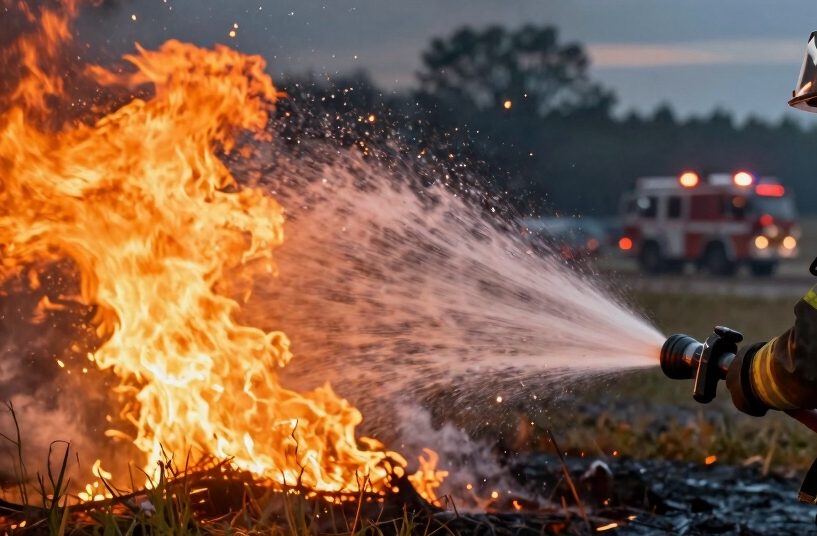
Cooling frequently plays a vital role in extinguishing fires by removing the heat that keeps fuel at its ignition temperature.
When you apply water or a cooling agent, it absorbs heat from burning materials, lowering their temperature below what’s needed to sustain combustion.
This stops the fire from spreading and eventually puts it out.
For ordinary combustibles like wood or paper, water is your best tool because it efficiently reduces temperature and prevents re-ignition.
You can also use water mist sprays for sensitive areas where you want to minimize damage.
Additionally, cutting off heat sources, such as turning off a stove, helps cool the environment and halts fire growth.
Removing heat disrupts the fire triangle, making cooling a vital and effective fire suppression method.
When using a fire extinguisher for cooling, remember to aim the nozzle low at the fire’s base to effectively target the heat source.
How Smothering Cuts Off Oxygen to Stop Fires?
When you smother a fire, you cut off its oxygen supply, effectively suffocating the flames. Without oxygen, combustion can’t continue, so the fire dies out quickly.
You can use fire blankets to create an airtight seal over small fires, such as pan fires, preventing oxygen from feeding the flames. Foam blankets work well on flammable liquid fires by covering the surface and blocking air.
For electrical or liquid fires, CO2 extinguishers displace oxygen without leaving residue, making cleanup easier. In everyday scenarios, simply placing a wet blanket or lid over trash or skillet fires can stop oxygen flow and extinguish the fire safely.
Always act swiftly to smother the fire before it spreads, ensuring you don’t disturb the cover once applied.
Regular maintenance and cleaning fire alarms can help ensure early detection and prevent false alarms while protecting your home.
How Starving Removes Fuel to Extinguish Fires?
Smothering cuts off oxygen to stop fires, but removing the fuel source is another effective way to put flames out.
When you starve a fire, you deny it the material it needs to burn. For example, shut off the gas supply immediately during a Class C fire to prevent new fuel from feeding the flames.
In outdoor settings like wildfires, creating firebreaks by clearing vegetation stops the fire’s progress. Always eliminate unburnt materials around the fire, which removes potential fuel.
Quick action is key. You have to anticipate where the fire might spread and cut off fuel sources before it grows.
Just as reducing water usage prevents system overload in septic tanks, limiting fuel availability is crucial to controlling fire spread, highlighting the importance of early intervention in emergencies.
How Chemical Agents Interrupt Fire’s Chain Reaction?
Although you can remove heat, fuel, or oxygen to stop a fire, chemical agents work differently by disrupting the combustion chain reaction itself.
They target free radicals that sustain the fire, halting the process without needing to cool, smother, or starve the flames. This method is especially effective on various fire classes.
| Chemical Agent | Mechanism |
|---|---|
| Dry Chemical (ABC) | Bonds with free radicals |
| Halons | Prevent radical continuation |
| Halogenated Agents | Interrupt chain reaction |
| Dry Powder | Interferes with chemical reaction |
| CO2 | Displaces oxygen, supports chemical inhibition |
Use chemical agents when traditional methods aren’t feasible, ensuring rapid and effective fire suppression. Understanding the detection of fires, such as through photoelectric smoke detection, can improve early response and safety measures.
Frequently Asked Questions
What Safety Precautions Should I Take Before Attempting to Extinguish a Fire?
Before you try to extinguish a fire, make sure you have a clear escape route and never let the fire block your exit.
Assess if the fire is small and contained; if not, evacuate immediately.
Use the correct extinguisher type for the fire class.
Avoid inhaling smoke, and always stay low to reduce exposure.
Wear protective gear if possible, and remember the PASS technique for effective extinguisher use. Safety is your top priority.
How Do I Choose the Right Fire Extinguisher for Different Fire Types?
You choose the right extinguisher by matching it to the fire class.
Use water or water mist for Class A fires like wood or paper.
For flammable liquids (Class B), foam or CO2 extinguishers work best.
Electrical fires (Class C) need CO2 or dry chemical extinguishers.
For metal fires, use dry powder only.
Always check the extinguisher label and never use water on grease or electrical fires to avoid danger.
When Is It Safer to Evacuate Rather Than Fight a Fire?
You should evacuate rather than fight a fire if it’s spreading quickly, producing heavy smoke, or you don’t have the proper extinguisher.
Also, if you feel unsure or unsafe, leave immediately.
Fires that are too large, involve hazardous materials, or block your exit routes require evacuation.
Always prioritize your safety. Don’t take risks trying to control a fire beyond your capacity.
Call emergency services as soon as you’re safe.
How Often Should Fire Extinguishers Be Inspected and Maintained?
You should inspect fire extinguishers monthly to check for damage, pressure, and accessibility.
Make sure the pin is intact and the nozzle is clear.
Maintenance by a professional technician should happen annually to guarantee proper function and refill or replace agents if needed.
Regular inspections and maintenance keep extinguishers reliable when you need them, so don’t skip these steps.
Stay proactive to protect yourself and others effectively.
What Are the Common Mistakes to Avoid When Using a Fire Extinguisher?
Don’t panic or waste time; act quickly and confidently.
Avoid aiming at the flames’ top; always target the base.
Don’t forget the PASS technique: Pull, Aim, Squeeze, Sweep.
Don’t use an extinguisher on large or spreading fires; evacuate instead.
Never turn your back; stay alert for re-ignition.
Avoid using the wrong extinguisher type; know your fire class.
Finally, don’t ignore safety; keep a clear exit path at all times.
Empowered to Act: Fire Safety Starts With You
Now that you know fires need heat, oxygen, and fuel to keep burning, you can act confidently to stop them.
Did you know that nearly 70% of home fires are extinguished before firefighters arrive, often because someone used cooling, smothering, starving, or chemical methods effectively?
By applying these strategies quickly, you can protect your home and loved ones. Remember, understanding how fires work gives you the power to put them out safely and efficiently.