
You can’t rely on a carbon monoxide detector to detect natural gas because it’s specifically calibrated for carbon monoxide’s unique chemical signature.
CO detectors use electrochemical sensors that respond only to CO molecules, not methane, the main component of natural gas.
This requires catalytic or infrared sensors. Using just a CO detector leaves you vulnerable to undetected gas leaks and explosion risks.
Understanding why separate or combination detectors are necessary will help you guarantee thorough safety for your home.
Key Takeaways
- Carbon monoxide detectors are calibrated specifically to detect CO molecules, not methane or other natural gas components.
- Natural gas primarily consists of methane, which has a different molecular structure that does not trigger CO sensors.
- CO detectors use electrochemical sensors that react only with carbon monoxide, leaving natural gas leaks undetected.
- Detecting natural gas requires specialized sensors like catalytic bead or infrared sensors designed for hydrocarbons.
- Relying solely on a CO detector leaves a home vulnerable to undetected natural gas leaks and explosion risks.
Why CO Detectors Can’t Detect Natural Gas?
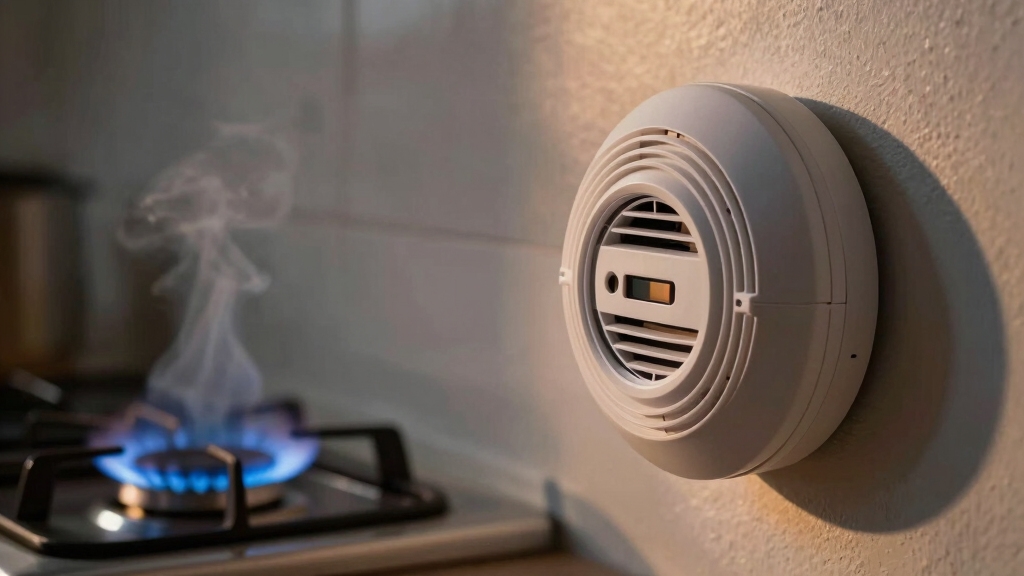
Although carbon monoxide detectors are essential for identifying toxic CO levels, they can’t detect natural gas because their sensors are specifically calibrated for carbon monoxide’s chemical properties.
Carbon monoxide detectors are vital but cannot sense natural gas due to their specific sensor calibration.
Carbon monoxide detectors rely on electrochemical sensors that react only with CO molecules, generating an electrical signal proportional to CO concentration.
Natural gas, primarily methane, has a different molecular structure and doesn’t trigger these sensors.
To detect natural gas, you need devices equipped with catalytic or infrared sensors designed to identify methane’s presence accurately.
Using a CO detector alone leaves you vulnerable to undetected natural gas leaks, which present explosive hazards.
Consequently, it’s critical to install separate detection systems tailored to each gas, ensuring thorough monitoring and enhancing your home’s safety against both toxic exposure and combustible gas risks.
For optimal protection, ensure installation of detectors follows recommended placement guidelines to detect hazardous gases early and effectively.
How Carbon Monoxide and Natural Gas Differ Chemically?
Understanding why carbon monoxide detectors can’t sense natural gas requires examining the chemical distinctions between the two gases.
Carbon monoxide (CO) is a colorless, odorless gas composed of one carbon atom bonded to one oxygen atom.
In contrast, natural gas primarily consists of methane (CH4), a hydrocarbon with one carbon atom bonded to four hydrogen atoms.
These fundamental compositional differences affect their physical and chemical properties, such as flammability and toxicity.
CO detectors use sensors calibrated specifically to detect the molecular signature of carbon monoxide, making them unresponsive to methane molecules.
Since natural gas lacks the oxygen atom present in carbon monoxide, its detection requires sensors designed to identify hydrocarbons, not CO.
Consequently, understanding these chemical differences is critical for selecting appropriate detection technology to guarantee safety.
Because carbon monoxide is produced by incomplete combustion in fuel-burning appliances, CO detectors focus solely on detecting this gas rather than natural gas leaks, which require separate gas leak detectors.
Specialized Sensors for Natural Gas Detection
When it comes to detecting natural gas, it’s crucial to use sensors that are specifically designed for methane. You can’t rely on carbon monoxide detectors for this purpose. They just don’t do the job!
So, what technologies are out there? Well, you’ve got catalytic sensors and infrared sensors. These guys work by measuring chemical reactions or by absorbing light at very specific wavelengths to identify methane. Pretty neat, right?
Understanding how these specialized detection methods work is super important. Why? Because it ensures that you get accurate and timely alerts in your safety system. After all, safety first!
For continuous safety, installing gas leak detectors that provide electronic monitoring and audible alarms is recommended to catch leaks early and reliably.
Sensor Technology Differences
Since natural gas and carbon monoxide have fundamentally different chemical properties, their detection relies on specialized sensor technologies tailored to each gas.
Carbon monoxide detectors use electrochemical sensors calibrated specifically to measure CO concentrations, reacting only to this toxic gas.
Conversely, natural gas detectors employ catalytic bead or infrared sensors designed to detect methane’s unique properties, such as combustion heat or infrared absorption at specific wavelengths.
These sensors continuously monitor methane levels to alert you before concentrations reach dangerous thresholds.
You shouldn’t expect a carbon monoxide detector to identify natural gas leaks because its sensor won’t respond to methane’s distinct chemical signature.
Understanding these sensor technology differences is vital for ensuring you install the appropriate detector for each gas, maintaining all-around safety in your home environment.
Regular maintenance and ensuring adequate ventilation for combustion appliances help prevent CO buildup and improve overall gas safety combustion appliances.
Methane Detection Methods
Building on the differences in sensor technologies, methane detection relies on specialized methods tailored to identify natural gas leaks accurately.
You’ll find catalytic (Pellistor) sensors measure temperature variations between heated beads to detect methane presence, while infrared (NDIR) sensors absorb light at specific wavelengths unique to natural gas.
Advanced Micro-Electromechanical System (MEMS) sensors offer faster, more precise readings and reduce false alarms caused by household chemicals.
These detectors continuously monitor methane concentrations, alerting you before reaching explosive thresholds.
Unlike carbon monoxide sensors, methane detectors are calibrated explicitly for natural gas’s chemical properties.
To guarantee safety, rely on these dedicated sensors rather than standard CO detectors.
Proper installation and maintenance of methane detection devices provide critical early warnings, preventing potential fire or explosion hazards associated with natural gas leaks.
For comprehensive leak detection, combine sensor use with soap bubble testing to visually confirm the presence of escaping gas at joints and fittings.
Why Separate Detectors Are Essential for CO and Natural Gas Safety?
Because carbon monoxide and natural gas possess distinct chemical properties and hazards, you’ll need separate detectors to guarantee effective monitoring.
Carbon monoxide detection relies on electrochemical sensors calibrated exclusively for CO molecules, whereas natural gas detection requires catalytic or infrared sensors tailored to identify methane concentrations.
CO detectors use electrochemical sensors; natural gas detectors need catalytic or infrared sensors for methane detection.
Using a single detector type risks missing critical gas presence, as sensor technologies don’t cross-detect these chemically different gases.
Carbon monoxide poses toxic risks, while natural gas presents explosive hazards; both demand specialized, independent detection systems.
Installing separate detectors secures all-around safety by continuously monitoring each gas with precision.
Relying on one detector type compromises your home’s protection, leaving you vulnerable to undetected leaks and potentially catastrophic consequences.
Prioritize separate detection units for reliable, accurate hazard identification.
Regular maintenance and inspection of fuel-burning appliances are essential to prevent carbon monoxide leaks and ensure detector effectiveness.
How Combination Detectors Protect Against Both Gases?
Combination detectors are pretty impressive because they combine two different sensor technologies to accurately identify both carbon monoxide and natural gas. Each sensor is specially calibrated for its specific gas, which means you get reliable detection without any interference.
Plus, if you’re thinking about installation, going with a combination detector makes things a lot easier. It simplifies the whole process while still giving you comprehensive safety monitoring. So, it’s a win-win!
Regular maintenance, including monthly testing and cleaning of sensors, ensures the detector’s reliability and longevity.
Dual Gas Detection Technology
Combining advanced sensor technologies, dual gas detectors provide simultaneous monitoring of carbon monoxide and natural gas hazards in a single unit.
These devices integrate electrochemical sensors calibrated specifically for carbon monoxide with catalytic or infrared sensors designed to detect methane and other combustible gases.
By employing separate sensing elements within one housing, the detector maintains precise measurement capabilities tailored to each gas’s unique chemical signature.
This guarantees accurate, reliable alerts while minimizing false alarms.
You’ll find that microprocessor controls continuously analyze sensor data, enabling prompt detection of dangerous concentrations before risks escalate.
However, dual detectors require careful placement and regular maintenance to function optimally.
Using this technology, you enhance safety by addressing both toxic and explosive gas threats with a consolidated, yet technically rigorous, detection solution.
For optimal performance, it is essential that the wiring and power supply conform to low voltage wire standards to ensure safety and reliability in installation.
Benefits Of Combination Units
When you opt for a combination detector, you bring together the capabilities of two specialized sensors within a single device. This ensures simultaneous and accurate detection of both carbon monoxide and natural gas.
This integration provides all-encompassing monitoring, reducing installation complexity and cost while maintaining distinct sensor calibration for each gas.
Combination units leverage catalytic or infrared sensors for methane detection alongside electrochemical sensors for carbon monoxide, providing rapid alerts to protect your home effectively.
| Feature | Benefit |
|---|---|
| Dual Sensor System | Detects CO and natural gas simultaneously |
| Cost Efficiency | One device replaces two separate detectors |
| Space Saving | Reduces clutter and simplifies installation |
| Enhanced Safety | Minimizes risk by monitoring multiple hazards |
Many modern combination detectors include battery backup to ensure continuous operation during power outages, enhancing safety and compliance with building codes.
Choosing combination detectors strengthens your defense against both toxic and flammable gases with precision and reliability.
Critical Dangers of Undetected Natural Gas Leaks
Because natural gas is highly flammable and odorless in its pure form, undetected leaks pose an immediate risk of fire or explosion in your home.
Methane, the primary component of natural gas, can accumulate silently and reach explosive concentrations without warning. Even minor leaks can create hazardous environments, increasing the likelihood of catastrophic events.
Additionally, prolonged exposure to natural gas displaces oxygen, potentially causing asphyxiation. Since carbon monoxide detectors lack sensors for methane, they won’t alert you to these dangers.
You must install specialized natural gas detectors calibrated to monitor methane concentration levels continuously. Ignoring this need leaves you vulnerable to invisible threats that could jeopardize your safety and property.
Vigilant monitoring through appropriate detection systems is essential for preventing severe accidents linked to natural gas leaks.
Proper ventilation and annual inspections of gas appliances are critical to minimizing the risk of dangerous gas buildup and ensuring safe operation.
Features to Look For in Effective Carbon Monoxide and Natural Gas Detectors
Although carbon monoxide and natural gas detectors serve distinct purposes, choosing units with reliable features is essential for safeguarding your home effectively.
You should look for detectors with advanced sensor technology, such as MEMS for natural gas and electrochemical sensors for carbon monoxide, to guarantee accuracy and reduce false alarms.
Continuous real-time monitoring with backlit digital displays helps you track gas levels precisely. Battery backup is critical to maintain functionality during power outages.
Additionally, end-of-service life warnings prevent prolonged use of ineffective sensors.
If you prefer a streamlined approach, consider combination detectors designed to simultaneously detect methane, propane, and carbon monoxide.
Prioritize models with microprocessor intelligence to analyze readings carefully, minimizing false alerts. These features collectively offer all-encompassing protection against both toxic and explosive gas hazards.
Frequently Asked Questions
How Often Should Carbon Monoxide and Natural Gas Detectors Be Replaced?
You should replace carbon monoxide and natural gas detectors approximately every 7 years.
Over time, sensor accuracy diminishes, increasing the risk of undetected leaks. Pay attention to end-of-service life warnings on your units.
Regular replacement guarantees reliable detection and safety. If your detector shows frequent false alarms or malfunctions, replace it immediately.
Maintaining up-to-date detectors is critical for your home’s all-encompassing protection against toxic and explosive gases.
Can Natural Gas Detectors Operate Without Electricity During Power Outages?
Think of your natural gas detector as a vigilant night watchman. Many models come equipped with internal batteries, allowing them to stay alert even when the power goes out.
So yes, you can expect natural gas detectors with battery backup to keep monitoring during outages. However, detectors relying solely on mains electricity will cease functioning without power.
Always check your device’s specifications and guarantee battery backup is in place for continuous safety.
Where Is the Best Location to Install Natural Gas Detectors in a Home?
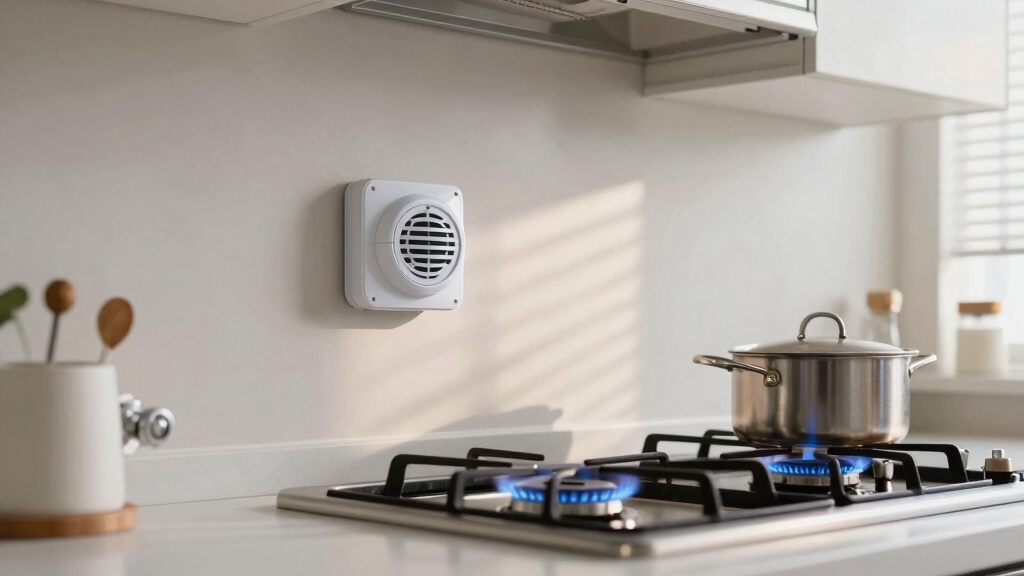
You should install natural gas detectors near potential leak sources, like kitchens, utility rooms, or near gas appliances.
Place them about 5 feet above the floor since natural gas is lighter than air and rises.
Avoid corners or enclosed spaces that restrict airflow.
Installing detectors in well-ventilated areas guarantees accurate readings.
Follow manufacturer guidelines precisely to optimize sensor performance and maintain consistent, reliable monitoring for early leak detection.
Are Natural Gas Detectors Affected by Household Cleaning Chemicals?
Natural gas detectors can be affected by household cleaning chemicals, but modern units with MEMS sensor technology reduce false alarms caused by such substances.
You should use detectors with microprocessor intelligence that analyze readings carefully, minimizing interference from common chemicals.
Still, avoid placing detectors near areas where sprays or vapors are frequently present to guarantee accurate detection.
Regular maintenance and following manufacturer guidelines help keep your detector reliable and responsive.
What Maintenance Is Required to Keep Gas Detectors Functioning Accurately?
You should regularly test your gas detectors using the built-in test button to make certain proper operation.
Replace batteries annually or as indicated by low-battery alerts.
Clean sensors gently with a dry cloth to avoid dust buildup, but never use cleaning chemicals that could damage sensors.
Follow manufacturer guidelines for end-of-life replacement, typically every 5-7 years, to maintain accuracy.
Avoid placing detectors near vents or humidity sources that could cause false readings.
Right Detector, Right Protection: Don’t Confuse the Two
You shouldn’t rely on a carbon monoxide detector to spot natural gas. It’s like expecting a smoke alarm to catch a water leak.
Each gas demands its own specialized sensor because their chemical natures differ fundamentally. To keep your home truly safe, invest in detectors designed specifically for CO and natural gas, or combination models that cover both.
Remember, early detection is your best defense against invisible threats lurking in the air you breathe.