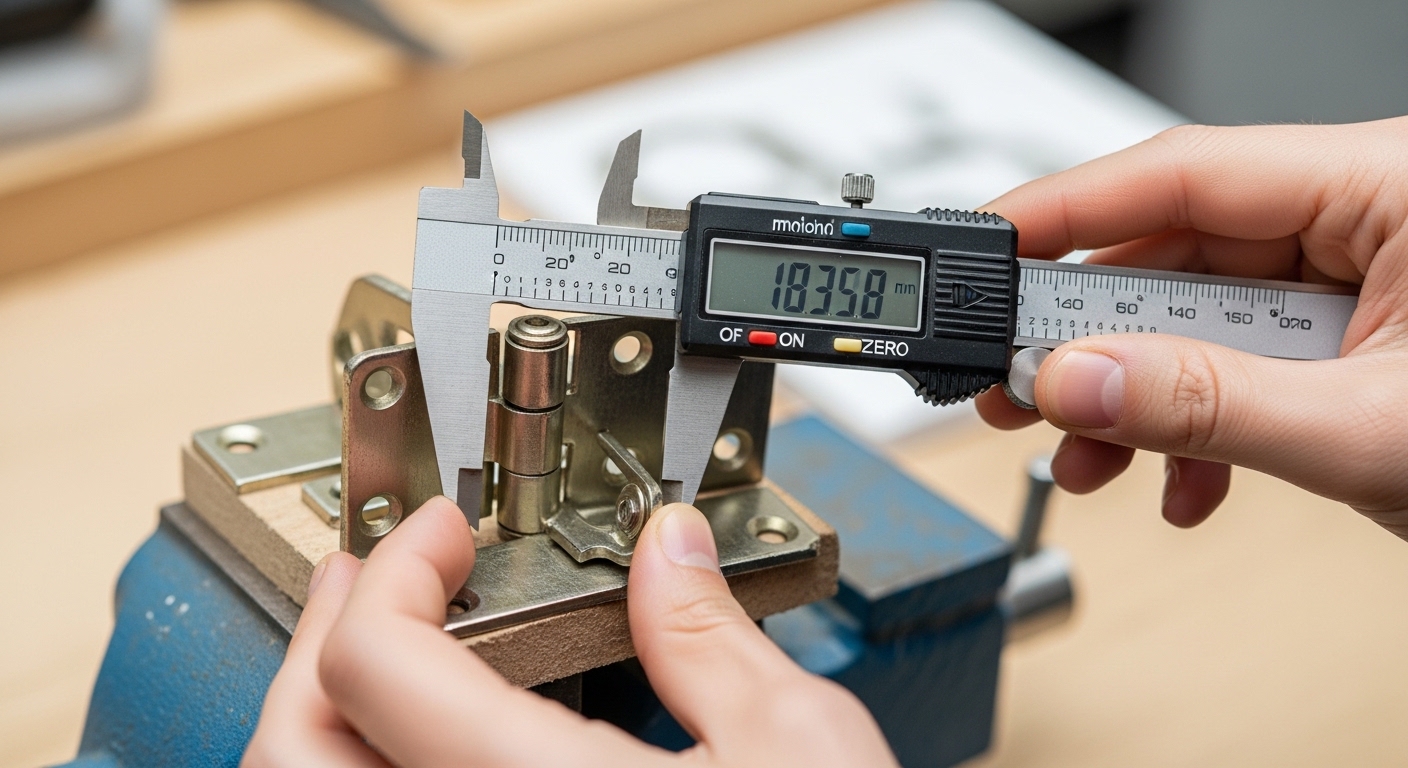

To measure a door hinge, first remove it from the door and frame. Then lay it flat on a solid surface.
Measure the hinge height from top to bottom, width at the widest point when closed, and thickness of the leaf.
Use a caliper for precision and measure the screw hole spacing between centers.
Don’t forget to check the corner radius, as it affects fit. Understanding these basics helps you pick the right hinge size and quantity for your door’s weight and dimensions.
Key Takeaways
- Remove the hinge from the door and frame, then lay it flat on a level surface for accurate measurement.
- Measure the hinge height from the top to bottom, including the hinge pin.
- Measure the width across the widest point of the closed hinge leaf.
- Use a caliper to measure the thickness of the hinge leaf for proper fit and support.
- Measure the distance between screw hole centers on both leaves to ensure replacement compatibility.
Remove and Lay Flat Your Door Hinge for Measurement
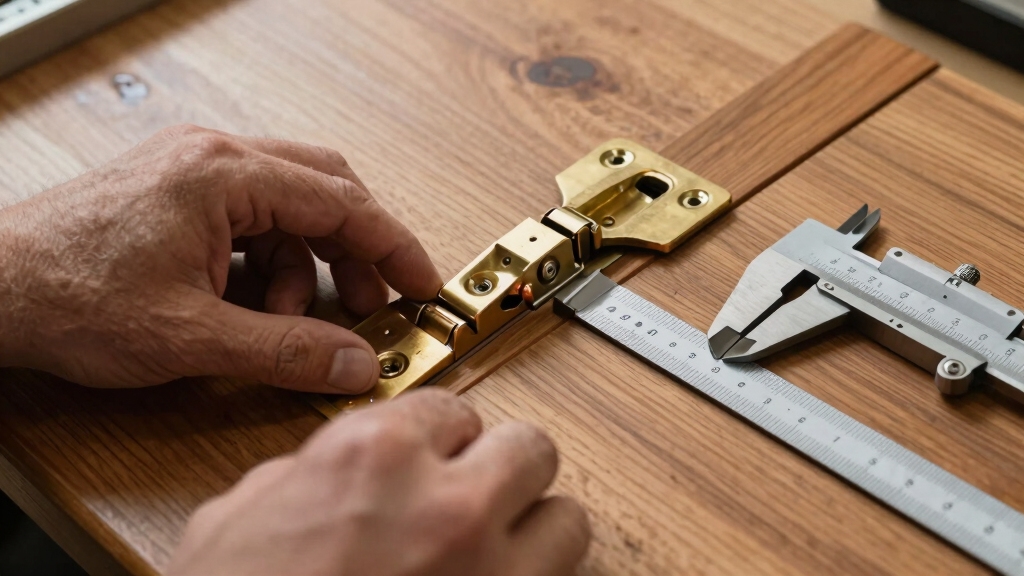
To accurately measure your door hinge, start by removing it from the door and laying it flat on a stable surface.
Use a screwdriver or drill to carefully unscrew the hinge leaves from both the door edge and the door frame. Keep all screws organized to avoid loss.
Once detached, fully open the hinge and place it leaf-side down on a level, solid workspace. Make certain the hinge pin is secure so it doesn’t shift during measurement.
Laying the hinge flat eliminates inaccuracies caused by curvature or door positioning. This setup allows you to use precise tools like calipers or a tape measure to assess dimensions accurately.
Avoid measuring the hinge while it’s still mounted, as it can distort the true size due to door alignment or hinge tension.
Proper preparation and tool selection, similar to those recommended for accurate placement marking, ensure precise and reliable measurements.
Measure Hinge Height, Width, Thickness, and Screw Hole Spacing
When measuring your hinge, focus first on its height, width, thickness, and screw hole spacing to guarantee an accurate match for replacement or installation.
Start by measuring the height from the top to the bottom of the hinge leaf, including the pin.
Begin by measuring the hinge height from its top edge down to the bottom, including the pin.
Next, measure the width at the widest point of the closed leaf.
Then, use a caliper to check the leaf thickness, as this affects door support and mortising depth.
Finally, measure the screw hole spacing precisely between centers on both leaves to confirm proper alignment with the door and frame.
Height typically ranges from 3″ to 6″ depending on door weight.
Width varies between 1.5″ and 3″ on standard hinges.
Screw hole spacing usually falls between 1.5″ and 2.5″ for ideal fit.
To ensure proper function and avoid binding, always check that the door frame is level and plumb before finalizing hinge measurements.
Identify Hinge Corner Radius for Accurate Replacement
After measuring the hinge height, width, thickness, and screw hole spacing, turn your attention to the corner radius of the hinge leaves.
The corner radius determines how the hinge fits into the door and frame mortises, affecting alignment and aesthetics. Measure the radius by placing a radius gauge or comparing to a template.
Common corner radii include ¼″ (dime radius) and ⅝″ (nickel radius).
| Corner Radius | Description | Common Name |
|---|---|---|
| 0.25 inches | Small, tight curve | Dime Radius |
| 0.625 inches | Larger, rounded | Nickel Radius |
| Custom | Varies by hinge | Specialty |
Accurately identifying this radius ensures your replacement hinge matches the door’s mortise, preventing fit issues. Properly aligned hinges contribute significantly to the structural integrity and security of reinforced doors.
Match Door Hinge Size to Your Door’s Dimensions and Weight
Select hinge sizes based on your door’s thickness, width, and weight to ensure proper support and smooth operation.
Matching the hinge size to your door prevents sagging and guarantees durability. Consider these parameters when choosing hinges:
Doors 1⅜″ thick and up to 32″ wide typically require 3.5″ hinges, while widths up to 36″ use 4″ hinges.
Heavier doors, like 1¾″ thick or fire-rated steel doors, need 4.5″ to 5″ hinges to accommodate weight and stress.
For larger or commercial doors with closers, select ball bearing hinges sized 5″ x 5″ or 6″ x 5″ for enhanced load-bearing capacity.
Properly sized hinges align with door dimensions and weight for ideal function and longevity.
Regular maintenance and inspection of door components, including hinges and closers, are essential to ensure compliance with safety codes and prevent operational issues.
How Many Hinges Does Your Door Need?
Matching hinge size to your door’s thickness and weight guarantees proper support, but determining the correct number of hinges is equally important for stability and function.
Generally, install one hinge per 30 inches of door height or fraction thereof. For doors up to 60 inches tall, use two hinges; between 60 and 90 inches, three hinges; 90 to 120 inches, four hinges; and above 120 inches, five or more hinges are necessary, especially for heavy commercial doors.
This secures even weight distribution, prevents sagging, and maintains smooth operation. If your door is heavier or wider, consider adding extra hinges beyond minimum requirements to bolster durability.
Always verify hinge placement aligns with the door and frame mortises for proper fit and performance. Proper maintenance and periodic inspection, similar to replacing a damaged door peephole, help ensure long-term door functionality and security.
Frequently Asked Questions
Can I Reuse Old Hinge Screws When Replacing Door Hinges?
You can reuse old hinge screws if they’re in good condition—straight, undamaged, and free of stripped threads.
However, screws often wear out or lose grip, especially if they’ve been removed multiple times.
For secure, long-lasting installation, it’s best to use new screws that match the original size and type.
This guarantees proper alignment and prevents future loosening or damage to the door and frame.
What Tools Are Best for Removing Painted-Over Hinges?
You might worry painted-over hinges will be impossible to remove, but you’ve got the right tools to simplify the task.
Use a utility knife to carefully score around the hinge edges, preventing paint from binding it.
Then, grab a flathead screwdriver or a small pry bar to gently lift the hinge leaves.
For stubborn screws, an impact driver or penetrating oil can ease removal without stripping.
Patience and precision make this manageable.
How Do I Lubricate Door Hinges to Stop Squeaking?
To lubricate door hinges and stop squeaking, first clean the hinge with a cloth to remove dirt.
Apply a lubricant like silicone spray, WD-40, or white lithium grease directly onto the hinge pin and moving parts.
Open and close the door several times to work the lubricant in. Wipe off excess to prevent drips.
Avoid heavy oils that attract dust; use products designed for metal hinges for lasting results.
Are There Special Hinges for Soundproof or Fire-Rated Doors?
Yes, you’ll find special hinges designed for soundproof and fire-rated doors.
Fire-rated hinges are typically 4.5″ x 4.5″, made from steel or other fire-resistant materials, ensuring safety compliance.
For soundproof doors, heavier, ball-bearing hinges with tight tolerances reduce vibration and noise transmission.
Always match hinge size and material to your door specs and check certification standards to maintain fire or soundproof ratings during installation.
Can I Install Door Hinges Without Mortising the Door Frame?
Imagine you’re updating a closet door and want a quick fix.
Yes, you can install door hinges without mortising, especially with surface-mounted or wrap-around hinges designed to sit on the frame.
These eliminate the need for chiseling. However, for standard butt hinges, mortising guarantees flush alignment and smooth operation.
Skipping mortising may cause gaps or misalignment, so choose hinge types suitable for no-mortise installation to maintain door function and aesthetics.
One Last Reminder: Accuracy Makes the Door Feel Brand New
Measuring a door hinge might seem straightforward, but overlooking details like corner radius or screw hole spacing can lead to improper fitting.
While a quick glance might suggest any hinge will do, precision guarantees smooth operation and durability. By carefully matching hinge dimensions to your door’s size and weight, you avoid costly mistakes.
Remember, the difference between a perfectly functioning door and a stubborn one often lies in your measurement accuracy.