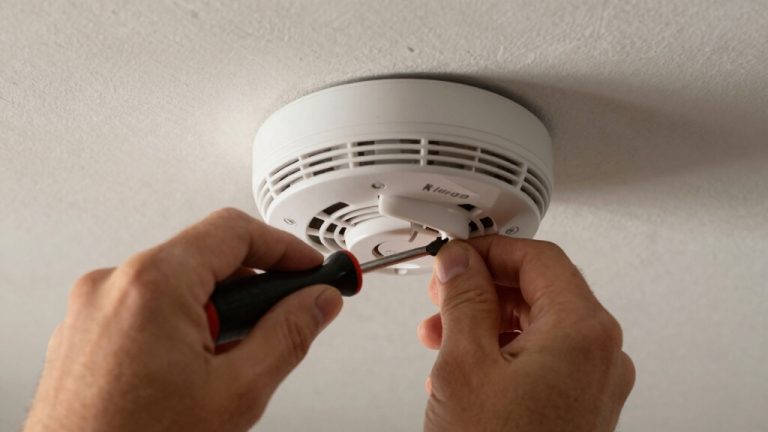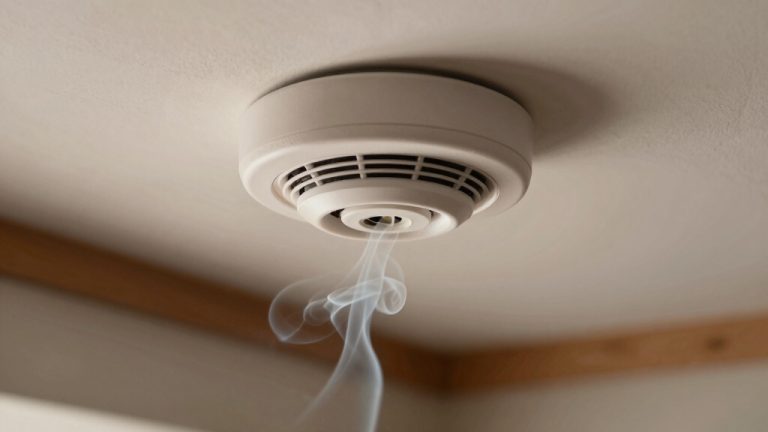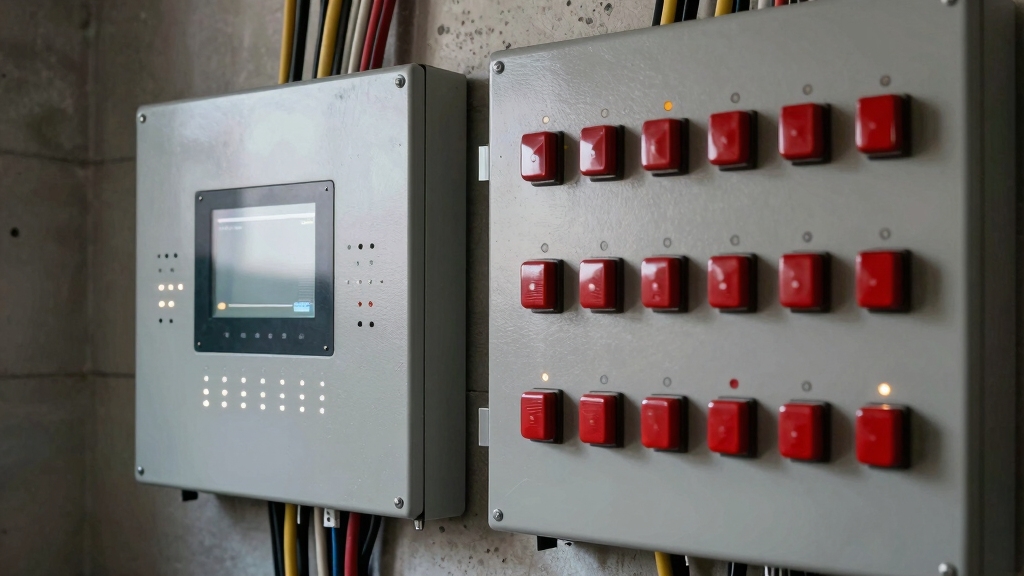

You’ll find addressable fire alarm systems assign a unique digital ID to each device, enabling precise fire location and faster response.
Conventional systems group devices into zones, providing only general areas.
Addressable setups use digital loops for detailed device monitoring and diagnostics, reducing false alarms and maintenance costs.
Conventional systems are simpler and cost-effective for small spaces but less scalable.
If you’re managing a larger or complex building, understanding these differences helps optimize safety and cost efficiency more clearly.
Key Takeaways
- Addressable systems assign unique digital addresses to each device, enabling precise alarm location, unlike conventional systems that only identify general zones.
- Conventional systems use simpler analog zone wiring, making them cost-effective for small buildings, while addressable systems use loop wiring suited for larger, complex facilities.
- Addressable fire alarms reduce false alarms by up to 40%, lowering maintenance costs and minimizing unnecessary emergency responses compared to conventional systems.
- Addressable systems provide device-level fault monitoring and diagnostics, facilitating quicker maintenance and troubleshooting over conventional systems requiring manual checks.
- Conventional systems suit small, simple layouts under 5,000 sq ft with lower upfront costs; addressable systems scale better for large buildings needing rapid, targeted emergency response.
How Addressable And Conventional Fire Alarm Systems Differ?
Although both addressable and conventional fire alarm systems serve to detect and alert occupants to fire hazards, they differ fundamentally in how they identify and communicate the location of an alarm.
Conventional systems operate by dividing a building into zones, signaling only the general area of activation. You’ll need to manually search within that zone, which can delay response times.
In contrast, addressable systems assign each device a unique digital address, instantly pinpointing the exact source of the alarm on a control panel. This precise identification enables faster intervention and reduces potential damage.
Additionally, conventional systems rely on analog signaling and simpler wiring per zone. Addressable systems use digital binary communication over loop wiring, supporting intelligent device-level monitoring and diagnostics for improved system management.
Moreover, addressable systems can be integrated with central monitoring stations for automatic verification and emergency dispatch, enhancing safety especially in unoccupied properties.
Why Location Detection Matters In Fire Alarm Systems?
Understanding how fire alarm systems identify the location of an alarm highlights why precise location detection directly impacts emergency response effectiveness.
Conventional systems only signal a general zone, forcing responders to manually search for the source. This delays intervention and increases potential damage.
Traditional alarms alert broadly, causing delays as responders hunt for the exact fire location.
In contrast, addressable systems assign a unique address to each device, immediately pinpointing the exact alarm location. This precision enables you to target the emergency quickly, reducing response time and limiting loss.
Additionally, accurate location data supports efficient resource deployment and minimizes disruption to unaffected areas. Without precise detection, you risk slower reactions and broader damage.
Consequently, investing in systems with granular location identification directly enhances safety outcomes and operational efficiency during fire emergencies. Moreover, monitored addressable systems can automatically notify the fire department, reducing emergency response times by 7–10 minutes through automatic notification.
How Addressable Fire Alarm Systems Speed Emergency Response?
Addressable fire alarm systems cut down emergency response times by instantly pinpointing the exact device triggering the alarm. This eliminates the need for manual searches common in conventional setups.
When an alarm activates, you immediately see the precise location via a unique device address on the control panel, allowing targeted intervention. This specificity reduces confusion and accelerates firefighter deployment, vital in limiting damage and casualties.
Unlike conventional systems, which only identify broad zones and require physical verification, addressable systems leverage digital loop wiring and device-level communication. They continuously monitor and report status.
The result? You gain faster, data-driven decisions during emergencies, lowering maximum probable loss and enhancing safety. This precision transforms your emergency response from reactive to proactive, optimizing resource allocation and minimizing downtime.
Proper preparation and vigilance, including regular inspection and maintenance of safety systems, ensure that these advanced alarms function reliably when most needed.
Installation And Maintenance Cost Comparison Of Fire Alarm Systems
Faster emergency response through precise device identification also impacts the overall cost structure of fire alarm systems. While addressable systems demand higher initial investment, they offer lower installation and maintenance costs over time due to streamlined wiring and advanced diagnostics.
Precise device identification speeds emergency response and lowers long-term installation and maintenance costs despite higher upfront investment.
Consider these factors:
- Installation Complexity: Conventional systems require zone-based wiring, increasing labor and material costs for larger buildings. Addressable systems use loop wiring, reducing complexity and installation time.
- Maintenance Efficiency: Addressable systems provide device-level fault notifications, minimizing troubleshooting time and maintenance expenses. Conventional systems rely on manual checks, increasing labor costs.
- False Alarm Reduction: Addressable technology reduces false alarms by up to 40%, preventing costly disruptions and unnecessary emergency responses common in conventional setups.
In addition, understanding wiring defects such as broken wires or loose connections is crucial for maintaining system reliability and avoiding costly repairs over time.
Choosing Conventional Fire Alarm Systems For Small Buildings
When you choose a conventional fire alarm system for a small building, you’re really making a smart choice. It’s cost-effective and the installation is pretty straightforward, which is perfect for those limited spaces. Plus, the simplified setup means less labor and complexity. This makes it an ideal option for structures that are under 5,000 square feet.
Not only does this approach save you money, but it also guarantees reliable protection. You won’t have to worry about extra features that might be unnecessary for smaller layouts. It’s all about getting the essentials right! Additionally, ensuring your system includes a battery backup is crucial for continuous protection during power outages.
Cost-Effective Installation Benefits
Choosing a conventional fire alarm system can markedly cut down your initial installation expenses, especially for small buildings under 5,000 square feet.
You’ll benefit from lower hardware costs and straightforward system architecture, which streamline budget planning.
Here are three key cost-effective installation benefits:
- Reduced Equipment Costs: Conventional panels and detectors are less expensive, minimizing upfront capital outlay.
- Simplified Labor Requirements: Installation involves basic wiring and fewer components, which shortens labor time and reduces associated costs.
- Lower Programming Expenses: Conventional systems need minimal configuration, eliminating the need for specialized programming and saving you on technical labor fees.
Additionally, using low voltage wiring rated for 50 V AC or less ensures enhanced safety and compliance during installation in small-scale fire alarm systems.
Simplified Wiring And Setup
Beyond cost savings, conventional fire alarm systems simplify wiring and setup, making them particularly suitable for small buildings.
You’ll work with zone-based analog wiring, where each zone connects devices in parallel to a dedicated circuit. This approach reduces complexity by using fewer cables and straightforward mechanical monitoring.
Unlike addressable systems requiring loop wiring and digital communication protocols, conventional setups avoid intricate programming and device addressing. This means you can install and maintain the system with less specialized knowledge, speeding deployment.
However, the zone-level monitoring limits device-specific identification, which is acceptable in small layouts with minimal occupancy. By focusing on simplicity, you reduce installation errors and troubleshooting time, making conventional systems a practical choice when your priority is efficient, reliable basic coverage without the overhead of advanced configuration.
Additionally, integrating photoelectric smoke detectors with conventional systems can enhance early fire detection, especially for smoldering fires common in residential and small commercial buildings.
Ideal For Small Spaces
Although addressable fire alarm systems offer advanced features, conventional systems remain the best choice for small buildings due to their straightforward design and cost-effectiveness.
When you manage a small space, typically under 5,000 sq ft, conventional systems provide essential fire detection without unnecessary complexity.
You benefit from:
- Simplified Installation: Zone-based wiring reduces setup time and technical requirements.
- Cost Efficiency: Lower initial investment suits limited budgets while meeting safety codes.
- Ease of Maintenance: Basic mechanical monitoring allows quick troubleshooting without specialized tools.
Since conventional systems identify alarms by zone rather than exact devices, you accept longer response times but gain reliable baseline protection.
For small retail or residential properties with simple floor plans, this balance of functionality and affordability makes conventional alarms the best choice.
Regular inspections and maintenance ensure continued efficient operation and compliance with fire safety standards.
Key Benefits Of Addressable Systems In Large, Complex Facilities
When it comes to large, complex facilities, having a fire alarm system that can pinpoint the exact location of a device is crucial. You really want to minimize response time and reduce potential damage, right? That’s where addressable systems come into play. Unlike conventional zone-based alerts, these systems use unique device addresses to provide precise location identification.
And here’s another great thing: their digital architecture is designed for scalability. This means you can expand your system without needing a complete overhaul. As your facility grows, your fire alarm system can adapt right alongside it. How convenient is that? Additionally, incorporating manual activation options ensures quick and reliable emergency response.
Precise Location Identification
When a fire alarm sounds in a large, complex facility, you need to zero in on the exact source immediately. Unlike conventional systems that identify only a general zone, addressable fire alarm systems pinpoint the precise device triggering the alert. This capability markedly reduces response time and limits damage.
Here’s how addressable systems enhance location identification:
- Unique Device Addressing: Each detector has a digital address, enabling instant identification on the control panel.
- Targeted Response: You can dispatch personnel directly to the exact location, avoiding time-consuming manual searches.
- Reduced Loss Potential: By locating the source precisely, you limit fire spread and minimize property damage.
With addressable technology, you gain superior situational awareness essential for complex layouts and high-occupancy environments. Additionally, integrating acoustic sensors and vibration detection can complement addressable systems by providing rapid alerts for physical disturbances that may indicate fire or forced entry.
Enhanced System Scalability
Since building requirements often evolve, you’ll need a fire alarm system that scales without extensive rewiring or full replacement. Addressable systems excel here by using loop wiring and digital communication, allowing you to add or relocate devices easily.
Conventional systems rely on fixed zones and analog wiring, making expansion labor-intensive and costly.
| Feature | Addressable System |
|---|---|
| Wiring | Loop wiring supports device addition without rewiring |
| Device Identification | Unique addresses facilitate seamless integration |
| Scalability | Supports large, complex facility expansions without overhaul |
This scalability reduces downtime and installation costs. It enables you to adapt the system as building layouts change or occupancy increases, ensuring continuous protection and compliance with minimal disruption.
How False Alarms Impact Long-Term Costs And Your System Choice?
Although false alarms might seem like minor inconveniences, they substantially inflate the total cost of ownership (TCO) for fire alarm systems over time.
When choosing between addressable and conventional systems, consider how false alarms affect your budget and operational efficiency.
Conventional systems can incur costs of up to $5,115 per false alarm incident, appreciably increasing long-term expenses.
Addressable systems reduce false alarms by up to 40%, mitigating these costs.
Key impacts of false alarms include:
- Increased Maintenance and Service Calls: Frequent false alarms demand costly inspections and resets.
- Operational Disruptions: False alarms cause downtime, impacting productivity and safety protocols.
- Regulatory Fines and Liability: Repeated false alarms can lead to penalties and reputational damage.
Choosing an addressable system minimizes these risks and lowers your TCO.
Frequently Asked Questions
Can Addressable Systems Integrate With Smart Home Devices?
Yes, you can integrate addressable fire alarm systems with smart home devices.
These systems support digital communication protocols, allowing seamless connectivity with Building Management Systems (BMS), HVAC controls, and smart technology.
This integration enables you to monitor alarms remotely, automate safety responses, and receive precise alerts.
What Wiring Types Do Conventional Systems Typically Use?
When it comes to wiring, conventional systems typically use zone-based analog wiring. You’ll find individual wires running from each device back to a common panel per zone, often employing shielded or twisted-pair cables to reduce interference.
This setup’s simplicity is a double-edged sword; it’s easy to install but limits scalability. So, while it’s straightforward, you might find yourself hitting a wall if your system needs to grow or adapt later on.
Are Addressable Systems Compatible With Older Fire Safety Equipment?
You’ll find that addressable systems aren’t inherently compatible with older fire safety equipment designed for conventional systems, due to differing communication protocols and wiring methods.
However, you can integrate some legacy devices using specialized interface modules or adapters, which translate signals between addressable control panels and conventional detectors or modules.
Keep in mind, this solution may limit functionality and complicate maintenance, so upgrading to fully addressable devices is generally recommended for peak performance and reliability.
How Do Fire Alarm Systems Comply With Local Fire Codes?
Think of fire alarm systems as vigilant guardians in a fortress, constantly aligning with the kingdom’s laws to protect its people. You assure compliance by selecting devices and installation methods that meet local fire codes, which dictate sensor placement, system type, and notification requirements.
Regular inspections and certifications guarantee ongoing adherence. This exacting process assures your system functions flawlessly under regulations, safeguarding lives and property with dependable, code-approved performance.
What Training Is Needed for Maintaining Addressable Fire Alarms?
You’ll need specialized training covering digital loop wiring, device addressing, and interpreting diagnostic reports.
It’s vital to understand programming interfaces for adjusting sensitivity and multi-sensor parameters.
You must be proficient in fault isolation and device-level troubleshooting to minimize downtime.
Familiarity with integration protocols for building management systems guarantees seamless operation.
Regular certification updates keep you compliant with evolving standards and technologies, enabling effective maintenance and rapid response to faults or alarms.
Smart Decisions Today for Safer Buildings Tomorrow
You’ll find conventional systems simpler, cost-effective, and suitable for small buildings. Addressable systems offer precise location detection, faster emergency response, and better false alarm management, ideal for large, complex facilities.
You’ll weigh installation costs against long-term savings, balance ease of use with advanced functionality, and consider how each system impacts safety and maintenance.
Ultimately, your choice hinges on your building’s size, complexity, and your priorities for efficiency, accuracy, and cost control.