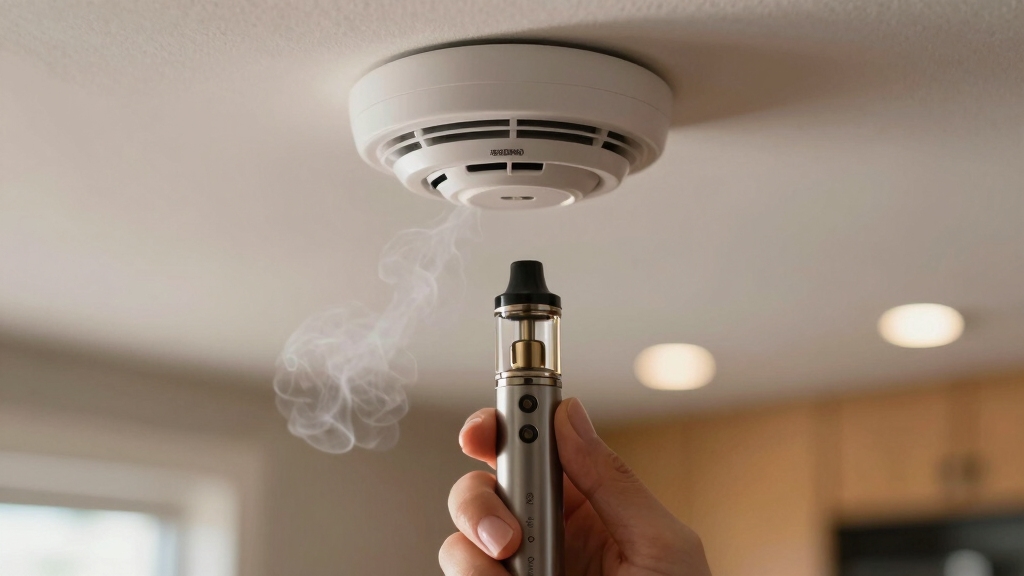

Yes, vaping can set off fire alarms because vape aerosols mimic smoke particles that disrupt sensor mechanisms.
Ionization alarms detect changes in ion flow caused by fine vape particles. Photoelectric alarms respond to dense vapor scattering infrared beams.
Higher device power and high vegetable glycerin e-liquids increase vapor density, raising false alarm risk.
Exhaling near detectors often triggers alarms in enclosed spaces. Understanding these interactions helps you manage vaping habits to avoid unwanted activations.
Key Takeaways
- Vape aerosol particles disrupt ionization or scatter light in photoelectric alarms, causing false fire alarm activations.
- High-powered vape devices produce dense vapor clouds that increase the likelihood of triggering smoke detectors.
- Ionization alarms react to fine aerosol particles, while photoelectric alarms respond to larger, denser vapor particles.
- Enclosed spaces and poor ventilation amplify vapor concentration near detectors, raising false alarm risks.
- Using low-wattage devices, low-VG e-liquids, and vaping away from sensors helps prevent fire alarm activations.
How Vape Aerosol Triggers Ionization and Photoelectric Fire Alarms?
Although fire alarms are designed to detect smoke particles, vape aerosol can interfere with their sensing mechanisms, causing false triggers.
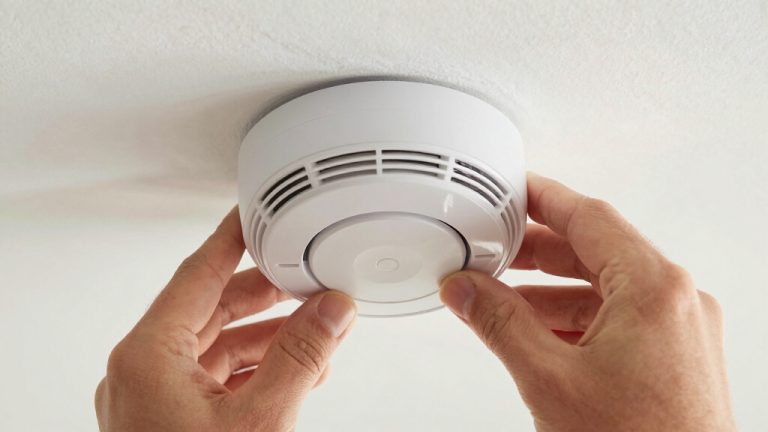
Ionization alarms detect smoke by monitoring ion flow disruption within a radioactive chamber. Vape particles entering this chamber disrupt ion flow similarly, prompting alarm activation.
Photoelectric alarms operate by sensing airborne particles scattering an infrared light beam. Vape aerosol, especially dense vapor from high VG e-liquids, mimics these particles, scattering light and triggering the alarm.
The particle size and density produced during vaping closely resemble smoke characteristics, leading to misinterpretation by sensors. Since these detectors rely on physical disruptions rather than chemical composition, they can’t distinguish vape aerosol from actual smoke. This results in false alarms when vapor infiltrates the sensing chamber.
Photoelectric smoke alarms are particularly sensitive to larger smoke particles due to their reliance on the Tyndall Effect for detection, which makes them more prone to false alarms from dense vape aerosol.
Sensitivity of Fire Alarms to Vaping Vapor and Device Power
When you vape with high-powered devices, the increased vapor density markedly raises the likelihood of triggering fire alarms.
Ionization detectors, sensitive to minute particulate disruption within their chambers, respond readily to the fine aerosol particles produced by these devices.
Photoelectric alarms, while generally less sensitive to small particles, can still activate when exposed to dense vapor clouds that scatter infrared light beams.
The power level of your device directly influences the volume and concentration of vapor emitted; higher wattage yields thicker clouds, increasing particle accumulation near sensors.
Furthermore, vapor composition, particularly high vegetable glycerin content, amplifies particle size and density, further enhancing detection probability.
Understanding these sensitivities helps you mitigate false alarms by adjusting device power and vaping behavior accordingly.
Unlike smoke detectors, sprinklers activate only when exposed to heat, not smoke or vapor, due to their heat-driven mechanism.
How Vapor Density and Device Power Affect Fire Alarm Activation?
Vapor density directly influences how fire alarms respond to vaping. Denser clouds increase the likelihood of sensor activation.
When you use high-powered devices, they generate larger vapor volumes composed of fine particles similar in size to smoke. This dense aerosol disrupts ionization chambers or scatters infrared beams in photoelectric sensors, triggering alarms more rapidly.
The e-liquid’s composition also affects vapor density. High VG content produces thicker clouds, intensifying sensor interference. Since ionization alarms are more sensitive to small particles, denser vapor from powerful devices elevates false alarm risks.
Additionally, if you exhale vapor near a detector, the concentrated particles can accumulate quickly, overwhelming sensor thresholds. To avoid triggering alarms, controlling device power and vapor output is essential. These factors directly modulate particle density impacting fire alarm activation.
Because fire alarms are integrated systems that monitor multiple detectors and communicate with a central control panel, they can be triggered by dense vapor similarly to smoke due to their smoke detection technologies.
Real-Life Vape-Related Fire Alarm Activations and Incidents
Frequently, vape use sets off fire alarms in real-world settings due to aerosol particles interfering with sensor mechanisms. Schools and hotels report multiple false alarms triggered by dense vapor clouds entering ionization or photoelectric detectors.
In Minnesota, a high school faced repeated restroom evacuations caused by vaping. Similarly, aircraft and hotel fire systems, designed with heightened sensitivity, frequently mistake vapor for smoke, prompting unnecessary responses.
Lab simulations confirm that dense vapor, especially from high-powered devices, disrupts sensor readings, activating alarms. In office environments, good ventilation reduces risk, but enclosed spaces like bathrooms amplify it.
Understanding these incidents helps you appreciate how vaping’s physical properties and environmental factors combine to trigger false alarms. This emphasizes the need for awareness about device use and location relative to fire detectors.
Additionally, control panels often include a short acknowledgment delay to allow verification before full alarm activation, which can help reduce false alarm responses.
Easy Ways to Vape Without Setting Off Fire Alarms
Although vaping can easily trigger fire alarms due to aerosol particles disrupting sensors, you can markedly reduce this risk by controlling device settings and environment.
Use low-powered devices and low-VG e-liquids to minimize dense vapor production. Vape in well-ventilated, open areas away from detectors. Avoid exhaling vapor directly toward sensors. Understanding device and environment interplay is essential.
Ensuring proper detector placement can also help minimize false alarms caused by transient vapor exposure.
| Factor | Recommended Action | Reason |
|---|---|---|
| Device Power | Use low-wattage settings | Reduces vapor density |
| E-liquid Composition | Choose low VG blends | Produces less dense aerosol |
| Location | Vape away from detectors | Limits particle exposure to sensors |
| Ventilation | Confirm airflow and windows | Prevents vapor accumulation near alarms |
Frequently Asked Questions
Can Vape Battery Malfunctions Cause Actual Fires?
Yes, vape battery malfunctions can cause actual fires. Lithium-ion batteries in vape devices may undergo thermal runaway if damaged, overheated, or improperly charged.
This leads to short-circuits, sparks, and potential explosions. Using incompatible chargers or poor USB practices increases fire risk.
You must handle batteries carefully, avoid physical damage, and use recommended chargers to prevent ignition sources. Proper maintenance reduces the likelihood of dangerous battery-related fires in vaping devices.
Do Sprinklers Activate From Vape Vapor or Only Heat?
Sprinklers activate only from heat, not vape vapor. They rely on heat-sensitive elements that trigger at temperatures above 155-165°F, well beyond any vapor’s temperature.
Vape aerosol particles can’t cause sprinkler activation because they lack sufficient thermal energy to melt or break sprinkler components.
While vape vapor might set off smoke detectors, it won’t activate sprinklers. Sprinklers respond strictly to fire-generated heat rather than airborne particles.
Are Vape Alarms More Sensitive in Humid Conditions?
Yes, vape alarms are more sensitive in humid conditions because moisture exacerbates vapor particle effects on detectors.
High humidity increases aerosol persistence, causing vape particles to linger and accumulate near sensors. This amplifies the disruption in ion flow or light scatter within ionization and photoelectric alarms, respectively.
You should be especially cautious vaping in humid, enclosed spaces. These conditions markedly raise the risk of false alarms triggered by your vapor clouds.
How Do Vape Chargers Contribute to Fire Risks?
Vape chargers contribute to fire risks primarily through improper use and electrical faults. When you use incompatible chargers or damaged cables, you increase short-circuit potential, leading to overheating.
Overcharging lithium-ion batteries causes thermal runaway, which can ignite fires. Additionally, using uncertified USB chargers or charging unattended raises hazards.
To minimize risks, always use manufacturer-approved chargers. Avoid overcharging and regularly inspect cables and batteries for damage or swelling.
Can Vape Aerosol Affect Alarm Placement or Maintenance?
Absolutely, vape aerosol affects alarm arrangement and upkeep.
Since vapors produce particles that mimic smoke, you must position detectors away from vaping zones to prevent persistent false alarms.
Frequent maintenance becomes mandatory, as residue buildup from dense vapor can degrade sensor sensitivity.
You should schedule regular cleanings and calibrations to guarantee precise performance.
Ultimately, understanding aerosol attributes guides strategic sensor placement and meticulous maintenance, safeguarding alarm accuracy and reliability.
Understanding Vape Aerosol and Fire Alarm Reactions
You might not realize it, but vaping can indeed set off fire alarms.
Ionization and photoelectric detectors respond to vape aerosol, especially when device power creates dense vapor. This triggers the sensors similarly to smoke particles.
Knowing this, you can adjust your vaping habits. Use lower power settings and vape in well-ventilated areas to avoid false alarms.
Understanding the interaction between vapor and alarm technology helps you vape responsibly without unwanted disruptions.