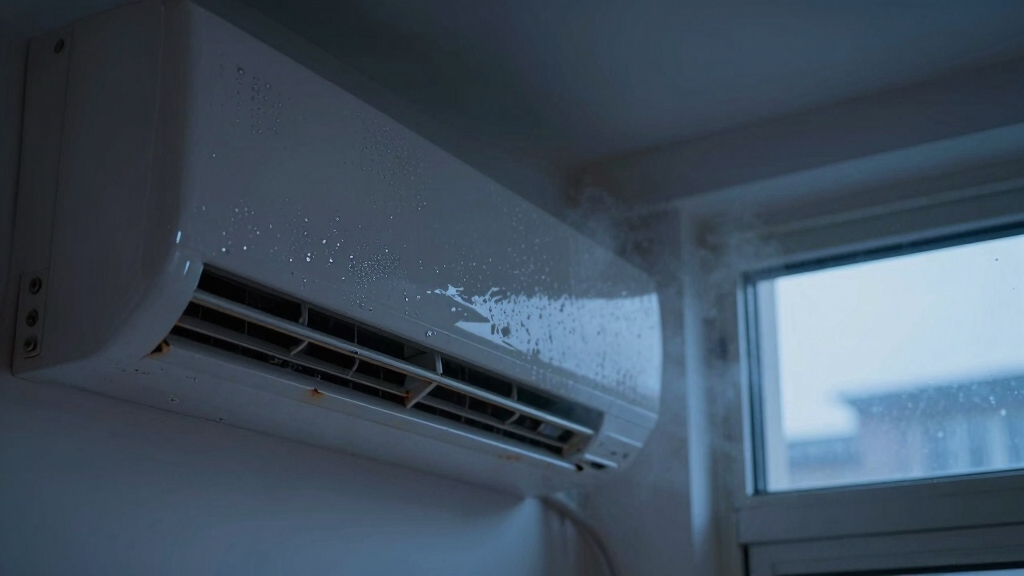

You won’t get carbon monoxide (CO) directly from an air conditioner since it runs on electricity and doesn’t burn fuel.
However, if your home has fuel-burning appliances like furnaces or water heaters that produce CO, your AC’s ductwork or ventilation could circulate that gas inadvertently.
Poor maintenance or blocked vents can worsen this risk. Understanding how your AC relates to potential CO exposure and taking preventive steps can help protect your indoor air quality and safety.
Key Takeaways
- Electric air conditioners do not produce carbon monoxide (CO) because they have no combustion processes.
- AC systems can circulate CO if nearby fuel-burning appliances emit it into shared ductwork or indoor air.
- Malfunctioning furnaces or gas appliances near HVAC ducts can cause CO to infiltrate and spread through AC systems.
- Proper maintenance and sealed ductwork prevent CO from entering or accumulating via air conditioning systems.
- Using an air conditioner alone does not generate CO, but external fuel appliance leaks pose indirect risks.
Can Portable and Window Air Conditioners Produce Carbon Monoxide?
You can rest assured that portable and window air conditioners don’t produce carbon monoxide, as they operate entirely on electricity without any combustion process.
Since these units rely solely on electric components like compressors and fans, no fuel burning occurs, eliminating the possibility of CO generation.
The exhaust from portable air conditioners primarily consists of heat and water vapor, which poses no carbon monoxide risk.
Similarly, window air conditioners function by transferring indoor heat outside without producing or emitting carbon monoxide gas. These appliances don’t contain flues, vents, or burners, which are typical sources of CO in fuel-burning systems.
Consequently, when you use portable or window air conditioners, you can be confident that carbon monoxide production isn’t a concern.
Unlike fuel-burning appliances, these electric cooling systems have no combustion chambers or heat exchangers that could pose CO risks, further enhancing indoor air safety through combustion-free operation.
Why Air Conditioners Don’t Produce Carbon Monoxide Themselves?
You don’t really have to worry about air conditioners producing carbon monoxide. Why? They run entirely on electricity and don’t involve any combustion. Since there’s no fuel being burned while they’re working, they don’t emit any carbon monoxide gas.
This is true for all kinds of electric air conditioners, whether you’re using a portable unit or a window model. So, you can feel pretty safe knowing that your air conditioner isn’t contributing to carbon monoxide concerns!
However, it’s always important to ensure proper ventilation and regular maintenance to avoid any indirect risks associated with electrical appliances, such as fire hazards from blocked vents or mechanical failures that could potentially lead to hazardous incidents.
Electric Operation Eliminates CO
Air conditioners operate exclusively on electricity, which completely eliminates the production of carbon monoxide (CO) during their functioning.
Since these systems rely solely on electrical energy, they’ve no combustion processes that could generate CO.
Portable, window, and central air conditioning units all function without burning fuel, so they can’t emit carbon monoxide themselves.
The exhaust produced by portable units consists only of heat and water vapor, not hazardous gases.
Hence, when you use an air conditioner, you don’t have to worry about it creating CO.
Any carbon monoxide risk linked to air conditioning typically stems from nearby fuel-burning appliances or blocked ventilation systems, not from the electric operation of the air conditioner itself. This distinction is vital for understanding safe AC use.
However, poor ventilation or blocked vents near air conditioning systems can cause CO from other sources to accumulate indoors, triggering alarms and health risks.
No Combustion, No Emission
Because air conditioners operate solely on electrical power without any fuel combustion, they inherently don’t produce carbon monoxide.
This means the refrigeration cycle in your unit relies on compressors and refrigerants, not burning fuel, so no CO is generated during operation.
Whether you use a portable, window, or central AC system, the absence of combustion eliminates the risk of carbon monoxide emission from the unit itself.
Key points to remember:
- Electric air conditioners lack combustion chambers, preventing CO production.
- Portable and window units exhaust heat and water vapor, not gases.
- Central AC systems circulate air but don’t create CO internally.
- CO risks arise only if your AC circulates air contaminated from external fuel-burning sources.
Understanding this helps you separate inherent AC safety from indirect CO hazards. For complete safety, installing carbon monoxide detectors near potential external sources is essential to detect any CO presence early.
How Fuel Appliances Increase Carbon Monoxide Risks When Using ACs?
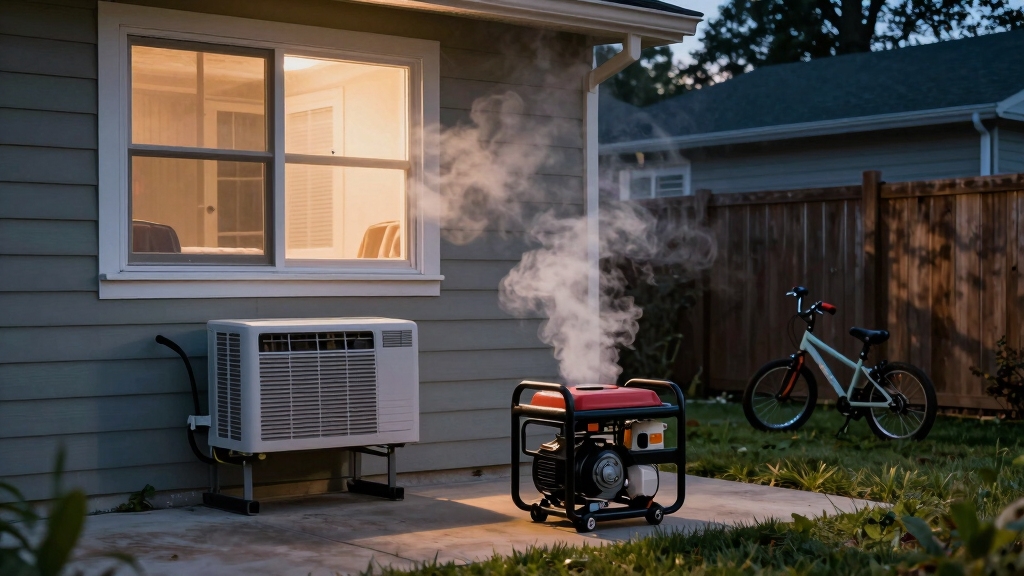
When you use air conditioners with fuel-burning appliances, there’s a real risk of carbon monoxide emissions piling up indoors, especially if you don’t have good ventilation. It’s pretty concerning because your AC system might spread this harmful gas around your home, increasing the chances of exposure.
That’s why it’s super important to keep your combustion appliances well-maintained and to regularly check those vents and flues. Doing this can really help prevent any CO buildup when you’re running your air conditioning.
It’s all about keeping your space safe and comfortable! Always remember to monitor gas leaks carefully, as even small leaks can increase carbon monoxide risks significantly.
Fuel Appliances CO Emissions
Fuel-burning appliances can markedly elevate the risk of carbon monoxide exposure in homes with air conditioning systems.
While air conditioners themselves don’t produce CO, fuel appliances like furnaces, water heaters, and gas stoves generate this toxic gas during combustion.
If these appliances malfunction or their vents and flues are blocked, CO can accumulate indoors. Your AC system may then circulate this harmful gas throughout your home, increasing exposure risk.
Key factors to monitor include:
- Malfunctioning combustion appliances producing excess CO
- Blocked or improperly installed vents and flues
- HVAC ductwork located near fuel-burning devices
- Central AC systems that distribute CO from these sources
Regular inspections and maintenance of fuel appliances and their venting are crucial to minimizing CO risks when running air conditioning. Installing a monitored carbon monoxide detector can provide automatic alerts to emergency services, enhancing safety by ensuring prompt response even if occupants are unaware of rising CO levels.
AC Ventilation and CO
Amid your home’s ventilation system, improperly maintained or blocked vents and flues can allow carbon monoxide produced by nearby fuel appliances to enter and circulate throughout the living space.
When your central AC system operates, it draws air through ductwork that may be adjacent to fuel-burning equipment. If these appliances emit CO due to incomplete combustion or venting issues, your AC can distribute this toxic gas widely.
Window or portable units don’t generate CO but can still move existing gas more efficiently. Consequently, the risk increases when your HVAC ducts run near combustion sources without proper isolation or vent clearance.
To minimize exposure, make sure ventilation pathways remain unobstructed and separate from fuel appliance exhausts. Your AC’s airflow can otherwise exacerbate CO infiltration and elevate poisoning risk.
Regular maintenance and inspection of both your HVAC and fuel-burning appliances are essential to prevent indoor air contamination and reduce carbon monoxide hazards.
Combustion Appliance Maintenance
Maintaining combustion appliances directly impacts the levels of carbon monoxide your air conditioning system may circulate.
Fuel-burning devices like furnaces or water heaters produce CO, which can infiltrate your HVAC ducts if these appliances are poorly maintained.
When you use your AC, it may distribute this existing CO throughout your home, increasing poisoning risks.
To reduce these dangers, you should:
- Schedule annual professional servicing for all combustion appliances.
- Inspect and clear vents, flues, and chimneys to make certain unobstructed exhaust.
- Verify correct fuel-to-air ratios during appliance tune-ups.
- Replace filters and check for cracks in heat exchangers to prevent leaks.
Proper maintenance limits CO production and prevents your air conditioner from spreading this hazardous gas indoors.
Regular inspections and maintenance not only reduce CO risks but also extend the operational lifespan of your combustion appliances and HVAC systems.
How Central Air Conditioning Can Spread Carbon Monoxide in Your Home?
Central air conditioning systems can inadvertently circulate carbon monoxide (CO) throughout your home if vents or flues become blocked or malfunction.
CO originates from nearby fuel-burning appliances, and a compromised ventilation system allows this gas to enter the HVAC ductwork.
Once inside, your central AC distributes the contaminated air rapidly through all rooms, increasing exposure risk.
Malfunctioning components, such as cracked heat exchangers or improperly sealed ducts, exacerbate this problem by enabling CO infiltration into the airflow.
When your system recirculates indoor air without adequate fresh air exchange, CO levels can accumulate dangerously.
To prevent this, regularly inspect and maintain vents, flues, and heat exchangers. Ensure proper combustion appliance operation and unobstructed exhaust paths.
Professional HVAC inspections are essential to mitigate CO spread via your central air conditioning system.
Additionally, power surges and voltage spikes can damage HVAC control systems, potentially worsening ventilation issues and increasing the risk of CO infiltration.
Signs of Carbon Monoxide Exposure From Air Conditioner Use
Often, you mightn’t immediately recognize the signs of carbon monoxide (CO) exposure linked to your air conditioner, especially since symptoms can mimic common illnesses.
Because central AC systems can circulate CO from nearby fuel-burning appliances or blocked vents, you should be alert to subtle indicators.
Early detection is critical to prevent severe outcomes. Watch for these key symptoms during AC use:
- Persistent headaches or dizziness without apparent cause
- Nausea or flu-like symptoms that worsen indoors
- Confusion, impaired vision, or difficulty concentrating
- Unexplained fatigue or weakness, especially when AC is running
If you notice these signs, suspect CO exposure and act promptly by ventilating the area, turning off potential sources, and seeking professional HVAC inspection and medical evaluation.
Proper maintenance, including regular duct cleaning, can reduce the risk of harmful gas buildup and improve indoor air quality.
Health Effects of Carbon Monoxide Poisoning Related to ACs
Because carbon monoxide (CO) interferes with your blood’s ability to carry oxygen, exposure related to air conditioner systems can quickly lead to serious health problems.
Carbon monoxide from air conditioners impairs oxygen transport, posing serious health risks.
When CO circulates through your home’s ventilation, it binds with hemoglobin, reducing oxygen delivery to essential organs. You may experience headaches, dizziness, impaired vision, and memory loss as early symptoms.
Prolonged or high-level exposure can cause unconsciousness, neurological damage, or death. If you have heart conditions, CO exposure worsens your symptoms by stressing your cardiovascular system.
Since CO is colorless and odorless, you won’t detect it without a monitor, increasing risk. Recognizing these health effects is critical for prompt intervention to prevent tissue damage or fatal outcomes linked to faulty AC system ventilation or nearby fuel-burning appliances.
Key AC Components to Inspect for Carbon Monoxide Safety
It’s really important to inspect vents and flues regularly. You want to make sure they’re free of any blockages that could trap carbon monoxide. It’s a simple check, but it can make a big difference in safety.
Also, don’t forget to check your combustion appliances. You should ensure they’ve the proper fuel-air mixture and look for any signs of damage. This can help prevent CO leaks, which is crucial for keeping your home safe.
And when it comes to your HVAC system, maintaining the filters and components is key. By doing this, you promote safe airflow and reduce any contamination risks. A little maintenance goes a long way!
Vent and Flue Inspection
When inspecting your air conditioner’s vents and flues, focus on making sure they remain clear and functional to prevent carbon monoxide buildup.
Blocked or damaged vents can trap CO, allowing it to enter living spaces through the HVAC system. You should regularly check for obstructions, corrosion, or improper sealing that compromise exhaust flow.
Proper venting guarantees that any CO from adjacent fuel-burning appliances doesn’t accumulate or recirculate indoors via the AC ductwork.
Key inspection points include:
- Confirm vents are free of debris, nests, or blockages.
- Verify flue pipes are securely connected without cracks or gaps.
- Make sure vent caps and screens are intact and unobstructed.
- Inspect for signs of corrosion or rust that may weaken vent integrity.
Maintaining vent and flue integrity is critical for safe air conditioner operation and CO exposure prevention.
Combustion Appliance Checks
Conducting regular combustion appliance checks is essential to make certain your air conditioner’s safety and prevent carbon monoxide hazards.
Although electric air conditioners don’t produce CO, central systems connected to fuel-burning appliances can circulate existing carbon monoxide if vents or flues are blocked.
You need to inspect key components such as combustion chambers, heat exchangers, and venting systems for cracks, corrosion, or blockages.
Verify that fuel-air mixtures in connected appliances are correctly balanced to avoid incomplete combustion, which generates CO. Make certain flue pipes and chimneys are unobstructed and sealed properly to direct exhaust gases outside.
Regular professional inspections and maintenance reduce risks by detecting faults early, maintaining proper ventilation, and confirming that no CO leaks into your living spaces through the HVAC system’s ductwork.
HVAC Filter Maintenance
Regularly inspecting and maintaining HVAC filters is essential for guaranteeing carbon monoxide safety in your air conditioning system.
Dirty or clogged filters reduce airflow, causing the system to work harder and potentially circulate existing carbon monoxide trapped in your home’s ductwork.
Proper filter maintenance helps prevent the buildup of contaminants that compromise indoor air quality and may mask the presence of CO.
To maintain safety, focus on these key actions:
- Replace or clean filters every 1-3 months depending on usage and filter type.
- Use filters with appropriate MERV ratings to balance filtration and airflow.
- Inspect filters for damage or excessive dirt accumulation regularly.
- Guarantee filters fit correctly to prevent unfiltered air bypass.
Consistent HVAC filter care supports system efficiency and reduces risks associated with carbon monoxide exposure.
How Carbon Monoxide Detectors Protect Homes With Air Conditioning?
Frequently overlooked, carbon monoxide detectors play a crucial role in safeguarding homes equipped with air conditioning systems.
Since AC units don’t produce CO but can circulate existing gas from nearby fuel-burning appliances, detectors alert you to dangerous CO levels promptly.
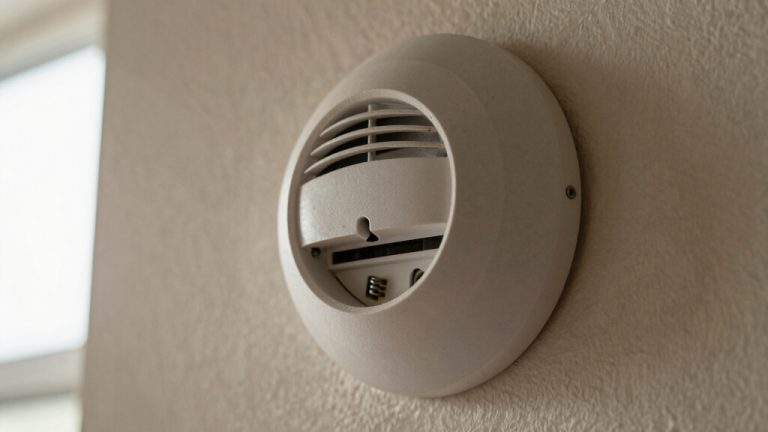
They continuously monitor air quality, enabling immediate action before symptoms like dizziness or unconsciousness occur. Proper placement near bedrooms and HVAC vents maximizes safety.
| Detector Placement | Function | Maintenance |
|---|---|---|
| Near sleeping areas | Detects CO concentration | Test monthly |
| Close to HVAC vents | Monitors circulated CO | Replace batteries yearly |
| On each floor | Provides whole-home coverage | Replace every 5-7 years |
| Away from cooking appliances | Avoid false alarms | Keep clean and dust-free |
| Near fuel-burning units | Early warning of leaks | Professional inspection |
Installing and maintaining CO detectors guarantees your air-conditioned home stays safe from hidden CO risks.
Steps to Safely Use Air Conditioners Around Fuel-Burning Appliances
When you use air conditioners near fuel-burning appliances, you must take specific precautions to prevent carbon monoxide (CO) hazards.
Since air conditioners don’t produce CO themselves, the main risk lies in circulating existing CO from appliances with combustion. To minimize this risk, make certain proper ventilation and regular maintenance.
Air conditioners don’t emit CO but can spread it from combustion appliances; ensure ventilation and upkeep to stay safe.
Follow these critical safety steps:
Install carbon monoxide detectors in areas near fuel-burning appliances and AC systems. Schedule annual inspections and tune-ups for both HVAC and fuel-burning appliances.
Check vents, flues, and chimneys regularly for blockages or leaks. Maintain clean filters and make certain correct airflow in HVAC ductwork to avoid CO accumulation.
Why Regular HVAC Inspections Prevent Carbon Monoxide Poisoning
Maintaining your HVAC system through scheduled inspections markedly reduces the risk of carbon monoxide poisoning by identifying and addressing potential hazards before they escalate.
During these inspections, technicians check for cracked heat exchangers, blocked vents, and improper venting, common causes of CO leaks.
They verify the correct fuel-air mixture in combustion appliances to make certain complete combustion, minimizing CO production.
Regular filter replacements and system lubrication maintain peak airflow and prevent overheating, which can contribute to CO buildup.
Additionally, inspections confirm that ductwork near fuel-burning appliances isn’t circulating existing carbon monoxide throughout your home.
Frequently Asked Questions
Can Air Conditioners Affect Indoor Air Quality Besides Carbon Monoxide?
Yes, air conditioners can affect indoor air quality beyond carbon monoxide.
They may circulate dust, mold spores, and allergens if filters aren’t cleaned regularly.
Poor maintenance can lead to microbial growth inside ducts, impacting respiratory health.
You should replace filters frequently, schedule professional cleanings, and ensure proper ventilation.
Doing so helps maintain air purity, reduces pollutants, and prevents moisture buildup that could worsen indoor air quality.
Does Using an Air Conditioner Increase Electricity Bills Significantly?
Imagine your electricity bill as a car’s fuel gauge. Running the AC is like pressing the accelerator.
Yes, using an air conditioner increases electricity bills, sometimes considerably depending on your unit’s efficiency, usage duration, and home insulation.
For example, a typical central AC can add 15-30% to monthly energy costs.
To minimize this, maintain your system, seal leaks, and use programmable thermostats to optimize cooling without wasting power.
How Often Should Air Conditioner Filters Be Replaced for Safety?
You should replace your air conditioner filters every 1 to 3 months to maintain safety and efficiency.
Dirty filters restrict airflow, causing your system to work harder and potentially spread contaminants, including carbon monoxide if nearby fuel-burning appliances leak.
Regular replacement guarantees clean air circulation and reduces risks.
Check filters monthly, especially during heavy use, and replace them promptly to prevent buildup that could compromise indoor air quality and system performance.
Can Air Conditioners Cause Mold Growth if Not Maintained Properly?
Imagine a hidden rainforest inside your air conditioner. If you don’t maintain it properly, mold can indeed grow.
Moisture accumulates on filters and drip pans, creating the perfect breeding ground for mold spores. To prevent this, you should clean or replace filters regularly, guarantee proper drainage, and schedule professional maintenance.
Neglecting these steps not only damages your system but also risks poor indoor air quality and health issues caused by mold exposure.
Are There Specific Air Conditioner Models Safer for Homes With Gas Appliances?
You should choose electric air conditioners, like portable or window units, since they don’t produce carbon monoxide.
Avoid central AC systems near gas appliances unless they’ve well-maintained, properly vented ducts. Faulty installations can circulate CO.
Look for models with sealed ductwork and regular HVAC inspections.
Prioritize units certified for safe indoor air quality and make sure CO detectors are installed to monitor any risk from nearby combustion sources.
Keeping Your Home Cool and Carbon Monoxide (CO) Free
You can’t get carbon monoxide directly from your air conditioner, but fuel-burning appliances connected to your HVAC system can pose risks. Remember, “an ounce of prevention is worth a pound of cure.” Regularly inspect key AC components and install carbon monoxide detectors to guarantee safety.
By maintaining your system and using air conditioners properly around fuel appliances, you’ll protect your home from hidden dangers and enjoy cool comfort without worry.