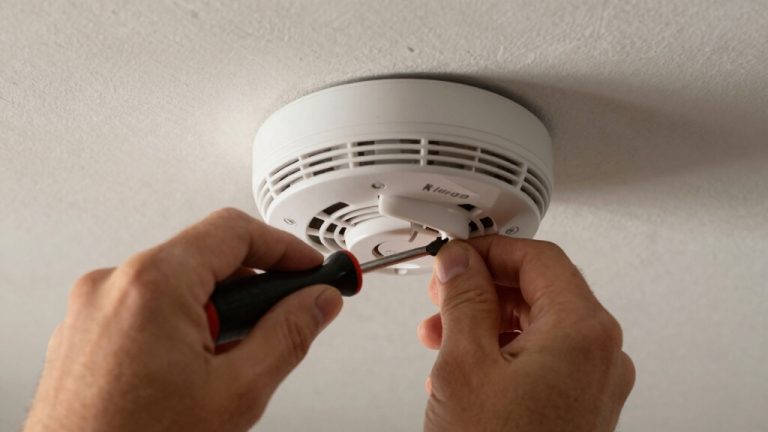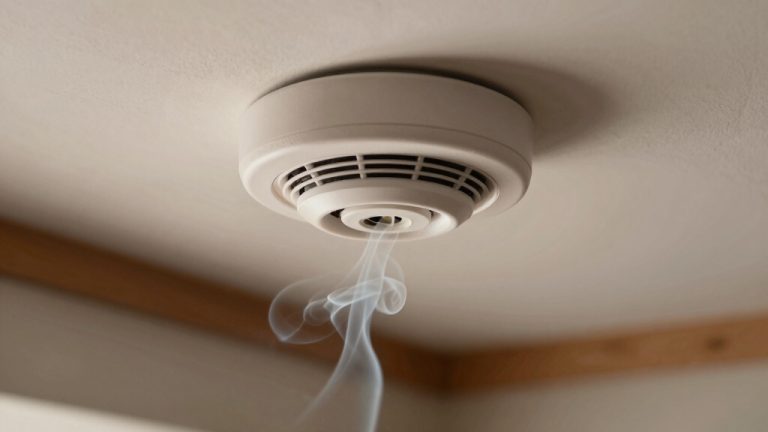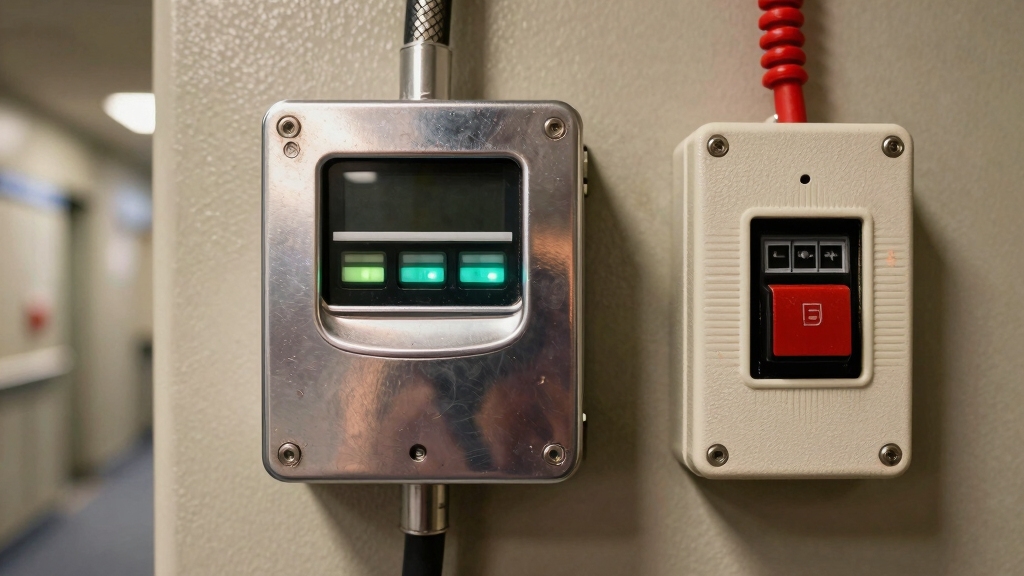

You’ll find local fire alarms alert only onsite through sirens or lights, relying on occupants to act. They are best when people are present constantly.
Central fire alarms, however, connect to 24/7 monitoring centers that verify alerts and notify emergency services automatically, even when the property is empty. This reduces response times and false alarms.
Central systems cost more upfront and require subscriptions but greatly enhance safety and reliability. Exploring these differences can help you choose the best fit for your property.
Key Takeaways
- Local fire alarms alert only on-site with sirens and strobes, while central systems notify a 24/7 monitoring station for emergency dispatch.
- Central alarms provide faster emergency response, especially for unoccupied properties, by automatically alerting responders without occupant intervention.
- Local systems are cost-effective with simple installation and no monthly fees, whereas central systems require professional setup and ongoing monitoring subscriptions.
- Central monitoring reduces false alarms through signal verification and trained operator analysis, improving response reliability and minimizing unnecessary dispatches.
- Decision depends on occupancy, property size, budget, and safety needs, balancing local system simplicity against central system enhanced protection and monitoring.
How Local Fire Alarm Systems Work and When to Use Them?
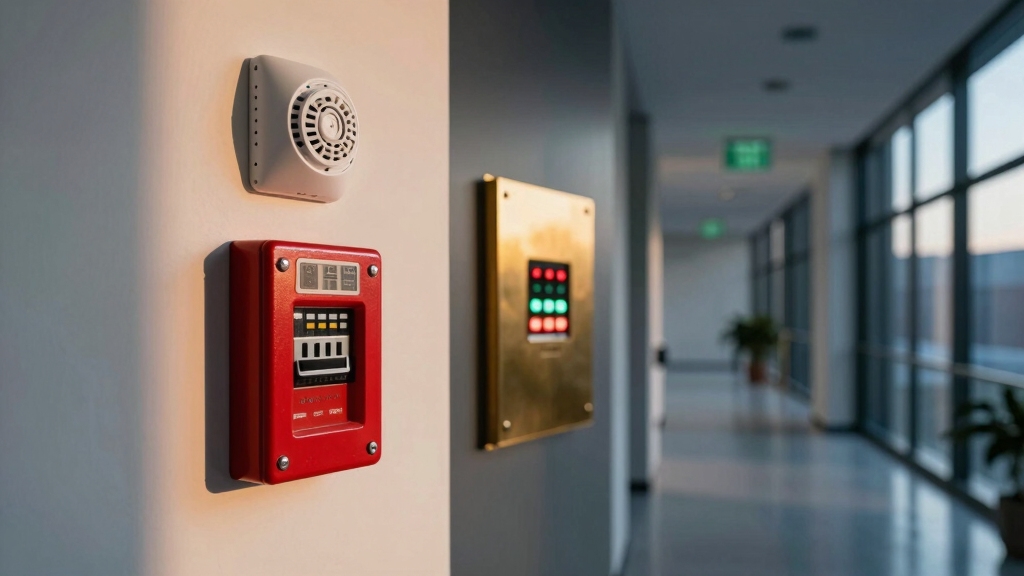
Local fire alarm systems typically alert only those on-site by triggering audible sirens, strobe lights, or push notifications when detectors sense smoke or carbon monoxide.
You rely on these systems primarily in residential or small business settings where occupants are almost always present to respond promptly.
Older setups use battery power, while newer installations incorporate hardwired connections with battery backup for reliability.
These systems activate locally without automatically notifying emergency services, so you must manually dial 911 if an alarm sounds.
Local alarms provide immediate alerts within the premises but lack remote monitoring or verification capabilities.
You should choose local systems when constant occupancy ensures timely human intervention and budget constraints preclude monthly monitoring fees.
Be aware of their limitations during absences or unoccupied periods.
Regular maintenance such as battery replacement and cleaning is essential to prevent false alarms and ensure reliable operation.
How Central Fire Alarm Systems Work and Why They’re More Reliable?
Because central fire alarm systems connect to a 24/7 monitoring station staffed by live operators, they provide continuous oversight and rapid emergency dispatch.
Central fire alarms ensure nonstop monitoring and swift emergency response through live operator connection.
When a detector triggers, the signal routes instantly to a central panel, which transmits verified alerts to the monitoring center.
Operators assess alarm validity, reducing false dispatches, then notify emergency responders automatically within seconds.
This automated verification and centralized monitoring guarantees the system functions reliably even when the premises are unoccupied, unlike local alarms that depend on on-site presence.
Advanced central setups offer point identification for precise incident location, enhancing response efficiency.
Though installation is more complex, the professional oversight and immediate authority notification markedly improve fire safety, particularly in multi-unit or high-value buildings where unattended periods increase risk.
Monitored systems can reduce emergency response times by 7–10 minutes, significantly mitigating property damage and loss.
Comparing Costs of Local Vs Central Fire Alarm Systems
While central fire alarm systems demand higher upfront investment and ongoing monitoring fees, they often provide cost benefits through insurance discounts and enhanced property protection.
You’ll pay more initially due to complex installation and monthly subscriptions for professional oversight.
In contrast, local fire alarms cost less to install and have no recurring fees, making them attractive if you occupy the premises continuously.
However, local systems lack automated emergency dispatch, which can increase risk and potential costs from property damage or liability.
Central systems’ ability to verify alarms and notify authorities promptly often offsets their expenses, especially in commercial or multi-unit buildings.
When comparing costs, factor in installation complexity, monitoring fees, insurance incentives, and the value of immediate, automated emergency response tailored to your specific property needs.
Additionally, integrating battery backup systems in central fire alarms ensures continuous operation during power outages, enhancing overall safety and reliability.
Pros and Cons of Local Fire Alarm Systems for Homes and Small Businesses
Frequently, homes and small businesses rely on fire alarm systems that alert occupants directly through audible sirens and visual signals without connecting to external monitoring services.
You benefit from immediate local notifications without recurring fees or dependencies on third-party monitoring. These systems are cost-effective and straightforward, ideal when occupants are always present to respond promptly.
However, they don’t automatically notify emergency services, leaving you responsible for calling 911. If no one is present or if the alarm goes unnoticed during sleep, response delays arise.
Local alarms also lack verification processes, increasing false alarm risks that might be ignored.
Additionally, their coverage is limited to specific areas without full building integration.
While suitable for always-occupied smaller properties, weigh these limitations carefully against your occupancy patterns and safety priorities.
Many local fire alarm systems use photoelectric smoke detection technology, which is especially effective at providing early warnings for smoldering fires.
Pros and Cons of Central Fire Alarm Systems for Commercial and Multi-Unit Buildings
When it comes to central fire alarm systems for commercial and multi-unit buildings, there are some clear advantages. One of the biggest perks is the automated emergency dispatch feature. This can really cut down response times, which is crucial in emergencies. Just think about it: in a bustling environment, every second counts!
But, of course, it’s not all sunshine and rainbows. You also need to consider the ongoing monitoring costs that come with these systems. They can add up over time, and you don’t want to overlook that.
Plus, there’s the question of service reliability. If the system isn’t reliable, it could leave you in a tough spot when you need it most. It’s also important to regularly inspect for wiring defects to ensure the system functions properly during an emergency.
Automated Emergency Dispatch
Automated emergency dispatch materially enhances fire safety in commercial and multi-unit buildings by ensuring rapid and verified notification to authorities.
When a central fire alarm triggers, signals automatically relay to a 24/7 monitoring station, where operators promptly verify alarms, reducing false dispatches.
This system eliminates reliance on occupants to call emergency services, critical in unoccupied or large complexes.
You gain faster response times and improved coordination with fire departments, minimizing damage and risk.
However, automated dispatch depends on reliable monitoring infrastructure and may incur ongoing fees.
While it streamlines emergency communication, you must consider the system’s integration complexity and potential vulnerability to service outages.
Proper use of fire safety equipment, including knowing how to assess and prepare before use, remains a vital complement to automated systems.
Monitoring Costs and Reliability
Central fire alarm systems typically involve ongoing monitoring fees that cover 24/7 professional oversight, ensuring rapid verification and response to alarms.
You’ll pay higher upfront costs plus monthly subscriptions, but these fees fund continuous system supervision by trained operators, reducing false alarms and enhancing reliability.
Unlike local alarms, which rely solely on on-site detection and occupant response, central systems maintain connectivity even during absences, providing consistent protection.
However, you must consider dependency on the monitoring company’s uptime and infrastructure; outages or non-UL-listed stations can compromise alerts.
While these systems increase operational expenses, they often yield insurance discounts and superior emergency response.
This makes the investment justifiable in commercial and multi-unit buildings where reliability outweighs cost concerns.
Additionally, certified professionals emphasize preserving system integrity during installation and maintenance to ensure ongoing dependable operation.
Why Local Fire Alarms Don’t Protect Unoccupied Properties?
Because local fire alarms only alert people within earshot, they leave unoccupied properties vulnerable to undetected fires.
Local fire alarms alert only nearby occupants, leaving empty properties exposed to unnoticed fires.
When no one is present, these alarms fail to trigger any emergency response, allowing fires to escalate without intervention.
You can’t rely on audible sirens or visual signals alone if the site is empty; no automatic notification reaches fire services.
This limitation creates a critical gap in protection, especially for vacant homes or businesses closed overnight.
Without remote monitoring or central dispatch, you risk significant property damage and delayed emergency response.
Local alarms function well when occupants are present to act immediately, but they offer no safeguard during absences.
Consequently, relying solely on local fire alarms compromises safety for unoccupied properties.
Integrating fire alarms with remote monitoring systems ensures immediate notification to emergency responders even when the property is empty.
How Central Fire Alarm Systems Automatically Alert Emergency Services?
When a central fire alarm goes off, it automatically sends signals to a monitored station that’s staffed around the clock. This is where trained operators come into play; they verify if the alarm is legit. Isn’t that great? It really helps cut down on those annoying false dispatches, ensuring that emergency services only respond to real incidents.
And here’s the best part: this whole automated system speeds up how quickly emergency notifications are sent out. There’s no need for someone to make a manual call anymore. Instead, the fire department can be deployed right away. That means faster response times when it really matters!
Professional monitoring often uses automated alert verification to reduce false alarms and enhance response efficiency.
Automated Emergency Dispatch
Through continuous monitoring by a dedicated central station, fire alarm systems automatically alert emergency services the moment they detect a verified alarm condition.
When a sensor triggers, the system instantly transmits a coded signal to the central monitoring center using secure communication protocols.
Trained operators analyze incoming data to confirm the alarm’s validity before dispatching fire, police, or medical responders.
This automated dispatch process eliminates reliance on occupants to call emergency services, reducing response time markedly.
The system’s integration with advanced panels enables pinpointing the alarm’s location within a building, facilitating targeted intervention.
By leveraging redundancy and fail-safes in communication links, the system guarantees consistent alert delivery.
You benefit from this streamlined, reliable mechanism that enhances safety, especially in unoccupied or high-risk properties where immediate human response isn’t guaranteed.
For optimal safety, it is also crucial to install detectors near bedroom doors to ensure alarms are audible and provide early warnings to occupants.
Central Monitoring Verification
Central monitoring verification streamlines emergency response by rigorously evaluating fire alarm signals before alerting authorities. When your central fire alarm system detects a potential fire, it transmits a signal to a 24/7 monitoring station where trained operators analyze the data.
They verify alarm authenticity using signal patterns, device location, and cross-referencing environmental inputs to reduce false alarms. Upon confirmation, they immediately notify emergency services, ensuring rapid dispatch while minimizing unnecessary responses.
This automated verification process surpasses local alarms’ reliance on manual calls, offering continuous oversight regardless of occupancy. By integrating real-time signal assessment with professional operator judgment, central monitoring verification enhances reliability, reduces response times, and provides you with a robust safety network that local systems can’t match.
Installation and Maintenance: What to Expect for Local and Central Alarms?
Although local and central fire alarm systems serve similar safety purposes, their installation and maintenance processes differ markedly.
When you install a local system, expect a straightforward setup. Hardwired or battery-powered detectors connect to sirens and strobes without complex wiring.
Maintenance mostly involves periodic battery replacement and functional testing, which you can manage independently.
Central systems demand professional installation with integrated wiring to a central panel and connection to a 24/7 monitoring station.
You’ll require certified technicians for setup and ongoing inspections to guarantee communication integrity.
Maintenance includes monthly system tests, software updates, and monitoring service coordination.
Unlike local systems, central alarms incur recurring fees for professional oversight.
Planning installation and upkeep accordingly safeguards compliance and peak operation tailored to your property’s occupancy and risk profile.
Choosing the Right Fire Alarm System for Your Property and Budget
When selecting a fire alarm system, you must evaluate your property’s occupancy patterns, size, and risk factors alongside your budget constraints.
Choosing a fire alarm system requires balancing property use, size, risks, and budget considerations.
For always-occupied small residences or businesses, a local system offers cost-effective, immediate on-site alerts without ongoing fees.
However, if your property is unoccupied for extended periods or features multiple units, central monitoring provides automated emergency dispatch and professional alarm verification, enhancing safety despite higher upfront and monthly costs.
Consider insurance incentives, as central systems often qualify for premium discounts that offset monitoring fees.
Additionally, assess wiring complexity and service reliability; local systems require simpler installations, while central systems depend on UL-listed monitoring stations to prevent outages.
Align your choice with operational needs and financial capacity to guarantee peak protection and cost-efficiency.
Frequently Asked Questions
Can Local Fire Alarms Integrate With Smart Home Devices?
Yes, you can integrate local fire alarms with smart home devices, but it depends on the system’s compatibility and technology.
Modern local alarms with wireless capabilities or smart sensors often support integration via Wi-Fi or Zigbee protocols. This lets you receive push notifications on your phone and automate responses like shutting off HVAC systems.
However, traditional local alarms without smart features lack this capability, requiring upgrades or additional modules for smart integration.
Are Central Fire Alarm Systems Compatible With Existing Building Automation?
Think of central fire alarm systems as the nervous system of a building. They communicate and coordinate seamlessly.
Yes, you can integrate these systems with existing building automation through standardized protocols like BACnet or Modbus.
This interoperability allows automated responses such as HVAC shutdown or elevator recall during alarms.
However, integration depends on your system’s compatibility and may require professional configuration to guarantee precise, reliable coordination between fire safety and building operations.
How Do Fire Alarms Handle Power Outages or Backup Power?
Fire alarm systems use backup power to stay operational during outages.
You’ll find local alarms often rely on battery backups or hardwired connections with battery reserves to maintain alerts.
Central systems incorporate uninterruptible power supplies (UPS) and battery banks to ensure continuous monitoring and communication with central stations.
This design guarantees alarms function and notifications dispatch even when main power fails, maintaining safety and compliance with fire code requirements.
What Regulations Govern Fire Alarm Installation in Historic Buildings?
You must follow local building codes, the National Fire Protection Association (NFPA) 72 standards, and sometimes the International Building Code (IBC) when installing fire alarms in historic buildings.
Authorities often require minimally invasive methods to preserve historic fabric, balancing safety and preservation.
You’ll likely need approval from historic preservation offices, which may allow exceptions or alternative solutions.
Always make certain your system meets life safety requirements without compromising the building’s integrity.
Can Pet Activity Trigger False Alarms in Local or Central Systems?
Yes, pet activity can trigger false alarms in both local and central systems, especially if the detectors are overly sensitive or improperly placed.
However, central systems often include verification processes that reduce false dispatches caused by pets.
Local alarms lack this filtering, so you’ll experience more false alerts from pet movement.
To minimize this, position detectors away from pet areas and consider installing pet-immune sensors designed to ignore typical animal activity.
A Smarter Fire Alarm Choice Means Faster Help When It Matters
Choosing between local and central fire alarm systems depends on your property type and risk level. Did you know that buildings with central alarm systems see emergency response times cut by up to 50%? This critical advantage enhances safety, especially for commercial or multi-unit properties.
While local alarms suit smaller, occupied spaces, central systems provide automated alerts and superior reliability. Assess your budget, occupancy, and protection needs carefully to select the most effective fire alarm solution.