
You won’t find carbon monoxide (CO) coming from an electric furnace because it heats your home using electric resistance heating.
No combustion, no fuel burned, no flame, so no CO generated. The heating elements convert electricity directly into heat without producing combustion byproducts.
However, other fuel-burning appliances in your home can emit CO. Understanding how electric furnaces operate and the indirect CO risks in your household can help you maintain a safer environment.
Key Takeaways
- Electric furnaces generate heat via electrical resistance without combustion or fuel burning.
- No combustion means electric furnaces produce zero carbon monoxide (CO) indoors.
- They lack burners, flames, and heat exchangers that can cause CO leaks in fuel-based systems.
- Absence of combustion byproducts eliminates CO production and venting needs.
- Electric furnace operation improves indoor air safety by eliminating direct CO emission risks.
How Electric Furnaces Generate Heat?
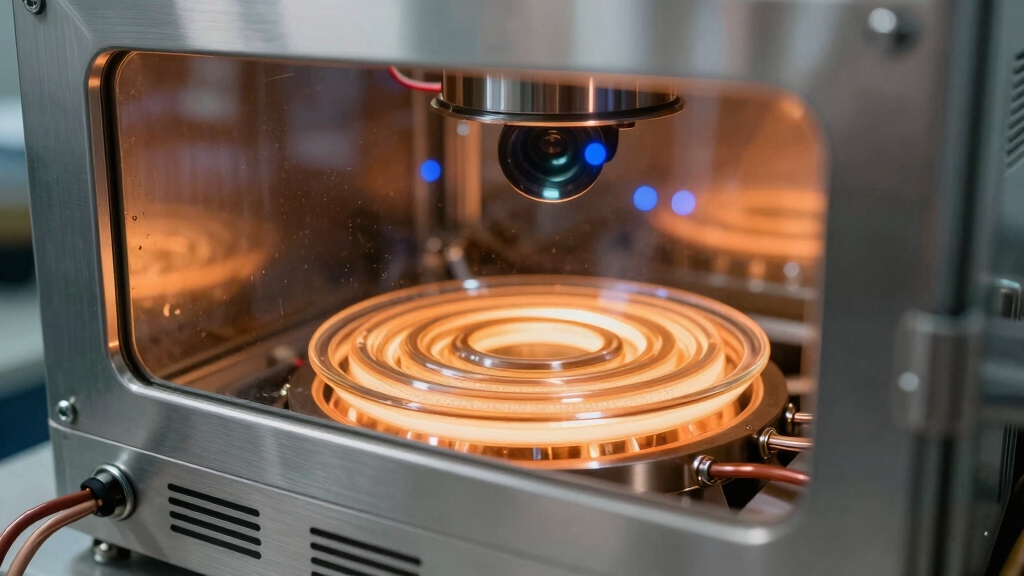
Electric furnaces generate heat by passing electrical current through heating elements made of conductive materials like nichrome.
You’ll find these elements arranged as tightly wound metal coils, often stacked in tiers within a block.
When electricity flows through these coils, resistance causes them to heat up without combustion. The coils then transfer heat directly to the air surrounding them.
Your furnace’s thermostat monitors room temperature and signals the system to activate heating elements via electric relays.
A sequencer manages the coil activation in stages, preventing electrical overload by gradually increasing heat output.
A blower fan forces air over these heated coils, distributing warm air through your home’s ductwork.
This process offers precise, efficient heating without producing combustion byproducts, ensuring a clean and safe operation.
Unlike combustion-based heating systems, electric furnaces do not emit carbon monoxide, making them a safer choice for indoor air quality.
Carbon Monoxide Production in Fuel-Burning Furnaces
When you’re using a fuel-burning furnace, you mightn’t realize that incomplete combustion can lead to the production of carbon monoxide, which is a hazardous gas. It’s pretty important to be aware of this!
The heat exchanger in your furnace is meant to keep the combustion gases separate from the air inside your home. However, if there are any cracks or damage, it can lead to leaks.
So, what can you do about it? Well, proper venting is really crucial. It’s essential to safely expel that carbon monoxide outdoors to prevent it from building up indoors, where it can become dangerous.
Keeping an eye on your furnace’s condition and ensuring everything is working correctly can make a big difference in your home’s safety! Regular inspections every 1–3 years can help detect early issues and prevent hazardous gas buildup.
Combustion Process Overview
Although fuel-burning furnaces efficiently generate heat by igniting natural gas, propane, or oil in a combustion chamber, this process inherently produces carbon monoxide (CO).
When fuel combusts in the burner area, it creates hot gases, including CO, which pass through the heat exchanger to warm air circulated by the blower fan.
For complete combustion, you need a steady oxygen supply; insufficient oxygen causes incomplete combustion, forming CO as a hazardous byproduct.
You can often identify incomplete combustion by yellow or flickering flames, while a steady blue flame indicates proper burning with minimal CO.
Normally, CO exits safely through the flue pipe. However, any disruption in this process can increase CO production, emphasizing the importance of proper maintenance and ventilation in fuel-burning furnace operation.
Regular inspections and maintenance help prevent issues that could lead to increased carbon monoxide risks and ensure safe furnace function.
Heat Exchanger Failures
Since heat exchangers play a critical role in separating combustion gases from indoor air, any failure in their integrity can lead to dangerous carbon monoxide leakage.
Corrosion and cracks permit combustion gases, including CO, to enter your living space. Restricted airflow from these failures causes incomplete combustion, elevating CO levels.
You must recognize signs like yellow flames, soot buildup, or water pooling, which indicate exchanger damage and potential CO hazards.
| Failure Type | Cause | Risk |
|---|---|---|
| Corrosion | Rust, polypropylene steel damage | Airflow restriction, CO buildup |
| Cracks | Wear, thermal stress | Direct CO leakage indoors |
| Incomplete Combustion | Poor air-fuel ratio | Elevated CO, unsafe burning |
Always maintain and inspect heat exchangers to prevent these critical safety risks. Proper inspection techniques can be aided by understanding the principles of light behavior that explain how certain hazards might be detected visually.
Venting and Leakage Risks
Because fuel-burning furnaces rely on combustion, they inherently produce carbon monoxide (CO) as a byproduct. This makes proper venting essential to prevent indoor CO accumulation.
You must make certain that vent pipes are correctly sized, sloped, and free of obstructions like debris or nests. Blockages can cause exhaust gases to backdraft into your home.
Cracked heat exchangers or corroded flue sections can also leak CO into living spaces. Negative house pressure from exhaust fans may exacerbate backdrafting risks.
To minimize hazards, schedule annual professional inspections focusing on vent integrity, combustion efficiency, and heat exchanger condition.
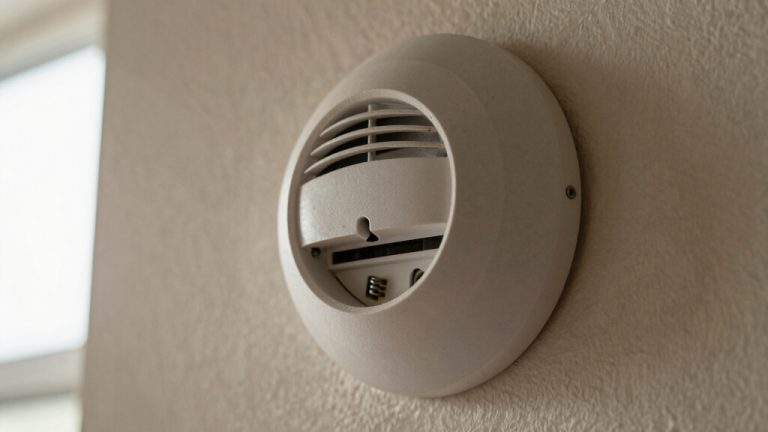
Install CO detectors near sleeping areas and on every level to provide early warnings. Proper maintenance and adherence to installation codes are critical to safely managing venting and leakage risks associated with fuel-burning furnaces.
In case of fire emergencies caused by furnace malfunctions, having a dry chemical fire extinguisher on hand can provide quick suppression to prevent further hazards.
Why Electric Furnaces Do Not Produce Carbon Monoxide?
You won’t find carbon monoxide in an electric furnace, and here’s why: it doesn’t rely on combustion to generate heat. Instead, it uses electrical resistance in heating elements to convert electricity directly into warmth.
This means there are no chemical byproducts involved.
Without any fuel burning, the system inherently lacks the conditions necessary for carbon monoxide production. So, you can feel a bit safer knowing that your electric furnace won’t be producing that harmful gas!
Additionally, electric furnaces contribute to energy efficiency by operating without combustion-related emissions.
No Combustion Process
Although many heating systems emit carbon monoxide due to fuel combustion, electric furnaces don’t produce this gas because they operate without burning any fuel.
Since electric furnaces rely entirely on electrical energy, they eliminate the combustion process responsible for CO formation.
No fuel such as natural gas, propane, or oil is burned, and therefore no incomplete combustion occurs, which is the sole chemical pathway for carbon monoxide generation.
You won’t find burners, flames, or combustion chambers in an electric furnace, nor will you need exhaust flues or venting systems to manage toxic gases.
This absence of combustion components guarantees that electric furnaces generate heat directly without producing CO or any byproducts, providing a fundamentally safer heating method compared to fuel-burning alternatives.
Heating Element Functionality
Electric furnaces rely on heating elements that convert electrical energy directly into heat without combustion, which is why they don’t produce carbon monoxide.
These elements consist of high-resistance metal alloys, such as nichrome, designed to impede electron flow and generate heat efficiently.
The electrical current heats the coils via the Joule heating mechanism, ensuring precise, combustion-free thermal output.
The process is controlled through sequencers and thermostats, activating elements in stages to maintain safety and prevent overload.
| Aspect | Description | Function |
|---|---|---|
| Heating Element | Nichrome coils | Resistive heat generation |
| Electrical Current | Controlled 240V flow | Heat activation |
| Sequencer | Staged coil energization | Prevents circuit overload |
| Heat Transfer | Conduction & convection | Air warming |
| Safety Features | Self-limiting temperature control | Maintains operational safety |
Electric furnaces are often paired with programmable thermostats that improve energy efficiency and precise temperature control.
Absence of Combustion Byproducts
Typically, furnaces that generate heat through electrical resistance don’t produce carbon monoxide because they operate without combustion.
Since electric furnaces rely solely on electrical energy converted by resistance elements, there’s no fuel burned.
Consequently, no combustion byproducts like carbon monoxide or volatile organic compounds are formed.
This absence of flame and chemical reactions eliminates any CO risks from the heating process.
Keep in mind these key points:
- No combustion means no carbon monoxide or nitrogen dioxide emissions.
- Electric systems avoid incomplete combustion hazards inherent in fossil fuels.
- No combustion gases require venting or exhaust systems.
- Indoor air quality improves without fumes or toxins from burning fuel.
Therefore, electric furnaces inherently guarantee safer operation with zero CO production.
Indirect Carbon Monoxide Risks Associated With Electric Heating
While electric furnaces themselves don’t produce carbon monoxide (CO), you should be aware that indirect risks arise from other combustion appliances and HVAC system interactions withinyour home.
Gas stoves, water heaters, oil furnaces, and propane devices can emit CO during incomplete combustion or malfunction.
Shared ductwork and poorly sealed HVAC systems may allow CO to infiltrate the electric furnace’s air stream, distributing it throughout your living spaces.
Blocked vents or faulty heat exchangers in adjacent combustion systems exacerbate this risk.
Additionally, maintenance lapses, such as neglected gas appliances or aging ductwork, can increase CO exposure.
Finally, upstream electricity generation from fossil fuels contributes indirectly to carbon emissions, though not CO inside your home.
Understanding these factors is essential for evaluating potential CO hazards when using electric heating.
Proper installation and maintenance of HVAC systems, including the use of reinforced frames, can help mitigate infiltration of harmful gases.
Safety Recommendations for Homes With Electric Furnaces
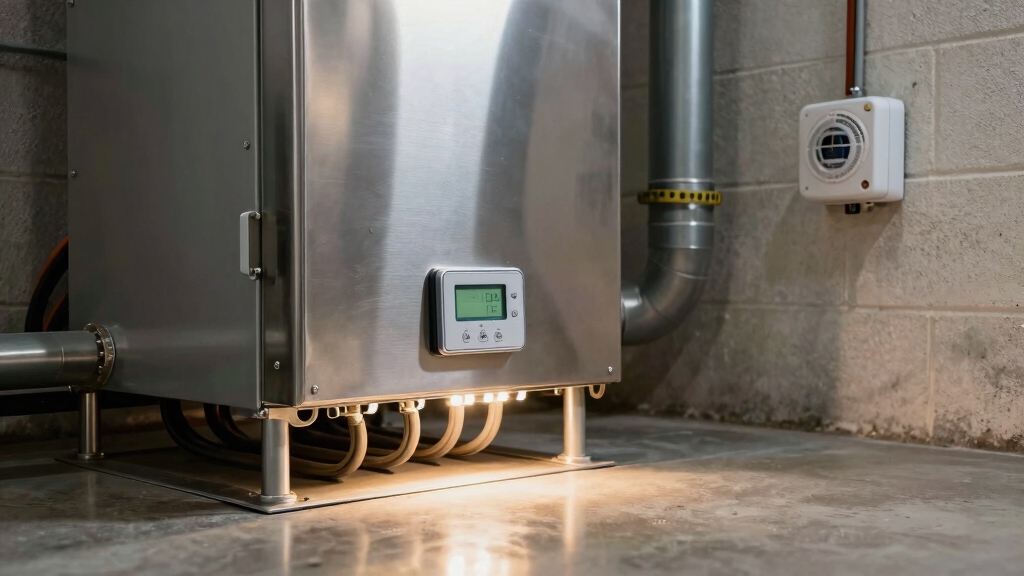
Regularly scheduling professional inspections is essential to make certain your electric furnace operates safely and efficiently.
A qualified HVAC technician should perform an annual inspection, focusing on electrical components and ensuring proper installation to prevent fire hazards.
Annual professional inspections ensure your electric furnace runs safely and efficiently, preventing potential fire hazards.
Additionally, maintain clear ventilation and clean vent systems to avoid blockages. To enhance safety, install UL-certified carbon monoxide detectors on each level of your home, especially near sleeping areas. Test detectors routinely and replace them every five years.
Follow these key safety steps for your home with an electric furnace:
- Schedule yearly professional maintenance and electrical inspections.
- Keep furnace area clutter-free and vents unobstructed.
- Install and maintain carbon monoxide detectors properly.
- Avoid improper enclosure or modifications to heating equipment.
Regular maintenance and inspections help ensure compliance with fire and safety standards and prevent hazards associated with malfunctioning equipment.
Common Myths About Carbon Monoxide and Electric Heating
Although electric furnaces don’t produce carbon monoxide (CO) themselves, several common misconceptions persist about their safety regarding CO emissions.
You might hear that all heating systems emit CO, but electric furnaces operate without combustion, using electrical resistance elements that don’t generate CO.
Another myth is that cracked heat exchangers in electric furnaces can leak CO; however, electric units lack combustion chambers and heat exchangers, so this failure mode doesn’t apply.
It’s also important to understand that having an electric furnace doesn’t eliminate CO risk in your home, since other combustion sources, like gas stoves or attached garages, can introduce CO.
Consequently, you should remain vigilant about all potential CO sources, not just your furnace.
Additionally, awareness of carbon monoxide sources beyond heating systems is crucial for comprehensive home safety.
The Role of Carbon Monoxide Detectors in Electric Furnace Homes
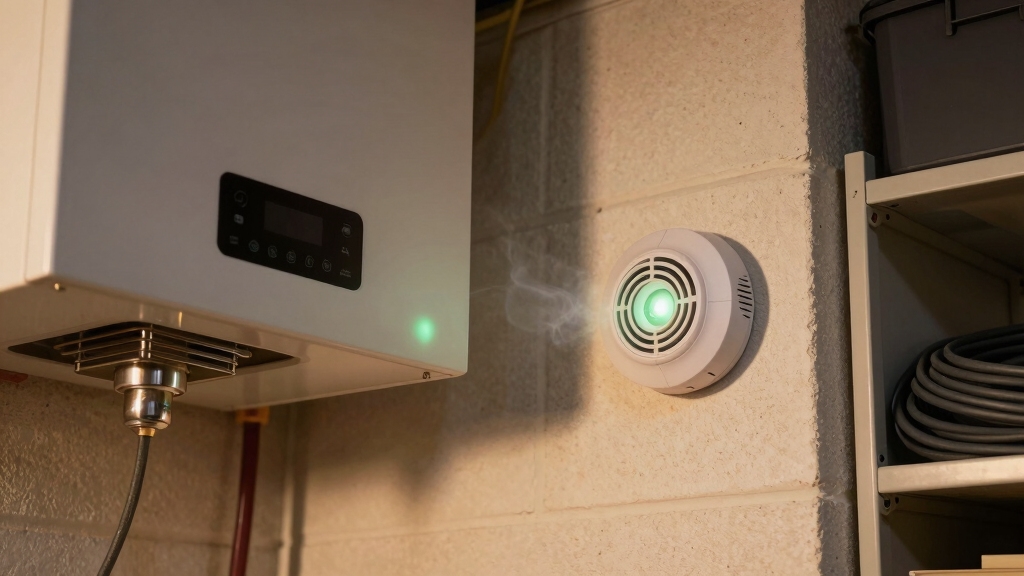
Even though electric furnaces don’t emit carbon monoxide, your home’s safety still depends on effective CO detection.
Carbon monoxide can originate from other household sources like blocked chimneys or malfunctioning gas appliances.
Installing CO detectors guarantees early warning of this invisible, odorless gas, protecting you and your family.
To maintain peak safety, you should:
- Place detectors on every level, especially near bedrooms and close to the furnace but 15-20 feet away from fossil fuel sources.
- Use reliable models—plug-in with battery backup, hardwired, or 10-year sealed battery units.
- Test alarms monthly and replace batteries every six months.
- Schedule professional inspections for all combustion appliances and verify proper detector placement.
These steps form your first line of defense against CO poisoning, even in homes heated by electric furnaces.
Environmental Considerations of Electric Furnace Use
When evaluating electric furnaces, you should consider their environmental impact both directly and indirectly.
Directly, electric furnaces produce zero CO₂ emissions since they lack combustion processes, eliminating greenhouse gases and indoor pollutants like nitrogen oxides.
This contrasts sharply with gas furnaces, which emit approximately 7,500 lbs of CO₂ annually for an average home.
Indirectly, emissions depend on your electricity source; coal-heavy grids may result in higher emissions than gas furnaces, while grids with renewables reduce the carbon footprint markedly.
Additionally, electric furnaces have longer lifespans and smaller manufacturing footprints, with most components recyclable.
Considering these factors, electric furnaces offer a cautious but clear environmental advantage, especially as clean energy integration advances.
Frequently Asked Questions
Can Electric Furnaces Cause Electrical Fires or Other Hazards?
Yes, electric furnaces can cause electrical fires and other hazards if improperly installed or maintained.
You risk overloaded circuits, loose connections causing arcing, or motor overheating, all potential ignition sources.
Faulty wiring insulation or improper breaker sizing increases these dangers.
To prevent issues, make certain correct installation, use OEM parts, and schedule annual inspections checking electrical integrity and safety device function.
Vigilance minimizes fire risks and protects your home’s electrical system.
How Often Should Electric Furnaces Be Professionally Inspected?
You should have your electric furnace professionally inspected at least once per heating season, ideally annually before winter starts.
This timing aligns with general HVAC maintenance recommendations to guarantee peak performance and safety. If you use your furnace heavily, consider more frequent inspections.
A professional will check heating elements, electrical connections, airflow, and safety controls to prevent failures and maintain efficiency. This helps you avoid costly repairs or hazards.
What Maintenance Tasks Can Homeowners Perform on Electric Furnaces?
You can vacuum the blower fan and motor housing quarterly to reduce dust buildup. Wipe heating elements gently with a soft cloth to avoid damage.
Clean or replace air filters monthly or bi-monthly, and inspect duct openings seasonally for obstructions. Annually, remove dirt from the cabinet exterior.
Additionally, check for unusual noises monthly and test electrical connections semiannually. Always follow manufacturer guidelines and schedule professional inspections yearly for safety.
Are Electric Furnaces More Cost-Effective Than Gas Furnaces to Operate?
Electric furnaces generally cost more to operate than gas furnaces because electricity prices per heat unit tend to be higher.
However, if you live where electricity is cheap or natural gas prices spike, electric heating might be more economical.
Also, electric resistance furnaces convert nearly all input energy to heat, but gas furnaces’ higher fuel efficiency and lower fuel cost usually make them cheaper to run in most regions.
How Do Electric Furnaces Affect Indoor Air Quality Compared to Other Heaters?
Think of your indoor air as a delicate ecosystem. Electric furnaces act like gentle gardeners, circulating clean air without introducing combustion pollutants like carbon monoxide or soot.
Unlike gas heaters, they don’t produce harmful byproducts, which helps maintain better air quality. However, you should still monitor other potential sources of indoor pollution.
Electric Furnaces and Indoor Air Quality: What Homeowners Should Do?
You don’t have to worry about electric furnaces producing carbon monoxide since they generate heat without combustion.
Curiously, the U.S. Consumer Product Safety Commission reports that over 200 deaths annually result from CO poisoning linked to fuel-burning appliances, highlighting the safety advantage of electric heating.
However, you should remain cautious of indirect risks like poor ventilation or faulty electrical components. Always maintain CO detectors and follow safety guidelines to make certain your home stays secure.