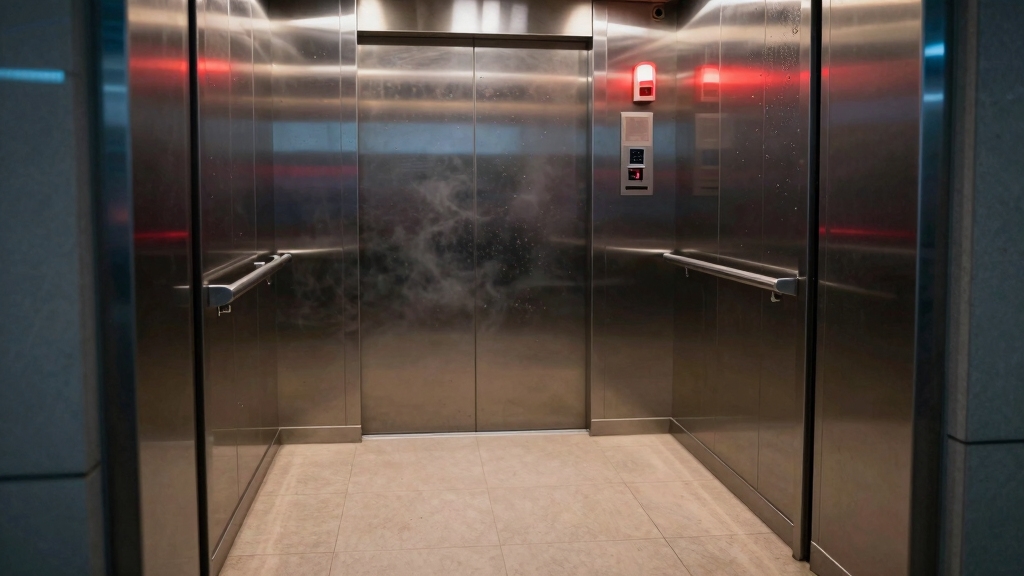

When a fire alarm goes off, elevators automatically recall to a designated floor and shut down power to prevent use during emergencies.
This Phase I Emergency Recall operation bypasses all stops, opens doors at the recall floor, and remains inactive until the alarm resets.
Power interruption occurs via monitored shunt trip devices to reduce hazards and clear the hoistway for responders.
You’ll find a system of integrated controls, safety codes, and manual overrides designed to enhance fire safety and responder access.
Key Takeaways
- Elevators automatically recall to a designated floor and bypass intermediate stops when a fire alarm activates.
- Elevator power is typically shut down by a shunt trip device to prevent electrical hazards during fire emergencies.
- Fire alarm initiating devices on each floor and in machine rooms trigger elevator recall and power shutdown.
- Manual firefighter controls can override automatic recall to allow safe elevator operation during emergencies.
- Elevator power shutdown resets automatically after fire conditions clear, restoring normal elevator functions.
How Fire Alarms Trigger Elevator Recall and Shutdown?
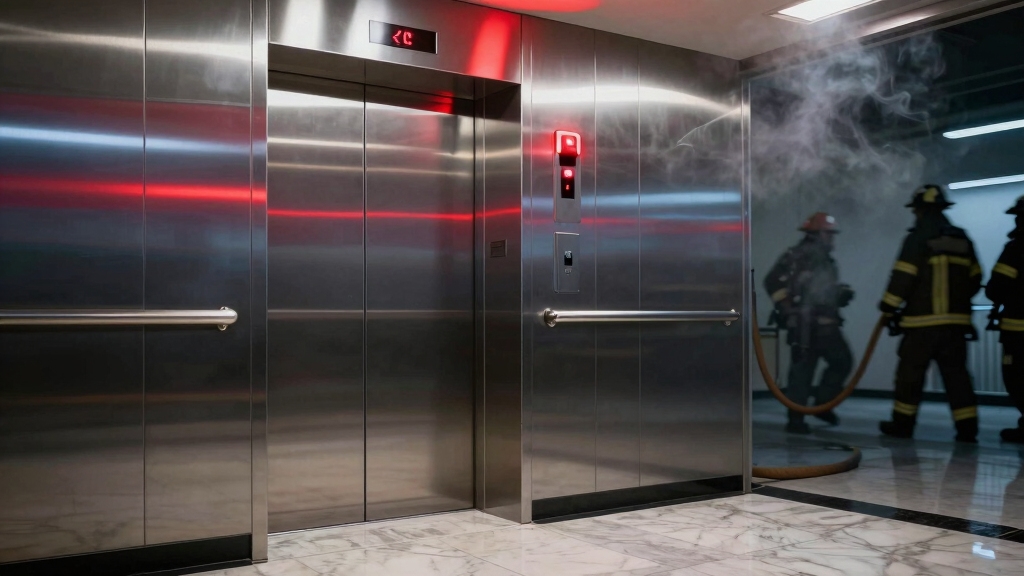
When a fire alarm goes off, the system kicks in an automatic recall of all elevators to a designated floor, known as Phase I Emergency Recall Operation.
This process is initiated by smoke detectors installed in elevator lobbies, hoistways, and machine rooms. If the alarm activates on any floor other than the designated one, all elevators return nonstop to that specific floor.
Elevators rising more than 80 inches must have Firefighter Emergency Operations capabilities. Fire alarm initiating devices are required at every floor served by the elevator, as well as in the machine room and control space.
This setup guarantees prompt detection and initiation of recall and power shutdown sequences to minimize fire-related risks associated with elevator operation during emergencies.
Modern fire alarm systems often integrate with building management systems to enable automatic verification and dispatch, enhancing emergency response effectiveness.
What Phase I Emergency Recall Means for Elevators?
Phase I Emergency Recall Operation directs elevators to automatically return to a designated floor immediately after a fire alarm activates, except when the alarm originates at that floor.
When triggered, you’ll find that elevators bypass all intermediate floors, returning nonstop to the recall level to clear the hoistway for emergency responders.
This recall is initiated by smoke detectors or fire alarm devices located in elevator lobbies, hoistways, and machine rooms.
Once the elevator arrives at the designated floor, its doors open and remain open, preventing further use until the fire alarm system resets.
This operation guarantees occupant safety by removing elevators from potential fire-affected zones while facilitating firefighter access.
The recall system follows strict code requirements, including NFPA 72 and ASME A17.1 standards.
To ensure rapid emergency response, recall activation is often integrated with monitored fire alarm systems that automatically notify fire departments.
Why Tall-Rise Elevators Need Firefighter Emergency Operations?
Elevator systems in tall-rise buildings demand specialized Firefighter Emergency Operations (FEO) to guarantee safe and efficient fire response.
Elevators over 80 inches high require FEO to assure manual control by firefighters during emergencies, overriding automatic recall. This system enhances fireground safety and avoids entrapment risks.
Automatic fire alarm systems with central monitoring can further improve firefighter response by providing verified emergency notifications for quicker intervention.
| Feature | Purpose | Requirement |
|---|---|---|
| Phase I Recall | Automatic elevator return | Mandatory on fire alarm |
| Manual Firefighter Use | Controlled elevator operation | Firefighter override switch |
| Power Shutdown | Prevent electrical hazards | Coordinated with sprinkler use |
| Signage | Inform occupants and responders | Clear instructions visible |
These components ensure both occupant safety and firefighter access under stringent code compliance.
Where Fire Alarm Devices Must Be Installed for Elevator Safety?
When it comes to elevator safety, it’s really important to have fire alarm initiating devices installed on every floor that the elevator serves. This way, we can ensure a quick recall of the elevator in case of an emergency.
But that’s not all! We also need to place detectors in the machine room and control space. These areas are crucial for monitoring the elevator’s critical components.
By having detectors in these spots, we can trigger emergency recall and keep the elevator operation safe during a fire event.
Additionally, it is critical to avoid using elevators during a fire alarm and instead use stairwells for safe evacuation.
Elevator Floor Device Locations
Several critical locations require the installation of fire alarm initiating devices to guarantee elevator safety during emergencies. You must make certain these devices detect smoke or fire promptly to trigger Phase I Emergency Recall and elevator power shutdown effectively.
Key locations include:
- At each floor served by the elevator, especially elevator lobbies, to detect hazards near passenger areas.
- Inside the machine room, where elevator machinery can be vulnerable to fire and smoke.
- In the control space, housing electrical and control systems critical for elevator operation.
- Within the hoistways, to monitor fire conditions along the elevator shaft.
Proper placement ensures rapid detection and coordinated elevator recall, minimizing risk to occupants and firefighters during emergencies. Additionally, integrating fire alarms with battery backup systems ensures uninterrupted operation even during power outages, maintaining elevator safety at all times.
Machine Room Alarm Placement
Within the machine room, strategically placed fire alarm devices play a crucial role in detecting smoke or fire that could compromise elevator safety.
You must install smoke detectors in this space to promptly initiate Phase I Emergency Recall, guaranteeing elevators return to a designated floor without delay.
Positioning these devices correctly prevents damage to elevator machinery and reduces fire spread risk.
Since the machine room houses critical elevator controls, the fire alarm system must integrate seamlessly with elevator shutdown and recall operations.
You should follow NFPA 72 and ASME A17.1 standards to guarantee compliance and reliability.
Proper documentation and approval by the authority having jurisdiction are essential before installation.
Avoid placing devices where false alarms might occur, maintaining system integrity and occupant safety at all times.
Fire alarm systems typically include multiple detectors such as smoke and heat sensors for comprehensive fire detection in critical areas like machine rooms.
Control Space Detector Requirements
Although often overlooked, control spaces require carefully placed fire alarm devices to guarantee elevator safety during emergencies. You must make certain these detectors are installed to promptly detect smoke or fire, triggering Phase I Emergency Recall Operation.
Specifically, fire alarm initiating devices must be positioned:
- In the control space where elevator controls reside
- At each floor served by the elevator
- Within the elevator machine room
- In elevator lobbies and hoistways for thorough monitoring
This precise placement enables immediate recall of elevators to a safe, designated floor and initiates power shutdown if necessary. Proper detector installation in these critical areas aligns with NFPA and ASME safety codes, reducing risk and enhancing occupant safety during fire incidents.
Neglecting control space detectors compromises the entire emergency recall system’s reliability and effectiveness. Additionally, power surges caused by fire events can disrupt elevator control systems if protective measures are not implemented.
How Elevator Power Shutdown Works During a Fire Alarm?
When a fire alarm activates, the elevator power shutdown system quickly disconnects the main power supply to prevent elevator use during the emergency.
Upon fire alarm activation, elevator power is promptly cut to ensure safety during emergencies.
This shutdown is typically achieved through a shunt trip device that interrupts the elevator’s electrical circuit before sprinkler water can affect equipment.
Heat detectors linked to the fire alarm can also initiate power cutoff in facilities with wet sprinkler systems.
The control circuits for this shutdown are continuously monitored for voltage; any loss triggers a supervisory signal to alert building management.
Once the fire condition clears, the system self-resets to restore normal elevator operation.
You must make sure these mechanisms are installed and maintained precisely to comply with safety requirements and avoid delays or failures during emergencies.
Proper installation locations near exits and escape routes help ensure quick access for safety device activation and maintenance.
Key Safety Codes for Elevator Shutdown and Fire Recall
It’s really important to understand the elevator shutdown codes, especially the ones outlined in NFPA 72 and ASME A17.1. These codes play a crucial role in fire recall operations and emergency power controls.
Basically, what they do is ensure that elevators automatically return to a designated floor when a fire alarm goes off. They also make sure that power is safely disconnected during such emergencies.
Following these standards isn’t just a formality; it’s essential for keeping everyone safe and ensuring that the system works reliably when it’s needed the most.
Integrating these protocols with multi-point locking systems and reinforced construction in building access points enhances overall emergency security.
Elevator Shutdown Code
Since elevator shutdown during fire emergencies involves critical safety considerations, it must adhere strictly to established codes such as NFPA 72 Section 6.15.4 and ASME A17.1.
These codes define how and when elevators disconnect power and initiate shutdown to prevent hazards during fires.
You should know these key points about elevator shutdown code compliance:
- Fire alarm initiating devices must be installed in all elevator-relevant areas, including machine rooms and hoistways.
- Elevator power shutdown systems require monitored control circuits to detect voltage loss and trigger supervisory signals.
- Time-delay switches are prohibited for pressure or waterflow devices controlling elevator power disconnection.
- Design documents must be approved by the authority having jurisdiction and kept onsite for inspection.
Following these rules guarantees elevator shutdown systems function reliably and safely during emergencies. It is important to avoid using time-delay switches in safety-critical systems to ensure immediate response without compressor or equipment protection delays.
Fire Recall Operations
Building on the foundation of elevator shutdown code compliance, fire recall operations play a pivotal role in coordinating elevator response during fire emergencies.
When a fire alarm activates, Phase I Emergency Recall automatically returns elevators to a designated floor, assuring occupant safety.
You must assure fire alarm initiating devices are installed on each floor, machine room, and control space to trigger this recall.
Firefighter Emergency Operations capabilities are mandatory for elevators rising over 80 inches.
Manual override switches at the fire control station allow firefighters to control elevator use.
| Feature | Requirement |
|---|---|
| Phase I Recall Activation | Automatic upon fire alarm |
| Smoke Detector Locations | Lobbies, hoistways, machine rooms |
| Firefighter Emergency Ops | Required for elevators > 80 inches rise |
| Manual Recall Switch | Located at fire control station |
| Design Approval | Authority having jurisdiction |
Emergency Power Controls
Guaranteeing reliable emergency power controls plays a critical role in the safe shutdown and recall of elevators during fire incidents. When the fire alarm activates, these controls initiate power disconnection to prevent elevator use and facilitate firefighter access.
You must guarantee the system aligns with NFPA 72 and ASME A17.1 standards, which mandate monitored control circuits and self-resetting shutdown mechanisms.
Key considerations include:
- Shunt trip devices disconnect elevator power before sprinkler water discharge.
- Heat detectors linked to the fire alarm system trigger power shutdown in wet-sprinkler areas.
- Control circuits require continuous voltage monitoring to detect faults or tampering.
- Supervisory signals alert staff if shutdown circuits lose voltage, guaranteeing prompt response.
Proper integration and testing confirm these controls operate precisely during emergencies.
Integrating Elevator Shutdown With Fire Alarm and Sprinkler Systems
When designing elevator shutdown systems, you need to closely coordinate their operation with fire alarm and sprinkler systems to guarantee timely and safe responses during emergencies.
The system must integrate fire alarm initiating devices at each elevator-served floor, machine rooms, and control spaces to trigger Phase I Emergency Recall and power shutdown mechanisms, such as shunt trips, before sprinkler activation.
You must make certain heat detectors linked to sprinklers initiate shutdown without causing false alarms or unnecessary evacuation signals.
Compliance with NFPA 72 and ASME A17.1 requires monitored control circuits and self-resetting functionality post-emergency.
Proper separation standards from NFPA 13 and NEC protect electrical components from sprinkler discharge, potentially allowing selective power shutdown.
Coordinating these systems minimizes risk and ensures elevators operate safely and predictably during fire events.
Testing and Maintaining Elevator Shutdown Systems
To ensure everything runs smoothly, you’ll need to conduct thorough testing of the elevator shutdown system. This means simulating fire alarm conditions to verify that the recall and power cutoff work as they should.
It’s a good idea to coordinate closely with both elevator and fire alarm contractors. That way, you can guarantee system integrity and compliance.
Also, don’t forget about the importance of clear signage and documented emergency procedures. These are essential for guiding both occupants and responders during an incident. Keeping everyone informed will make a big difference when it matters most!
Testing Procedures Overview
Although elevator shutdown systems are designed for reliability, you must conduct thorough testing immediately after installation and regularly thereafter to confirm proper functionality.
Testing simulates fire alarm conditions and verifies that elevators return to the designated recall floor and that power shuts off after the programmed delay.
Follow these key testing steps:
- Activate fire alarm initiating devices to trigger Phase I Emergency Recall.
- Confirm elevator cabs return nonstop to the lowest recall level without stopping.
- Verify shunt trip mechanism disconnects elevator power supply appropriately.
- Monitor control circuits to ensure supervisory signals activate upon fault or loss of voltage.
Precision in testing prevents system failures during emergencies. Document all procedures and results meticulously to guarantee compliance with NFPA 72 and ASME A17.1 standards.
Coordination With Contractors
Thorough testing of elevator shutdown systems requires close collaboration between elevator contractors and fire alarm system contractors.
You must coordinate schedules to simulate fire alarm activations accurately, verifying that elevators execute Phase I Emergency Recall and that power shutdown mechanisms engage after the programmed delay.
Both parties should review control circuits, shunt trip functions, and supervisory signals to guarantee compliance with NFPA 72 and ASME A17.1 standards. During maintenance, you’ll confirm the self-resetting feature restores normal operations post-emergency.
Documentation of test results and any corrective actions must be shared and retained on-site for jurisdictional review. Your cautious approach minimizes system failures during actual emergencies, assuring occupant safety and regulatory compliance.
Clear communication between contractors is essential for seamless integration and reliable elevator shutdown system performance.
Signage And Emergency Protocols
When testing and maintaining elevator shutdown systems, clear and visible signage plays a critical role in guiding occupants during fire emergencies.
You must make certain signage indicates automatic elevator recall to the lowest level and provides evacuation instructions.
Testing procedures should simulate fire alarm conditions to verify proper elevator recall and power shutdown.
Coordination between elevator and fire alarm contractors is essential for accurate system validation.
Emergency protocols must be documented and readily accessible to facilitate occupant evacuation and firefighter response.
Key actions to focus on include:
- Verify signage clarity and location near elevator lobbies.
- Conduct functional tests simulating fire alarm activation.
- Confirm power shutdown and elevator recall operate as designed.
- Update emergency evacuation procedures and train personnel accordingly.
How Firefighters Use Manual Fire Recall Switches Safely?
Since manual fire recall switches override the elevator’s automatic recall operation, you must operate them with care to guarantee firefighter safety and building occupant protection.
At the building fire control station, you’ll find the Fire Recall switch, which you must rotate clockwise from “RESET” to “OFF” and then to “ON” to engage manual recall.
Keys are removable only in the “OFF” and “ON” positions, preventing accidental disengagement.
You should verify that all three elevator control circuits terminate correctly in the designated machine room controller before activating the switch.
Remember, removing elevators from Phase I Emergency Recall requires rotating the switch back to “RESET” and then “OFF.”
Always coordinate manual recall use with fire department protocols to maintain system integrity and ensure that elevators respond predictably during fire emergencies.
Emergency Procedures to Protect Occupants During Elevator Fires
Although elevators are designed with multiple safety features during fires, you must follow strict emergency procedures to protect occupants trapped inside. Ensuring their safety requires prompt, coordinated action aligned with fire alarm and elevator recall systems.
Elevator safety during fires demands strict, coordinated emergency procedures to protect trapped occupants effectively.
To protect occupants during elevator fires, you should:
- Initiate immediate evacuation protocols, directing occupants away from elevators to stairwells.
- Activate Phase I Emergency Recall to return cabs to the designated floor and prevent further use.
- Shut down elevator power via approved mechanisms to reduce electrical and fire hazards.
- Coordinate with fire responders for safe occupant extraction and manual override of elevator controls if necessary.
Adhering to these procedures minimizes risk and complies with NFPA and ASME safety codes. This effectively safeguards occupants.
Frequently Asked Questions
Can Elevators Be Manually Operated During a Fire Emergency?
Yes, you can manually operate elevators during a fire emergency using the Fire Recall switch at the building’s fire control station.
Rotate the switch clockwise from “RESET” to “OFF” and then to “ON.” Keep in mind, keys are removable only in the “OFF” and “ON” positions.
This manual override allows firefighters to control elevator recall operations safely. It ensures coordinated emergency response while preventing unauthorized use during the incident.
What Happens if an Elevator Gets Stuck During a Fire?
If an elevator gets stuck during a fire, you mustn’t try to use it.
Emergency procedures require you to follow documented evacuation protocols and call for fire department assistance immediately.
Firefighters have specialized training and equipment to safely evacuate trapped occupants.
Elevator shutdown systems and emergency recall operations aim to prevent such situations.
If one occurs, coordinate with emergency responders to guarantee your safety and avoid risking further entrapment or injury.
Are All Elevators in a Building Required to Have Fire Recall Features?
Not all elevators must have fire recall features, but those rising more than 80 inches typically do per ASME A17.1 standards.
You’ll find fire alarm initiating devices installed at each served floor, machine room, and control space to trigger recall.
Elevators below that height mightn’t need full firefighter emergency operations.
Always check your local code and authority having jurisdiction for specific requirements, as compliance guarantees occupant safety and proper emergency response.
How Quickly Do Elevators Respond to Fire Alarm Activation?
When a fire alarm activates, elevators respond like a well-trained guard dog, springing into action almost instantly.
The Phase I Emergency Recall Operation kicks in immediately, sending elevators directly to a designated floor nonstop.
Power shutdown follows swiftly, typically before sprinklers discharge water.
This rapid sequence guarantees occupant safety by minimizing elevator use during fire emergencies, giving you a reliable, code-compliant response within seconds of alarm initiation.
Do Elevator Shutdowns Affect Emergency Power or Backup Generators?
Elevator shutdowns typically don’t affect emergency power or backup generators directly.
You’ll find elevator power is disconnected via shunt trip mechanisms before sprinkler water application, but emergency power systems remain active to maintain critical functions.
However, elevator controls and recall operations rely on integrated fire alarm and building management systems.
Emergency power supports these systems without powering elevator motors during shutdown. Always verify coordination between shutdown and emergency power in your facility’s design.
Safety in Motion: How Elevators Protect You During a Fire
When the fire alarm blares, imagine elevators halting like sentinels, ensuring your safety by recalling to designated floors or shutting down power to prevent danger.
These precise systems, integrated with alarms and sprinklers, act swiftly and cautiously, protecting both occupants and firefighters.
Understanding how these mechanisms work helps you stay prepared, trusting that every emergency recall and shutdown is designed to keep you secure amidst the chaos of a fire event.