
Yes, fog machines can set off fire alarms because their vapor contains microscopic droplets that mimic smoke particles.
These particles scatter light and disrupt ionization currents inside detectors, tricking sensors into detecting combustion byproducts.
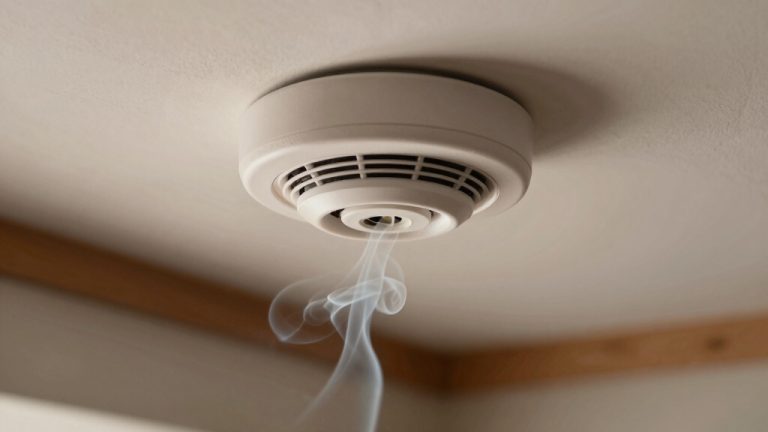
Ionization, photoelectric, and hybrid detectors all respond differently, but dense fog near ceiling-mounted sensors markedly raises false alarm risk.
Understanding the types of detectors involved and how fog interacts with them helps you manage or prevent these unintended activations effectively.
Key Takeaways
- Fog machines emit microscopic vapor droplets that mimic smoke particulates, triggering fire alarms by scattering light or disrupting ionization currents.
- Photoelectric detectors respond to light scattering from fog particles, often causing false alarms in enclosed spaces with dense fog.
- Ionization detectors detect small particles causing current drops, making them sensitive and prone to fog-triggered false alarms.
- Hybrid detectors combining photoelectric and ionization methods have heightened sensitivity, increasing false alarm risk during fog machine use.
- Dense fog accumulates near ceiling-mounted sensors, where most detectors are installed, raising the likelihood of fire alarm activation.
Why Fog Machines Set Off Fire Alarms?
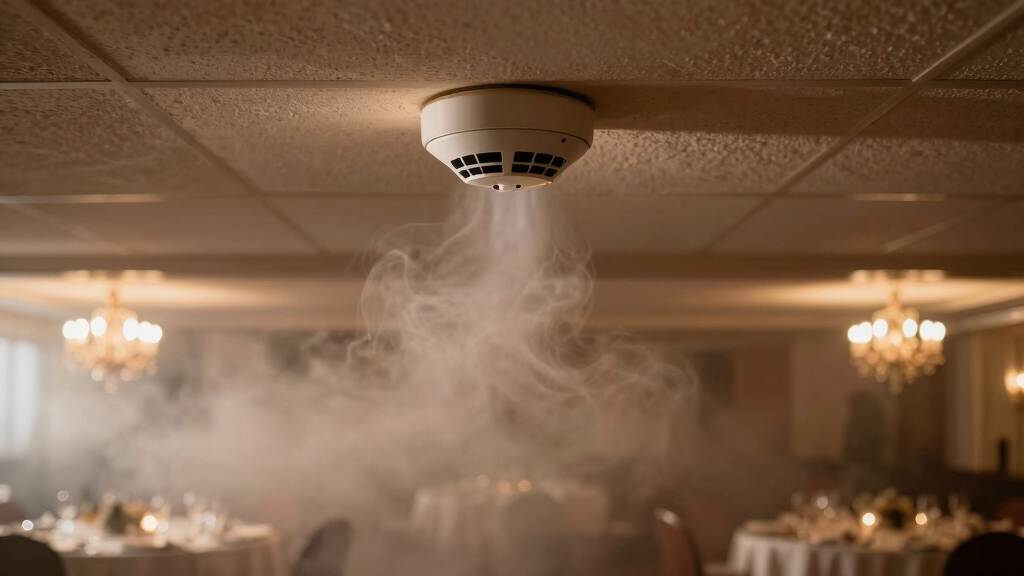
Although fog machines produce harmless vapor, they often set off fire alarms because the suspended particles mimic smoke. This disrupts detector sensors designed to identify combustion byproducts.
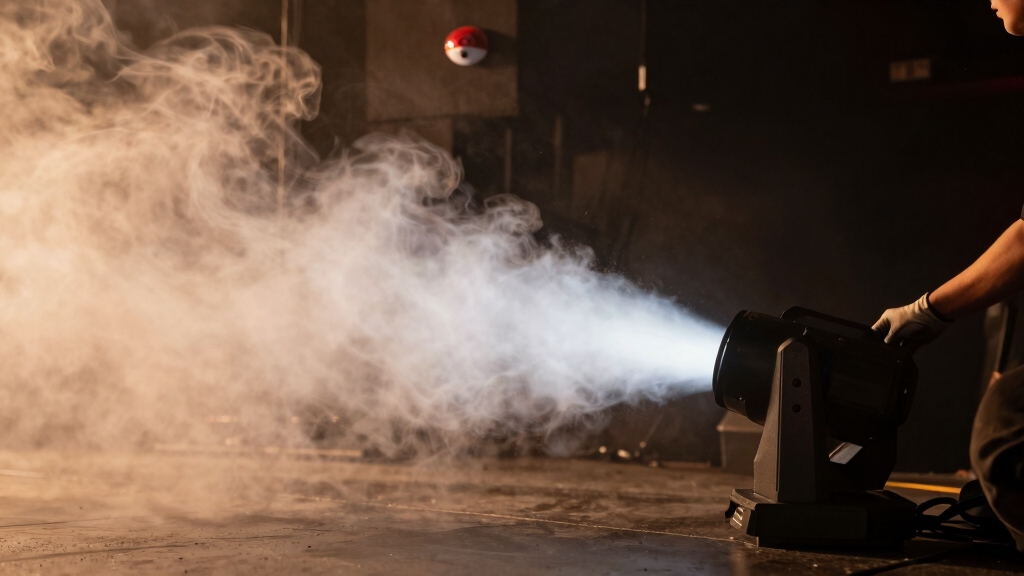
Fog machines heat a specially formulated fluid, generating vapor that contains microscopic droplets. These droplets scatter and absorb light or interfere with ionization currents inside smoke detectors.
When vapor density reaches a threshold, detectors interpret this as a sign of fire. The vapor’s physical properties, such as particle size and concentration, closely resemble smoke particulates, triggering alarms.
Additionally, dense fog tends to accumulate near ceilings where detectors are installed. This increases the likelihood of sensor disruption. Knowing this mechanism helps you anticipate alarm activation during fog use and plan mitigation strategies for safer operation.
Proper ventilation and strategic placement of detectors can reduce false alarms caused by fog machine vapor by preventing dense particle accumulation.
Which Smoke Detectors Are Most Likely to Be Triggered by Fog?
You know, when it comes to smoke detectors, ionization detectors are pretty sensitive. They can easily be triggered by fog because those tiny fog particles mess with their electrical currents. It’s not uncommon for them to go off for no good reason!
On the other hand, photoelectric detectors are also quite responsive. They work by detecting scattered light, which means they can trigger alarms even with just a little bit of haze in the air. So, if there’s fog around, you might find these going off too.
Then we’ve hybrid detectors, which combine both ionization and photoelectric methods. These are actually the most reactive when it comes to fog interference. So, if you’re in a foggy area, you might want to keep these factors in mind!
Photoelectric sensors detect smoke using the Tyndall Effect, which causes light scattering by particles like fog or smoke to trigger the alarm.
Ionization Detector Sensitivity
Because ionization detectors rely on maintaining an electric current within a small chamber, the vapor particles produced by fog machines can disrupt this current and trigger false alarms.
These detectors use a radioactive source to ionize air molecules, creating a steady current. When smoke or fog particles interfere, the current drops, signaling an alarm.
Fog’s microscopic droplets mimic smoke particles’ behavior, causing the detector to interpret vapor as fire.
You’ll find ionization detectors especially sensitive to dense or prolonged fog exposure, as vapor concentration increases ionization chamber interference.
Unlike photoelectric types, ionization sensors respond quickly to small particles, making them more prone to false triggers with fog.
The particle size and density of fog droplets closely resemble smoke, which ionization sensors cannot chemically distinguish from actual fire particles.
Photoelectric Detector Responses
Photoelectric smoke detectors operate by projecting a light beam into a sensing chamber and detecting scattered light caused by smoke particles.
When you use a fog machine, the vapor particles mimic smoke, scattering the light and triggering the sensor.
You’ll find that photoelectric detectors, common in public buildings, are highly sensitive to this effect due to their optical detection method.
The dense fog generated by commercial machines increases light scattering, causing false alarms more frequently than ionization types.
If you’re managing an event, it’s vital to understand that photoelectric alarms react quickly to suspended particles, including water-based fog vapor.
Their design prioritizes early detection of smoldering fires but inadvertently makes them prone to fog interference.
This is especially true in enclosed spaces with poor ventilation or concentrated fog buildup near ceiling-mounted sensors.
Because smoke detectors provide early alerts by sensing airborne particles, they are more susceptible to non-fire aerosols like fog than sprinklers.
Hybrid Detector Detection Methods
Hybrid smoke detectors combine ionization and photoelectric technologies to enhance fire detection accuracy by monitoring both electric current disruptions and light scattering.
When fog particles enter these detectors, their dual mechanisms increase sensitivity compared to single-technology units.
The ionization chamber detects changes in the electric current caused by vapor particles, while the photoelectric sensor senses the scattering of light beams by fog.
This dual detection raises the likelihood of triggering alarms under fog conditions, especially with dense or prolonged exposure. If you’re using fog machines in spaces equipped with hybrid detectors, expect them to respond more quickly and consistently than ionization-only models.
Consequently, it’s essential to test fog density and ventilation to avoid false alarms in environments with hybrid detection systems.
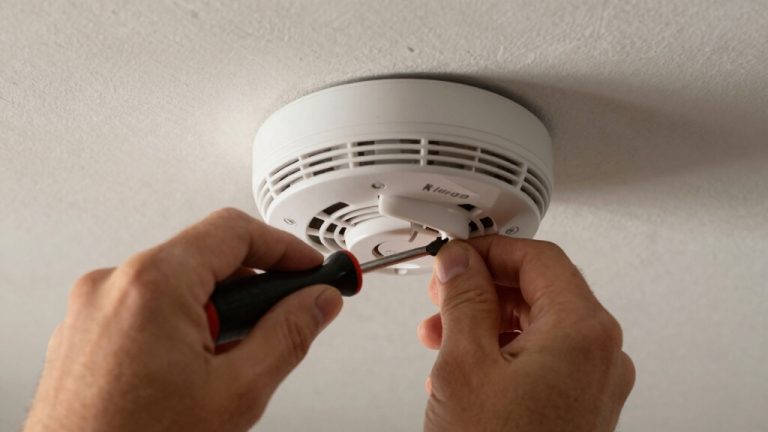
Proper inspection and maintenance of smoke detectors can help manage their sensitivity and reduce false alarms caused by fog machines.
Real-Life Examples of Fog Machines Triggering Fire Alarms
When fog machines kick in during events, they often set off fire alarms due to the dense vapor’s interference with detection systems.
For example, a church DJ event triggered alarms near strobe detectors. A school cafeteria gig using Chauvet 1300 fluid set off sensors repeatedly.
Modern buildings with multi-sensor detectors are particularly sensitive, especially in confined spaces where fog concentrates.
| Event Location | Fog Machine Fluid Type | Alarm Triggered |
|---|---|---|
| Church DJ Event | Standard glycol-based | Yes, near strobe sensor |
| School Cafeteria | Chauvet 1300 water-based | Yes, repeated triggers |
| Public Venue | Commercial-grade fluid | Yes, multi-sensor alarm |
Because fire alarms rely on detecting smoke particles which can be mimicked by dense fog, understanding the fire fundamentals behind detection is crucial to prevent false alarms.
Testing Fog Machines Without Triggering Alarms
Sure! Here’s a more conversational version of your text:
You’ll want to kick things off by checking the sensitivity of your detectors in a safe, controlled space. It’s a smart idea to see where those alarm thresholds really lie.
Start by releasing fog in small, measured amounts. This way, you can figure out at what concentration the alarms actually go off.
Remember to consider how particulate matter from the fog can accumulate and affect sensor response during your testing.
Detector Sensitivity Testing
Because fog machines emit vapor that closely mimics smoke particles, you must carefully test detector sensitivity before use to avoid false alarms.
Begin by identifying the types of detectors installed: ionization, photoelectric, or hybrid, as each responds differently to particulate density.
Introduce low-density fog incrementally while monitoring detector response via control panels or indicator lights.
Use calibrated measurement tools to quantify vapor concentration near sensors, assuring it stays below triggering thresholds.
Record alarm activation points to establish safe operating limits. Conduct multiple trials under varied ventilation conditions to assess consistency and environmental impact.
This analytical approach enables you to determine precise fog output levels that minimize false alarms without compromising event ambiance or safety compliance.
Avoid bypassing protocols; sensitivity testing guarantees reliable fire detection alongside fog machine use.
For systems without automatic monitoring, it is essential that occupants remain prepared to manually contact emergency services in case an alarm is triggered by fog, emphasizing the importance of manual 911 calls for safety.
Controlled Fog Release
Executing controlled fog release demands careful modulation of fog density and dispersion to prevent fire alarm activation while maintaining desired atmospheric effects. You must calibrate fog output incrementally, monitor sensor response, and adjust ventilation to minimize aerosol concentration near detectors.
Use directional fans to guide vapor away from alarms, reducing particle accumulation in sensitive zones.
| Parameter | Control Method | Effect on Alarm Risk |
|---|---|---|
| Fog Density | Gradual increase | Limits sensor overload |
| Dispersion | Use of fans and vents | Redirects vapor flow |
| Duration | Short bursts | Prevents particle buildup |
| Sensor Monitoring | Real-time alarm status check | Immediate response to triggers |
Preventing Fire Alarms During Fog Use
When using fog machines in enclosed spaces, preventing false fire alarms requires careful planning and control of vapor density.
You should start by testing smoke detectors in the venue under low fog output to identify sensitivity thresholds.
Use water-based fluids to minimize particulate density. Adjust the fog machine’s output to avoid saturating the air near ceiling-mounted alarms.
Position fans strategically to direct vapor away from detectors, enhancing ventilation to dissipate fog quickly.
If possible, temporarily disable non-critical alarms during controlled testing, but only with proper authorization and safety measures.
Always maintain communication with venue safety personnel to guarantee compliance.
These technical steps reduce false alarms by controlling particulate concentration and airflow. This ensures fog use stays within safe operational parameters without compromising fire detection systems.
Additionally, recognizing how moisture exposure can affect sensor reliability helps in planning fog machine use around alarm systems.
Key Fire Safety Risks for Venues Using Fog Machines
Managing fog machine output helps reduce false alarms, but venues still face significant fire safety risks tied to fog use. Dense vapor can accumulate near ceiling detectors, increasing false alarm probability.
Photoelectric sensors, common in public spaces, are particularly sensitive to fog particles. Older detection systems lack advanced filtering, raising risk. You must consider ventilation, fog fluid type, and room size to mitigate hazards effectively.
| Risk Factor | Impact |
|---|---|
| Dense fog accumulation | Triggers ceiling-mounted detectors |
| Sensor type sensitivity | Photoelectric most prone to false alarms |
| Ventilation efficiency | Poor airflow prolongs vapor presence |
| Detection system age | Older systems less resistant to fog |
Installing photoelectric smoke detectors according to manufacturer guidelines can improve reliability in fog-prone environments.
Understanding these risks helps you optimize safety protocols when using fog machines in public venues.
Frequently Asked Questions
Are Fog Machines Safe to Use in Residential Homes With Smoke Detectors?
You can use fog machines in residential homes, but you must be cautious.
Smoke detectors, especially photoelectric and ionization types, may falsely trigger due to fog particles scattering light or disrupting electric currents.
To avoid alarms, test a small amount first.
Make certain proper ventilation and keep fog away from detectors.
Adjust output levels and use water-based fluids to reduce risk.
Always monitor detector sensitivity before extended use.
How Long Does Fog Linger in a Typical Indoor Environment?
Fog typically lingers indoors for 15 to 30 minutes, depending on room size, ventilation, and fog density.
In small, poorly ventilated spaces, fog can persist longer, accumulating near ceilings and sensors.
You can reduce lingering time by increasing airflow with fans or opening windows.
Denser fog takes more time to dissipate, so adjusting output helps control duration.
Monitoring environmental factors guarantees you manage fog clearance efficiently and avoid prolonged vapor buildup.
Can Fog Machine Fluid Cause Damage to Smoke Detector Sensors?
Like a gentle rain on delicate electronics, fog machine fluid generally won’t damage smoke detector sensors if used properly.
The water-based fluids are designed to vaporize cleanly without leaving residue. However, excessive use or poor ventilation can cause buildup, potentially affecting sensor sensitivity over time.
To keep detectors in tip-top shape, make sure there’s proper ventilation and avoid continuous heavy fog exposure. This prevents any long-term sensor impairment.
What Are the Differences Between Fog and Haze Machines Regarding Fire Alarms?
You’ll find fog machines produce dense vapor that accumulates near ceilings, triggering photoelectric fire alarms quickly.
Haze machines emit much finer, less concentrated particles that disperse evenly, reducing the chance of alarm activation.
Because haze maintains low particle density, it’s less likely to interfere with light-scattering detectors.
For fire safety, you should prefer haze machines in sensitive environments, but always test beforehand and control output to minimize false alarms.
Do Fog Machines Affect Heat Detectors or Only Smoke Detectors?
Fog machines primarily affect smoke detectors, especially photoelectric and ionization types, by introducing vapor particles that scatter light or disrupt currents.
Heat detectors, however, respond to temperature changes, not particulates, so fog machines rarely trigger them unless excessive heat is generated nearby.
You should focus on smoke detector sensitivity when using fog, as heat detectors remain largely unaffected by vapor.
This ensures minimal false alarms from temperature-based sensors during fog machine operation.
Smart Fog Machine Use: Keep the Atmosphere, Skip the Alarm
If you think fog machines are harmless, think again. These devices can trigger fire alarms faster than you can say “evacuation.” You don’t want your event ruined by blaring sirens and panicked crowds because your fog set off smoke detectors.
Understanding which sensors are most sensitive and taking precise precautions is vital. Don’t gamble with safety; control your fog machine’s output meticulously to avoid false alarms that could disrupt everything you’ve planned.