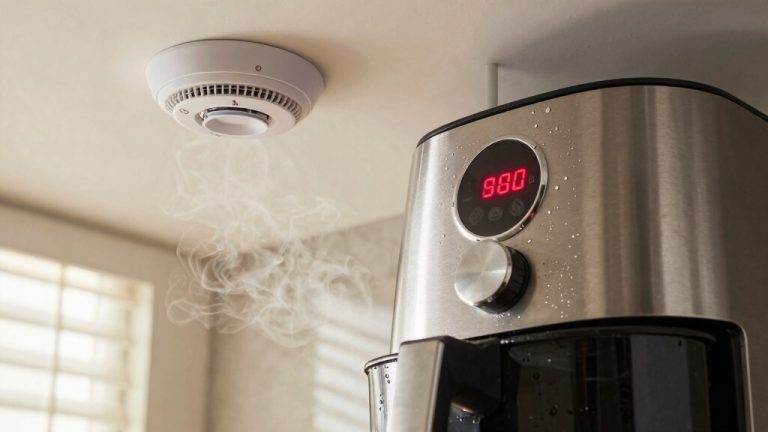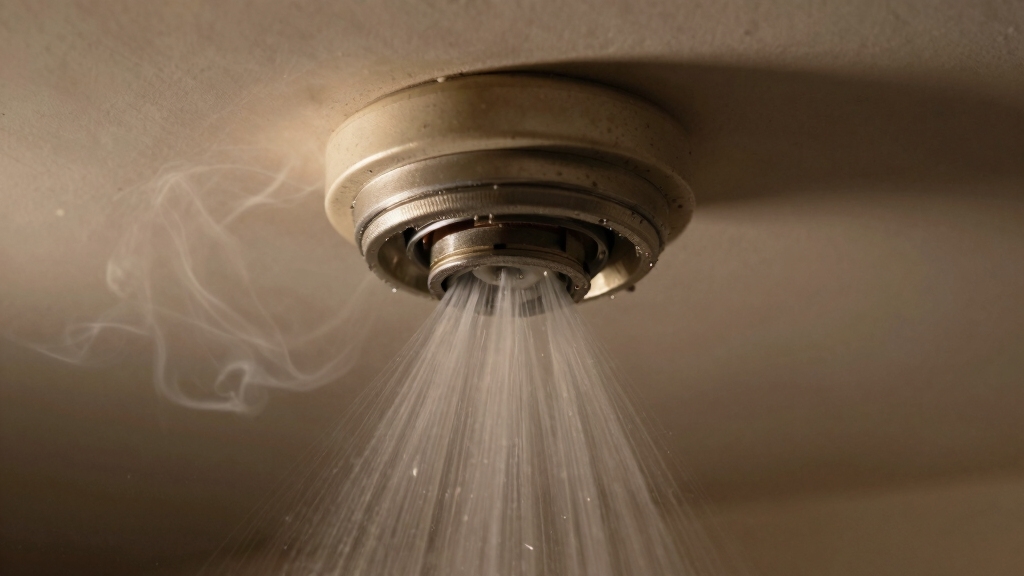

Fire sprinklers don’t detect smoke; they activate solely in response to heat, typically between 135 and 165°F.
They use heat-sensitive elements like glass bulbs or fusible links that trigger water flow once the temperature threshold is reached, directly at the fire source.
Smoke alone lacks the necessary thermal energy to cause activation. For early warning, smoke detectors are essential.
Understanding how these systems function individually and together can help improve your home’s fire safety measures.
Key Takeaways
- Sprinklers activate only when exposed to heat, not smoke or airborne particles.
- Heat-sensitive elements like glass bulbs break at 135−165°F to release water on fire.
- Smoke particles lack sufficient heat to trigger sprinkler activation mechanisms.
- Smoke detectors, not sprinklers, sense smoke and provide early fire warnings.
- Integrated systems combine smoke detection with sprinklers for faster, safer fire response.
How Fire Sprinklers Detect Heat to Activate?
Although fire sprinklers don’t respond to smoke, they activate reliably when exposed to significant heat, typically between 135 and 165°F (57 to 74°C).
You’ll find that each sprinkler head contains a heat-sensitive element, either a glass bulb filled with liquid or a fusible metal link, designed to fail at a specific temperature threshold.
When the ambient temperature reaches this point, the glass bulb shatters or the fusible link melts, releasing a valve that allows water to discharge directly onto the fire source.
Each sprinkler head operates independently, ensuring targeted activation only where heat is detected.
This heat-driven mechanism minimizes false activations and optimizes water usage, focusing suppression efforts precisely on actual fire conditions rather than incidental environmental factors.
Unlike fire sprinklers, photoelectric smoke alarms detect the presence of smoke particles through light scattering to provide early warnings before heat levels rise enough to activate sprinklers.
Why Smoke Alone Does Not Trigger Sprinklers?
While sprinklers rely exclusively on heat to activate, smoke alone doesn’t cause any reaction in these systems.
Sprinklers activate solely from heat; smoke by itself won’t trigger these fire suppression systems.
Sprinkler heads contain heat-sensitive elements, such as glass bulbs filled with glycerin or fusible links, that respond only when ambient temperatures reach specific thresholds, typically between 135−165°F (57−74°C).
Smoke particles lack the thermal energy required to trigger these mechanical devices. This design guarantees sprinklers activate solely in the presence of actual fire heat, preventing false discharges from incidental smoke sources like cigarettes or vapor.
Consequently, sprinklers don’t provide early fire warnings based on smoke detection. Instead, their function centers on flame suppression once a fire generates sufficient heat to break the heat-sensitive components and release water directly at the fire’s location.
For early fire detection and alerts, smoke alarms are essential as they detect smoke particles rather than heat.
How Smoke Detectors and Fire Sprinklers Work Together?
You know how smoke detectors are your first line of defense against fire? They pick up on those tiny particles in the air and let you know when something’s not right, giving you a heads-up before the heat really ramps up.
Now, let’s talk about fire sprinklers. They work a bit differently. These guys kick in when temperatures hit between 135 and 165°F. They respond to heat, not smoke, which is pretty cool.
When you put these two systems together, you get a powerful combination! The smoke detectors give you an early warning, while the sprinklers jump into action to tackle the flames directly. It’s all about enhancing your safety and making sure you’re protected from fire hazards.
For the best fire protection, integrating sprinklers with monitored fire alarm systems can ensure automatic notification to emergency services, reducing response times.
Smoke Detection Basics
Because smoke detectors respond to airborne particles long before heat levels rise enough to activate sprinklers, they provide the earliest warning of fire.
You rely on smoke detectors to alert you promptly, while sprinklers engage only when temperatures reach 135−165°F (57−74°C). This division guarantees rapid notification and effective suppression.
| Device | Activation Trigger |
|---|---|
| Smoke Detector | Airborne smoke particles |
| Fire Sprinkler | Heat (135−165°F / 57−74°C) |
| Integrated System | Smoke signals prompt sprinkler activation |
Understanding this helps you appreciate their complementary roles.
Smoke detectors detect incipient fires, triggering alarms, while sprinklers activate independently upon heat detection, focusing on fire control rather than early warning.
This synergy enhances overall fire safety.
For optimal home safety, it is also crucial to install detectors following best placement principles to ensure early detection and alerting throughout the residence.
Sprinkler Activation Criteria
Although fire sprinklers rely solely on heat to activate, smoke detectors can prompt integrated systems to initiate sprinkler operation earlier by signaling the control panel upon detecting smoke.
Sprinklers activate when heat-sensitive elements, like glass bulbs or fusible links, reach specific temperatures, typically between 135−165°F (57−74°C).
These elements respond only to significant heat, ensuring sprinklers engage during genuine fires, not from smoke or minor heat sources.
In integrated systems, smoke detectors detect airborne particles and send signals to the control panel, which can trigger pre-action sprinkler systems to release water before heat thresholds are met.
This coordination accelerates fire suppression, improving safety.
However, standalone sprinklers don’t respond to smoke alone, as their activation criteria focus strictly on thermal conditions, maintaining targeted and reliable fire response.
For enhanced safety, integrating smoke detection with central monitoring systems ensures faster emergency response by automatically notifying emergency services upon detection.
Integrated Fire Safety
Integrating smoke detectors with fire sprinkler systems enhances overall fire safety by combining early warning and rapid suppression capabilities.
Smoke detectors sense airborne particles and activate alarms well before heat levels rise enough to trigger sprinklers, giving you vital time to evacuate safely.
When linked to a control panel, smoke detectors can also initiate pre-action sprinkler systems, releasing water only after confirming fire presence.
This integration markedly improves response times and fire containment, reducing casualties and property damage.
While sprinklers activate independently upon detecting heat between 135−165°F (57−74°C), smoke detectors provide the essential early alert that sprinklers lack.
Using both systems together offers a thorough approach: alarms alert occupants promptly, and sprinklers suppress flames effectively, meeting or exceeding many modern building code requirements for residential and commercial properties.
Hardwired smoke detectors typically include a battery backup to ensure continuous operation during power outages, maintaining reliable early warning even when mains power fails.
Debunking Common Myths About Sprinklers and Smoke
You might think that sprinklers go off when they sense smoke, right? Well, that’s a common misconception! In reality, sprinklers only activate when they detect heat levels between 135−165°F. So, just smoke alone won’t do the trick; it’s really the heat-sensitive elements—like those glass bulbs or fusible links in the sprinkler heads—that respond to temperature changes.
Understanding this distinction is super important. It clears up why smoke detectors are crucial for giving you an early warning. They’re designed to detect smoke before a fire gets too out of control.
On the other hand, sprinklers are all about putting out the fire once it starts. So, while both are essential, they serve different purposes in keeping you safe. For enhanced safety, many modern systems integrate smoke detectors with automated fire suppression to provide both early alert and rapid response.
Sprinklers React To Heat
Sprinkler systems activate solely in response to heat, not smoke, debunking a common misconception. They rely on heat-sensitive elements like glass bulbs or fusible links that break at specific temperatures (135−165°F / 57−74°C).
This design guarantees sprinklers respond only to actual fire heat, minimizing false activations from smoke or vapors.
| Activation Trigger | Temperature Range (°F) | Mechanism |
|---|---|---|
| Heat | 135−165 | Glass bulb rupture |
| Smoke | N/A | No activation |
| Vapors | N/A | No activation |
Each sprinkler head operates independently, activating only when its specific heat threshold is met. This ensures targeted fire suppression without unnecessary water damage. Understanding the role of heat removal in fire control explains why sprinklers focus on temperature rather than smoke.
Smoke Alone Does Not
Don’t let smoke fool you. Sprinkler systems won’t activate from smoke alone. These systems rely on heat-sensitive elements like glass bulbs or fusible links designed to break at specific temperatures between 135−165°F (57−74°C).
Smoke, regardless of density or source—vape, cigarette, or cooking fumes—lacks the thermal energy needed to trigger sprinklers. Their activation mechanism targets significant heat generated by actual flames, not airborne particles.
This distinction is vital because sprinklers function solely as fire suppression devices, not early warning sensors. Instead, smoke detectors perform that role by sensing airborne particles and alerting occupants before heat reaches sprinkler activation levels.
Understanding this separation helps debunk common myths and emphasizes the complementary nature of smoke detectors and sprinklers in integrated fire safety systems.
Additionally, improper placement of detectors near combustion sources can cause false alarms, highlighting the importance of correct detector placement to ensure reliable fire detection.
Why Integrated Fire Safety Systems Matter for Your Home?
Although fire sprinklers effectively suppress flames once activated, relying solely on them leaves critical gaps in early fire detection and occupant warning.
You need an integrated fire safety system combining smoke detectors and sprinklers to address these gaps. Smoke detectors sense airborne particles and trigger alarms well before heat levels reach sprinkler activation thresholds, providing vital early warnings.
When integrated, smoke detectors communicate with control panels to expedite sprinkler activation, enhancing fire suppression timing.
This combined approach significantly reduces casualties; studies show a 73% fatality reduction versus 50% with smoke detectors alone. Additionally, integrated systems ensure coordinated responses, improving occupant safety and minimizing property damage.
For comprehensive protection, you should prioritize installing interconnected smoke alarms and sprinkler systems that meet local building codes and safety standards. Regular inspection and maintenance of these devices is essential to ensure they function correctly when needed.
Best Practices to Enhance Fire Safety With Sprinklers and Detectors
When you combine properly installed smoke detectors with strategically placed fire sprinklers, you create a robust defense that addresses both early warning and flame suppression.
Combining smoke detectors and fire sprinklers provides comprehensive protection through early alert and effective fire control.
To enhance fire safety, install smoke detectors on every floor, inside bedrooms, and near kitchens. Test them monthly and replace batteries annually.
Position sprinklers to cover all living areas, ensuring heads remain unobstructed. Regularly inspect sprinkler heads for damage or corrosion and confirm system pressure aligns with manufacturer specs.
Integrate detectors with a centralized alarm panel that can trigger sprinklers in advanced systems. Avoid relying solely on one device type; smoke detectors alert you early, while sprinklers activate only when heat reaches critical thresholds.
Maintaining both systems guarantees faster response times and markedly reduces fire-related risks in your home.
Frequently Asked Questions
Can Sprinkler Systems Operate During a Power Outage?
Yes, sprinkler systems can operate during a power outage because most rely on water pressure and mechanical activation, not electricity.
You’ll find dry pipe and pre-action systems designed for reliability even when power fails.
These systems use pressurized air or water that activates when heat triggers the sprinkler head.
What Temperature Range Typically Activates Sprinkler Heads?
You’ll find sprinkler heads typically activate between 135°F and 165°F (57°C to 74°C).
You rely on heat-sensitive elements, like glass bulbs or fusible links, designed to break precisely within this range.
You witness individual sprinkler heads operating independently as soon as they detect sufficient heat.
You understand that this targeted, temperature-triggered activation guarantees sprinklers respond only to actual fire conditions, not to ambient changes or smoke presence.
How Do Dry Pipe Sprinkler Systems Prevent Freezing?
Dry pipe sprinkler systems prevent freezing by keeping water out of the pipes until activation. Instead, they fill the pipes with pressurized air or nitrogen.
When heat triggers a sprinkler head, the air pressure drops, opening a valve that releases water into the pipes and out the sprinkler. This design stops water from sitting in cold pipes, avoiding freezing and pipe bursts in unheated or freezing environments.
Are Sprinkler Heads Equipped With Cameras or Security Features?
Think of sprinkler heads as silent sentinels, solely guarding against flames without prying eyes.
You won’t find cameras or security features integrated into standard sprinkler heads. Their design focuses strictly on fire suppression, activating mechanically when heat reaches a critical threshold.
While fire alarms and other systems may include security tech, sprinklers remain dedicated to controlling fires. They operate independently without surveillance capabilities or electronic monitoring functions.
Do Pre-Action Sprinkler Systems Require Smoke Detection to Release Water?
Yes, pre-action sprinkler systems require a detection signal, often from a smoke or heat detector, before releasing water.
You won’t see water flow immediately upon heat at the sprinkler head; instead, the system waits for confirmation from an external detection device.
This two-step process helps prevent accidental discharge, making pre-action systems ideal for sensitive environments where accidental water damage must be minimized.
You rely on integrated detectors to trigger water release in these setups.
Fire Safety Made Simple: Early Alerts + Fast Suppression
While fire sprinklers don’t detect smoke, they activate when heat reaches around 155°F (68°C), ensuring targeted fire suppression. In fact, studies show sprinklers reduce fire-related deaths by 80%, highlighting their critical role alongside smoke detectors.
By understanding that smoke detectors alert you early and sprinklers respond to heat, you can better protect your home. Integrating both systems creates a thorough fire safety strategy that maximizes your chances of preventing extensive damage and injury.