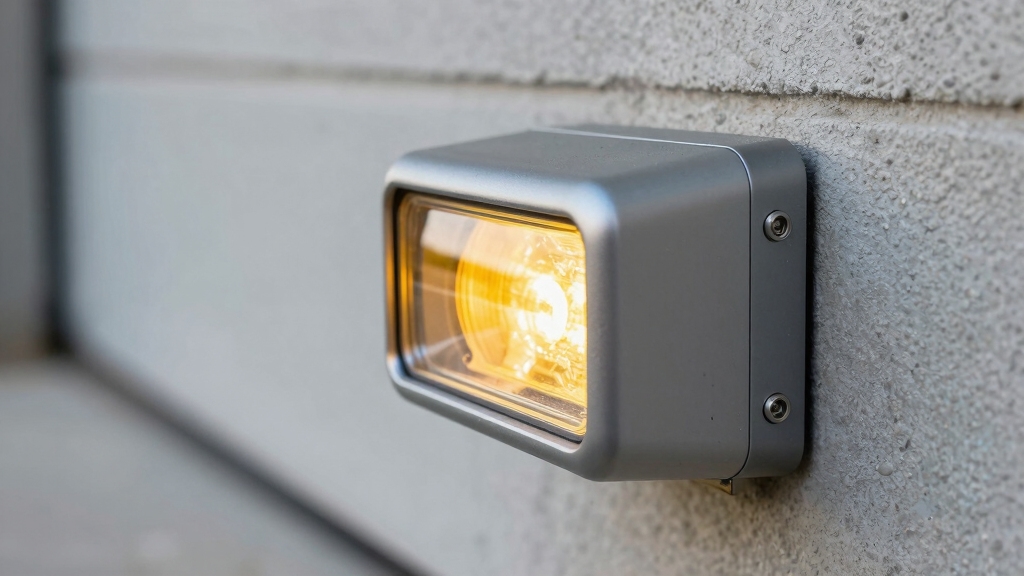

If your garage door sensor light is yellow, it means the system detects an issue blocking the infrared beam, preventing your door from closing safely.
This often happens because sensors are misaligned, dirty, obstructed, or have wiring problems. You can try cleaning the lenses, adjusting the sensors, and checking connections to fix it.
Persistent issues may require deeper troubleshooting or professional help. You’ll find straightforward maintenance tips and when to seek expert assistance ahead.
Key Takeaways
- A yellow garage door sensor light signals a problem, usually the infrared beam is not reaching the receiver.
- Common causes include misaligned sensors, dirty lenses, obstructions, or wiring issues disrupting the sensor signal.
- Clean sensor lenses, realign sensors, and check wiring connections to fix the yellow light issue.
- The door will not close when the yellow light is on to prevent unsafe operation.
- Call a professional if the yellow light persists after troubleshooting or if there is visible sensor or wiring damage.
What Does a Yellow Garage Door Sensor Light Mean?
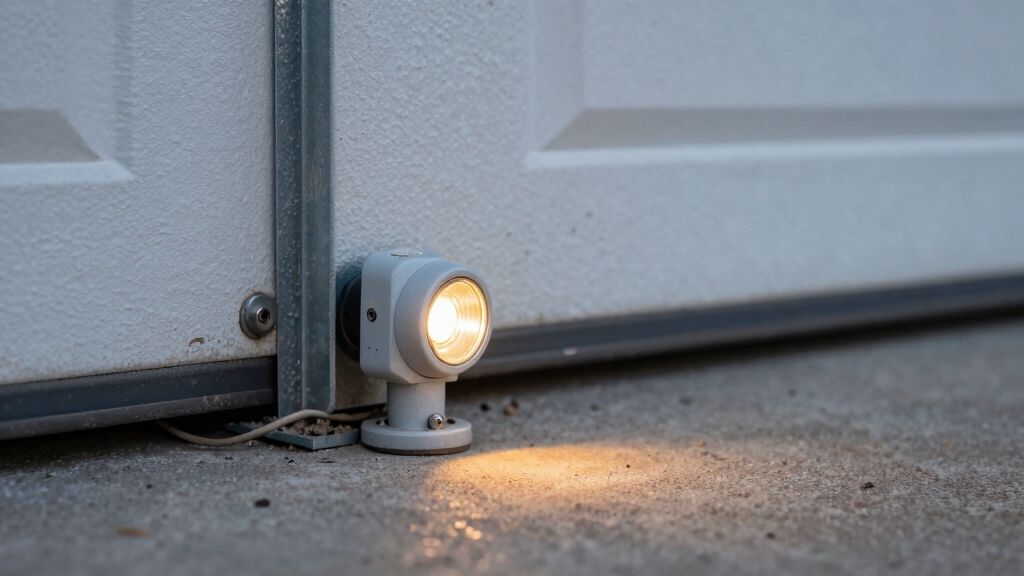
When you see a yellow light on your garage door sensor, it indicates a problem within the sensor system.
Typically, this means the transmitting sensor is powered, but the receiving sensor isn’t detecting the signal properly.
This often occurs because the infrared beam from the sender isn’t reaching the receiver due to misalignment, obstruction, or lens contamination.
Normally, the sender shows a solid yellow light while the receiver displays a solid green light, signaling proper communication and safe door operation.
If only the yellow light is on, the door won’t close to prevent accidents.
Sensor behavior varies by brand, so consult your manual for specific light codes.
Addressing this promptly guarantees your garage door operates safely and efficiently without risking malfunction or injury.
For many sensor issues, cleaning, alignment, and resetting can often resolve the problem before considering replacement or professional service.
Why Does Your Garage Door Sensor Light Turn Yellow?
Because the yellow light signals a communication issue between the transmitting and receiving sensors, it often turns on due to misalignment, dirt accumulation on the lenses, or obstructions blocking the infrared beam.
The yellow light indicates communication trouble caused by sensor misalignment, dirty lenses, or beam obstructions.
You might also see this light if wiring connections are loose, damaged, or frayed, disrupting power to the receiving sensor.
Electrical faults or power interruptions can trigger the yellow signal as well.
When the sensors aren’t properly aligned, the infrared beam doesn’t reach the receiver, causing the system to prevent door closure for safety.
Dirt or debris on the lenses reduces signal strength, while objects partially blocking the beam can create intermittent faults.
Understanding these common causes helps you identify why your garage door sensor light turns yellow before moving to corrective steps.
Additionally, sensor wiring faults such as cuts, corrosion, or miswiring can cause erratic sensor behavior leading to the yellow light indicator.
How to Fix a Yellow Garage Door Sensor Light?
To fix a yellow garage door sensor light, start by thoroughly inspecting the sensor lenses for dirt, dust, or obstructions that might block the infrared beam.
Clean both lenses gently with a soft cloth or damp paper towel to remove debris.
Next, verify that the sensors are properly aligned; adjust them until both lights show steady illumination: yellow on the sender and solid green on the receiver.
Examine wiring connections for looseness, frays, or damage; secure or replace wires as needed to restore proper power flow.
Make sure no objects or sunlight interfere with the beam’s path.
After these steps, test the door operation. If the yellow light persists, consider consulting the manufacturer’s manual or a professional technician, as internal sensor faults may require specialized repair or replacement.
Always check for sensor wiring issues before attempting advanced troubleshooting to ensure safety and proper function.
How to Prevent Yellow Sensor Lights With Simple Maintenance?
Regularly maintaining your garage door sensors markedly reduces the chance of a yellow warning light. You can prevent sensor issues by adopting a consistent maintenance routine focused on key areas. Follow these steps:
- Clean the sensor lenses weekly using a soft cloth or damp towel to remove dust, cobwebs, and debris blocking the infrared beam.
- Check and adjust the sensor alignment monthly, ensuring the transmitter and receiver face each other directly to maintain a steady light signal.
- Inspect wiring quarterly for loose connections, frayed wires, or damage that could interrupt power or signal transmission.
- Always disconnect power before performing maintenance to ensure safe sensor realignment and prevent accidental activation.
When Should You Call a Professional for Sensor Issues?
Although many sensor issues can be resolved with basic troubleshooting, you should call a professional when you’ve checked alignment, cleaned lenses, and inspected wiring but the yellow light persists.
Persistent yellow light may indicate internal sensor faults, electrical problems, or complex wiring issues beyond DIY repair. A pro can diagnose with specialized tools and guarantee safe operation. Proper installation and inspection of safety sensors help prevent many common sensor problems.
| Issue | When to Call a Professional |
|---|---|
| Persistent yellow light | After all DIY fixes fail |
| Wiring damage | Visible frays or intermittent power |
| Sensor replacement needed | Sensors physically damaged or old |
| Complex electrical faults | Frequent power interruptions |
| Safety concerns | Door won’t close or reverses unexpectedly |
Don’t delay professional help; sensor safety is critical for your garage door’s operation.
Frequently Asked Questions
Can a Yellow Sensor Light Cause My Garage Door to Open Unexpectedly?
A yellow sensor light itself won’t cause your garage door to open unexpectedly.
Instead, it signals a problem with the sensor alignment or obstruction, which usually prevents the door from closing safely.
If your door opens on its own, the issue likely lies elsewhere, such as faulty wiring or a malfunctioning control board.
You should inspect all components and fix sensor alignment to ensure proper, safe operation.
Do Yellow Sensor Lights Drain the Garage Door Opener’s Battery?
Imagine your garage door sensors as a pair of walkie-talkies.
When one flashes yellow, it’s like one side is talking but the other isn’t listening properly.
This doesn’t drain your opener’s battery.
Instead, the sensors just signal a misalignment or blockage, causing the door not to close safely.
The opener’s power consumption stays normal, so you don’t need to worry about battery drain from a yellow sensor light.
Are Yellow Sensor Lights Affected by Weather Conditions Like Rain or Snow?
Yes, yellow sensor lights can be affected by weather conditions like rain or snow.
Moisture can cause dirt buildup or water droplets on the sensor lenses, blocking the infrared beam and triggering the yellow light.
Snow or ice may also misalign sensors or cause wiring issues due to cold exposure.
You should regularly clean and inspect your sensors during bad weather to maintain proper alignment and clear signal transmission.
Can Pets or Small Objects Trigger the Yellow Sensor Light?
Pets or small objects can definitely throw a wrench in the works by triggering the yellow sensor light. When anything interrupts the infrared beam between sensors, like a curious pet wandering through or a stray toy, the system detects a blockage.
This misalignment or obstruction causes the yellow light to appear, preventing the door from closing. To avoid issues, keep the sensor path clear and monitor for any unexpected interruptions regularly.
Is It Safe to Bypass the Sensor When the Yellow Light Is On?
You shouldn’t bypass the sensor when the yellow light is on, as it signals a malfunction that compromises safety.
Disabling it puts you at risk of injury or damage since the door might close on objects or people.
Instead, troubleshoot the issue by checking alignment, cleaning lenses, and inspecting wiring.
If you can’t fix it yourself, contact a professional to make sure your garage door operates safely and correctly.
Keep Your Garage Door Safe, Smart & Problem-Free
A yellow garage door sensor light often signals a misalignment or obstruction. These issues affect nearly 60% of sensor malfunctions.
By regularly checking alignment and cleaning the sensors, you can prevent most problems before they start. If your fixes don’t work, don’t hesitate to call a professional. Delaying repairs can compromise safety.
Staying proactive guarantees your garage door operates smoothly and securely every time you use it.