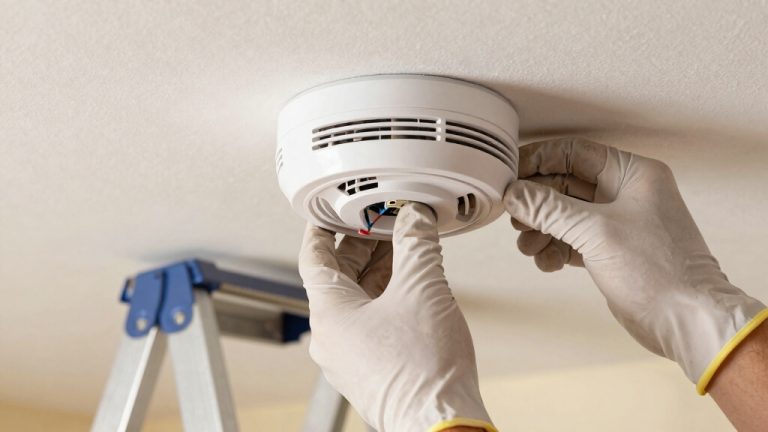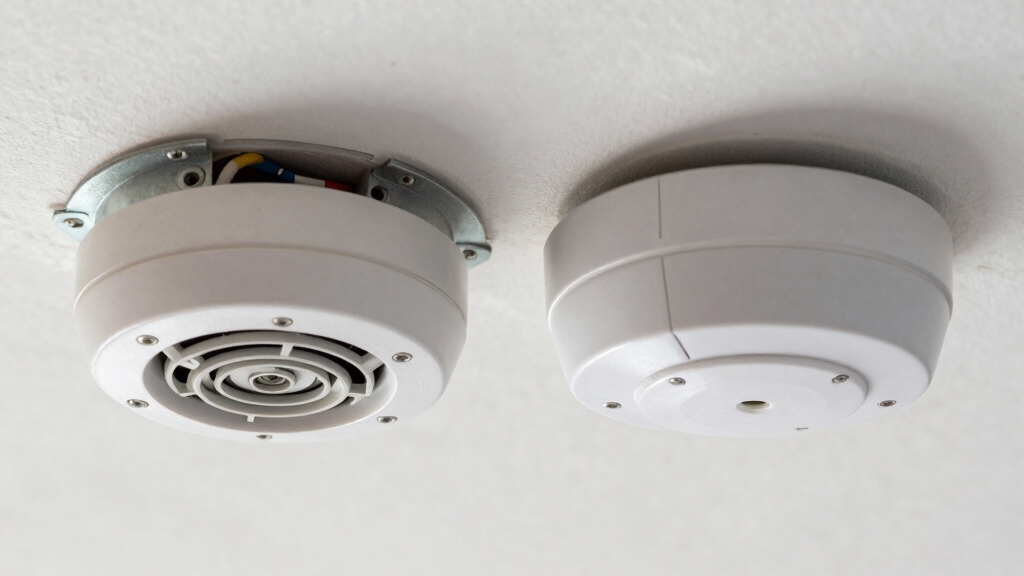

You’ll find hardwired smoke detectors draw continuous 240-volt power with automatic 9-volt battery backup. This ensures no downtime during outages.
Battery-only models rely solely on replaceable cells, needing frequent checks to maintain responsiveness.
Hardwired units offer interconnected alerts for all-encompassing coverage, while battery units alert locally.
Installation complexity and upfront costs are higher for hardwired systems but require less maintenance over time.
Understanding these distinctions clarifies which type fits your home’s safety needs best.
Key Takeaways
- Hardwired smoke detectors use continuous 240-volt power with battery backup, ensuring uninterrupted operation during outages.
- Battery smoke detectors rely solely on replaceable batteries, requiring frequent checks and replacements to maintain functionality.
- Hardwired units offer interconnectivity, triggering all alarms simultaneously for whole-home alerts, while battery units alert only locally.
- Installation of hardwired detectors requires professional wiring, making them costlier upfront compared to easy-to-install battery models.
- Hardwired detectors reduce nuisance low-battery alerts and provide maintenance alerts, enhancing reliability over battery-only units.
Hardwired vs Battery Smoke Detector: Key Differences at a Glance
| Feature | Hardwired Smoke Detector | Battery Smoke Detector |
|---|---|---|
| Power Source | Connected to home electrical wiring with battery backup | Runs entirely on replaceable batteries |
| Reliability | Highly reliable due to continuous power supply | Depends on battery condition and maintenance |
| Interconnection | Supports interconnected alarms across the entire home | Usually standalone units with local alerts |
| Installation | Requires professional installation and wiring | Simple DIY installation with no wiring needed |
| Maintenance Needs | Minimal maintenance besides occasional battery replacement | Requires regular battery checks and replacements |
| Best For | New homes, renovations, or large properties needing full coverage | Apartments, smaller homes, or temporary setups |
| Cost Consideration | Higher upfront cost but lower long-term maintenance | Lower initial cost but ongoing battery expenses |
Hardwired vs Battery Smoke Detectors: Key Differences
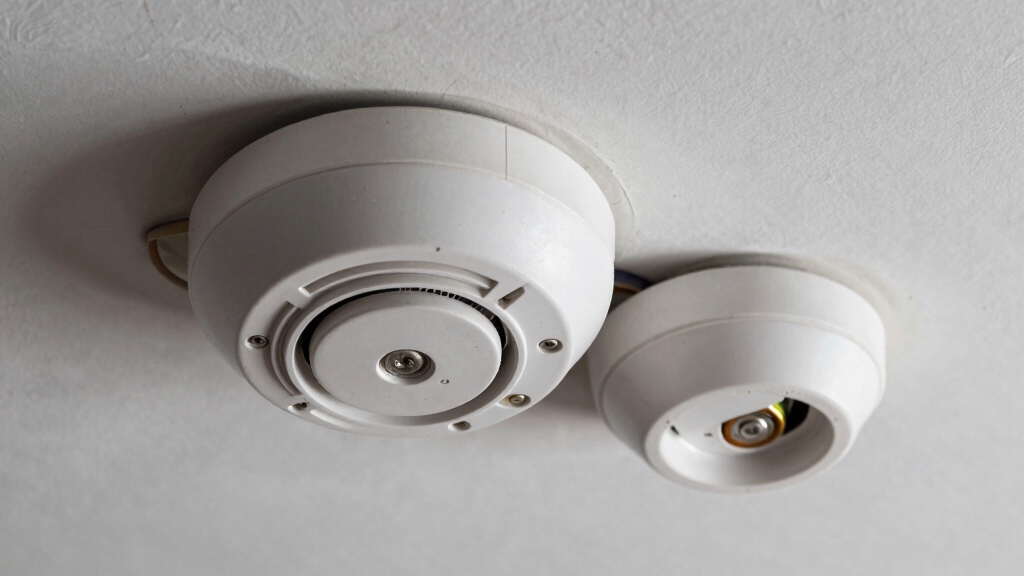
When comparing hardwired and battery smoke detectors, you’ll find distinct differences in power sources, installation requirements, and reliability.
Hardwired and battery smoke detectors differ significantly in power, installation, and dependability.
Hardwired detectors draw continuous 240-volt main power with a 9-volt battery backup, ensuring uninterrupted operation and interconnectivity among units. This setup eliminates frequent battery replacements and minimizes false alarms from low power.
Battery detectors operate independently on replaceable lithium or alkaline cells, allowing easy installation without wiring but requiring regular checks to maintain functionality.
You’ll notice hardwired systems demand professional installation and are typical in newer or renovated buildings. Battery units suit smaller homes or spaces without wiring infrastructure.
Both types comply with UL or ETL standards, but hardwired models provide enhanced dependability with dual power sources and interconnected alerts, vital for thorough early fire detection.
Regular maintenance including replacement of the backup battery every 1–2 years is essential to ensure continuous protection and compliance with safety codes.
How Hardwired Smoke Detectors Work?
Although hardwired smoke detectors rely on your home’s 240-volt electrical system for continuous power, they incorporate a 9-volt battery backup to maintain functionality during outages.
You’ll find they’re interconnected, so when one detects smoke, all alarms activate simultaneously, enhancing early warning.
The continuous main power removes the need for frequent battery replacements, while the backup guarantees reliability during blackouts.
Advanced models utilize photoelectric or ionization sensing technologies, meeting strict safety regulations for comprehensive detection.
Proper placement following NFPA standards is crucial for maximizing the effectiveness of hardwired smoke detectors.
| Feature | Description |
|---|---|
| Power Source | 240V main supply + 9V battery backup |
| Interconnection | All units alert together on smoke detection |
| Power Continuity | Continuous electrical supply with backup |
| Sensor Types | Photoelectric, ionization, or combination |
| Compliance | Meets legislation and safety standards |
How Battery Smoke Detectors Work?
You know, battery-powered smoke detectors are pretty handy because they work without needing any wiring. That’s why it’s super important to understand how they get their energy.
When smoke particles make their way into the sensing chamber, that’s when things get interesting. The detector uses either photoelectric or ionization technology to trigger an alarm. It’s like having a little guardian on duty!
The best part? This independent activation process means the unit can signal danger quickly, even if there’s a power outage. How great is that?
Photoelectric detectors, in particular, offer early warnings by detecting smoke particles through light scattering, making them especially effective for smoldering fires.
Battery Power Functionality
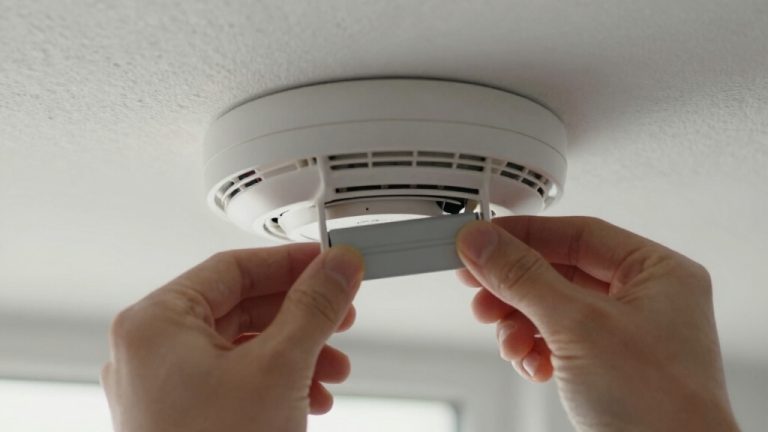
Many battery smoke detectors operate independently using a 9-volt or lithium battery as their sole power source, guaranteeing continuous functionality even during power outages.
These detectors rely entirely on stored electrical energy, which powers their sensing, processing, and alarm circuits without external input.
Lithium batteries, favored for their longer lifespan and stable voltage output, reduce the frequency of replacements compared to standard 9-volt alkaline batteries.
You’ll need to monitor battery health regularly, as voltage depletion directly impacts detector responsiveness.
The internal battery also supports self-testing mechanisms, allowing you to verify operational status.
Unlike hardwired units, battery detectors lack a secondary power source, so maintaining battery integrity is critical to prevent device failure or false low-battery chirps.
Proper battery selection and upkeep guarantee reliable smoke detection in locations without wired power access.
Manufacturers recommend replacing smoke detector batteries annually or immediately after the low-battery alert to ensure continuous protection.
Alarm Activation Process
When smoke particles enter the sensing chamber of a battery smoke detector, the device immediately processes the change in air composition to trigger an alarm.
Depending on the technology, photoelectric or ionization, the detector senses smoke differently. Photoelectric sensors detect scattered light caused by smoke. Ionization sensors measure changes in electrical conductivity due to ionized air particles.
Once smoke concentration surpasses a set threshold, the detector’s circuit activates the alarm signal.
Since battery detectors operate independently from mains power, their response depends entirely on battery health. Insufficient power can delay or prevent alarm activation.
You must regularly test and replace batteries to maintain responsiveness. This self-contained activation mechanism guarantees the detector alerts occupants promptly, providing critical early warning despite the absence of external wiring or power sources.
For optimal safety, it is important to mount detectors at eye-level placement to ensure easy reading and maintenance access.
Why Dual Power Makes Hardwired Alarms Safer?
You rely on hardwired smoke detectors for a good reason. Their continuous 240-volt power supply means they’re always on, ready to alert you without any interruptions. If the main power ever goes out, no worries—the backup battery kicks in right away, keeping everything running smoothly.
And here’s another great feature: the interconnection. This means that if one alarm goes off, all of them do. So, you get that extra layer of safety with a comprehensive early warning.
It’s like having a team working together to keep you safe! Hardwired units usually have battery backups to ensure operation during power outages, which is critical for reliable operation.
Continuous Power Supply
A continuous power supply markedly enhances the reliability of smoke detectors by guaranteeing uninterrupted operation regardless of external conditions.
When your hardwired smoke detector draws power from the main 240-volt supply and simultaneously relies on a 9-volt battery backup, you gain a fail-safe system.
This dual-source design prevents power loss interruptions, maintaining consistent functionality.
You benefit from:
- Constant power flow, eliminating downtime caused by outages or wiring issues.
- Automatic switch to battery backup during main power failure, maintaining alert readiness.
- Elimination of low-battery chirp interruptions common in battery-only units.
This redundancy guarantees your smoke detector remains operational at all times, providing superior protection compared to battery-only models that depend solely on periodic battery checks and replacements.
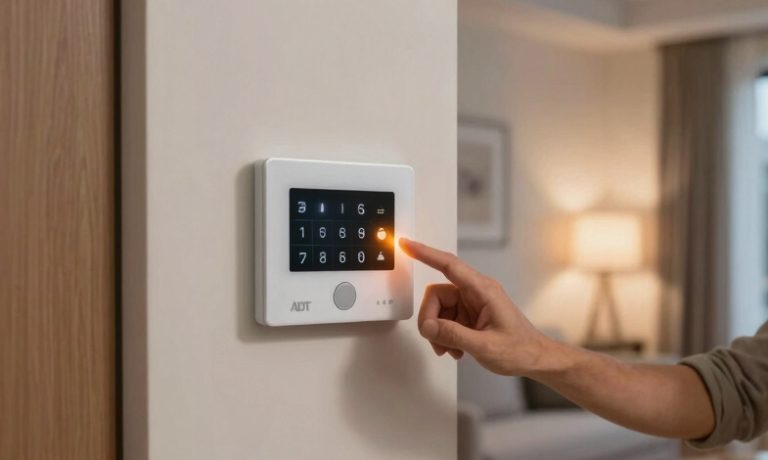
Additionally, hardwired systems often support integration with central monitoring, enabling automatic verification and faster emergency response.
Backup Battery Benefits
Frequently, power outages challenge the effectiveness of smoke detection systems.
Hardwired alarms with dual power sources mitigate this risk by seamlessly switching to their backup battery.
This dual power design guarantees continuous operation, maintaining safety even when the main supply fails.
You benefit from reduced false alarms caused by low battery levels and avoid the disruption of manual battery replacements.
Proper maintenance and regular testing ensure the reliability of these systems, helping prevent unnoticed failures in backup power.
| Feature | Benefit |
|---|---|
| Dual Power Source | Guarantees uninterrupted alarm function |
| Automatic Switching | Eliminates user intervention |
| Battery Backup Duration | Sustains alarm during extended outages |
| Maintenance Alerts | Notifies when backup battery needs replacement |
Enhanced Safety Interconnection
Because hardwired smoke detectors operate on dual power sources, they enable an interconnected safety system that markedly enhances early warning capabilities. This dual power, 240 volts from the main supply with a 9-volt battery backup, ensures uninterrupted operation even during outages.
When one unit detects smoke, the system instantly triggers alarms throughout the property, providing thorough alerts you can rely on. This interconnected design improves response time and occupant safety greatly.
Key advantages include:
- Immediate notification across all units, minimizing reaction delay.
- Continuous power supply, avoiding false negatives due to battery failure.
- Compliance with safety legislation through advanced photoelectric and ionization technologies.
Additionally, these systems often include interconnected notification appliances that provide both audible and visible alerts to occupants throughout the building.
Installation: Hardwired Vs Battery Smoke Detectors
When you decide on installing smoke detectors, understanding the distinctions between hardwired and battery-operated models is essential.
Hardwired detectors require professional installation due to integration with your home’s 240-volt electrical system and interconnection wiring. This increases upfront costs and complexity. They’re typically installed during new construction or renovations to assure full building coverage.
Hardwired smoke detectors need professional installation and are best suited for new builds or major renovations.
In contrast, battery-operated detectors offer straightforward installation. They mount on walls or ceilings without electrical work, making them ideal for existing homes lacking wiring infrastructure or for portable use.
While hardwired systems provide continuous power with battery backups, eliminating low-battery alerts, battery models require regular battery replacement and testing.
Your choice depends on home size, budget, and infrastructure. Hardwired systems are suited for larger properties needing interconnected alarms, while battery units fit smaller or temporary setups.
Regular maintenance, including battery replacement and cleaning, is crucial to prevent false alarms and ensure reliable operation.
Which Smoke Detector Is Safer for Your Home?
When you’re picking a smoke detector, it’s super important to think about how reliable the power source is. You want something that keeps running nonstop, and having a battery backup is a big plus for safety.
Now, if you go for an interconnected hardwired system, you’re in for some serious peace of mind. These systems alert you throughout your home, which can really cut down on response time during emergencies.
But don’t forget about maintenance! Regular testing is crucial, especially for battery-operated units. You’ll want to check them often to make sure they’re functioning properly. Keeping them in top shape is key to ensuring your home stays safe.
Power Source Reliability
Although both hardwired and battery-powered smoke detectors serve critical safety functions, their power source reliability greatly impacts overall effectiveness.
Hardwired detectors draw continuous power from the main electrical supply, supported by a 9-volt battery backup. This guarantees operation even during outages. Battery-powered units rely solely on battery integrity, demanding regular maintenance to avoid failure.
Consider these reliability factors:
- Hardwired systems provide stable power with automatic backup, reducing failure risk.
- Battery detectors require frequent checks and replacements to maintain readiness.
- Hardwired units eliminate low-battery alerts, preventing missed warnings.
You should weigh your home’s wiring infrastructure and maintenance capacity. If uninterrupted power is paramount, hardwired detectors deliver superior reliability.
However, for simpler installations or locations lacking wiring, battery-powered units remain viable but demand diligent upkeep to guarantee safety.
Interconnection Safety Benefits
Interconnected smoke detectors markedly enhance home safety by ensuring that an alarm triggered in one unit activates all others simultaneously. This rapid, whole-home alert system reduces response time during a fire, especially in larger or multi-level homes.
Hardwired systems inherently support this interconnection via existing electrical wiring, offering continuous synchronized alerts. Battery-only detectors typically lack this feature unless specially designed, limiting all-encompassing warning capability.
| Feature | Hardwired Interconnected | Battery-Only Units |
|---|---|---|
| Alarm Synchronization | All units activate simultaneously | Individual unit activation |
| Installation | Requires wiring integration | Simple, no wiring needed |
| Power Source | Main power with battery backup | Battery powered only |
| Safety Impact | Enhanced whole-home warning | Limited to single location |
Choosing hardwired interconnected detectors provides a technically superior safety network for your home.
Maintenance and Testing
Regular maintenance and testing are critical to make certain smoke detectors function reliably during emergencies.
Hardwired detectors benefit from continuous power and reduced false alarms, but they still require periodic testing to confirm both the main and backup systems operate correctly.
Battery-powered units demand more frequent attention, as battery depletion directly affects functionality.
To guarantee peak performance, you should:
- Test alarms monthly by pressing the test button until the alarm sounds.
- Replace batteries annually or immediately if low-battery chirps occur.
- Clean detectors regularly to prevent dust interference with sensors.
Upfront and Maintenance Costs for Both Types
Several factors influence the upfront and maintenance costs of hardwired and battery smoke detectors, affecting your overall investment in home safety.
Hardwired systems demand higher initial expenses due to professional installation and electrical integration. However, their continuous 240-volt power supply with battery backup reduces ongoing maintenance costs by eliminating frequent battery replacements.
Hardwired systems require higher upfront costs but offer lower maintenance with continuous power and battery backup.
Conversely, battery detectors have lower upfront costs and simpler installation but require regular battery changes, typically annually for lithium types, to maintain reliability.
Maintenance demands for battery units include vigilance against power loss and periodic functionality checks, increasing time and potential costs over a detector’s lifespan.
Hardwired units, while costlier initially, offer long-term savings through fewer replacements and interconnectivity benefits.
Your choice hinges on balancing these upfront and ongoing expenses against desired reliability and installation complexity.
Best Use Cases for Hardwired and Battery Detectors
Choosing between hardwired and battery smoke detectors depends heavily on your home’s size, wiring infrastructure, and safety priorities.
Hardwired detectors suit larger homes or full-building coverage where continuous power and system interconnection guarantee comprehensive alerts.
Battery detectors fit smaller homes, apartments, or spaces lacking wiring, offering portability and simpler installation.
Consider these factors for optimal choice:
- Home size and layout: Hardwired excels in extensive properties; battery works well in compact or segmented spaces.
- Wiring availability: Hardwired requires existing electrical infrastructure; battery is independent and flexible.
- Safety and maintenance: Hardwired provides reliable dual power sources; battery demands regular battery checks and replacements.
Analyze your property’s features and operational needs to decide which smoke detector aligns best with your safety strategy.
How Interconnected Hardwired Alarms Improve Fire Safety?
Although individual smoke detectors provide localized alerts, interconnected hardwired alarms markedly enhance fire safety. When one unit detects smoke, all alarms throughout the building sound simultaneously.
This immediate, building-wide notification substantially reduces evacuation time and improves occupant awareness. You benefit from a unified system powered continuously by the main supply with battery backup. This minimizes failure risk during outages.
This interconnected setup outperforms isolated units, especially in larger or multi-level homes.
| Feature | Hardwired Interconnected | Battery Standalone |
|---|---|---|
| Alert Coverage | Whole building simultaneous | Single unit only |
| Power Source | Main supply + battery backup | Battery only |
| Reliability | High, minimal failure risk | Moderate, needs checks |
| Evacuation Efficiency | Faster due to system-wide alert | Slower, localized alert |
Battery Smoke Detector Maintenance and Certification Standards
While interconnected hardwired alarms provide all-inclusive coverage, battery smoke detectors remain widely used due to their convenience and affordability.
Battery smoke detectors offer convenient, affordable protection despite the comprehensive coverage of interconnected hardwired alarms.
To guarantee reliability, you must perform regular maintenance and adhere to certification standards. Battery detectors demand consistent battery replacement, typically annually or when low-battery chirps sound, to maintain peak function.
Additionally, you should test units monthly to verify sensor responsiveness and replace devices after 10 years per manufacturer guidelines.
Certification by UL (Underwriters Laboratories) or ETL (Intertek) guarantees compliance with rigorous performance and response standards.
Key maintenance points include scheduled battery replacement and functional testing, adherence to device lifespan recommendations, and use of certified models meeting NFPA and UL/ETL criteria.
Frequently Asked Questions
Can Hardwired Smoke Detectors Be Upgraded With Smart Home Features?
Yes, you can upgrade hardwired smoke detectors with smart home features by integrating compatible smart modules or replacing existing units with smart-enabled models.
These upgrades allow you to monitor alarms remotely, receive alerts on your phone, and interconnect devices over Wi-Fi or Zigbee.
Make certain the new devices comply with electrical codes and maintain the backup battery function.
Professional installation is recommended to preserve system reliability and compliance with safety standards.
How Do Smoke Detectors Perform in Extreme Temperature Conditions?
Over 30% of smoke detector failures occur due to extreme temperatures. You’ll find most detectors operate reliably between 40°F and 100°F, but exposure beyond these ranges can cause sensor inaccuracies or battery drain.
In cold conditions, lithium batteries perform better. Extreme heat may trigger false alarms or damage internal components. For precise performance, choose detectors rated for your environment and regularly test them to verify functionality under temperature variations.
Are There Specific Regulations for Smoke Detectors in Rental Properties?
Yes, specific regulations require you to install smoke detectors in rental properties to ensure tenant safety.
You must comply with local building codes and fire safety laws, which often mandate hardwired or battery-operated detectors with backup power.
You’re responsible for assuring devices are UL or ETL certified, properly installed, interconnected if required, and regularly maintained.
Non-compliance can lead to fines and increased liability in fire-related incidents.
What Should I Do if My Smoke Detector Frequently Gives False Alarms?
When false alarms ring like a broken record, start by cleaning your smoke detector thoroughly. Dust and debris often cause this issue.
Check the detector’s placement; avoid kitchens or bathrooms where steam or cooking fumes trigger alarms. If problems persist, test the sensitivity settings or consider replacing an aging unit.
Regular maintenance and correct positioning guarantee reliable performance and prevent unnecessary disruptions, safeguarding your home without false alerts.
Can Battery Smoke Detectors Be Recycled or Disposed of Safely?
Yes, you can recycle battery smoke detectors, but you must follow specific guidelines.
Remove the battery before disposal, as lithium batteries require separate recycling due to toxicity.
Contact local waste management or recycling centers for electronic waste programs that accept smoke detectors.
Avoid throwing them in regular trash to prevent environmental harm.
Proper disposal guarantees hazardous materials don’t contaminate landfills and supports resource recovery from electronic components.
Making the Right Choice for Your Home’s Fire Protection
When deciding between hardwired and battery smoke detectors, you’ll want to weigh reliability, installation complexity, and maintenance.
Hardwired units offer dual power and interconnectivity, making them a safer bet for thorough coverage. Battery detectors provide flexibility and easy setup but demand regular upkeep.
Remember, safety isn’t something to leave to chance. Keeping your alarms in top shape is the key to staying one step ahead when seconds count.