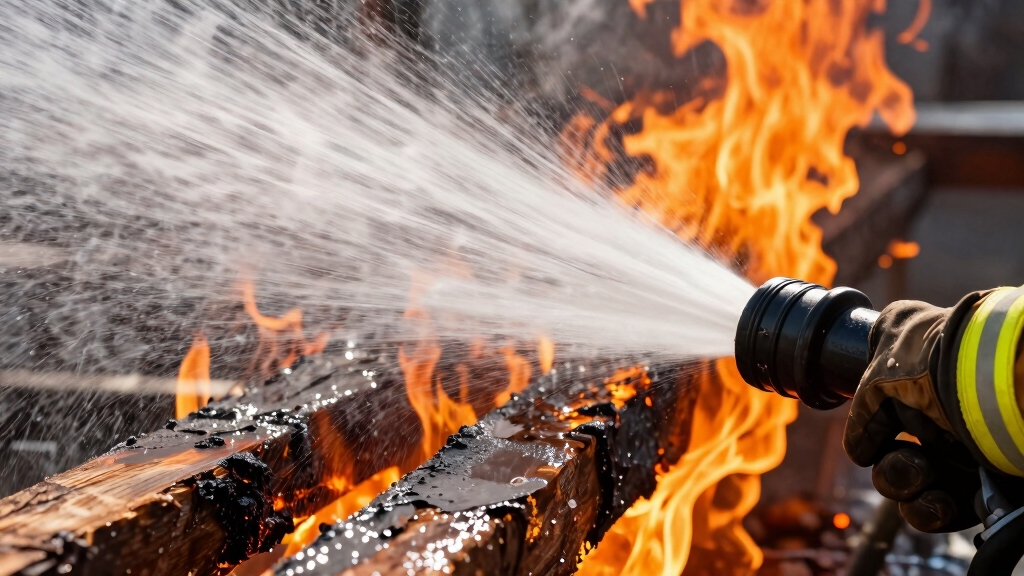

When you use water as a fire extinguisher, it absorbs heat rapidly due to its high specific heat capacity. This cooling effect brings the fuel below its ignition temperature.
As water vaporizes, it expands dramatically, pushing oxygen away and reducing its concentration around the fire. This dual action of cooling and oxygen displacement interrupts the combustion process effectively.
Pressurized water extinguishers deliver a targeted jet to maximize cooling and steam formation. Exploring further reveals advanced formulations and specific use cases that optimize water’s fire suppression capabilities.
Key Takeaways
- Water cools fuel by absorbing heat, lowering temperature below the ignition point to stop combustion.
- Evaporation of water consumes latent heat, reducing fire surface temperature and intensity.
- Expanding steam displaces oxygen, reducing its concentration and interrupting the fire triangle.
- Water soaks porous fuels, limiting oxygen access inside materials to slow fire spread.
- Water extinguishers release a focused jet aimed at the fire base for sustained cooling and steam generation.
Key Physical Properties That Make Water Ideal for Firefighting
Water consistently proves to be one of the most effective agents in firefighting due to its unique physical properties.
You’ll notice water boils at 100°C and expands markedly, up to 1,700 times its volume, when converting to steam. This rapid phase change absorbs a substantial amount of heat energy from combustible materials.
Its high specific heat capacity allows you to remove heat from fuel efficiently, interrupting combustion. Water’s ability to soak porous fuels like wood or textiles further prevents fire spread by limiting oxygen access within the material.
Additionally, water’s low cost and widespread availability make it practical for Class A fires. When you apply water, you leverage both its thermal absorption and physical expansion, creating effective conditions to suppress flames and prevent reignition without introducing harmful chemicals.
The effectiveness of water in firefighting is maximized when you aim the nozzle at the fire’s base to target the heat source directly and enhance cooling.
How Water Cools Fuel to Stop Fires?
Absorbing heat from burning fuel rapidly lowers its temperature below the ignition point, halting combustion.
Removing heat swiftly cools fuel beneath ignition temperature, effectively stopping the fire’s chemical reaction.
When you apply water to a fire, its high specific heat capacity enables it to act as an effective heat sink, drawing substantial thermal energy from the fuel.
This rapid heat absorption prevents the fuel from reaching or maintaining the temperature required for vaporization and sustained burning.
Additionally, the evaporation of water consumes significant latent heat, further reducing the fuel surface temperature.
By cooling both the fuel and its surroundings, water diminishes the fire’s intensity and lowers the risk of re-ignition.
This thermal suppression interrupts the combustion process directly, targeting the heat element of the fire triangle without relying on oxygen displacement or chemical inhibition.
Unlike water, dry chemical fire extinguishers suppress flames by releasing pressurized powder that interrupts the fire chemistry and smothers the fuel.
How Steam Helps Put Out Fires by Pushing Away Oxygen?
Although cooling the fuel is essential, steam plays a critical role in fire suppression by actively displacing oxygen around the flames.
When water vaporizes, it expands to about 1700 times its original volume. This pushes ambient oxygen away and reduces its concentration below combustion-sustaining levels.
This dilution interrupts the fire triangle’s oxygen element, starving the flames.
| Property | Effect on Fire |
|---|---|
| Volume expansion | Displaces oxygen |
| Low density | Enhances airborne spread |
| Vapor temperature | Maintains oxygen dilution |
You can see how steam’s physical properties create an oxygen-deficient environment. Combined with cooling, this disrupts combustion more effectively than water alone.
This mechanism is critical in enclosed or confined spaces where oxygen displacement can quickly suppress fire.
Using the proper fire extinguisher technique ensures safety and effectiveness when applying water or steam in firefighting.
How Water Fire Extinguishers Deliver Water Effectively?
Operating a water fire extinguisher involves a coordinated mechanism designed to deliver water efficiently to the fire’s base.
When you pull the pin and squeeze the handle, pressurized gas forces water up through an internal tube and out the nozzle as a focused jet.
This jet targets the combustible material directly, maximizing cooling efficiency by rapidly absorbing heat from the fuel.
The nozzle’s design controls flow rate and dispersion pattern, ensuring water penetrates the fire rather than dispersing prematurely.
You must aim low, as hitting the base interrupts the combustion cycle effectively.
The pressure system maintains a consistent stream, preventing interruptions that reduce cooling impact.
This precise delivery mechanism is critical since water’s heat absorption and steam generation depend on sustained contact with the fuel source.
However, water should never be used on grease fires as it can cause dangerous splattering and fire spread.
Enhanced Water Formulations for Better Fire Suppression
Enhancing water’s fire suppression capabilities involves integrating chemical agents that accelerate cooling and disrupt combustion more effectively than plain water.
You’ll find that dry water agents rupture on heat contact, releasing solutions that rapidly lower temperature. Compounds like ammonium dihydrogen phosphate interrupt the chemical chain reaction by scavenging combustion radicals.
Modifiers such as polyvinyl alcohol and sodium chloride optimize heat absorption and vapor dispersion, producing faster and more efficient fire knockdown.
However, it is critical to avoid using water or water-based agents on combustible metal fires, as these can react violently and create dangerous explosions.
| Agent | Function |
|---|---|
| Dry water agents | Rapid solution release on heat |
| Ammonium dihydrogen phosphate | Blocks combustion radicals |
| Polyvinyl alcohol | Enhances heat absorption |
| Sodium chloride | Improves vapor dispersion |
Frequently Asked Questions
Can Water Extinguish Electrical Fires Safely?
You shouldn’t use water to extinguish electrical fires because water conducts electricity. This increases the risk of electric shock and equipment damage.
Instead, you should use Class C-rated extinguishers, like carbon dioxide or dry chemical agents. These are designed to interrupt the fire triangle without conducting electricity.
Using water on electrical fires compromises safety and can worsen the situation. It can facilitate electrical current flow through the water stream.
Why Shouldn’t Water Be Used on Oil Fires?
Back in the age of muskets, you’d never douse oil fires with water, and you shouldn’t now either.
Water is denser than oil, so when you pour it on an oil fire, it sinks beneath the burning liquid, instantly vaporizes, and violently spreads the fire.
This rapid expansion propels flaming oil droplets outward, increasing fire size and danger.
Instead, use specialized agents designed to smother oil fires safely without causing splatter.
How Does Water Affect Fire Spread on Different Materials?
You’ll find water effectively slows fire spread on porous, Class A materials like wood and paper by absorbing heat and soaking fibers. This prevents ignition.
However, on flammable liquids or oily surfaces, water can cause fire to spread by dispersing burning fuel. On textiles, water cools and saturates, reducing flame propagation.
You must consider material type carefully, as water’s cooling and oxygen displacement vary. This influences fire behavior and suppression efficiency.
What Are the Environmental Impacts of Using Water in Firefighting?
You’ll find that using water in firefighting can lead to runoff contamination, carrying debris and chemicals into waterways.
Excessive water use may cause soil erosion and habitat disruption.
However, water itself is non-toxic and breaks down naturally, minimizing long-term pollution.
You should also consider local water availability; large-scale use can strain resources.
Balancing effectiveness with environmental impact requires careful management during firefighting operations.
Are There Alternatives to Water for Firefighting in Dry Conditions?
Yes, you can use alternatives like dry chemical agents such as ammonium dihydrogen phosphate or sodium bicarbonate for dry conditions.
These powders interrupt the combustion chain reaction without relying on moisture.
You might also consider foam-based suppressants or gaseous agents like CO2, which displace oxygen without adding water.
These options prevent fuel wetness, reducing re-ignition risks, and suit Class B or electrical fires where water is unsuitable.
From Science to Safety: Water’s Firefighting Edge
You can see how water’s high heat capacity cools fuel efficiently, while steam production displaces oxygen, suffocating flames like a knight’s shield blocking fiery arrows.
Water extinguishers deliver this power precisely, and enhanced formulations optimize its effectiveness.
Understanding these mechanisms lets you appreciate why water remains a cornerstone in firefighting technology.
It combines physical principles with practical application to control and eliminate fires swiftly and reliably.