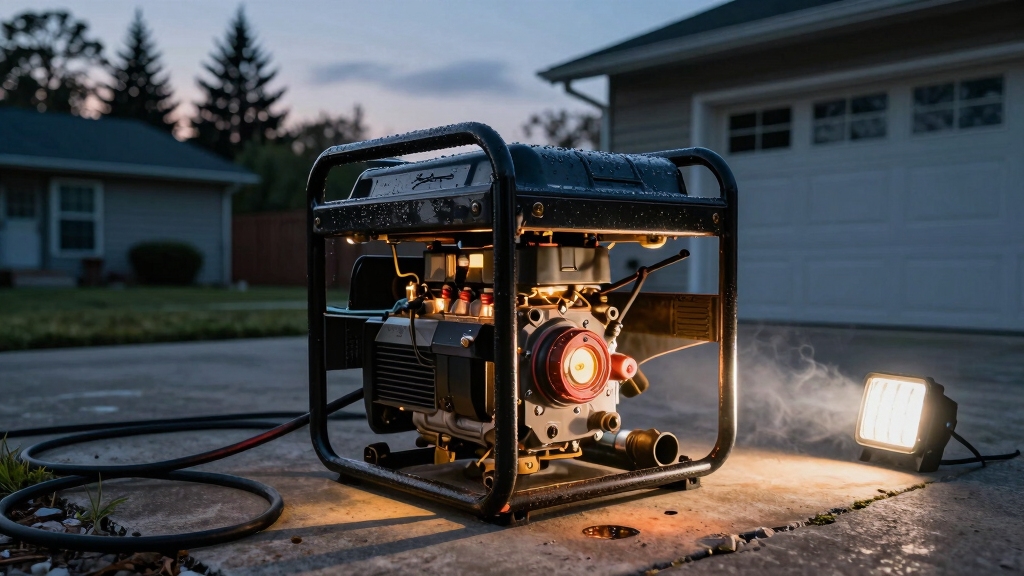

You can run a generator anywhere from 6 hours to multiple days, depending on fuel type, tank size, and load.
Portable gasoline models typically last 6–18 hours, while diesel and propane generators extend from 24 hours up to several days with larger tanks.
Running your generator at 50–75% load optimizes fuel use and longevity.
Environmental factors and maintenance also impact runtime.
Understanding these details will help you maximize your generator’s performance and efficiency.
Key Takeaways
- Gasoline portable generators typically run 6–18 hours, depending on tank size and load levels.
- Inverter generators run 10–14 hours at 25% load using 2.2–2.5 gallon tanks for efficient, quiet operation.
- Diesel standby generators can operate 24–72 hours based on fuel tank capacity and load conditions.
- Propane generators with large tanks (e.g., 500 gallons) sustain 5–10 days at 50% load with 10–20 kW output.
- Natural gas generators run indefinitely when connected to a stable continuous fuel supply.
Typical Runtime of Different Generator Types
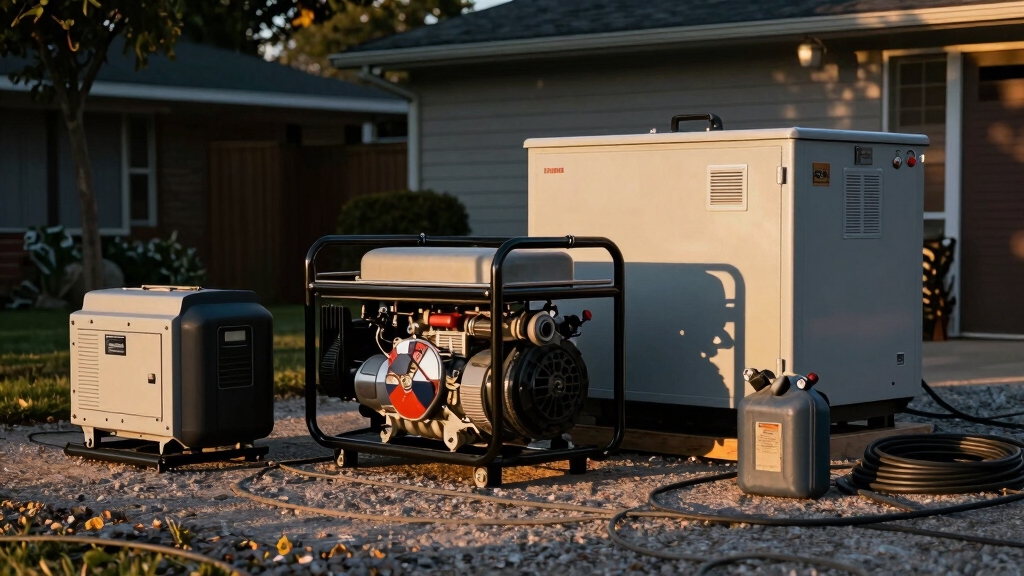
Although runtimes vary markedly by generator type, understanding these differences helps you select the right unit for your needs.
Portable gasoline generators typically run 6 to 18 hours on standard tanks, influenced by fuel capacity and load.
Inverter generators, optimized for efficiency, deliver 10 to 14 hours at 25% load on 2.2-2.5 gallon tanks, balancing fuel economy with quieter operation.
Diesel standby generators provide extended operation, lasting 24 to 72 hours depending on tank size, suitable for prolonged outages.
Propane generators, equipped with large 500-gallon tanks, can sustain 10 to 20 kW loads for 5 to 10 days at 50% load, leveraging fuel density.
Natural gas standby units effectively run indefinitely, contingent on a stable supply, making them ideal for continuous power needs without refueling interruptions.
How Load Levels Affect Generator Runtime?
As load levels go up, you’ll see that your generator’s runtime takes a hit because it consumes more fuel. It’s pretty straightforward: the higher the load, the shorter the runtime.
To get the most out of your generator, aim to operate it within that sweet spot of 50-75% load. This not only boosts efficiency but also helps extend the runtime and reduces wear and tear on the machine.
By keeping this balance in mind, you can manage your fuel usage better and keep your generator performing at its best.
It’s all about finding that right mix!
Additionally, monitoring parameters such as flow rate and temperature can help detect inefficiencies that might impact generator performance over time.
Load Impact On Runtime
Understanding how load levels affect generator runtime is crucial for optimizing fuel efficiency and operational duration. The higher the load, the more fuel the generator consumes per hour, reducing total runtime.
For example, running a 4500W inverter generator at 25% load can yield 10-14 hours. However, at 100% load, runtime drops to 3-5 hours. Load impacts runtime in three key ways:
- Fuel consumption increases exponentially with load, shortening operational time.
- Operating at lower loads improves combustion efficiency, extending runtime.
- Sustained high loads accelerate engine wear, potentially decreasing long-term performance.
Additionally, just as solar lights charge at varying rates depending on their exposure, generator runtime can be influenced by operational efficiency factors that affect fuel usage and engine wear.
Optimal Load Range
Managing generator load within an ideal range directly influences fuel efficiency and engine longevity. You should aim to operate your generator between 50% and 75% load.
This range balances fuel consumption and mechanical stress, fine-tuning runtime and minimizing wear. Running at loads below 50% can cause inefficient fuel use due to incomplete combustion cycles.
Sustained operation at or near 100% load accelerates engine degradation and increases fuel consumption disproportionately. For instance, a 4500W inverter generator running at 50% load can nearly double runtime compared to full load.
Additionally, operating within this sweet spot reduces maintenance frequency by preventing overheating and excessive vibration. You can further enhance efficiency by prioritizing essential appliances and utilizing ECO modes when available, ensuring reliable and extended generator performance.
Regular maintenance and monitoring can further extend the service life of your generator by preventing issues that cause excessive wear and breakdowns, similar to how routine maintenance practices extend sump pump lifespan.
How to Optimize Your Generator’s Load for Longer Runtime?
Although generators can handle full loads, optimizing your generator’s load between 50% and 75% markedly extends runtime and improves fuel efficiency.
Running generators at 50% to 75% load significantly boosts fuel efficiency and extends runtime.
Operating within this range reduces fuel consumption per hour and limits mechanical stress, consequently prolonging engine life.
To optimize load effectively, consider these steps:
- Prioritize essential appliances to minimize total wattage and avoid unnecessary full-load operation.
- Use inverter generators with ECO mode to automatically adjust engine speed, matching power output to demand.
- Monitor load continuously to prevent spikes above 75%, which accelerate fuel use and wear.
Additionally, protecting your generator with surge protection helps prevent damage from voltage spikes and ensures reliable operation during power fluctuations.
How Fuel Tank Size Influences Generator Runtime?
Your generator’s fuel tank size plays a big role in how long it can run before you need to refuel. Basically, the bigger the tank, the longer it can operate without interruption. But it’s not just about the tank size; the type of fuel you use—whether it’s gasoline, diesel, propane, or natural gas—also makes a difference. Each fuel type has its own energy density and consumption rate, which can really affect how long your generator will run.
When you’re estimating runtime, it’s important to consider a few key factors. You’ll want to look at the tank capacity, the load level you’re putting on the generator, and its fuel efficiency.
By keeping all these things in mind, you can get a much more accurate projection of how long your generator will last on a single tank. Additionally, external factors such as physical obstacles can impact the effective operation of wireless components associated with generator controls or monitoring systems.
Tank Capacity Effects
Understanding how fuel tank size impacts generator runtime is essential for accurately planning power availability. The larger your generator’s fuel tank, the longer it can operate before requiring a refill.
This directly affects continuous power supply. For example, a 2-gallon tank typically yields 4-6 hours, while a 10-gallon tank can provide 16-20 hours at similar load conditions.
When considering tank capacity, keep these key points in mind:
- Runtime scales proportionally with tank size, assuming consistent load and fuel type.
- Larger tanks reduce the frequency of refueling, enhancing operational convenience and reliability.
- Diesel and propane generators utilize tank capacity differently, but increased volume always extends runtime until fuel is depleted.
Thus, selecting an appropriate tank size is critical for meeting your generator’s runtime requirements efficiently. Regular maintenance and timely replacement of rechargeable backup batteries help ensure reliable generator operation during extended use.
Fuel Type Differences
Fuel type markedly affects how tank size translates into runtime for generators. Gasoline units with 2- to 10-gallon tanks deliver between 4 to 20 hours, but their runtime scales linearly with tank capacity and load.
Diesel generators, equipped with larger tanks, can operate for multiple days as their fuel consumption per kW is more efficient. Propane generators rely on tank size directly; a 500-gallon propane tank can sustain a 10-20 kW load for 5 to 10 days at 50% load, showcasing extended runtime potential.
Natural gas generators, tied to continuous supply lines rather than tanks, effectively run indefinitely. When evaluating runtime, you must consider fuel energy density and combustion efficiency differences inherent to each fuel type, as these impact how effectively stored fuel converts to operational hours.
For optimal performance and safety, it is important to ensure proper electrical outlet compatibility and wiring when connecting generators to your power system.
Runtime Estimation Factors
Although tank size alone doesn’t determine runtime, it directly influences how long your generator can operate before refueling.
Larger fuel tanks extend operation by providing more fuel reserves. However, runtime also depends on load and fuel type.
For example, a 2-gallon gasoline tank typically yields 4-6 hours, whereas a 10-gallon tank can provide 16-20 hours under similar conditions.
You should consider:
- Fuel consumption rate: Higher loads increase fuel use, reducing runtime despite tank size.
- Fuel type efficiency: Diesel and propane often support longer runtimes per gallon compared to gasoline.
- Generator type and design: Inverter generators optimize fuel use, extending runtime on smaller tanks.
Evaluating these factors alongside tank capacity helps you accurately estimate how long your generator will run.
Environmental Conditions That Shorten Generator Runtime
Environmental factors directly impact your generator’s combustion efficiency and overall runtime. High altitude reduces oxygen density, causing incomplete combustion and higher fuel use.
Extreme temperatures force your generator to consume more fuel while risking overheating or fuel gelling. Humidity displaces oxygen, impairing ignition and efficiency. Poor ventilation accelerates heat buildup, stressing components and increasing fuel consumption.
It is also important to maintain proper ventilation and safety clearances to prevent operational hazards and ensure longer generator life.
| Condition | Impact on Runtime | Technical Explanation |
|---|---|---|
| High Altitude | Reduces by 10-30% | Lower air density lowers combustion |
| Extreme Heat | Decreases by 5-15% | Increased cooling demand and fuel use |
| Extreme Cold | Cuts runtime by 10-25% | Fuel gelling, filter clogging |
| High Humidity | Reduces by 5-10% | Oxygen displacement impairs ignition |
| Poor Ventilation | Shortens by 10-20% | Overheating increases fuel consumption |
How Regular Maintenance Extends Generator Runtime?
Regularly performing maintenance tasks markedly improves your generator’s runtime by guaranteeing peak engine efficiency and preventing unexpected failures.
Neglecting routine upkeep reduces combustion efficiency, increases fuel consumption, and accelerates wear, all of which shorten runtime.
To optimize performance, focus on these key maintenance actions:
- Change oil every 100-200 hours to maintain lubrication and prevent engine damage.
- Clean or replace air and fuel filters to guarantee unobstructed airflow and proper fuel atomization.
- Inspect and tune injectors for precise fuel delivery, boosting combustion efficiency.
Maintaining a consistent operating temperature, similar to a water heater’s vacation mode, can also improve system longevity and efficiency.
Generator Fuel Sources That Provide the Longest Runtime
Understanding how maintenance impacts your generator’s efficiency naturally leads to examining the fuel sources that determine how long you can run it. Natural gas generators offer the longest runtime, operating indefinitely with a stable supply. This makes them ideal for continuous power.
Propane generators, with large tanks (e.g., 500 gallons), provide days of operation at moderate loads. They balance runtime and portability effectively. Diesel generators extend runtime markedly, often running 24-72 hours depending on tank size. Prime-power units benefit from large fuel reserves.
Conversely, gasoline-powered generators, especially portable types, have limited runtime. They typically run for 6-18 hours due to smaller tank capacities. Inverter models optimize fuel use but still depend on tank size and load.
When selecting fuel, prioritize supply stability and tank capacity to maximize runtime effectively. Always ensure proper gas leak detection methods are in place when using natural gas or propane to maintain safety and prevent hazardous situations.
Frequently Asked Questions
Can I Connect Multiple Generators to Increase Runtime?
Yes, you can connect multiple generators to increase total runtime, but it requires proper synchronization and load management.
You’ll need generators designed for paralleling or a suitable transfer switch to safely combine outputs. Without synchronization, you risk damaging equipment or causing power imbalances.
Paralleling helps distribute load, reducing individual generator strain and improving fuel efficiency. However, it doesn’t extend fuel capacity; separate fuel supplies are still necessary for longer operation.
How Does Generator Noise Level Vary With Runtime?
You might think generator noise stays constant, but it actually varies with runtime.
As your generator runs longer, engine components heat up, sometimes causing louder operation due to expanded metal parts and increased exhaust noise.
Fuel consumption adjustments can also shift engine speed, altering noise levels.
If your generator has ECO mode, it’ll reduce speed and noise over time at lighter loads.
Proper maintenance keeps noise stable and minimal during extended use.
What Safety Precautions Are Needed During Extended Generator Use?
You need to make sure proper ventilation to prevent carbon monoxide buildup when running your generator for extended periods.
Regularly check oil levels and filter conditions to avoid overheating and mechanical failure.
Keep fuel stored safely away to reduce fire risk, and avoid overloading by maintaining 50-75% load for efficiency.
Schedule routine shutdowns for inspections.
Use remote monitoring to track critical parameters like oil pressure and temperature, making certain safe, uninterrupted operation.
Can Running a Generator Continuously Damage the Engine?
Yes, running a generator continuously can damage the engine if you don’t manage it properly. Prolonged full-load operation accelerates wear, increases overheating risk, and depletes lubricants faster.
Without routine oil changes, filter cleaning, and cooldown periods, internal components degrade prematurely. To avoid damage, maintain 50-75% load and schedule regular maintenance every 100-200 hours.
Allow periodic shutdowns for inspection and cooling. Neglecting these steps reduces engine lifespan and efficiency.
How Do Inverter Generators Differ From Conventional Ones in Runtime?
Imagine you’re powering a Victorian era telegraph with modern tech.
Inverter generators optimize runtime by adjusting engine speed based on load.
Conventional ones run at constant RPM. This means you get 10-14 hours at 25% load on a small tank, while conventional generators consume fuel steadily.
Inverters also produce cleaner power and are quieter, enhancing fuel efficiency and extending runtime markedly under varying loads.
Guide to Unstoppable Generator Endurance
You hold the key to your generator’s endurance, like a captain steering through shifting tides.
By balancing load levels, optimizing fuel use, and maintaining your equipment diligently, you’ll extend runtime beyond mere hours.
Remember, fuel type and tank size are your lifelines, while environmental factors test your vessel’s limits.
With precise care and strategic management, your generator won’t just run; it’ll power your peace of mind through the darkest storms.