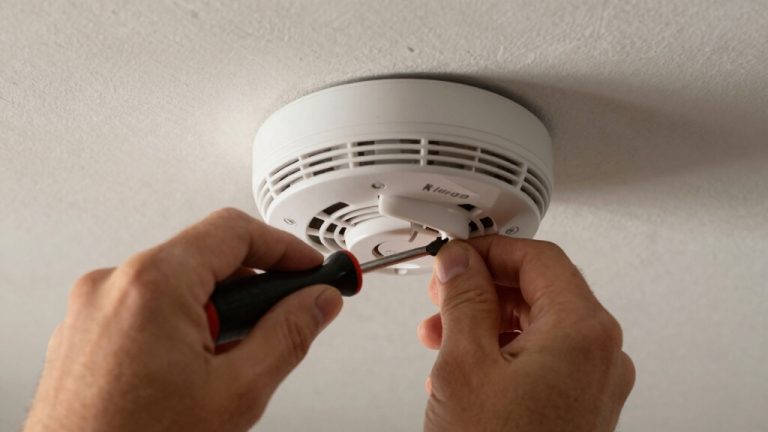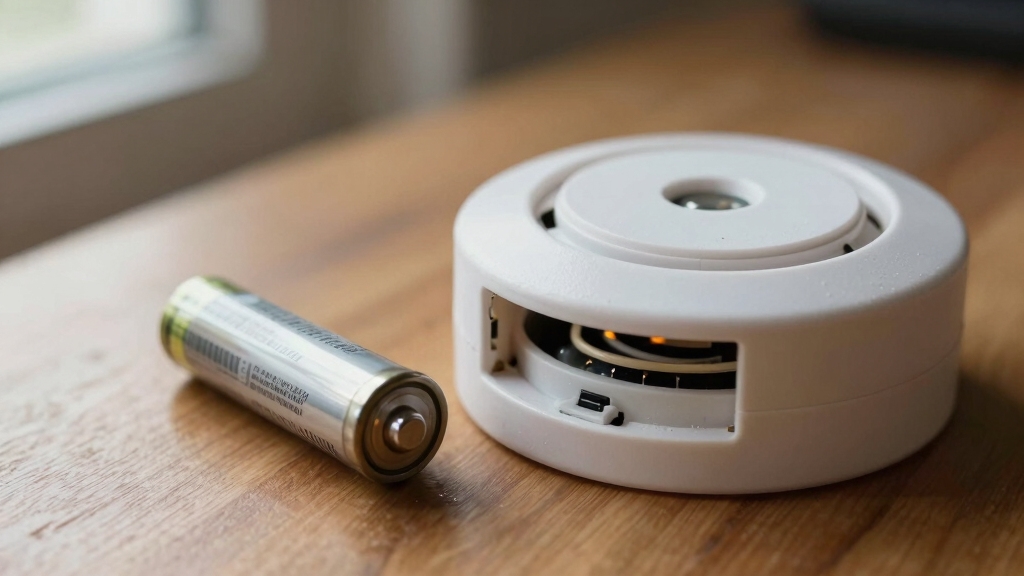

A standard 9V alkaline battery in your smoke detector generally lasts about 6 to 12 months, depending on the device’s power draw and usage frequency.
High-quality alkaline batteries may occasionally stretch to two years, while lithium 9V batteries can maintain stable voltage and last up to a decade in compatible units.
Environmental factors like temperature and humidity also influence battery life. Understanding these dynamics helps you optimize performance and replacement intervals for reliable safety.
Key Takeaways
- Standard alkaline 9V batteries typically last about 6 to 12 months in smoke detectors.
- High-performance alkaline 9V batteries may last up to 1 or 2 years depending on usage.
- Non-rechargeable lithium 9V batteries can last up to 10 years in compatible smoke detectors.
- Frequent alarms and environmental factors like cold or heat can shorten battery life significantly.
- Manufacturers recommend replacing smoke detector 9V batteries annually or immediately after low-battery alerts.
How Long Does a 9V Battery Last in Smoke Detectors?
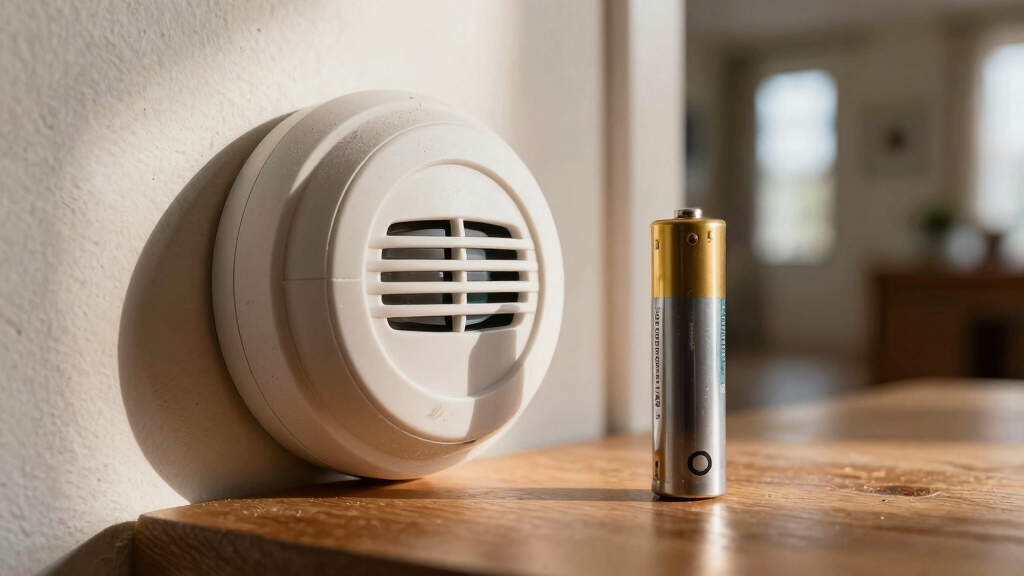
Typically, a standard 9V alkaline battery lasts between 6 to 12 months in a smoke detector, depending on usage and environmental factors.
You’ll find that how often the alarm activates markedly affects battery depletion. Frequent false alarms or cooking smoke triggers accelerate energy drain.
Temperature also influences performance, as colder environments reduce the battery’s effective output voltage, hastening the low-battery threshold.
Manufacturers recommend replacing batteries annually to guarantee reliability, even if the device hasn’t signaled low power.
While some users report extended life nearing two years with high-quality alkaline batteries, this varies widely.
Additionally, older smoke detectors may consume power less efficiently, shortening battery life.
To maintain peak functionality, you should monitor your detector’s battery status regularly and replace the 9V alkaline battery as advised, balancing safety with technical constraints.
It is important to remember that hardwired smoke detectors require these batteries as a backup power source to remain operational during power outages.
Alkaline vs. Lithium 9V Batteries: Which Lasts Longer?
You’ll often find that lithium 9V batteries outperform alkaline ones in smoke detectors by providing markedly longer service life, sometimes lasting up to 10 years compared to the typical 6 to 12 months of alkaline cells.
Lithium 9V batteries can last up to 10 years in smoke detectors, far outlasting alkaline alternatives.
Lithium cells maintain a more stable voltage output over time, minimizing voltage drop below the detector’s low-battery threshold.
Their higher energy density and superior chemistry reduce self-discharge and improve performance under varying load conditions.
Conversely, alkaline batteries experience faster voltage decline and capacity loss, especially under continuous low current drain typical in smoke detectors.
Although lithium 9V batteries cost more upfront, their extended lifespan reduces replacement frequency and maintenance.
For smoke detectors, selecting lithium over alkaline batteries guarantees enhanced reliability and longer uninterrupted operation, aligning with safety-critical device requirements.
Additionally, lithium 9V batteries offer superior performance in extreme temperatures, ensuring reliable operation in a wide range of environmental conditions.
Technical and Environmental Factors That Affect 9V Battery Life
Although 9V batteries are designed to provide stable power to smoke detectors, several technical and environmental factors can materially impact their lifespan.
You need to take into account these variables to understand battery performance accurately.
- Temperature: Cold environments reduce battery voltage output, causing premature low-battery alerts and shorter operational life.
- Detector Power Consumption: Older or feature-rich detectors (e.g., with wireless communication) draw more current, accelerating battery depletion.
- Usage Frequency: Frequent alarms from cooking or smoke increase power drain, shortening battery life.
- Battery Quality: High-quality alkaline or lithium batteries maintain consistent voltage longer. Cheap brands risk leakage and voltage drops.
- Proper maintenance and testing of detectors is essential to ensure battery longevity and reliable operation over time.
When Should You Replace Your Smoke Detector Battery: and Why?
Hey there! So, when should you really think about replacing your smoke detector battery? Well, a good rule of thumb is to do it right away if you hear that annoying low-battery chirp or if your smoke detector isn’t as sensitive during testing.
You see, replacing the battery promptly helps ensure that your detector is working at its best. Ideally, you want the voltage to stay above 8.7 volts.
If you let it slide, there’s a chance the device mightn’t work when you need it most, and nobody wants that! Plus, waiting too long can lead to power issues and even sensor problems down the line.
Bottom line: stay on top of your smoke detector battery—it’s a small task that can make a huge difference in keeping you and your home safe! Consider using sealed 10-year lithium batteries to reduce replacement frequency and prevent low-battery chirps.
Signs Battery Needs Replacement
Keep an ear out for the characteristic chirping sound that signals a low battery in your smoke detector.
This audible alert typically occurs when the battery voltage falls below approximately 8.74V, indicating imminent power loss.
Besides chirping, other technical signs include:
- Frequent false alarms triggered by insufficient power.
- Dim or absent indicator LED lights due to voltage drop.
- Intermittent operation or failure in wireless communication for smart detectors.
- Reduced sensitivity or delayed alarm response caused by unstable power supply.
Monitoring these indicators helps you identify battery degradation early, ensuring timely replacement.
Relying solely on elapsed time ignores real-time battery condition, risking detector failure.
Regular testing combined with attention to these signs maintains peak functionality and safety.
Photoelectric smoke alarms rely on a steady LED light source inside a dark chamber, so stable power from a healthy battery is essential for accurate smoke detection.
Importance Of Timely Change
Because smoke detectors rely entirely on battery power for critical operation, replacing their 9V batteries promptly is essential to maintain reliable fire detection and safety.
Delayed replacement risks device failure, false alarms, or missed alerts, compromising your household security. Manufacturers recommend swapping batteries annually or immediately upon low-battery chirps.
| Replacement Time | Reason | Risk if Delayed |
|---|---|---|
| Every 12 months | Battery depletion | Detector shutdown |
| Low-battery chirp | Voltage drop below ~8.7V | Missed alarm signals |
| Cold weather | Reduced battery output | Unreliable detection |
| Device age >10yrs | Sensor degradation | False negatives |
| After fire event | Potential battery damage | Malfunctioning alarms |
Timely changes guarantee consistent voltage supply, optimize sensor function, and uphold your smoke detector’s life-saving reliability.
Unlike monitored systems, standalone smoke detectors do not automatically alert the fire department, so maintaining battery power ensures occupants can hear the alarm and take immediate action in emergencies, which is critical for fire safety.
How Environmental Conditions Affect 9V Battery Performance?
Although 9V batteries are designed to provide reliable power, environmental conditions like temperature markedly impact their performance in smoke detectors.
You’ll notice that cold temperatures reduce battery voltage output, causing premature low-battery warnings or intermittent chirping. Conversely, high heat can accelerate chemical degradation, shortening overall lifespan.
Humidity also affects internal resistance, slightly lowering efficiency. Understanding these factors helps you anticipate battery behavior under different conditions.
Key environmental influences include:
- Temperature: Below 50°F, voltage drops, causing false low-battery alerts.
- Heat: Speeds up electrolyte evaporation, reducing capacity.
- Humidity: Increases internal resistance, diminishing current flow.
- Altitude: Lower air pressure can subtly affect chemical reactions.
Additionally, moisture-related issues can increase the risk of sparking and corrosion in electrical components, potentially affecting smoke detector performance and safety.
Tips to Extend Your 9V Smoke Detector Battery Life
When aiming to maximize your 9V smoke detector battery life, selecting high-quality batteries is essential. Inferior brands often exhibit inconsistent voltage output and higher leakage risk.
Maximize smoke detector lifespan by choosing high-quality 9V batteries to avoid voltage inconsistencies and leakage risks.
Choosing non-rechargeable lithium 9V batteries considerably extends operational duration, sometimes up to a decade in compatible units. Install batteries during moderate temperatures to reduce cold-induced voltage drops and false low-battery alerts.
Always adhere to manufacturer recommendations regarding battery type and replacement intervals to maintain peak performance. Avoid mixing new and partially depleted batteries, but consider reusing partially drained ones in low-drain devices to optimize resource utilization.
Regularly test your detector to detect early signs of power degradation. Additionally, be aware that voltage fluctuations can affect battery performance and device operation, so maintaining stable power conditions is important.
These measures collectively enhance battery efficiency, reliability, and lifespan, ensuring continuous smoke detection without premature power loss.
Frequently Asked Questions
Can Rechargeable 9V Batteries Be Used in Smoke Detectors?
You can use rechargeable 9V batteries in smoke detectors, but they’re generally not recommended.
Rechargeables like NiMH have lower voltage (around 8.4V fully charged) compared to alkalines, which may trigger low battery warnings prematurely.
Also, their capacity and discharge curve differ, potentially reducing reliable detector operation time.
For safety, stick to manufacturer-recommended batteries, typically alkaline or lithium, to guarantee consistent power and avoid false alarms or missed alerts.
How Do Smart Smoke Detectors Impact Battery Life?
Smart smoke detectors reduce battery life noticeably because they constantly use power for wireless communication and data processing.
You’ll find their batteries drain faster than standard models, often requiring replacements more frequently—sometimes every 6 to 9 months.
To maximize lifespan, you should use high-quality lithium 9V batteries and adjust settings to minimize unnecessary alerts or communication.
Regular testing helps make certain you catch low battery warnings early before failures occur.
Are There Any Health Risks From Leaking 9V Batteries?
You might wonder if leaking 9V batteries pose health risks.
Indeed, battery leakage releases corrosive alkaline substances like potassium hydroxide, which can cause skin irritation or chemical burns upon contact.
Inhalation of fumes can irritate your respiratory system.
Prolonged exposure increases hazards, especially if you handle leaks without gloves.
Always replace leaking batteries promptly, clean affected areas carefully, and avoid direct contact to minimize health dangers.
What Happens if I Ignore the Low Battery Chirp?
If you ignore the low battery chirp, your smoke detector will eventually lose power and stop functioning.
This compromises your safety by failing to alert you during a fire.
The chirp indicates the voltage dropped below about 8.7V, signaling imminent battery failure.
Delaying replacement increases risk, especially at night when you rely on alarms most.
Always replace batteries promptly to maintain reliable operation and adhere to safety standards.
Can Battery Type Affect Smoke Detector Sensitivity?
Yes, the battery type can affect your smoke detector’s sensitivity indirectly.
While the sensor’s detection capabilities remain constant, low or unstable voltage from depleted or poor-quality batteries can reduce the detector’s responsiveness.
Using high-quality alkaline or lithium 9V batteries guarantees stable power delivery, maintaining peak sensitivity.
Conversely, weak or fluctuating power from cheap or old batteries might cause delayed alarms or false chirps, compromising your detector’s performance and safety.
Small Battery, Big Safety: Don’t Let It Run Out
To keep your smoke detector reliable, you’ll want to replace your 9V battery every 6 to 12 months, depending on whether you use alkaline or lithium types.
Remember, environmental factors like temperature and humidity can throw a wrench in battery life, so monitor conditions closely.
Don’t wait for the battery to die. Changing it on schedule guarantees your safety isn’t left hanging by a thread when you need it most.