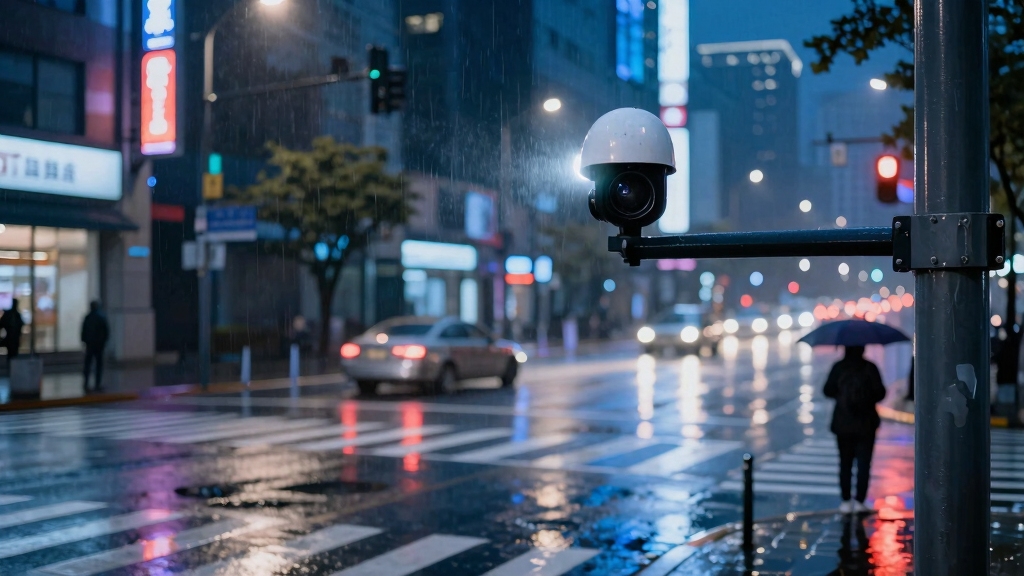

Traffic cameras typically keep footage based on camera type and location. Traffic flow cameras usually overwrite videos within 24 to 72 hours due to continuous recording and storage limits.
Enforcement cameras, like red-light or speed cameras, retain violation clips for 30 to 90 days to allow citation processing. Retention also depends on local laws, with some cities permitting longer storage for investigations.
If you want to understand retention variations and how to secure footage before deletion, explore the detailed factors involved.
Key Takeaways
- Traffic flow cameras typically retain footage for 24 to 72 hours before overwriting due to continuous recording and storage limits.
- Enforcement cameras (red-light, speed) store violation footage for 30 to 90 days to allow citations and appeals.
- Retention periods vary by jurisdiction, with some states or cities extending storage for ongoing investigations or legal needs.
- Traffic camera footage is often deleted automatically unless flagged for evidence or subject to legal hold.
- Prompt requests for footage are critical as storage constraints and automatic overwriting can lead to early deletion.
Typical Traffic Camera Footage Retention Times
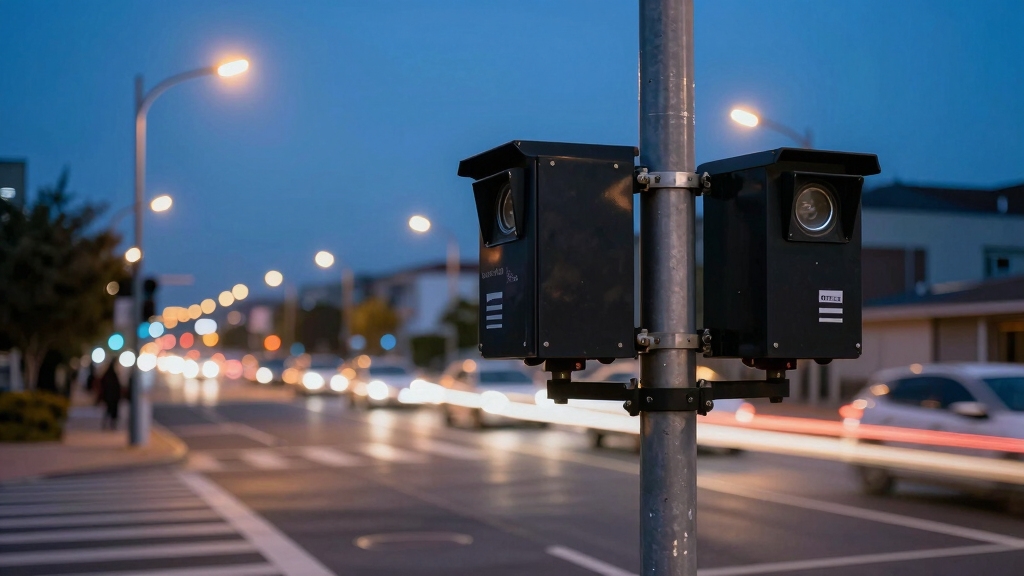
Although retention times vary by camera type and jurisdiction, typical traffic camera footage is stored between 24 hours and 90 days.
Traffic flow cameras usually overwrite footage within 24 to 72 hours due to high data volume and limited storage.
Enforcement-related cameras, like red-light and speed cameras, retain videos from detected violations for 30 to 90 days to allow time for citations and appeals.
Police surveillance cameras often keep footage longer, from 7 days up to several months, depending on investigative needs.
The average retention period across numerous jurisdictions ranges from one to three months before automatic deletion unless the footage is flagged.
Some municipalities, such as Los Angeles, extend retention up to five years for significant cases.
These timeframes reflect data storage constraints and legal policies aimed at balancing evidence preservation with resource management.
For enhanced security and reliability, many systems now incorporate video surveillance integration to maintain stable and uninterrupted footage feeds.
Traffic Camera Footage Retention by Camera Type
Traffic camera footage retention varies markedly by camera type, reflecting differences in function and storage capacity.
Traffic flow cameras typically overwrite footage within 24 to 72 hours due to continuous recording and limited storage.
Traffic flow cameras erase recordings every 24 to 72 hours because of nonstop capturing and storage limits.
Enforcement cameras, such as red-light and speed cameras, retain footage between 30 and 90 days but only store video when a violation is detected.
Police surveillance cameras hold recordings from 7 days up to several months, depending on jurisdictional policies and case relevance.
Private security cameras generally keep footage for 7 to 30 days, constrained by storage limits.
Body-worn cameras, used by law enforcement, often mandate a minimum retention period of 90 days in states like Texas.
These retention periods optimize storage management while balancing evidentiary needs and legal compliance.
Implementing real-time remote monitoring can enhance situational awareness and support timely responses based on footage review.
Traffic Camera Footage Retention by Location (Cities and States)
In California, red-light camera footage is kept for at least 30 days. If there’s an ongoing investigation, they can extend that storage period. So, if you’re in California, you can rest a little easier knowing there’s some accountability with that footage.
Now, let’s talk about New York City. Here, speed camera videos usually get deleted after 60 days. But, if they’re tied to a specific piece of evidence, they can stick around for a bit longer. Law enforcement footage, on the other hand, is held for up to 90 days. Quite a difference, right?
California Retention Policies
When reviewing California retention policies, you’ll find that red-light camera footage must be stored for at least 30 days, with extensions applied during ongoing investigations.
Typically, enforcement footage is retained between 30 and 90 days, depending on the agency and case status. Traffic flow cameras generally overwrite data within 24 to 72 hours unless flagged.
In major cities like Los Angeles, certain footage can be preserved up to five years for significant cases. The state mandates automatic deletion after retention unless saved for evidence.
You should act quickly to request footage, as storage duration varies and capacity constraints lead to overwriting. Understanding these timelines helps ensure you secure relevant video for dispute resolution or legal processes within the retention window.
For improved evidence preservation, it is important to secure cameras properly and maintain footage integrity during storage.
New York City Timelines
Although retention periods vary, New York City generally deletes speed camera footage after 60 days unless it serves as evidence in an active investigation or legal proceeding.
You should know that Queens law enforcement retains red-light and speed camera footage between 30 to 90 days, depending on case status.
The NYPD keeps surveillance footage for a minimum of 18 months, but this doesn’t typically include traffic enforcement cameras.
Here’s what matters for you:
- Speed camera data expires in 60 days without legal hold.
- Red-light violations in Queens may be stored up to 90 days.
- Active investigations extend retention automatically.
- Routine footage overwrites after prescribed periods to manage storage.
Understanding these timelines helps you act swiftly when requesting footage.
Variations Across States
Because traffic camera regulations fall under state and local jurisdiction, retention periods vary markedly across cities and states.
For example, California mandates red-light camera footage retention of at least 30 days, extending during investigations.
New York City deletes speed camera footage after 60 days unless it’s evidence.
Queens, NY holds red-light and speed footage between 30 to 90 days.
Oklahoma lacks a statewide standard, causing agency-specific retention policies.
Large cities like Los Angeles may retain footage up to five years, particularly for significant cases.
Traffic flow cameras typically overwrite data within 24 to 72 hours across jurisdictions.
Enforcement cameras store violation footage for 30 to 90 days.
Because no federal mandate exists, you must check local policies promptly.
Automatic deletion occurs unless footage is actively preserved.
To ensure reliable data storage and prevent loss, many agencies implement surge protection measures to safeguard their recording equipment from electrical faults.
What Laws Decide How Long Traffic Footage Is Kept?
Since no federal laws mandate specific storage durations for traffic camera footage, states and municipalities establish their own regulations that determine retention periods.
Federal law does not specify traffic camera footage retention; local authorities set their own rules.
You need to be aware that these laws vary markedly depending on jurisdiction and camera type.
For example:
- Red-light and speed camera footage is typically kept between 30 to 90 days if a violation is recorded.
- Traffic flow cameras often overwrite footage within 24 to 72 hours due to high data volume.
- Police surveillance video retention can span from 7 days up to several months, depending on local policy.
- Some large cities, like Los Angeles, retain footage for up to 5 years for legal and investigatory purposes.
Understanding these legal frameworks helps you act swiftly if you need access before automatic deletion occurs. Fire alarm systems, particularly the simplest fire alarm system, prioritize reliability and straightforward design, which can be a useful model for managing retention policies effectively.
Reasons for Extended Traffic Camera Footage Retention
When investigations or legal proceedings require it, traffic camera footage retention periods often extend beyond standard durations to guarantee evidence availability.
You’ll find footage kept longer when it serves as critical evidence in criminal cases, traffic violations, or insurance claims.
Agencies may retain recordings up to several years, like Los Angeles’ five-year policy, to support ongoing or unresolved cases.
Extended retention also occurs when footage is linked to public safety concerns or complex investigations demanding detailed review.
Additionally, legal mandates or court orders can override automatic deletion protocols, ensuring data preservation until resolution.
Storage capacity limits and jurisdiction-specific regulations influence these extensions, but the primary driver remains maintaining evidentiary integrity.
You should understand these factors affect how long your footage remains accessible beyond typical 30 to 90-day retention windows.
Regular inspection and early detection of tampering or suspicious activities can complement the use of retained footage in enhancing security efforts.
How to Get Traffic Camera Footage Before It’s Deleted?
To secure traffic camera footage before it’s deleted, you must act quickly and follow established procedures meticulously.
Footage retention varies: traffic flow cameras may overwrite within 24-72 hours, while enforcement cameras keep violation footage 30-90 days.
Here’s how you can obtain footage promptly:
- Identify the camera type and jurisdiction to estimate retention time.
- Submit a formal request, such as FOIA or public records, immediately, ideally within 24 hours.
- Use official agency forms and adhere strictly to submission deadlines.
- Consult a lawyer if necessary to navigate legal complexities and expedite the process.
Delays often lead to automatic deletion due to limited storage.
Acting swiftly and precisely maximizes your chance of retrieving critical footage before it’s lost. Understanding the importance of redundant communication channels can also improve the likelihood of accessing stored data reliably.
Frequently Asked Questions
Can Traffic Camera Footage Be Used in Civil Lawsuits?
Yes, you can use traffic camera footage in civil lawsuits as evidence to support claims like negligence or liability.
However, you must act quickly since footage retention varies between 24 hours and 90 days depending on the camera type and jurisdiction.
To preserve evidence, you should request the footage promptly through official channels, such as a public records request.
Consider legal assistance to guarantee proper handling and admissibility in court.
Are Private Citizens Allowed to Request Traffic Camera Footage?
Imagine sending a pigeon post. Today, you can request traffic camera footage, but your success depends on local rules.
You’re generally allowed to request footage through Freedom of Information Act (FOIA) or public records requests.
Act quickly; footage often overwrites within days.
Private cameras’ retention varies, and agencies may restrict access citing privacy or ongoing investigations.
Use official forms and meet deadlines to increase your chances of obtaining the data you need.
How Accurate Are Traffic Cameras in Capturing Violations?
Traffic cameras are highly accurate, with error rates typically below 1%.
They use calibrated sensors and high-resolution imaging to detect violations, like speeding or running red lights.
You can rely on their precise timing and speed measurement technology, which withstands legal scrutiny.
However, environmental factors like weather or obstructions can occasionally affect accuracy.
Do Traffic Cameras Record Audio Along With Video?
No, traffic cameras don’t record audio alongside video.
Over 90% of enforcement and traffic flow cameras focus solely on capturing visual evidence like license plates and vehicle speed.
This limitation guarantees privacy compliance since audio recording involves stricter legal restrictions.
Instead, these systems rely on high-resolution imagery and infrared sensors to detect violations.
This approach avoids the complexities of audio data storage and management in traffic surveillance operations.
Are There Privacy Concerns With Traffic Camera Footage Storage?
Yes, you should be aware of privacy concerns with traffic camera footage storage.
Since footage can capture identifiable individuals and license plates, improper handling risks unauthorized access or misuse.
Data retention policies vary, but lack of uniform federal regulation means your personal information’s protection depends on local rules.
Always review jurisdiction-specific privacy safeguards.
Note that footage is usually deleted automatically unless retained for legal reasons, limiting long-term exposure.
Before the Footage Fades: Act While the Evidence Still Exists
Traffic camera footage, like a fleeting shadow, rarely lingers beyond 30 to 90 days, depending on type and location.
Legal frameworks act as gatekeepers, dictating exact retention periods. Some circumstances demand extended storage, turning brief moments into lasting records.
To capture this digital evidence before it vanishes, you need prompt action. Understanding these timelines helps you navigate the technical maze, ensuring vital footage doesn’t slip through your fingers like sand in an hourglass.