
You need at least one smoke detector inside every bedroom, one outside each sleeping area, and one on every level of your house, including basements.
Space units no more than 30 feet apart to guarantee full coverage. Larger or multi-story homes may require eight to twelve detectors based on square footage.
Hardwired units with battery backup and interconnection are often required by code. Proper placement and maintenance are crucial for reliability; details you’ll want to understand fully.
Key Takeaways
- Install at least one smoke detector inside every bedroom and one outside each sleeping area for proper coverage and safety.
- Place smoke detectors on every level of the home, including the basement, to ensure early detection throughout.
- Maintain a maximum spacing of 30 feet between smoke detectors, with detectors at both ends of hallways longer than 40 feet.
- A typical single detector covers about 900–1,000 square feet; calculate total detectors based on your home’s total square footage.
- Follow local codes requiring hardwired or interconnected detectors, especially inside bedrooms and on each level, for compliance and reliability.
How Many Smoke Detectors Does Your Home Need?
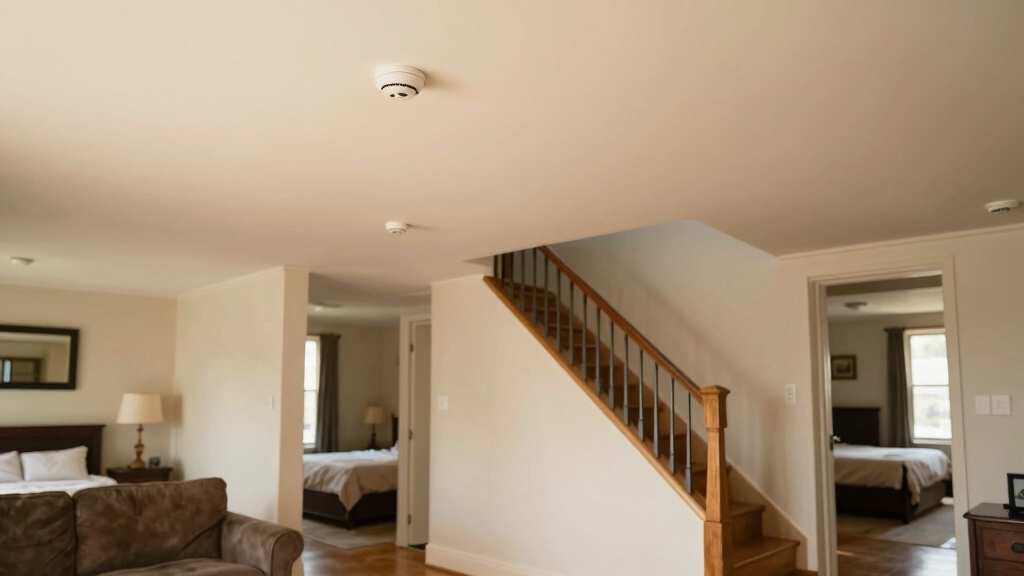
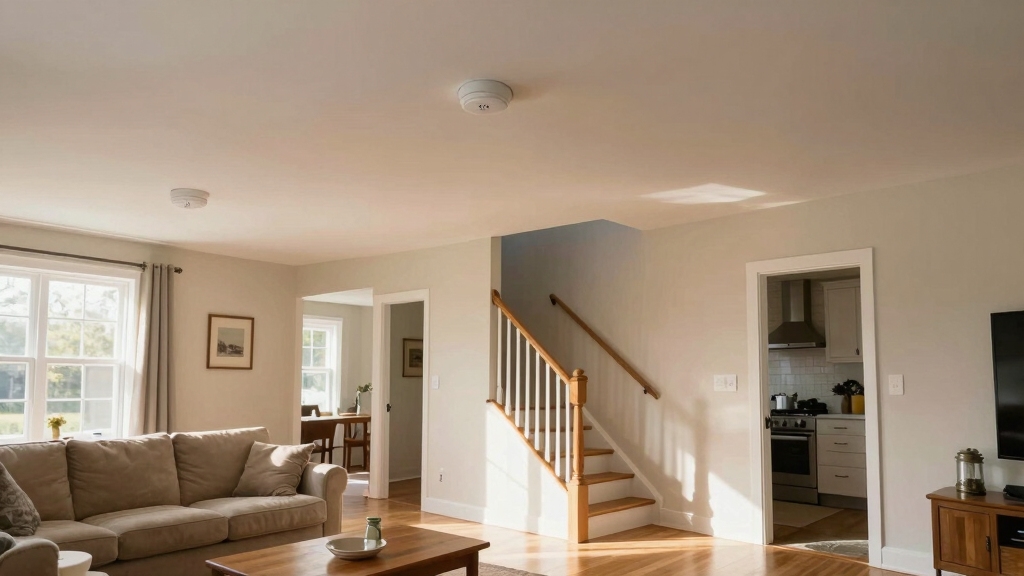
Although the exact number of smoke detectors your home requires depends on its size and layout, you should install at least one detector inside every bedroom, outside each sleeping area, and on every level, including the basement.
Position detectors to guarantee full coverage, maintaining a maximum spacing of 30 feet between units. For hallways longer than 40 feet, place detectors at both ends to ensure early detection.
A single smoke detector typically covers 900 to 1,000 square feet, so calculate your total accordingly. For example, a two-story, three-bedroom home generally needs six detectors, while larger multi-level homes require eight to twelve.
Always prioritize strategic placement over mere quantity to optimize safety. Compliance with local codes and NFPA standards is essential to ensure your smoke detection system meets regulatory and safety requirements.
Additionally, consider installing hardwired smoke detectors with battery backup to maintain continuous protection during power outages.
Best Places To Install Smoke Detectors
Once you determine how many smoke detectors your home requires, the next step is selecting their ideal locations.
Install a detector inside every bedroom and one outside each sleeping area to assure prompt alerts. Place a smoke detector on every level, including the basement, regardless of its use.
Install detectors inside bedrooms and outside sleeping areas, plus one on every level including the basement for safety.
In hallways longer than 30 feet, position detectors at both ends to maintain effective coverage. Mount detectors high on walls, within 12 inches of the ceiling, or directly on ceilings.
Avoid proximity to vents, fans, windows, kitchens, garages, or attics to reduce false alarms. Maintain a maximum spacing of 30 feet between detectors, and prioritize placement over area coverage.
Following these precise guidelines guarantees thorough early warning throughout your residence.
For optimal safety, ensure detectors are installed within 10 feet of bedrooms to maximize alarm audibility and effectiveness.
Understanding Local Smoke Detector Codes
Because smoke detector regulations vary markedly depending on your state, municipality, and the specifics of your home, you must consult local codes to guarantee full compliance.
These codes dictate exact requirements such as the number, placement, and type of detectors, often specifying hardwired units with battery backup, especially in bedrooms and on each level.
For example, Wisconsin mandates hardwired detectors inside bedrooms or within 21 feet on every floor.
You should also verify if your jurisdiction aligns with NFPA standards, which require detectors inside bedrooms, outside sleeping areas, and on every level, including basements.
Local codes may impose additional rules on spacing, interconnection, and device type.
To confirm safety and legal conformity, always cross-reference your home’s layout with the applicable codes before installation.
Additionally, understanding the distinction between local and central fire alarm systems can influence your choice of smoke detector setup and monitoring.
How To Maintain And Replace Smoke Detectors?
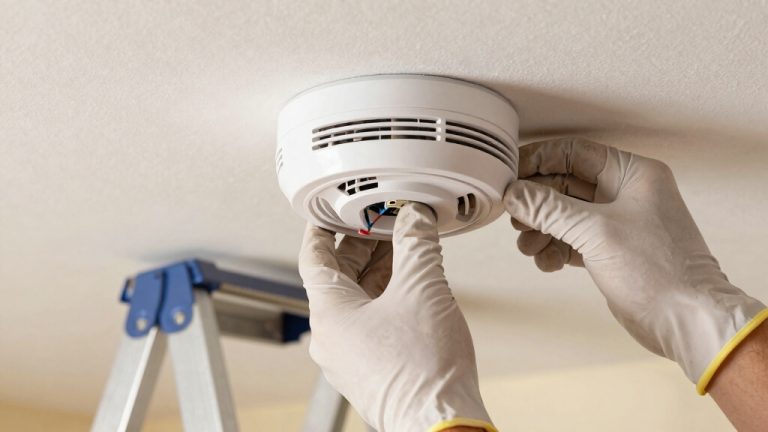
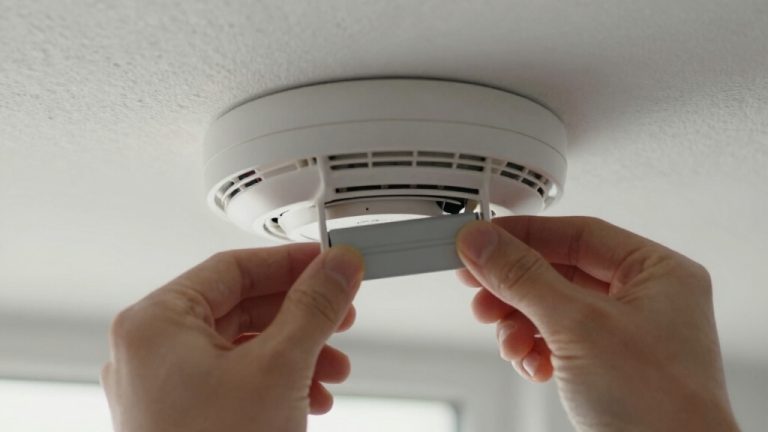
Regularly maintaining your smoke detectors is essential to guarantee they function correctly when you need them most. You should test each unit monthly using its test button to confirm proper operation.
Test your smoke detectors monthly to ensure they work properly when it matters most.
Replace batteries every 6 to 12 months, even if the detector hasn’t signaled low power. Smoke detectors must be replaced every 10 years or immediately after a fire event. Follow manufacturer instructions closely to assure compliance with lifespan guidelines.
Key maintenance steps include:
- Inspect and clean detectors regularly to remove dust and debris.
- Replace batteries annually or when low-battery alerts sound.
- Test alarms monthly for proper response.
- Replace entire units every decade or post-fire damage.
These actions assure your smoke detectors remain reliable and compliant with safety standards. Using sealed 10-year lithium batteries can eliminate routine battery changes and enhance long-term reliability.
Benefits Of Interconnected Smoke Detectors
Although standalone smoke detectors provide essential protection, interconnected smoke detectors markedly enhance your home’s safety by ensuring that when one alarm senses smoke, all alarms sound simultaneously.
This immediate, synchronized alert enables you and your family to respond faster, regardless of your location in the house.
Interconnected systems reduce the risk of delayed detection, especially in larger or multi-story homes where noise may not travel efficiently.
You can choose hardwired detectors with battery backup or wireless models, both compliant with NFPA standards and local codes.
By integrating alarms, you also simplify maintenance and increase redundancy, improving overall reliability.
Installing interconnected smoke detectors aligns with best safety practices, ensuring thorough coverage and timely warnings that can save lives and minimize property damage.
Additionally, interconnected alarms are often part of monitored systems that can automatically notify emergency services, further reducing response times and enhancing safety.
Frequently Asked Questions
Can I Use Combination Smoke and Carbon Monoxide Detectors?
Yes, you can use combination smoke and carbon monoxide detectors. They provide dual protection, detecting both smoke and CO in one device, which simplifies installation and maintenance.
Make sure these units meet UL standards and local code requirements. Place them according to smoke detector guidelines: inside bedrooms, outside sleeping areas, and on every level.
Regularly test and maintain them to guarantee reliable performance and compliance with safety regulations.
What Type of Smoke Detector Technology Is Most Reliable?
You might think ionization detectors are the most reliable, but truth is, photoelectric smoke detectors excel at sensing smoldering fires with slow, smoky combustion.
For complete protection, you should use a combination of both technologies, as ionization detects fast flaming fires better.
Dual-sensor alarms provide balanced coverage, reducing false alarms and maximizing response time.
Trust reputable brands and make certain proper installation for the best performance in detecting fire hazards.
How Do Smoke Detectors Perform in Very Humid Environments?
Smoke detectors can struggle in very humid environments because moisture can trigger false alarms or damage sensors.
You’ll want to use detectors rated for high humidity, like photoelectric types, which handle steam better than ionization models.
Avoid placing them near bathrooms or kitchens where humidity spikes.
Regular maintenance is essential; test them monthly and replace units showing frequent false alarms to guarantee reliable performance in moist conditions.
Are There Specific Smoke Detectors for People With Hearing Impairments?
Yes, you can get smoke detectors designed specifically for people with hearing impairments.
These models often include strobe lights and vibrating pads to alert you visually and physically.
They can interconnect with standard alarms to guarantee thorough warning throughout your home.
When selecting one, make sure it meets UL standards for hearing-impaired use and check compatibility with your existing system for seamless integration and enhanced safety.
Can Pets Trigger False Alarms in Smoke Detectors?
Sure, pets can trigger false alarms in smoke detectors, but it’s usually due to dust, dander, or rapid movement near the sensor, not the animals themselves.
Unlike a telegraph from the 1800s sending signals, modern detectors rely on optical or ionization methods sensitive to particles and chemicals, not pet presence.
To minimize false alarms, place detectors away from pet areas, clean devices regularly, and choose models with pet-immune technology when possible.
More Alarms, Fewer Emergencies: Safety Starts Everywhere
You might think one smoke detector is enough until your house fills with smoke and that lone alarm stays silent.
Don’t gamble with safety; install detectors in every bedroom, outside sleeping areas, and on each floor. Follow local codes precisely and keep them well-maintained.
Ironically, the more alarms you have, the less likely you’ll ever hear them blaring. So, invest in all-encompassing coverage; you’ll thank yourself long before the smoke does.