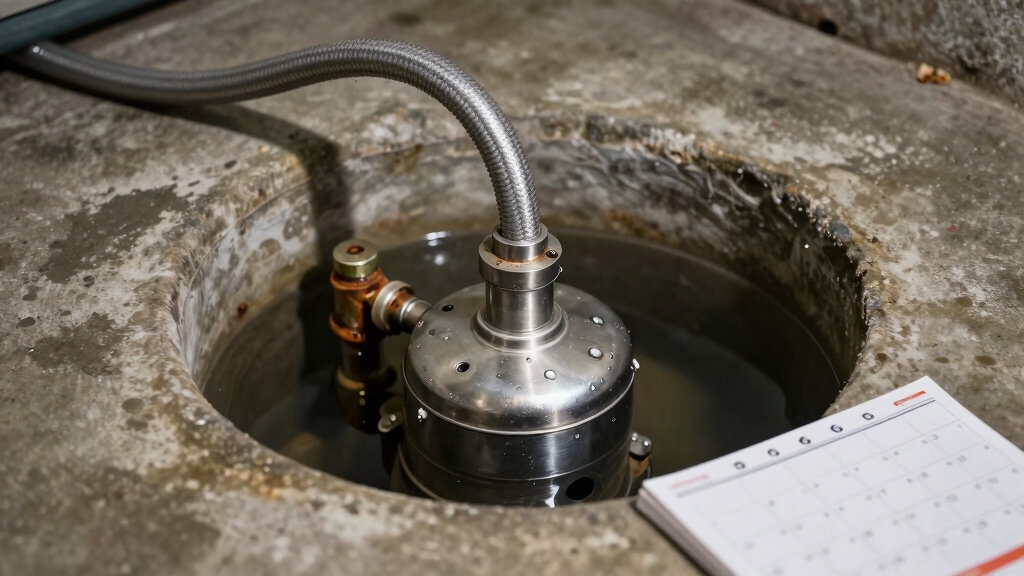

You should replace your sump pump every 7 to 10 years to ensure reliable operation and prevent costly water damage. Heavy use, frequent flooding, or harsh environmental conditions can reduce its lifespan, sometimes to under seven years.
Watch for signs like unusual noises, constant running, or rust, which signal that replacement is needed. Regular maintenance helps extend its life, but timely upgrading offers improved efficiency and backup features.
Discover the key factors influencing sump pump replacement timing and selection.
Key Takeaways
- Replace sump pumps every 7 to 10 years, with proactive replacement starting at 7 years for frequent or heavy use.
- Heavy rainfall, flooding, and high water tables can shorten sump pump lifespan to under 7 years.
- Signs like unusual noises, constant running, or visible rust indicate the need for immediate replacement.
- Regular maintenance and monitoring extend pump life but do not eliminate eventual replacement needs.
- Consider pumps with backup batteries and smart monitoring for reliability and timely failure alerts.
Typical Lifespan of a Sump Pump
Most sump pumps last around 7 to 10 years, with 10 years being the typical lifespan for high-quality, professionally installed units.
You should consider replacement once your pump reaches 7 years, especially if it operates frequently under heavy water loads.
Even if it seems functional, internal components degrade over time, reducing efficiency and increasing failure risk.
Regular performance monitoring, like testing and maintenance logs, helps you identify when the pump’s capacity declines or corrosion appears around the motor and float.
Parts can be worn even if the pump appears to work fine, so units in the 7–10 year range should be considered for replacement.
Proactive replacement before failure is critical to prevent costly water damage.
While some recommend replacing pumps every 5 years for peak reliability, the average high-quality unit maintains performance close to a decade with proper care and maintenance.
Staying ahead of wear guarantees your sump pump protects your home effectively.
Factors That Shorten Sump Pump Longevity
Frequent pump operation really speeds up mechanical wear and can cut down the overall lifespan of your sump pump.
Plus, environmental factors—like a high volume of water or corrosive conditions—add even more stress on the components. This can also contribute to hydraulic overload, which is a common cause of failure in related drainage systems.
This can lead to premature failure, which is definitely not what you want.
Sump pumps typically last around ten years, so knowing this average lifespan helps in planning replacements before failure occurs.
So, it’s super important to understand how both usage and environmental impacts play a role. By doing this, you can better plan for timely maintenance and know when it’s time for a replacement.
Usage Frequency Impact
When your sump pump operates more frequently due to environmental or mechanical factors, its lifespan decreases markedly.
Heavy rainfall, high water tables, and frequent flooding force your pump to run longer and more often, accelerating wear and mechanical fatigue. Such conditions may also lead to soil saturation, which impacts pump efficiency.
Continuous cycling caused by float switch or check valve failures further reduces motor life, leading to premature breakdowns.
Handling excessive water volumes strains pump components, especially in flood-prone areas, cutting operational life below the typical 7 to 10 years.
Using an undersized pump worsens this effect, as it runs constantly to compensate for inadequate capacity, rapidly accelerating degradation.
Regular maintenance can help extend the service life of your pump by preventing issues that cause excessive wear.
To maximize your sump pump’s longevity, make sure proper sizing and address mechanical issues promptly. Minimizing excessive runtime and cycling directly shortens its functional lifespan.
Environmental Wear Effects
Although sump pumps are designed to withstand challenging conditions, various environmental factors markedly accelerate their wear and reduce operational lifespan.
You need to monitor and mitigate these influences to maintain pump efficiency and longevity. Elevated groundwater levels force your pump to run continuously, increasing mechanical strain.
In coastal or low-elevation areas, changes in groundwater levels may also be influenced by tidal effects, which can further increase pump operation frequency. Proper placement and maintenance can help prevent false triggers caused by environmental interference.
Poor water quality causes corrosion and buildup, damaging internal parts. Debris accumulation in the sump pit leads to clogs and excessive cycling.
Extreme weather subjects seals and components to thermal stress, hastening failure. Finally, soil composition and moisture levels contribute to corrosion and operational overload.
Key environmental wear factors include:
- High groundwater levels causing constant operation
- Sediment and acidic water accelerating corrosion
- Debris buildup impairing float switch and intake
- Weather extremes stressing seals and mechanisms
- Moisture and soil conditions promoting rust and clogging
Signs Your Sump Pump Needs Replacement
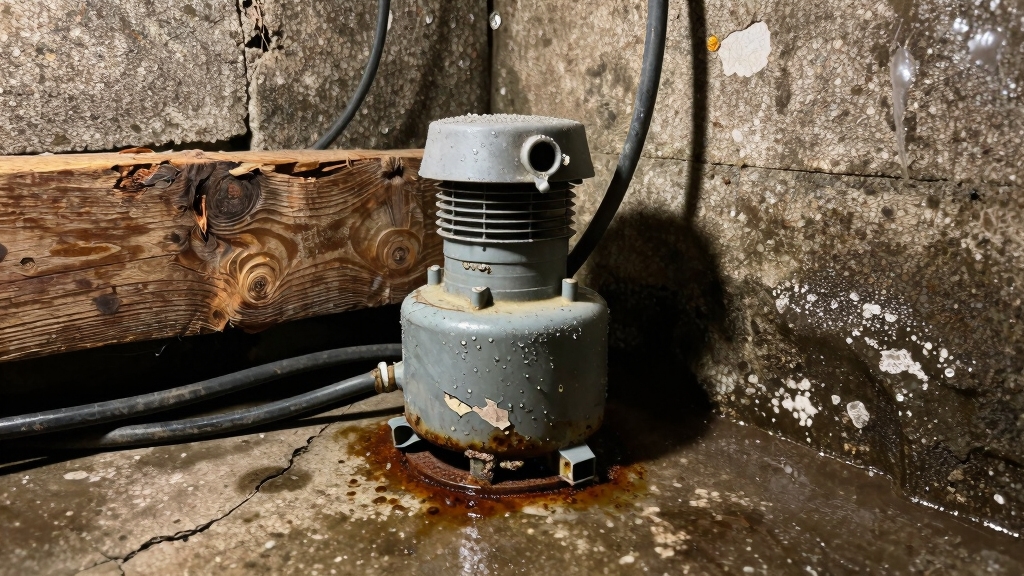
If your sump pump starts producing unusual noises like grinding or rattling, it often signals mechanical problems such as impeller damage that require prompt attention. These sounds, unlike the normal low hum, indicate internal failure or a broken impeller causing vibrations.
Unusual noises such as gurgles and bangs can be compared to a “horror movie soundtrack,” signaling that immediate inspection is needed.
Also, constant running regardless of water presence usually points to a jammed impeller or faulty float switch, risking motor overheating. Short cycling, where the pump frequently turns on and off, suggests erratic float switches, worn check valves, or electrical faults, reducing efficiency and increasing wear.
Visible rust or corrosion on metal parts compromises structural integrity and signals the pump is nearing the end of its service life. Emergency repairs or replacements for sump pumps can sometimes incur additional service fees due to urgent labor and parts costs.
Finally, if your pump is over seven years old, proactively consider replacement to avoid unexpected failures, as age and wear significantly reduce pump efficiency over time.
Impact of Environmental Conditions on Pump Durability
Did you know that frequent flooding and intense regional weather patterns can really put your sump pump to the test? It’s true! Proper maintenance and timely replacement can help avoid costly damage and ensure reliable operation during these conditions.
These conditions create a lot of strain on the pump’s components, which can lead to quicker wear and a shorter lifespan.
If you’re in an area that experiences heavy rainfall, you might notice that your pump has to deal with larger volumes of water. This not only increases the operational demands on the pump but also raises the risk of premature failure due to high frequency use.
So, understanding how these environmental factors impact your pump is pretty crucial. It can really help you plan out your maintenance and replacement schedules more effectively.
Flooding Effects
When environmental conditions push your sump pump to handle large water volumes, its durability takes a direct hit.
Frequent operation during flooding subjects the pump to mechanical stress and accelerates wear, often leading to premature failure. You must monitor and maintain your system rigorously to avoid costly breakdowns. Proper installation and maintenance, including attention to mechanical features, can extend service life.
Key flooding effects on sump pump durability include:
- Increased operational stress from continuous high water volumes.
- Elevated risk of motor burnout due to overuse.
- Sediment and debris accumulation causing blockages and abrasion.
- Corrosion accelerated by chemical exposure in floodwaters.
- Peak season demands creating intense strain on pump components.
Additionally, heavy rainfall can significantly increase the pump’s workload, which if not properly maintained, may cause the pump to falter under pressure (Weather Influence & Operational Load).
Understanding these factors helps you anticipate maintenance needs and replacement intervals, ensuring your sump pump remains reliable under flooding pressures.
Regional Weather Patterns
Although sump pumps are designed for durability, regional weather patterns markedly influence their operational lifespan. If you live in a high-precipitation area, expect your pump to run more frequently, accelerating mechanical wear and reducing its lifespan to under seven years.
Proximity to rivers or lakes further increases activation, often demanding replacements every seven years due to constant water inflow. Temperature extremes also impact durability: freezing conditions cause rust and corrosion, while hot climates accelerate submersible pump degradation.
Additionally, pumps in debris-heavy environments face clogging and jamming, requiring more frequent maintenance. In flood-prone regions like Chicago, intense usage can halve the typical 8-12 year lifespan.
Because frequency of use significantly impacts wear, maintenance schedules should be adjusted to match environmental conditions. Understanding these environmental factors helps you anticipate replacement schedules and maintain peak pump performance.
Proper maintenance schedules and inspections are essential to ensure reliable operation and extend the pump’s service life.
Maintenance Practices to Extend Pump Life
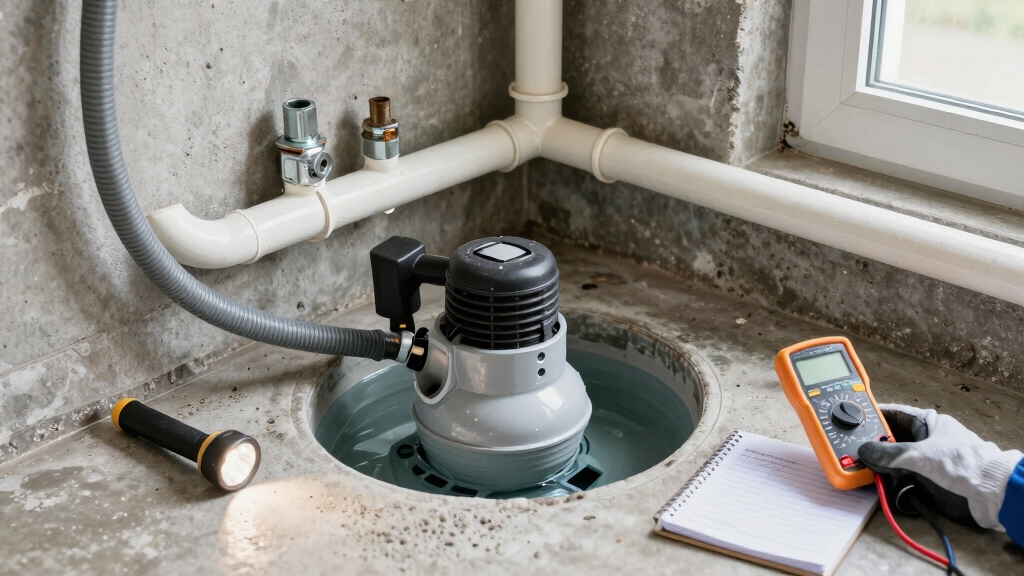
Since regular maintenance directly impacts your sump pump’s reliability and lifespan, it’s essential to establish a consistent schedule for key tasks. Performing these tasks helps prevent failures and extends operational life.
Regular maintenance also prevents basement flooding by removing water from flood-prone areas. Including periodic inspections that consider environmental factors can enhance overall system performance and longevity.
You should test the pump every 3-6 months by filling the pit to activate the float switch, ensuring quick water removal and proper shutoff. Cleaning the sump pit and inlet screen every 3-4 months removes debris that causes clogs. Proper sensor function verification is crucial to avoid unexpected failures.
Inspect the discharge line and check valve annually to confirm they’re free of damage and properly positioned. Additionally, examine the float switch and other components yearly to detect wear or corrosion.
- Test pump activation and shutoff twice yearly
- Clean pit and inlet screen quarterly or monthly if necessary
- Inspect discharge pipe and check valve annually
- Verify float switch movement and replace every two years
- Check backup power source and battery condition seasonally
Costs Associated With Replacing a Sump Pump
Maintaining your sump pump regularly can delay replacement, but eventually, wear or failure will require a new unit. Replacement costs vary based on pump type and labor. If you experience a security block while researching sump pump options online, it may be due to Cloudflare security filtering suspicious activity.
Regular maintenance extends sump pump life, but eventual replacement is inevitable due to wear or failure.
Pedestal pumps typically cost $60 to $170 per unit, while submersible pumps range from $100 to $400. Including labor, pedestal replacements generally run $400 to $600; submersible units can cost $800 to $2,000. It is important to assess replacement readiness to avoid unexpected failures.
Labor charges average $45 to $200 per hour, with most installations taking about an hour. Emergency service or complex setups increase costs.
Repairs average $529 but can reach $1,000 for submersible units. If repair expenses approach half the cost of a new pump, replacement is more cost-effective.
Additional expenses include battery backups ($250–$500) and discharge pipe repairs ($125–$600), so budget accordingly.
Benefits of Timely Sump Pump Replacement
Timely sump pump replacement guarantees reliable flood prevention by efficiently diverting rainwater and groundwater away from your foundation. Regular inspections and maintenance extend the system’s lifespan and ensure consistent performance over time.
By updating your system before failure, you maintain enhanced reliability and avoid unexpected breakdowns during critical moments. Newer models often include backup batteries that ensure continuous operation during power outages.
Modern pumps operate with improved efficiency, handling larger water volumes while reducing energy consumption. Ensuring compliance with inspection frequencies and timely replacement prevents costly damage and preserves system functionality.
This proactive approach protects your property by preserving structural integrity and preventing moisture-related damage like mold or insect invasion.
Additionally, it results in long-term savings by minimizing costly repairs and potential insurance hikes.
Key benefits include:
- Consistent operation with advanced technology and backup power
- Reduced risk of water damage and foundation erosion
- Decreased utility costs due to efficient performance
- Protection against mold, mildew, and pests
- Lower repair expenses and increased home value through dependable functionality
How to Choose the Right Replacement Pump?
Replacing your sump pump involves selecting a model that suits your specific drainage needs and environmental conditions.
First, determine the pump type: submersible for deep pits and debris handling, pedestal for narrow or shallow basins, or consider battery backup models if power outages are frequent. Submersible sump pumps are enclosed in a watertight casing and operate underwater, which helps them resist motor burnout while moving large volumes of water.
Evaluate horsepower based on expected water volume: 1/3 HP for standard use, up to 1 HP for heavy rainfall zones. Check float switch compatibility with your basin size and ensure the impeller design prevents clogging.
Material choice matters: cast iron and stainless steel offer durability and corrosion resistance, while thermoplastic suits budget constraints. Match pump capacity to discharge distance and basin volume.
Brands like Zoeller and Wayne provide reliable options, while Basement Watchdog excels in backup systems. Prioritize smart monitoring features for remote alerts and maintenance ease.
Frequently Asked Questions
Can a Sump Pump Be Repaired Instead of Replaced?
Yes, you can repair a sump pump instead of replacing it if the issues are minor, like a stuck float switch, clogged intake, or faulty seals.
Repairs are cost-effective, especially for pumps under seven years old. However, if repairs approach half the replacement cost or the pump shows signs of motor failure, corrosion, or continuous operation, replacement is wiser.
Always weigh repair costs against efficiency and lifespan to decide properly.
How Do Sump Pump Warranties Affect Replacement Decisions?
You’ll find sump pump warranties influence replacement timing considerably.
Since warranties typically last 7-10 years, you’re encouraged to replace pumps before expiration to avoid costly repairs.
Neglecting maintenance can void coverage, pushing you toward early replacement.
Regular inspections and upkeep keep warranties valid, extending pump life.
When warranty ends, you assume full repair costs, so proactively upgrading or repairing under warranty saves money and prevents unexpected failures.
Are There Eco-Friendly Sump Pump Options Available?
Yes, you’ll find eco-friendly sump pump options, including submersible models with corrosion-resistant materials and energy-efficient motors like the Wayne CDU980E.
Pedestal pumps offer long lifespans with lower energy consumption and reduced corrosion.
Battery backup and combination pumps optimize power use, while water-powered pumps operate quietly using municipal water.
These options minimize electricity use, reduce environmental impact, and provide reliable performance, making them ideal for sustainable basement water management.
What Are the Signs of a Failing Sump Pump Battery Backup?
If your sump pump battery backup starts acting like a drama queen, it’s time to pay attention.
You’ll notice the battery voltage dropping below 12.3 volts or the indicator light turning red.
The backup pump might fail to kick in when needed, or the alarm will beep persistently.
Corroded battery connections and reduced charge-holding capacity also signal trouble.
Regularly test and maintain your battery to avoid sudden failures.
How Does Sump Pump Replacement Impact Home Resale Value?
Replacing your sump pump enhances home resale value by ensuring reliable flood protection, which reassures buyers and inspectors.
A new, professionally installed pump reduces water damage risks, boosting market appeal, especially in flood-prone areas.
It lowers insurance premiums and prevents costly repairs, making your property more attractive.
Highlighting a well-maintained or upgraded sump pump can speed up sales and secure higher offers, demonstrating your commitment to home maintenance and risk mitigation.
Avoid Costly Flooding by Replacing an Aging Sump Pump
You might hesitate to replace your sump pump, thinking it still works fine, but waiting risks costly basement damage. A typical sump pump lasts about 7-10 years, and ignoring signs like unusual noises or frequent cycling can lead to failure when you need it most.
By proactively replacing your pump, you protect your home and avoid emergency repairs. Choosing the right pump and maintaining it will guarantee reliable, long-term performance and peace of mind.