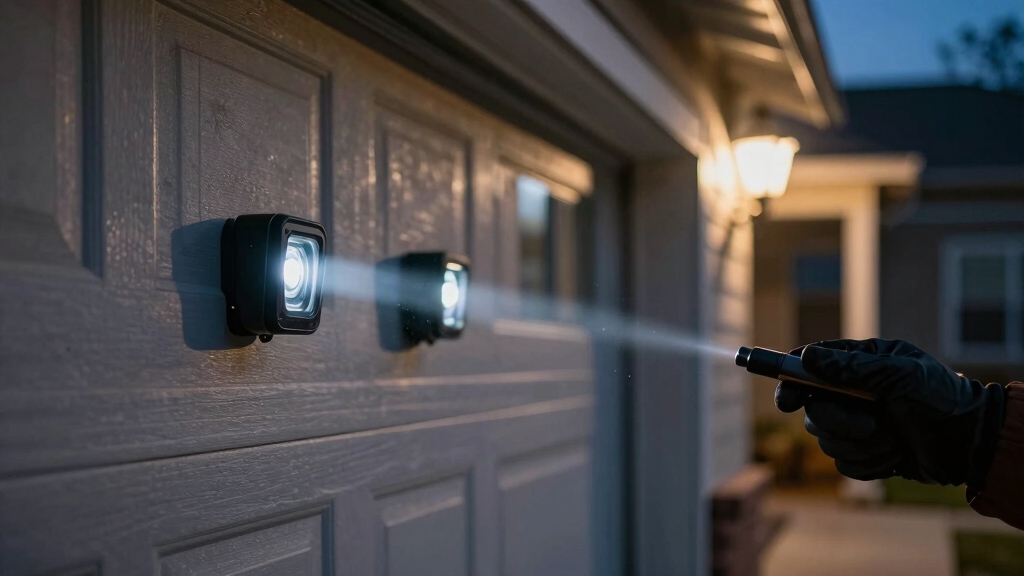

You can bypass garage door sensors temporarily by manually pulling the release cord to disengage the opener, using the wall button hold-down to override sensor interruption, or covering sensor lenses with opaque tape to block the beam.
Reflective materials can also trick sensors by redirecting the signal. Always disconnect power before adjusting or disconnecting wires, clear the area, wear protective gear, and monitor the door closely to avoid injury.
Understanding these methods and precautions guarantees safer temporary operation. Explore further for detailed guidance.
Key Takeaways
- Use the wall-mounted control panel’s button hold-down technique to temporarily override sensor safety and close the door fully.
- Pull the manual release cord firmly to disengage the trolley, allowing manual door operation without motor or sensor involvement.
- Apply opaque black electrical tape evenly over sensor lenses to block the infrared beam and bypass sensor detection temporarily.
- Always clear the doorway area of objects, pets, and people before bypassing sensors to prevent injury or damage.
- Treat sensor bypass as a brief emergency measure and restore normal operation promptly to maintain safety and comply with codes.
Manual Release Cord Method
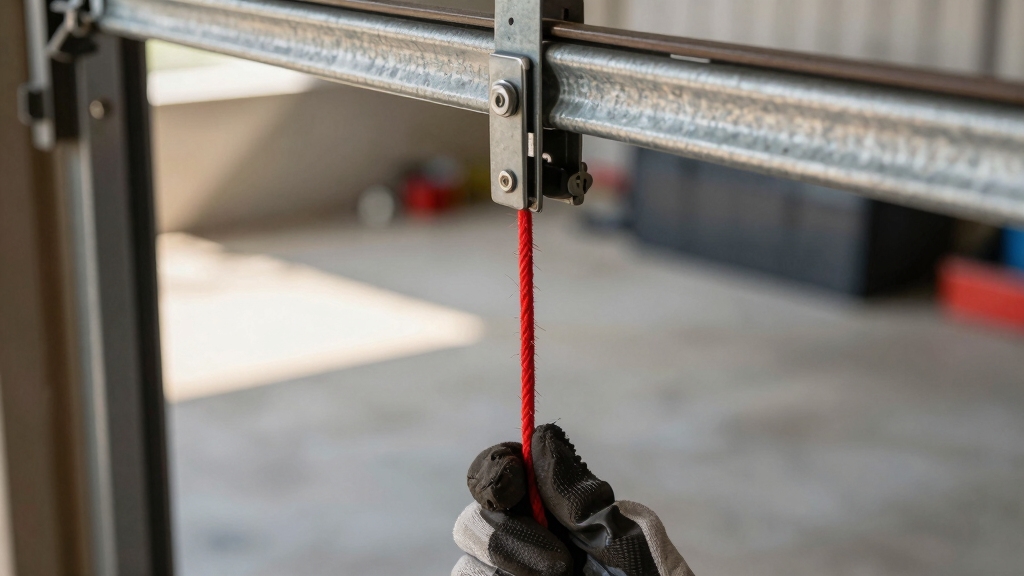
When you need to bypass garage door sensors, you’ll typically start by locating and pulling the manual release cord. This cord is a red rope with a handle hanging from the door trolley.
To bypass garage door sensors, first find and pull the red manual release cord on the door trolley.
This cord connects the trolley, which links the door to the opener carriage, allowing manual disengagement. Before pulling, make sure the door is fully closed to prevent sudden drops or damage. Disengaging with door up is extremely dangerous and can cause injury or damage. Regular inspection of the door closer mechanism helps ensure safe operation during manual use.
Use a ladder safely, with assistance nearby to reduce accident risk. Pull the cord firmly downward or toward the door until you hear a click, confirming trolley disengagement.
Once released, the door moves freely along the track without motor assistance, enabling manual operation. This method temporarily disables safety sensors, so exercise caution when manually operating the door to avoid injury or damage. Proper maintenance and inspection frequencies can reduce hazards associated with manual door control.
Using the Wall Button Hold-Down Technique
Although bypassing garage door sensors should be temporary, you can use the wall button hold-down technique to override safety signals momentarily. This method requires pressing and holding the wall-mounted control panel button continuously inside the garage until the door fully closes.
Most garage door sensors use an infrared beam that must be interrupted for the safety mechanism to engage. Releasing the button before the door touches the ground reactivates sensors, reversing the door for safety. For enhanced security, consider integrating magnetic/contact sensors on your garage door and frame to detect unauthorized openings.
Follow these steps carefully:
- Stand at the wall control panel inside your garage.
- Press and hold the button without interruption.
- Maintain pressure until the door reaches the floor.
- Release the button only after full closure.
Applying Opaque Tape to Sensor Lenses
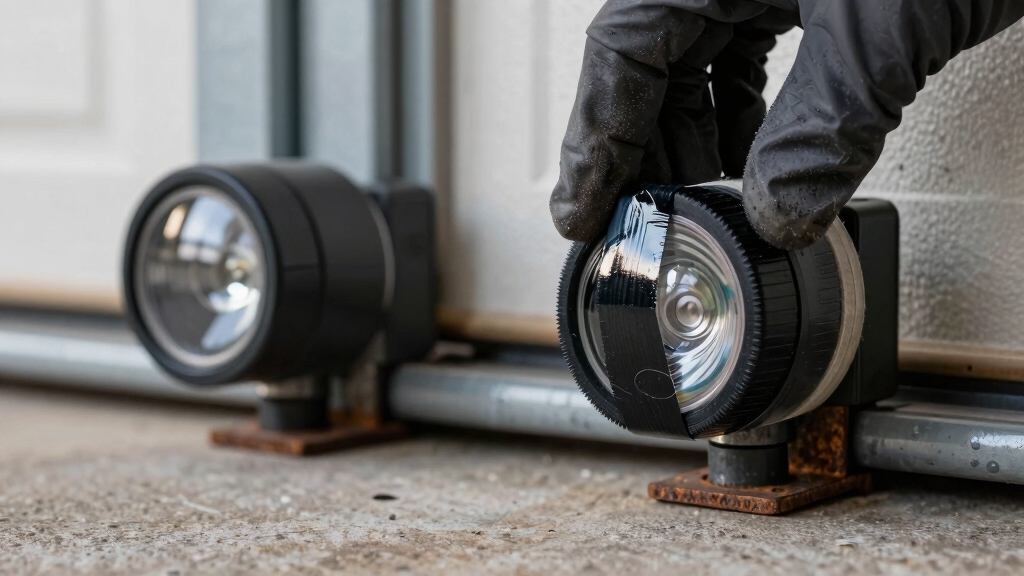
Applying opaque tape to your garage door sensors effectively blocks the infrared beams, temporarily disabling their safety function.
To do this, first clean both sensor lenses with a soft cloth to guarantee proper adhesion. Next, cover each lens evenly with black electrical tape or another fully opaque material, making sure no light leaks around the edges.
This blocks the beam detection, simulating an uninterrupted path and allowing the door to operate without sensor input. Test the door immediately after taping.
Remember, this method carries a medium safety risk, as it disables child and pet protections and should be used only briefly during repairs.
Remove the tape promptly to restore full sensor function, preventing injury risks, fines, and insurance issues. Always prioritize professional sensor alignment over bypassing.
For enhanced privacy and protection, consider installing a covering guard on your sensors to prevent accidental tampering or damage.
Utilizing Reflective Materials for Sensor Bypass
Blocking sensor lenses with opaque tape can disable your garage door’s safety features temporarily, but there’s another method that manipulates the sensor signals without covering them.
You can use reflective materials like small mirrors or reflective tape to redirect the infrared beam from the sender sensor back to the receiver, tricking the system into seeing a clear path.
Remember that the infrared beam emitted by the sensors is what detects obstructions and ensures safety. Understanding how infrared sensors work helps in applying this technique correctly.
To do this safely and effectively:
- Position a small mirror directly in front of the sender sensor, adjusting its angle until the receiver’s LED glows solid green.
- Secure the reflector with tape to maintain alignment during door operation.
- Use reflective tape aligned precisely on the sensor lens for consistent beam mimicry.
- Always test the door carefully with an observer present to prevent accidental injury.
This method provides a temporary bypass but should never replace proper sensor function.
Realigning Garage Door Sensors Properly
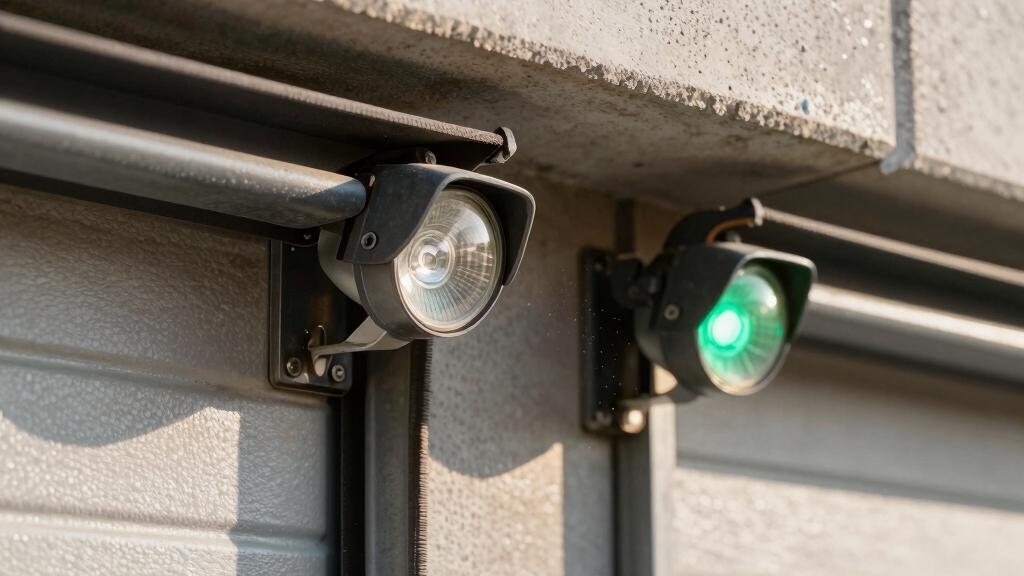
Before you dive into realigning your garage door sensors, it’s super important to disconnect the opener from its power source. Safety first, right? Using the correct tools and taking safety precautions ensures a smooth process.
Once that’s sorted, grab a soft cloth and give the sensor lenses a good clean. You want to make sure no dirt or debris is blocking the infrared beam—trust me, it makes a difference! Misalignment can mimic an obstruction and prevent the door from closing properly, so ensuring proper alignment is key to avoiding this issue.
Now that you’ve got those lenses nice and clean, it’s time to adjust the sensor brackets. Just take your time and make sure both units are facing each other directly. Proper sensor alignment techniques guarantee reliable operation.
You’ll want to position them at the right height and alignment for everything to work smoothly. It’s all about getting that perfect setup for peak operation!
Sensor Alignment Steps
When realigning your garage door sensors, you’ll want to start by disconnecting the power to prevent accidental activation or electrocution. This step is a crucial safety standard often performed by service professionals.
With power off, slightly loosen the screws on the sensor brackets so they can pivot freely. Ensuring the components are mounted on a reinforced frame can improve stability and sensor accuracy.
Next, tie a taut string between the sensors across the door width to make certain they share the same height level. Use a level under the string to verify perfect horizontal alignment, adjusting the brackets as necessary.
Finally, securely tighten the bracket screws without shifting the sensors. Restore power and test functionality by closing the door, confirming the sensors’ indicator lights glow steadily and the door reverses when obstructed.
Key steps include:
- Disconnect power at breaker or unplug unit
- Loosen mounting brackets gently for movement
- Use string and level to align sensors evenly
- Tighten screws firmly and test sensor operation
Cleaning Sensor Lenses
After ensuring your garage door sensors are properly aligned, you should clean their lenses to maintain accurate detection.
Use a soft microfiber cloth dampened slightly with mild soapy water or a lens-cleaning solution to wipe the lenses in gentle circular motions. Small infrared devices called photo eyes work as a sender and receiver, so keeping the lenses clear ensures the infrared beam is not obstructed.
Proper sensor function depends on the clarity of the optical path and the prevention of stray light interference. Remove loose debris first with a small, soft brush, like a paintbrush, carefully clearing cobwebs and dust without tugging wires.
For stubborn dirt in edges, use a damp cotton swab. Avoid harsh chemicals, glass cleaners with ammonia, paper towels, or abrasive pads that can scratch or damage the lenses. After cleaning, dry the lenses thoroughly with a dry microfiber cloth to prevent streaks or fogging.
Finally, inspect the lenses under light at an angle to confirm clarity, gloss, and absence of scratches before restoring sensor function. Proper optical chamber maintenance helps avoid false alarms and ensures reliable photodetector response.
Ensuring Sensor Positioning
Although it may seem straightforward, realigning your garage door sensors requires disconnecting the opener from its power source to guarantee safety and prevent accidental activation.
Start by locating sensors mounted on both sides of the door, about six inches above the ground. Slightly loosen the bracket screws using a screwdriver to allow sliding without removal.
The sensors use an infrared beam transmitted between them to detect obstructions in the door path. Proper sensor alignment is crucial because misalignment can trigger false alarms or prevent the door from closing, impacting the reliability and safety of the system.
Align sensors so they face each other directly, ensuring the infrared beam is unobstructed. Use a string and level to verify even height.
- Loosen brackets gently for mobility
- Position sensors 6 inches above ground
- Align sensors facing each other using a level
- Confirm steady indicator lights post-adjustment
Reconnect power only after securing sensors and verify proper door operation before finishing.
Disconnecting Sensor Wires Safely
Since disconnecting sensor wires involves handling electrical components, you must first accurately identify and document each wire’s configuration to guarantee safe disconnection and future reconnection.
Accurately identify and document sensor wire configurations before disconnecting to ensure safety and enable future reconnection.
Garage door sensors typically use two-wire setups—white and black or black-striped wires per sensor. Visually verify and note which wire connects to which terminal on the opener to prevent confusion later. Using simple mechanics to understand the wiring setup can help ensure correct handling.
Use wire cutters to trim sensor wires, leaving about five inches attached to the structure for future access. Immediately insulate exposed wire ends with electrical tape, double-wrapping to eliminate short-circuit risks.
When disconnecting, join white wires together to the white terminal and black wires to the black or gray terminal. Secure connections to maintain circuit integrity during manual operation.
Proper wire management and insulation are essential to guarantee safety and facilitate potential sensor restoration. Always remember that bypassing sensors is a temporary measure and should only be performed after exhausting all other troubleshooting options.
Precautions and Safety Tips When Bypassing Sensors
When you’re thinking about bypassing your garage door sensors, it’s super important to prioritize safety.
First off, make sure that this bypass is just a temporary solution. Set some clear reminders for yourself to restore the system as soon as you can. Permanent bypasses can really increase the risk of injury and even lead to some legal issues down the line, so it’s best to plan for those repairs or replacements right away. Regular routine care of your sensors can help avoid the need for bypassing them.
And hey, before you operate the door without those active sensors, always make sure to clear the path. It’s a good idea to double-check that no one is nearby, just to keep everyone safe. Your garage door is a handy tool, but safety should always come first!
Also, keep in mind that bypassing removes the safety feature that prevents the door from closing on people or objects.
Safety First Measures
Before you start bypassing garage door sensors, you must disconnect the power to prevent electrical hazards and carefully assess the sensor type involved. Identifying whether the sensors are photoelectric, infrared, or pressure-sensitive guides your approach.
Always make certain that bypassing is strictly a temporary emergency measure and complies with local building codes. Keep in mind that blocked or malfunctioning sensors increase the risk of property damage or theft. Follow these safety-first measures:
- Clear the entire doorway and surrounding area of any objects, pets, or people before proceeding.
- Wear protective gloves and goggles to safeguard against mechanical and electrical risks.
- Use a step ladder for safe sensor access and a multimeter to verify electrical connections.
- Maintain continuous visual monitoring during operation, ready to stop the door immediately if irregularities occur.
Adhering to these precautions minimizes injury risk and makes certain responsible sensor bypassing.
Temporary Bypass Risks
Taking all safety-first measures into account, you must recognize the significant risks involved in temporarily bypassing garage door sensors.
Doing so disables obstacle detection, increasing risks of serious injury, property damage, and system strain. Prolonged bypassing can strain the door mechanism and lead to increased wear on opener components.
Legal and security vulnerabilities also arise, as tampering violates codes and exposes your home to intrusion. Use this only as a brief, emergency solution. Reconnect sensors promptly and consult professionals if uncertain.
| Risk Category | Key Concerns |
|---|---|
| Safety Hazards | Crushing injuries, loss of reversal |
| System Damage | Mechanical wear, accelerated failure |
| Legal Issues | Code violations, fines liability |
| Security Risks | Increased theft, unauthorized access |
Frequently Asked Questions
Can Bypassing Sensors Void My Garage Door Warranty?
Yes, bypassing your garage door sensors will void your warranty.
Manufacturers explicitly exclude coverage if you tamper with or disable safety features like sensors.
Doing so not only voids warranties on the motor and door but also violates federal safety laws and building codes.
You’re responsible for any repairs or liabilities arising from this.
Instead, you should have a professional inspect and fix sensor issues to maintain compliance and warranty protection.
Are There Legal Issues With Bypassing Safety Sensors?
Imagine walking a tightrope without a safety net. That’s what bypassing garage door sensors feels like legally.
Yes, you face serious legal issues. Federal and local laws mandate these sensors for safety, and disabling them violates regulations.
This can result in hefty fines from $500 to $2,200. You’ll also jeopardize insurance coverage and could face lawsuits if accidents occur.
How Do Weather Conditions Affect Sensor Bypass Methods?
Weather conditions directly impact sensor bypass methods by reducing their reliability and safety.
Sunlight and humidity interfere with infrared beam techniques, causing false triggers or blockages. Reflective surfaces become inconsistent in wet or bright environments.
Tape or blocking materials degrade faster under moisture and UV exposure, weakening their effectiveness.
Mechanical methods like manual release or wire disconnection remain stable but require caution to prevent damage or corrosion from prolonged humidity or temperature shifts.
Can Sensor Bypass Methods Damage My Garage Door Opener?
Think of bypassing sensors like rewiring a delicate circuit board without a manual; you risk frying it.
Yes, sensor bypass methods can damage your garage door opener if done improperly. Incorrect wiring or jumper installation might short the circuit or overload components.
Even power disruptions during bypass can harm the opener’s electronics. Always label wires and limit bypass duration.
If you’re not experienced, avoid attempts to prevent costly damage and safety hazards.
What Are Signs That Sensors Need Professional Replacement?
You’ll know your garage door sensors need professional replacement if the sensor lights stay off or blink red despite cleaning and alignment attempts.
Physical damage like cracked casings, frayed wires, or corrosion signals failure.
If the door opens but won’t close or reverses immediately, that’s another red flag.
Also, sensors over 15 years old often lose reliability and should be replaced to maintain safety and proper operation.
Final Safety Reminder: Bypassing Garage Door Sensors Responsibly
Bypassing garage door sensors requires precision and caution. Remember, over 70% of garage door accidents involve sensor malfunctions, highlighting the importance of safety.
Always prioritize methods like the manual release cord or wall button hold-down, and avoid permanent sensor damage. Never bypass sensors without understanding the risks and local regulations.
Proper sensor realignment and cautious handling of wires guarantee your safety while maintaining door functionality. Stay vigilant to prevent accidents and protect yourself and your property.