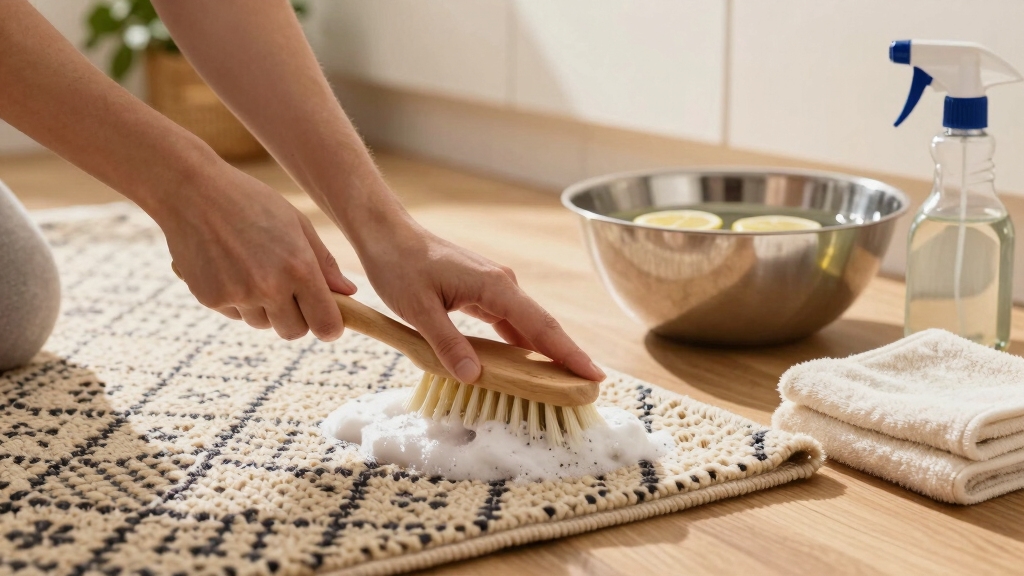

You can clean your carpet without a machine by first vacuuming thoroughly and clearing the area. Use a homemade mix like vinegar, warm water, and mild dish soap to spot clean stains, applying gently with a soft brush.
For tough spots, try baking soda with a vinegar mist to lift dirt and odors. Dry the carpet with towels and fans to prevent moisture damage. Following these steps gives you effective manual cleaning; discover more tips to keep your carpet fresh and spotless.
Key Takeaways
- Thoroughly vacuum carpet using an upright vacuum with edging tools to remove loose dirt and debris before cleaning manually.
- Apply a homemade cleaning solution (e.g., vinegar, water, and mild dish soap) to stains and gently scrub with a soft brush.
- Blot spills promptly with a clean white cloth, working from the outer edge inward to avoid spreading stains.
- Use baking soda sprinkled over the carpet to absorb odors, let sit overnight, then vacuum thoroughly for freshness.
- Dry damp areas by pressing absorbent towels, increasing ventilation with open windows and fans, and limiting foot traffic until fully dry.
Essential Tools for Manual Carpet Cleaning
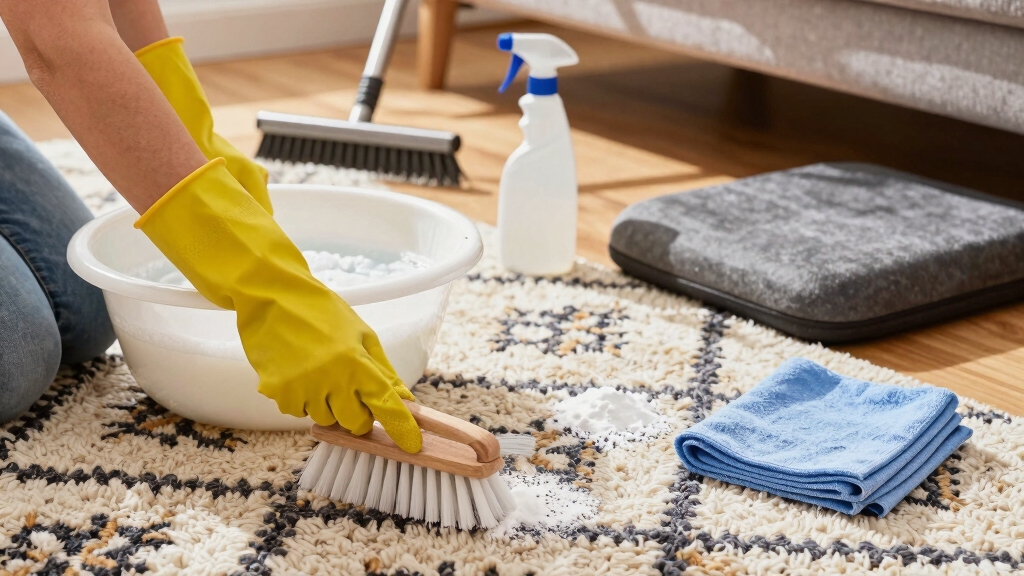
To clean carpets manually, you’ll need a selection of essential tools designed to tackle dirt, stains, and moisture effectively.
Start with vacuum cleaners: an upright vacuum with edging tools removes surface dirt, while adjustable beater bar vacuums adapt to various carpet types. For wet soil, use a wet/dry vacuum. It is important to vacuum at least once a week to maintain carpet cleanliness and reduce dirt buildup.
Brushes and rakes are vital; nylon scrub brushes agitate stains, carpet rakes loosen embedded dirt and pet hair, and rotary extractor brushes reach deep fibers. Sprayers deliver cleaning solutions precisely; opt for pump-up sprayers or spray bottles depending on coverage needs.
You’ll also require containers like buckets for mixing shampoo and absorbent cloths or microfiber towels for blotting and drying. Finally, drying aids such as fans speed up moisture evaporation, ensuring your carpet dries thoroughly and stays fresh.
Preparing Your Carpet for Cleaning
Begin by clearing the carpeted area of small furniture, decor, and breakables to prevent damage and guarantee unobstructed access. Next, protect immovable furniture legs with pads or plastic to avoid stains or rust marks on damp carpet.
Clear small items and shield furniture legs to protect your carpet and ensure easy cleaning access.
Then, pull back hanging fabrics like drapes and bed skirts to keep them dry. Before cleaning, thoroughly vacuum the carpet to remove loose soil, hair, and debris, focusing on corners, baseboards, and high-traffic areas.
Also, inspect the carpet carefully:
- Mark stains, traffic lanes, and damaged sections with removable tape.
- Identify pet-affected zones and matted areas needing extra attention.
- Check for moisture issues or mold to guarantee the carpet is dry before starting.
These steps prepare your carpet efficiently for manual cleaning. Regular maintenance and timely care help keep your carpet looking fresh and prevent buildup, similar to how routine care preserves the clarity of a peephole.
Mixing Effective Cleaning Solutions at Home
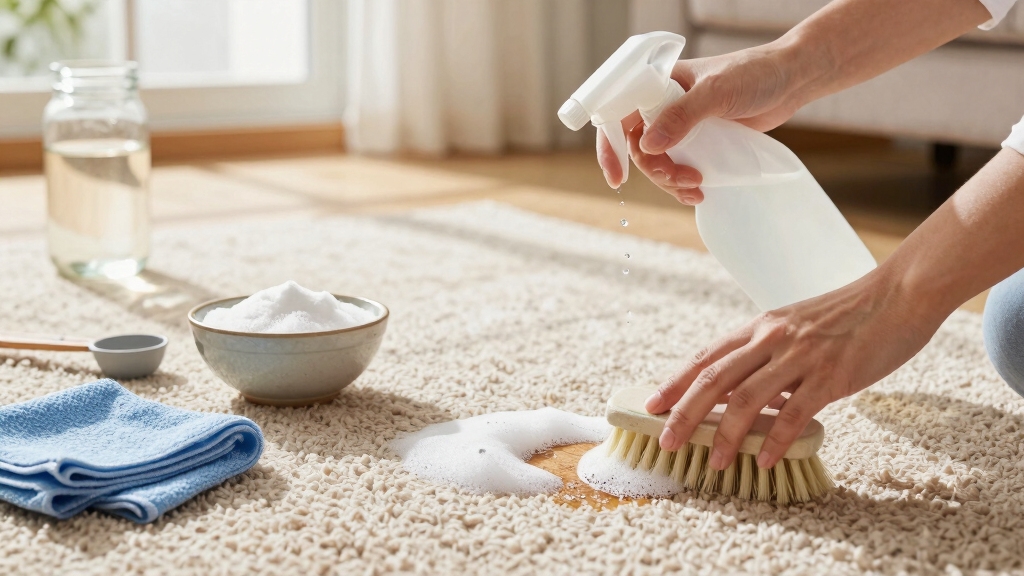
Once your carpet is properly prepared, selecting the right cleaning solution becomes key to tackling stains and odors effectively. Using a solution that avoids moisture buildup is important since residue can become corrosive over time.
You can mix a vinegar-water-dish soap solution using 1 cup white vinegar, 2 cups warm water, and 2 teaspoons mild dish soap, adding essential oils if preferred.
Spray on stains after sprinkling baking soda, let it bubble for 5–10 minutes, then blot. For deeper stains, mix equal parts vinegar and water, spray lightly on baking soda, wait 10 minutes, then scrub gently.
A concentrated laundry-based solution combines 2 tablespoons liquid detergent, 1/4 cup LA’s Totally Awesome cleaner, and 3 tablespoons Oxiclean in a gallon of hot water, ideal for tough stains.
For quick odor absorption, sprinkle a dry mix of cornstarch, borax, and salt overnight, then vacuum thoroughly. This homemade approach is a budget-friendly and safe alternative to harsh commercial cleaners.
Techniques for Spot Cleaning Stains
When dealing with fresh spills and spots, acting quickly is essential to prevent permanent damage. Begin by gently blotting the stain with a white, lint-free cloth. Never rub, as this pushes liquid deeper and risks spreading the stain.
Work from the outer edge toward the center to contain the spill. Before applying any treatment, remove solids by scraping or vacuuming.
To protect your safety and privacy during cleaning, be aware that visibility through certain small openings, like a peephole, is limited from the outside, ensuring you can check visitors without compromising your security.
Act quickly on fresh spills—blot gently with a white cloth, avoid rubbing, and remove solids before treatment.
Use these key steps to effectively spot clean:
- Identify the stain type and apply the appropriate agent, such as baking soda for grease or mild soap for food stains. For coffee stains, a mixture of water, vinegar, and gentle non-bleach soap can be sprayed on the stain and left to sit for a few minutes before blotting. coffee stain removal
- Apply minimal moisture and gently agitate with a soft-bristle brush to loosen soil without damaging fibers.
- Rinse with plain water, blot dry, and ensure good air circulation to prevent wicking and odor.
Step-by-Step Manual Carpet Cleaning Process
Although manual carpet cleaning requires more effort than using a machine, it offers precise control over each step to guarantee thorough soil removal without damaging fibers. This method is especially beneficial as it removes allergens and bacteria that regular vacuuming cannot reach.
Begin by vacuuming the entire carpet in multiple directions, focusing on high-traffic areas and edges. Using a consistent and controlled approach ensures the removal of particulate matter embedded deep in the fibers.
Next, perform a patch test with your chosen cleaning solution, such as a vinegar-water mix, on an inconspicuous spot to check for discoloration.
Lightly apply the solution section by section using a damp sponge or sprinkle baking soda and salt, brushing gently into the fibers. Let it sit: vinegar for 10-15 minutes, baking soda overnight.
Scrub each area with a soft brush in circular motions, avoiding oversaturation. Finally, rinse with a damp microfiber cloth, blot dry, and apply a pH neutralizer to remove residues and prevent dirt attraction.
Removing Tough and Persistent Stains
Tackle tough and persistent carpet stains by using targeted techniques that prevent spreading and fiber damage.
Begin by immediately blotting spills with a white cloth to wick stains out gently, avoiding rubbing that embeds them deeper. This early action removes allergens and bacteria, supporting healthier indoor air quality.
For effective removal, apply a vinegar and dish soap solution liberally, let it soak, then blot repeatedly. Many cleaning methods rely on the principle of magnification through convex lenses to visually inspect stain progress closely.
Baking soda combined with vinegar creates a fizzing reaction ideal for loosening stains, followed by gentle blotting and rinsing. Follow these steps for stubborn stains:
- Identify stain type to select the best agent (e.g., rubbing alcohol for grease, shaving cream for dirt).
- Use cold water to prevent setting stains.
- Repeat blotting and rinsing cycles until the stain lifts.
Best Practices for Drying Carpets Without Machines
After successfully removing stubborn stains, drying your carpet thoroughly prevents lingering moisture that can lead to mold and odor.
Start by placing absorbent towels or thick cloths over damp areas, walking on them to soak up water. Replace saturated towels repeatedly until the carpet feels dry.
Place thick towels on wet spots and press down to absorb excess moisture effectively.
Next, open windows and doors in warm, low-humidity conditions to create cross-ventilation. Proper airflow is critical because stagnant moisture can lead to microbial growth and unpleasant odors.
Allowing humidity to escape and enabling air circulation over the carpet aids evaporation and helps prevent mold growth natural drying. Use ceiling fans to blow air directly onto the carpet.
Sprinkle baking soda over damp spots, work it into fibers, and leave it overnight before vacuuming to absorb moisture. Finally, run fans continuously for at least 24 hours to promote evaporation, combining with dehumidifiers if available.
Check underneath padding for hidden moisture and limit foot traffic to avoid pushing water deeper. Drying within 24-48 hours is essential to prevent mold growth.
Maintaining Freshness and Odor Control
Regularly maintaining your carpet’s freshness requires effective odor control methods that go beyond simple masking.
You can use baking soda, which penetrates carpet fibers to absorb odors, and enhance it by mixing 20-30 drops of essential oils or dried herbs per cup for natural fragrance.
For storage, it is best to keep the mixture in an airtight glass mason jar to preserve the scent and effectiveness. Maintaining indoor relative humidity between 30%–50% can also help prevent mold growth and musty odors in carpeted areas.
Another potent method is lightly misting a 1:2 vinegar and water solution to neutralize smells without saturating the fibers. To maintain freshness efficiently:
- Apply baking soda generously and let it sit from 15 minutes up to 24 hours for maximum absorption.
- Use a spray bottle to mist vinegar solution lightly, avoiding excess moisture.
- Combine baking soda and vinegar sequentially for thorough odor neutralization and germ killing.
These methods keep your carpet fresh and odor-free using safe, cost-effective household ingredients.
Scheduling Regular Manual Carpet Care
It’s super important to keep up with your carpet care.
First off, make sure to do some daily spot cleaning whenever there’s a spill. This helps tackle those messes right away and stops any potential stains from setting in. Regular maintenance like this can prevent the need for costly repairs and helps maintain efficient operation.
Now, don’t forget to set aside some time each week for a deodorizing routine. This little step goes a long way in keeping your carpet smelling fresh and clean throughout your home.
And let’s not overlook the big stuff! It’s a great idea to schedule deep cleaning every six months. This will really help get rid of all that embedded dirt and give your carpets a nice, refreshed look. Regular deep cleaning also removes allergens and bacteria to improve indoor air quality.
Daily Spot Cleaning
Consistently addressing spills and stains promptly keeps your carpet looking fresh and prevents damage.
When you spot a spill, act quickly: blot gently with a clean white cloth or paper towel using light pressure, avoiding rubbing that can worsen the stain or damage fibers. This immediate action prevents penetration of substances into carpet fibers and reduces the chance of permanent staining.
Use appropriate cleaning solutions like diluted dish soap for food stains or vinegar-water for pet urine, testing them in an inconspicuous area first.
Follow these steps for effective daily spot cleaning:
- Blot the stain from the edges inward, replacing cloths as they become soiled.
- Rinse the area with cold water to remove cleaning residues.
- Blot dry thoroughly and allow to air-dry using fans if needed.
This methodical approach prevents stains from setting and maintains your carpet’s appearance.
Weekly Deodorizing Routine
Addressing spills promptly helps keep your carpet clean, but managing odors requires a more thorough approach. Establish a weekly deodorizing routine to prevent odor buildup and maintain freshness.
Start by sprinkling baking soda liberally over the carpet surface; this powder neutralizes odors by absorbing odor-causing compounds. For stubborn smells, mix baking soda with borax. Using baking soda is effective because it is a general-purpose odor neutralizer, making it suitable for most carpet odors.
After allowing it to sit at least 15 minutes or overnight for a deeper clean, vacuum thoroughly in multiple directions to remove residue. Enhance odor control by lightly misting a vinegar-water solution over the baking soda layer.
The fizzing action breaks down odors, especially pet and food spills. Let the carpet air dry completely before vacuuming. Consistent weekly treatment, paired with regular vacuuming using a HEPA filter vacuum, keeps your carpets fresh and odor-free between professional cleanings.
Biannual Deep Cleaning
Regularly scheduling biannual deep cleaning sessions is vital to maintain your carpet’s appearance and longevity. Aim for spring and fall to tackle seasonal debris and wear effectively.
Planning ahead gives you time to prepare the space and gather cleaning supplies. Before cleaning, clear the area and vacuum thoroughly using multi-directional strokes. Vacuum thoroughly to focus on high-traffic areas for best results.
Test solutions on hidden spots to avoid damage. Using a methodical approach ensures consistent and effective results. Use these steps for efficient manual care:
- Apply your chosen cleaning solution with a stiff-bristled brush in small sections using circular motions.
- Rinse treated areas with damp cloths to remove residue and prevent buildup.
- Press dry towels firmly and make certain of complete air drying within 24 hours to avoid mildew.
Following this methodical biannual approach extends your carpet’s life and keeps it fresh.
Frequently Asked Questions
Can Manual Carpet Cleaning Damage Delicate Carpet Fibers?
Yes, manual carpet cleaning can damage delicate fibers if you scrub vigorously. When you apply too much pressure, you risk pushing stains deeper and weakening the fibers, causing fraying or tearing.
You should avoid harsh chemicals and excessive moisture, as they can discolor or warp delicate materials like silk or natural fibers.
Instead, use gentle, pH-neutral solutions and light dabbing motions to preserve your carpet’s integrity and extend its lifespan.
How Do I Prevent Carpet Colors From Fading During Cleaning?
To prevent carpet colors from fading during cleaning, avoid harsh chemicals like bleach or chlorine.
Use mild, pH-neutral solutions such as diluted white vinegar or gentle detergents, and always spot test first.
Clean gently by blotting spills instead of rubbing. Apply carpet protectants or UV blockers to shield fibers.
Rotate your carpet regularly to distribute light exposure evenly, and keep it out of direct sunlight to minimize UV damage during and after cleaning.
What Are Safe Homemade Alternatives to Commercial Stain Removers?
Imagine Sarah tackling her red wine spill with a homemade mix: one part Blue Dawn dish soap and two parts hydrogen peroxide.
This combo safely cuts grease and lifts organic stains without harsh chemicals.
You’ll want to apply it with a spray bottle, blot gently, and prepare fresh batches since hydrogen peroxide breaks down quickly.
This method offers a precise, effective alternative to commercial removers, ensuring your carpet stays vibrant and clean.
How Can I Clean Carpets Without Causing Mold or Mildew?
You can clean carpets without causing mold by using low-moisture methods like dry powder or foam cleaning, which minimize water use.
Sprinkle baking soda or dry powder, gently agitate, then vacuum thoroughly.
For stains, apply white vinegar or lemon juice sparingly, then blot dry.
Make certain quick drying by opening windows, running fans, and using dehumidifiers to prevent moisture buildup.
This approach avoids dampness that promotes mold and mildew growth effectively.
Are There Natural Methods to Repel Dust and Allergens in Carpets?
Yes, you can naturally repel dust and allergens in your carpets by sprinkling baking soda mixed with crushed dried herbs like mint or rosemary.
These herbs offer antibacterial and freshening effects. Using essential oils such as peppermint or eucalyptus enhances antimicrobial properties while neutralizing odors.
Regularly vacuum and occasionally steam clean to kill dust mites and allergens. Activated charcoal sachets near your carpets also absorb musty smells and airborne particles, maintaining a healthier environment.
From Dull to Delightful: Your Carpet Revival Guide
Cleaning your carpet without a machine might seem like rowing upstream, but with the right tools and techniques, it’s entirely manageable.
By preparing properly, mixing effective solutions, and following systematic steps, you can restore your carpet’s freshness and tackle stubborn stains with confidence.
Remember to dry thoroughly and maintain regular care to keep your carpet looking vibrant. Your hands-on effort will pay off, turning your carpet into a clean, inviting landscape underfoot.