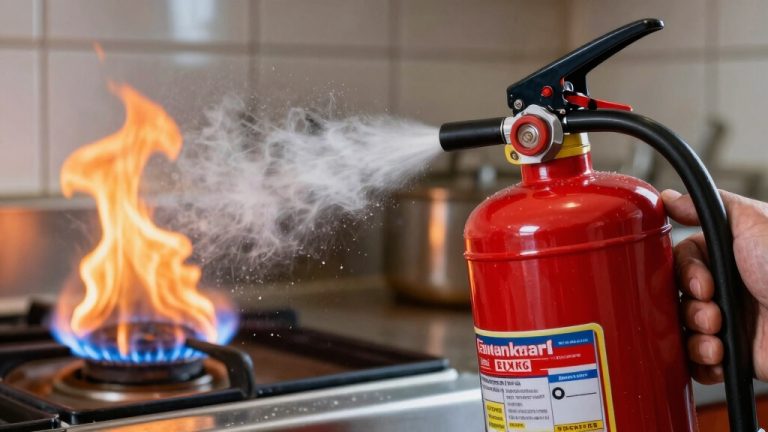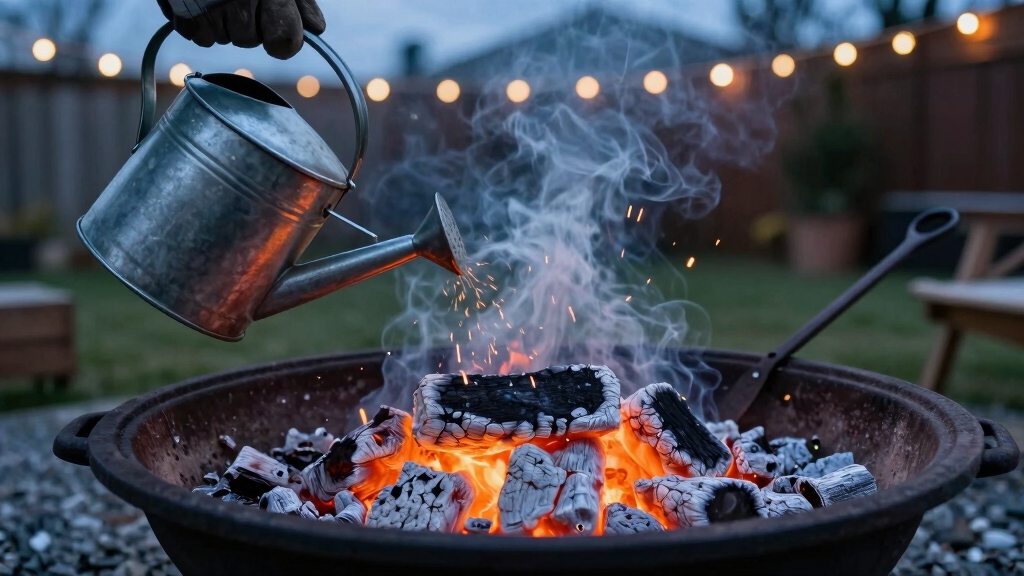

To extinguish your fire pit safely, let the flames die down naturally. Then use a garden hose set to a gentle spray or smother embers with dry sand, dirt, or a snuffer to cut off oxygen.
Stir ashes as you douse to cool them thoroughly. For small flames, fire spray works well, while a Class A fire extinguisher is a last resort for escalating fires.
Make certain the pit is fully cooled before leaving. Proper maintenance keeps it ready for next use. Discover detailed steps to protect your safety and equipment.
Key Takeaways
- Let flames die down naturally and clear flammable materials within a three-foot radius before starting extinguishing.
- Use a garden hose with a gentle spray or pour water slowly over coals, stirring until no sizzling sounds remain.
- Smother embers with dry sand, dirt, or use a snuffer to cut off oxygen and prevent reignition.
- For small flames, apply fire spray or a Class A fire extinguisher if fire escalates beyond control.
- Confirm fire pit is fully cooled by stirring ashes and checking for heat, then clean and cover the pit to prevent damage.
Choosing the Best Way to Extinguish Your Fire Pit
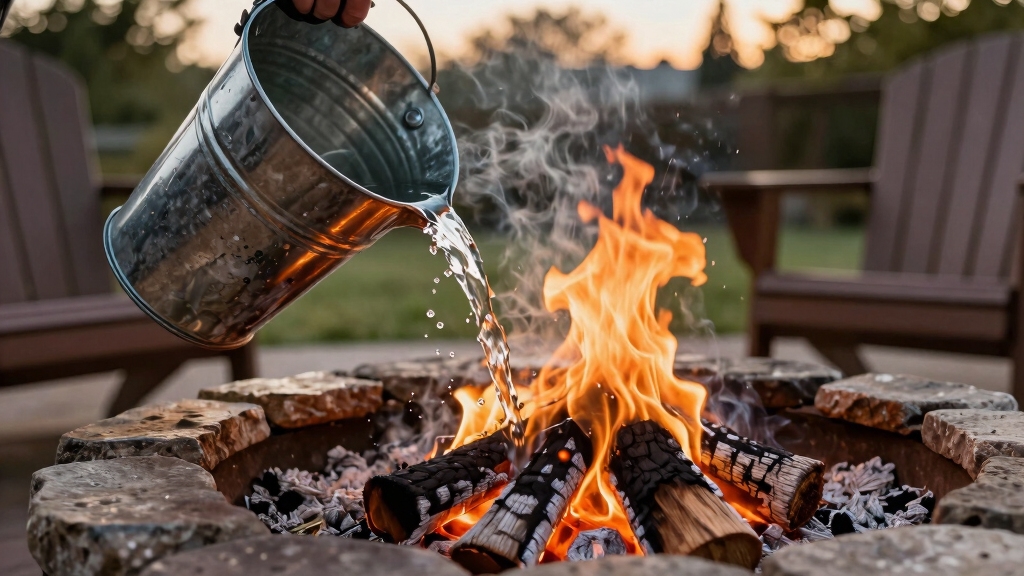
When deciding how to extinguish your fire pit, you’ll want to take into account factors such as safety, convenience, and the materials you have on hand.
If you have a garden hose, using a gentle spray helps cool coals without spreading sparks.
Dry sand or dirt suffocates embers by cutting off oxygen and is ideal when water isn’t available.
A snuffer provides a clean, smothering method that blocks oxygen efficiently without water or mess.
Fire spray offers a quick, non-toxic option that’s easy to use, while fire extinguishers serve best as a last resort due to cleanup and toxicity concerns.
Prioritize methods that cool the fire, remove oxygen, and are practical based on your setup to extinguish safely and effectively every time.
Always have a Class K fire extinguisher or appropriate suppression method nearby in case the fire grows beyond control.
Prepare Your Fire Pit for Safe Extinguishing
Before you put out your fire pit, it’s a good idea to let the flames die down on their own. This helps lower the heat and makes things safer.
Plus, clearing away any flammable materials around the pit is super important. You definitely don’t want anything nearby that could catch fire accidentally.
Also, always position yourself with a clear exit behind you to ensure quick escape in case of emergency, following proper fire safety practices.
Burn Down Fire Naturally
Allowing your fire to burn down naturally is essential for preparing your fire pit for safe extinguishing. This process reduces active flames and lowers heat, making it easier to control and fully extinguish the fire.
Here’s what you should do:
- Monitor the fire closely and let the flames subside until only glowing embers remain.
- Use a shovel or stick to spread out the remaining coals and ashes, increasing surface area for faster cooling and preventing heat concentration.
- Avoid adding fuel or stirring aggressively, which can revive flames and increase risk.
Removing heat by cooling with water or turning off heat sources helps lower the temperature below ignition, effectively stopping the fire’s spread through cooling.
Clear Surrounding Area
Clearing the area around your fire pit is essential to guarantee safety and prevent accidental spread of embers or flames during extinguishing.
Begin by removing any flammable materials, such as dry leaves, paper, or wood debris, within at least a three-foot radius.
Make certain that nearby furniture, cushions, and plants are moved farther away to avoid catching fire.
Inspect the ground for loose twigs or grass that could ignite and clear them thoroughly.
Maintain a clean perimeter to provide unobstructed access for extinguishing tools like hoses or shovels.
This preparation minimizes risk and ensures you can focus on safely putting out the fire.
Taking these precautions before you start extinguishing greatly reduces the chance of reignition or unintended fire spread, safeguarding both you and your surroundings.
Also, be aware that wet leaves and debris can increase fall hazards, so regularly clearing these from your fire pit area contributes to overall fall prevention safety.
Safely Using Water to Extinguish Your Fire Pit
Start by gently dispersing the coals and ashes with a shovel to spread out the heat evenly.
Begin by carefully spreading the coals and ashes to evenly distribute the heat.
Then, follow these steps to safely extinguish your fire pit with water:
- Use a garden hose with a multi-pattern nozzle set to spray, not a direct stream, to avoid spreading sparks.
- Pour water slowly over the ashes like gentle rain to prevent steam buildup and dangerous splashes.
- Stir the coals and ashes continuously with a shovel or stick until you hear no sizzling and the mixture resembles wet mud.
Repeat pouring and stirring as needed.
Once fully drenched and cooled, remove excess water from metal pits to prevent rust.
This method cools and douses embers effectively, minimizing fire risks.
For added safety, keep a dry chemical fire extinguisher nearby to quickly control any unexpected flare-ups.
Smothering Flames With Sand, Dirt, or a Snuffer
To use sand or dirt, wait until the fire has notably diminished.
Scoop enough dry material with a shovel to cover the entire fire surface.
Spread it evenly to suffocate all embers, then stir the mixture to verify no hot spots remain exposed.
Add more if you detect lingering heat.
When using a snuffer, position it fully over the fire pit’s opening, sealing off oxygen flow.
Leave it in place until the pit cools completely.
Both methods prevent reignition by starving the fire of air, making them reliable alternatives to water, especially where moisture could cause damage or steam hazards.
For safety, always ensure proper handling and monitoring to prevent accidental ignition or hazards related to system integrity.
Using Fire Spray to Extinguish Small Fire Pit Flames
Using fire spray offers a quick and effective way to extinguish small flames in your fire pit without the mess of water or the bulk of an extinguisher. This lightweight, non-toxic spray targets the base of the fire, extinguishing flames efficiently.
Fire spray quickly and cleanly puts out small fire pit flames without water mess or heavy extinguishers.
To use it properly:
- Tear off the safety tab and aim the nozzle directly at the fire’s base.
- Spray side to side, sweeping across the entire flame area to guarantee full coverage.
- Continue spraying until you see all flames and embers completely extinguished.
Fire spray is especially useful for small fires, providing a clean, affordable alternative to water or bulky extinguishers. It controls the fire quickly while minimizing residual mess, making it ideal for routine fire pit use. Be mindful that steam or smoke particles from extinguished fires can sometimes trigger smoke detectors, so ensure proper ventilation around your fire pit area.
Using a Fire Extinguisher on Your Fire Pit
When your fire pit fire escalates beyond manageable flames, one of the best emergency tools you can rely on is a Class A fire extinguisher designed for wood fires.
Use the PASS technique: pull the pin, aim at the base, squeeze the handle, and sweep side to side. This method targets the fire’s fuel source quickly, preventing further spread.
Remember, fire extinguishers are best for emergencies due to cleanup and toxicity concerns.
It is important to note that different fires require different extinguishers, such as a Class D fire extinguisher specifically designed for combustible metal fires.
| Step | Description |
|---|---|
| Pull Pin | Enables extinguisher readiness |
| Aim Base | Targets fire’s fuel source |
| Squeeze Handle | Releases extinguishing agent |
| Sweep Side-to-Side | Covers entire burning area |
Use only when flames are uncontrollable and always prioritize safety.
Checking and Maintaining Your Fire Pit After Extinguishing
After you’ve successfully extinguished your fire pit, whether with a fire extinguisher or another method, it’s important to inspect and maintain the area before leaving it unattended. Proper post-extinguishing care prevents reignition and preserves your equipment.
Ensuring your fire pit is fully inspected and maintained after extinguishing prevents reignition and protects your equipment.
Follow these steps:
- Check for heat and embers: Use the back of your hand cautiously to feel for warmth above the ashes. Stir with a shovel to expose hidden hot spots and reapply water, dirt, or sand if necessary.
- Remove excess water or debris: Clear out pooled water or ash buildup, especially in metal pits, to prevent rust and corrosion.
- Clean and cover: Once cooled, clean the pit surface and cover it to protect from weather and debris. This ensures it’s ready for your next use.
Additionally, incorporating proper preparation techniques can help maintain equipment longevity and safety after use.
Frequently Asked Questions
How Long Should I Wait Before Cleaning Ashes From My Fire Pit?
You should wait at least 24 to 48 hours after extinguishing your fire pit before cleaning out the ashes. This guarantees all embers are completely cool and reduces the risk of reignition or burns.
Always check for any residual heat by stirring the ashes gently with a shovel. If you feel warmth or see smoke, give it more time. Proper cooling protects your safety and prevents damage to the fire pit.
Can I Use Household Items to Smother a Fire Pit Flame?
You can use household items like dirt or sand to smother fire pit flames effectively.
Imagine scooping dry dirt, gently covering glowing embers, cutting off oxygen and starving the fire.
Just make sure it’s dry and you stir well to bury all hot spots.
Avoid water unless carefully poured, and never use flammable liquids.
These common materials work well, but always prioritize safety and never leave embers unattended until fully cooled.
What Materials Are Safest for Fire Pit Construction?
You should choose fire pit materials that resist heat and weather.
Steel, especially stainless or corten steel, offers durability and rust resistance.
Cast iron handles intense heat but needs maintenance to prevent rust.
Stone, like natural granite or fire bricks, provides excellent heat resistance and longevity.
Avoid wood or plastic components near the fire area.
Using these materials guarantees safety, durability, and effective heat management for your fire pit construction.
How Do Weather Conditions Affect Fire Pit Extinguishing Methods?
Like trying to smother embers in a gusty wind, weather conditions directly impact your fire pit extinguishing methods.
On windy days, avoid water sprays that scatter sparks; instead, use sand or a snuffer to suffocate flames safely.
Rain can cool embers but may cause steam burns if you pour water too fast.
Cold weather slows cooling, so stir ashes thoroughly.
Always adapt your approach to guarantee complete, safe extinguishing.
Is It Safe to Leave a Fire Pit Unattended After Extinguishing?
No, it’s not safe to leave a fire pit unattended immediately after extinguishing. Even if it looks out, embers can remain hot and reignite.
You should stir ashes, check for any heat or smoke, and make certain the pit is completely cool to touch. Stay nearby for at least 30 minutes after extinguishing, especially in dry or windy conditions, to prevent accidental flare-ups and keep your surroundings safe.
Stay Safe Outdoors With Proper Fire Pit Extinguishing
You might think letting your fire pit burn out on its own is the easiest way to go.
But that’s the surest path to unexpected flare-ups and smoky surprises.
Instead, take charge by extinguishing your fire pit safely with water, sand, or a fire extinguisher.
It’s ironic how a little effort now saves you from a lot of stress later.
Stay vigilant, follow proper steps, and enjoy the warmth without worry.