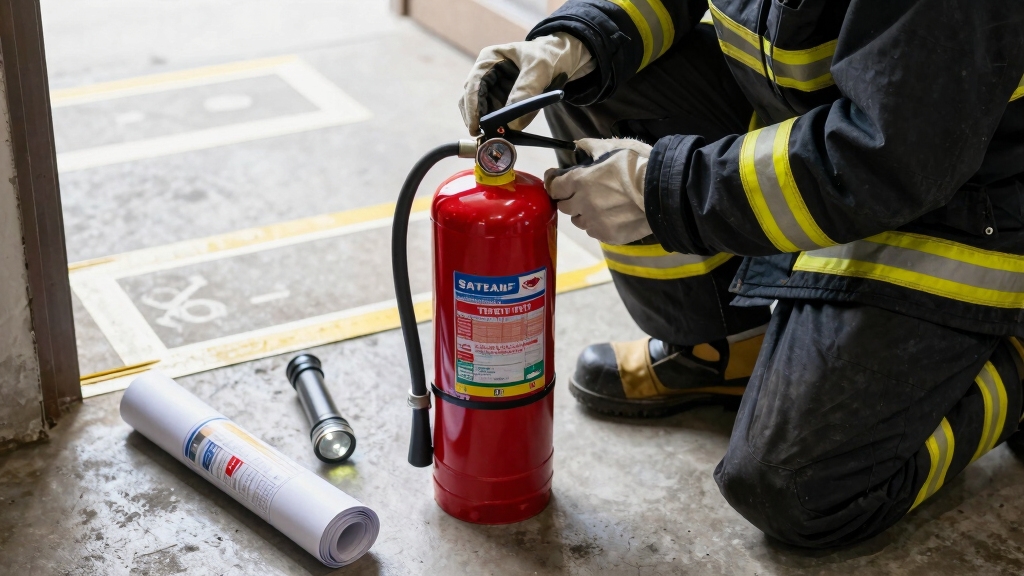

To properly use a fire extinguisher, position yourself with your back toward a clear exit and stand about 6 to 8 feet from the fire.
Pull the pin to break the seal, aim the nozzle at the fire’s base, squeeze the handle evenly, and sweep side to side until the flames go out.
Always make sure the fire is manageable, call for help first, and watch for reignition. Understanding each step lets you act quickly and safely in emergencies.
Key Takeaways
- Pull the pin completely to break the safety seal and make the extinguisher ready to use.
- Aim the nozzle at the base of the fire, targeting the fuel source for effective suppression.
- Squeeze the handle slowly and evenly to discharge the extinguishing agent onto the fire.
- Sweep the nozzle side-to-side across the fire’s base until the flames are fully extinguished.
- Position yourself with a clear exit behind you and stand 6 to 8 feet away while operating.
How to Place Fire Extinguishers for Quick, Safe Access?
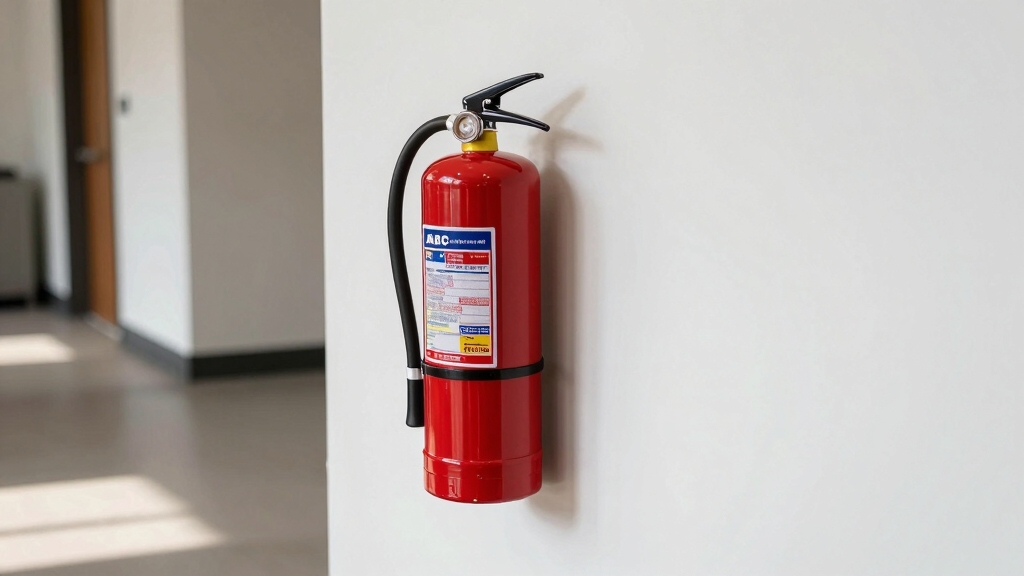
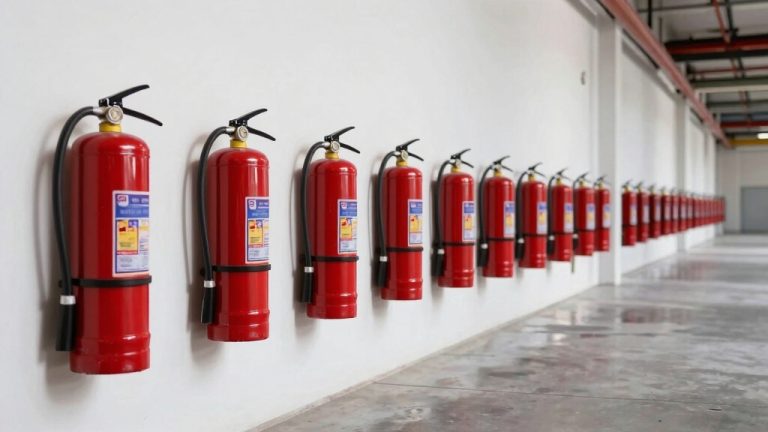
When placing fire extinguishers for quick, safe access, position them in plain view near escape routes so you can reach them immediately during an emergency.
Place fire extinguishers in clear view near escape routes for immediate access in emergencies.
Mount extinguishers above the reach of children but within easy access for adults. Avoid placing them near heat sources like stoves or heaters, as excessive heat can damage the extinguisher.
Make certain the area around the extinguisher stays unobstructed; never block it with furniture or storage. Install at least one extinguisher in key locations such as kitchens and garages where fire risks are higher.
Consult your local fire department for guidance on ideal placement specific to your building layout. Proper placement minimizes response time and maximizes safety during a fire emergency, so follow these protocols strictly.
Additionally, understanding the activation and dispersion process helps ensure effective use when seconds count.
How to Inspect and Maintain Your Fire Extinguisher?
Regularly inspecting and maintaining your fire extinguisher guarantees it functions properly during emergencies.
Each month, check the pressure gauge to make sure it’s within the operable range. Inspect the canister, hoses, and nozzles for any signs of damage, rust, or dents.
Remove dust, oil, and grease from the exterior to prevent deterioration. If your extinguisher requires shaking, do so monthly to keep the contents effective.
After any use, immediately recharge rechargeable models or replace disposable ones. Schedule periodic pressure tests in accordance with manufacturer guidelines.
Keep detailed maintenance records and adhere strictly to expiration dates. These steps make certain your extinguisher remains reliable and ready when you need it most.
Neglecting maintenance risks extinguisher failure, endangering safety. Proper maintenance complements fire alarm systems, as automatic notification from monitored alarms can reduce emergency response times.
How to Assess and Prepare Safely Before Using an Extinguisher?
Proper inspection and maintenance prepare your fire extinguisher for use, but knowing how to assess and prepare yourself before using it can make the difference between controlling a fire and putting yourself at risk.
First, evaluate the fire size. If it’s too large or spreading quickly, evacuate immediately. Always position yourself with your back to a clear exit, standing 6 to 8 feet away.
Call for help and activate the fire alarm before approaching. Hold the extinguisher upright, nozzle pointing away from you.
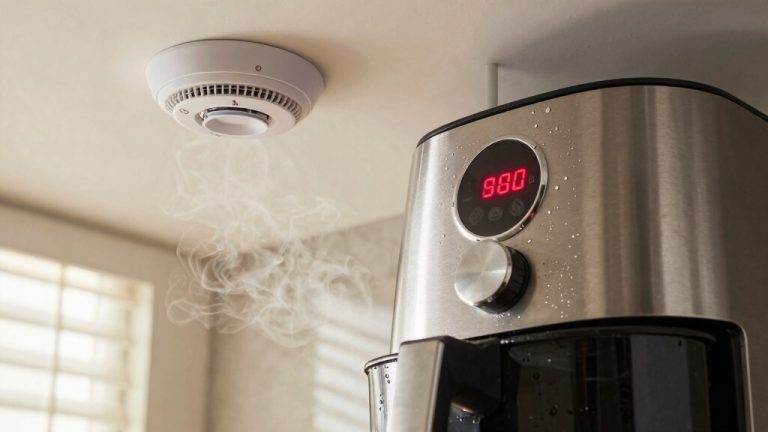
Note that burning candles, incense, or tobacco smoke contributes minor CO amounts that can trigger sensitive alarms, so be aware of potential carbon monoxide risks when operating extinguishers near combustion sources.
| Action | Reason |
|---|---|
| Assess fire size | Avert overwhelming flames |
| Position near exit | Assure quick escape |
| Call for help | Alert others and emergency |
| Hold upright | Maintain control and safety |
| Stand back 6-8 feet | Safe operating distance |
How to Use a Fire Extinguisher Step-by-Step?
Start by firmly pulling the pin completely out to break the safety seal, ensuring the extinguisher is ready for use. Next, aim the nozzle low at the base of the fire, not at the flames, to target the fuel source.
Hold the extinguisher upright with your back toward the exit, standing about 6 to 8 feet away. Squeeze the handle slowly and evenly to discharge the extinguishing agent.
Sweep the nozzle side-to-side across the fire’s base, covering the area until the flames go out. If the fire reignites, repeat the process.
Always maintain your position near the exit and move closer as the fire diminishes. Regular maintenance and inspection of your fire extinguisher are crucial to ensure reliable performance when you need it most.
What to Do After Using a Fire Extinguisher?
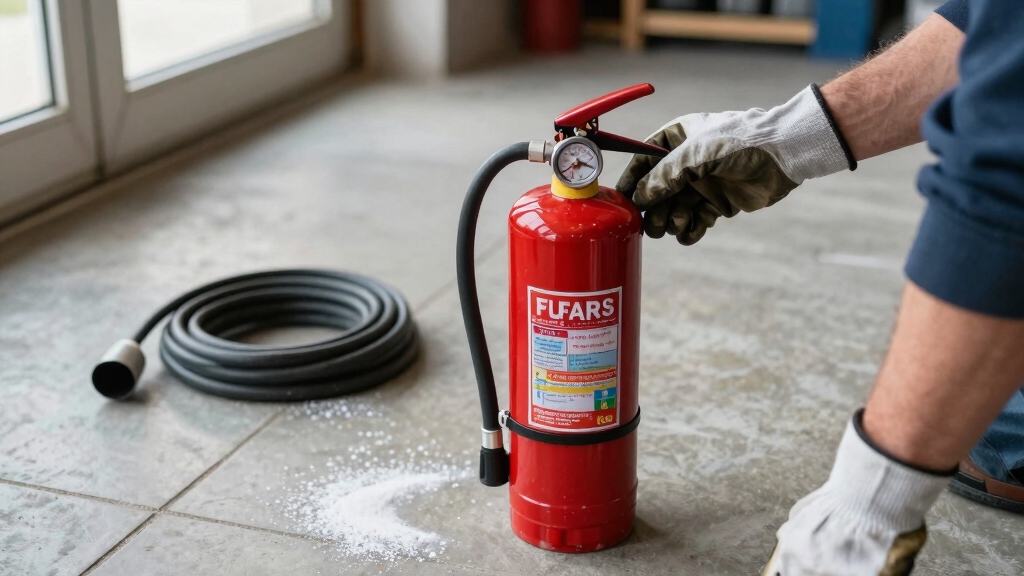
After you’ve extinguished the fire, keep a close watch on the area for any signs of reignition while carefully backing away toward safety.
Remain vigilant for flare-ups as you cautiously retreat to safety.
Never turn your back on the fire immediately, as embers can flare up unexpectedly. Once safe, call the fire department to inspect the site, even if the fire appears fully out.
This guarantees no hidden hazards remain. If you used a rechargeable extinguisher, have it professionally serviced and refilled immediately.
Disposable units must be replaced after a single use. Finally, review the extinguisher’s label for any specific post-use instructions, and report the incident to your workplace or property manager if applicable.
Following these steps maintains safety and prepares you for any future emergencies. Always ensure proper ventilation and avoid ignition sources while monitoring the area, as recommended in Immediate Safety Measures.
Frequently Asked Questions
Can I Use a Fire Extinguisher on Electrical Fires?
Yes, you can use a fire extinguisher on electrical fires, but only if it’s rated for Class C fires, which are specifically designed for electrical equipment.
Make sure to pull the pin, aim at the base of the fire, and use the PASS technique carefully. Never use water-based extinguishers, as water conducts electricity and can cause shocks.
Always maintain a safe distance and have an exit route before attempting to extinguish electrical fires.
How Often Should I Replace My Fire Extinguisher?
Imagine a family who ignored their extinguisher’s expiration and found it failed during a kitchen fire.
You should replace disposable extinguishers immediately after use or once they reach their expiration date, usually 5-15 years.
Rechargeable models need servicing after every use and pressure tests periodically. Always check your extinguisher monthly for damage or low pressure to guarantee readiness.
Don’t risk outdated equipment; replace it promptly to stay safe.
What Types of Fires Can Different Extinguishers Handle?
You need to match extinguisher types to fire classes. Class A handles ordinary combustibles like wood and paper. Class B tackles flammable liquids such as gasoline or oil.
Class C is for electrical fires involving energized equipment. Some extinguishers are multipurpose (ABC) and cover all these safely. Using the wrong type risks spreading the fire or injury.
Always check your extinguisher’s label to know which fires it can control.
Is It Safe to Use an Extinguisher on Grease Fires?
No, you shouldn’t use a standard extinguisher on grease fires because water and some extinguishing agents can spread the flames. Instead, use a Class K extinguisher designed for kitchen grease fires.
Always position yourself with an exit behind you, aim the nozzle at the fire’s base, and use a sweeping motion. If the fire grows or you feel unsafe, evacuate immediately and call 911.
Safety comes first; never take unnecessary risks.
Can Children Be Trained to Use Fire Extinguishers Safely?
Training children to use fire extinguishers safely isn’t a wild goose chase if done properly.
You should teach them the PASS technique: Pull, Aim, Squeeze, Sweep only when they’re old enough to understand the risks and stay calm.
Emphasize safety: keep their back to the exit, use extinguishers on small fires, and never let them fight fires alone. Always supervise and reinforce calling for help first.
Preparation Stops Disasters Before They Grow
Now that you know how to place, inspect, and use your fire extinguisher, you’re ready to act quickly when flames appear. Think of your extinguisher as your first line of defense, a loyal guardian standing by.
Always stay calm, follow the steps precisely, and never underestimate the power of preparation. Remember, proper use can stop a small fire from becoming a blazing disaster. Stay vigilant, stay safe, and keep your extinguisher ready.