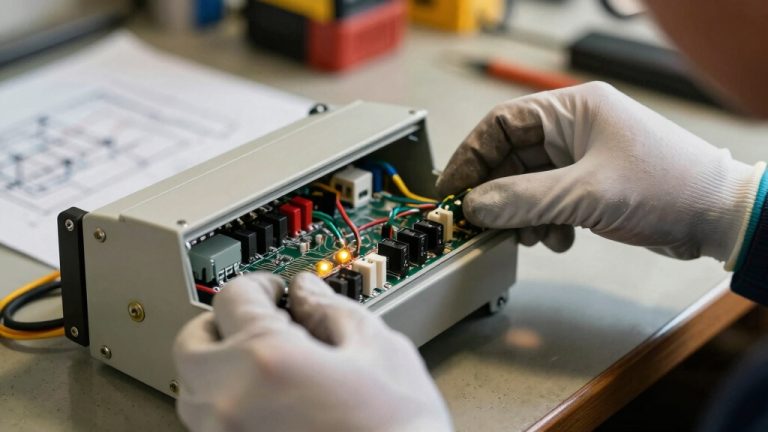

To secure your windows from break-ins, install magnetic contact sensors with a gap no larger than one inch. Mount them firmly on clean, non-metal surfaces.
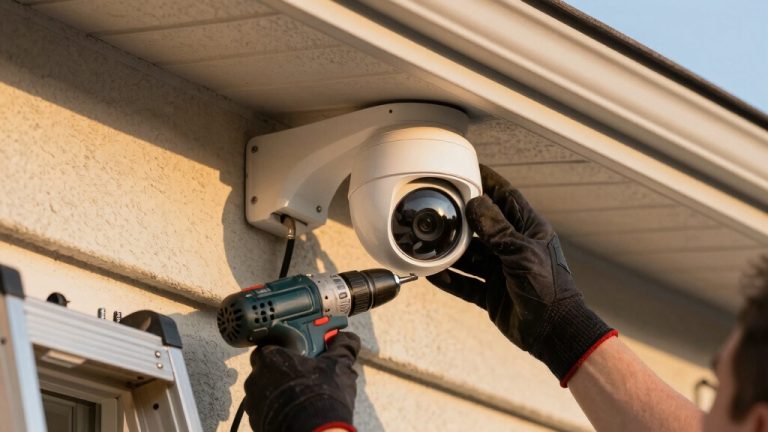
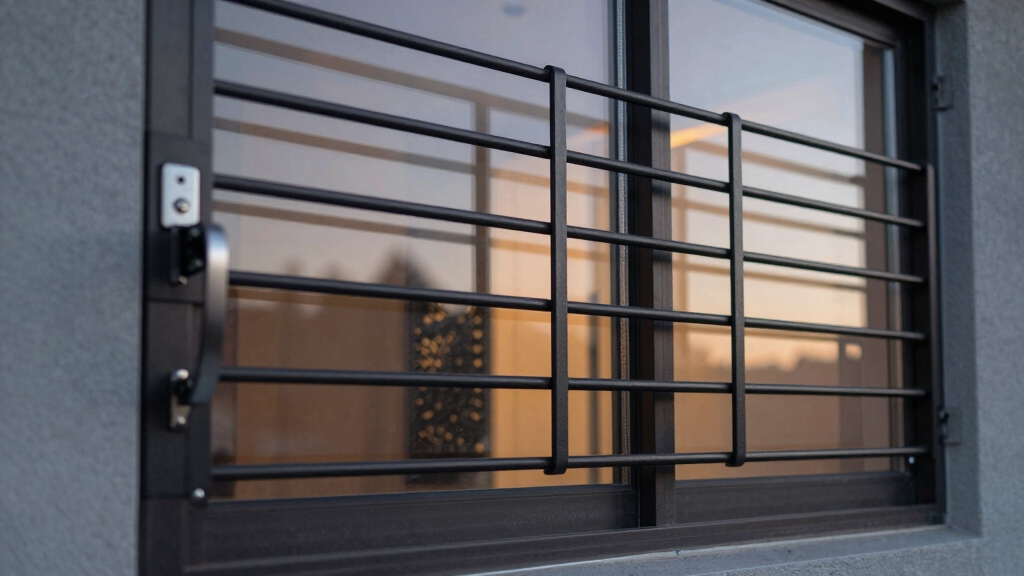
Use laminated glass panels to reduce breakage risks and delay forced entry. Integrate cameras focused on vulnerable windows for real-time monitoring.
Position cameras to avoid tampering and glare. Sync sensors with your control panel and configure alert settings for prompt notifications.
Implementing these measures enhances your security system’s reliability. Further steps can strengthen your home protection.
Key Takeaways
- Install laminated glass panels to reduce breakage risk and delay forced entry attempts.
- Use magnetic contact sensors with a gap no greater than one inch on all ground-floor and balcony windows.
- Position sensors on clean, non-metal window frames with strong adhesive or screws for permanent mounting.
- Integrate window sensors with the security control panel for real-time alerts and configure user notification settings.
- Regularly test sensors and inspect wiring to ensure proper function and prevent false alarms or tampering.
Why You Need to Secure Your Windows?
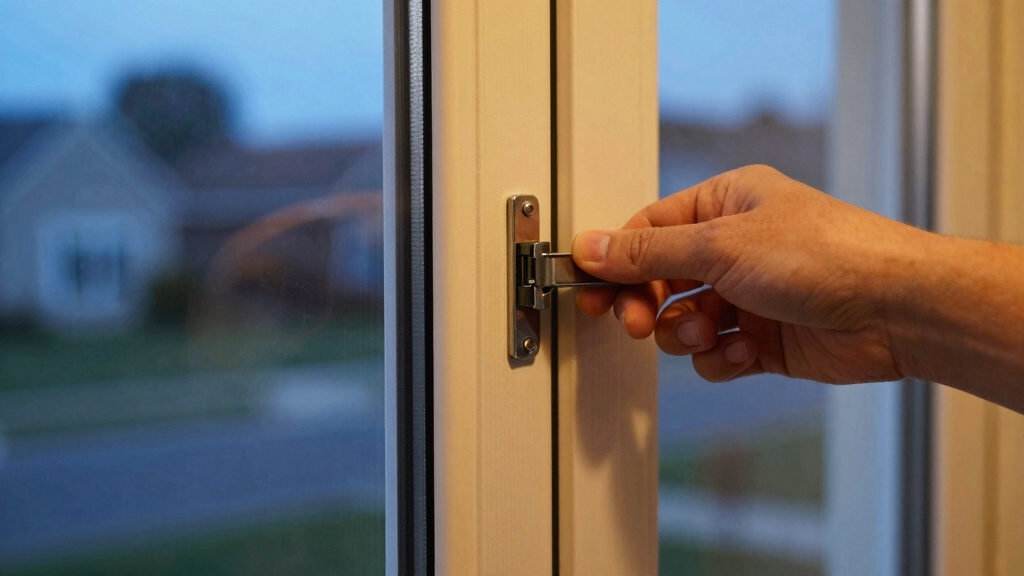
Although doors often get the most attention, securing your windows is equally critical. They represent vulnerable access points for intruders, especially on ground floors and balconies.
You must recognize that windows provide direct entry routes that are frequently overlooked but exploited. Failing to secure them compromises your entire security system’s integrity.
Properly installed window sensors detect unauthorized openings immediately, triggering alarms and alerts. You should prioritize windows with easy external access, as these pose the highest risk.
In addition, windows often lack robust locking mechanisms compared to doors, increasing susceptibility. By addressing these vulnerabilities, you reinforce perimeter defenses effectively.
Understanding this necessity guarantees you implement all-encompassing protection measures rather than focusing solely on doors. This approach greatly reduces potential break-in points.
Using laminated glass panels can significantly enhance window security by reducing breakage risk and delaying forced entry attempts.
How to Choose Window Sensors for Break-In Protection?
Securing your windows starts with selecting the right sensors tailored to your specific needs.
Effective window security begins with choosing sensors that fit your unique protection requirements.
Focus on sensors designed for ground-floor windows and accessible entry points, as these are most vulnerable. Choose magnetic contact sensors with minimal gap tolerance, ideally no more than one inch, to guarantee reliable detection.
Prioritize sensors with strong adhesive or screw-mount options for permanent installation on clean, non-metal surfaces. Avoid sensors sensitive to environmental interference, such as those affected by metal frames or unconditioned areas.
Verify compatibility with your control panel and integration with your security system for seamless alerts.
Finally, consider sensor durability against weather and tampering.
Selecting sensors that meet these criteria guarantees precise, consistent break-in detection and strengthens your overall window security strategy. Additionally, integrating sensors with multi-point locking systems can further enhance the security of your windows by distributing locking force and resisting forced entry attempts.
How to Install Window Sensors Correctly?
When installing window sensors, it’s important to focus on the accessible ground-floor windows. You’ll want to position the sensor on the frame and the magnet on the moving sash. Just make sure those alignment marks line up nicely, with no more than a one-inch gap. This helps ensure reliable detection.
Oh, and don’t forget to clean the surfaces thoroughly before you start! It really makes a difference.
Once you’re ready, press down firmly for at least 30 seconds to secure the adhesion. If you’re looking for a more permanent fit, using screws is a great option too!
For optimal security, consider adjusting sensitivity settings on your sensors to reduce false alerts while maintaining detection accuracy.
Optimal Sensor Placement
Install window sensors on all ground floor windows, balconies, and other accessible areas to maximize security coverage. Position the sensor on the fixed frame and the magnet on the moving sash, ensuring the gap between them doesn’t exceed one inch.
Avoid metal or aluminum surfaces, as they can interfere with sensor signals. Clean both surfaces thoroughly before mounting to ensure strong adhesion. For long-lasting security, use screws instead of adhesive where possible, especially in climate-variable locations.
Place sensors out of reach of children and pets to prevent accidental damage or tampering. Align sensors carefully so opening the window triggers the alarm immediately.
Before installation, inspect sensor wiring for damage or loose connections to ensure proper function and safety during setup, as recommended for sensor maintenance.
Installation and Alignment Tips
Begin by thoroughly cleaning both the window frame and the moving sash to guarantee peak sensor adhesion. Remove dust, oils, and moisture before applying sensors.
Position the sensor on the fixed frame and the magnet on the moving sash, aligning them precisely. Maintain a gap no greater than one inch to ensure proper signal transmission.
Press the adhesive firmly for at least 30 seconds or use screws for a permanent fit on wooden frames. Avoid metal or aluminum surfaces that can interfere with signals.
Test alignment by opening and closing the window; the alarm should trigger correctly.
It is important to ensure proper sensor positioning and alignment to avoid malfunction and maintain effective sensor operation.
| Step | Key Detail |
|---|---|
| Clean surfaces | Remove all debris |
| Sensor placement | Fixed frame |
| Magnet placement | Moving sash |
| Gap tolerance | ≤ 1 inch |
| Adhesion method | Adhesive or screws |
Best Placement for Window Sensors and Cameras
When it comes to window sensors, it’s a good idea to install them on all accessible and ground-floor windows. Just make sure that the sensor and magnet align closely—any gaps can affect reliable detection.
Now, let’s talk about cameras. You’ll want to position them to cover every entry point and those high-traffic areas. Keeping those views unobstructed is key; it really helps with both deterrence and monitoring.
Additionally, performing regular visual inspections of window frames and surrounding fixtures can help detect any hidden tampering or surveillance devices that could compromise security.
Optimal Window Sensor Locations
Frequently, ideal window sensor placement focuses on ground floor windows, balconies, and other easily accessible areas since these points present the highest risk of unauthorized entry.
You should mount sensors on the window frame and place magnets on the moving window sash, ensuring alignment and a maximum gap of one inch to maintain reliable contact.
Avoid metal or aluminum surfaces that can interfere with signal transmission, and steer clear of non-climate-controlled locations that may impair sensor function.
Clean all mounting surfaces thoroughly before installation, and consider using screws for a permanent and secure fit.
Position sensors out of reach of children and pets to prevent accidental tampering.
This precise placement optimizes detection, minimizing false alarms while maximizing responsiveness to unauthorized window openings.
For enhanced security, complement electronic detection with mechanical anti-lift pins to provide layered protection against forced entry.
Effective Camera Coverage Areas
Maximize your security system’s effectiveness by strategically positioning cameras and window sensors to cover all vulnerable access points.
Place window sensors on all ground-floor and balcony windows, guaranteeing magnets and sensors align with a maximum gap of one inch for accurate detection.
For cameras, cover every entry point, including windows, doors, and accessible outdoor spaces, with clear, unobstructed views.
Position cameras to face high-traffic areas and potential blind spots, deterring intruders before they approach.
Mount cameras at a height that prevents tampering but allows facial recognition and license plate capture.
Sync all devices with your control panel, then rigorously test each to confirm functionality.
This precise deployment ensures all-encompassing monitoring, rapid intrusion detection, and immediate alerts, reinforcing your home’s perimeter security effectively.
Regularly inspect and maintain sensor and camera connections to prevent issues like loose wiring that can compromise device operation.
How to Use Cameras to Secure Vulnerable Windows?
Position cameras strategically to monitor vulnerable windows, especially those on the ground floor or with balcony access.
Make certain each camera provides a clear, unobstructed view to capture any suspicious activity effectively. Mount cameras at angles that cover entire window frames and adjacent entry points without blind spots.
To maximize security, focus on these key points: Use weather-resistant cameras suitable for exterior mounting near windows. Align camera lenses to avoid glare and reflections that obscure footage. Connect cameras to your control panel for real-time monitoring and alerts.
Regularly test your cameras after installation to confirm functionality and adjust angles if needed. This precise placement deters intruders and enhances your overall window security by providing continuous surveillance of vulnerable access points.
Consider using IP cameras with advanced analytics capabilities for enhanced detection and alerting on suspicious activity.
Integrating Window and Door Sensors for Full Coverage
To achieve thorough security coverage, integrate window and door sensors by installing them on every possible entry point, focusing especially on ground-level access areas.
Ensure complete security by installing sensors on all entry points, prioritizing ground-level access areas.
Position door sensors on the frame with the magnet aligned on the moving door, ensuring the gap doesn’t exceed a quarter-inch. For windows, mount sensors on the frame and magnets on the moving sash, maintaining a maximum one-inch gap.
Clean all surfaces before installation, using screws for permanent fixation on windows and adhesive for doors. Avoid metal surfaces and areas prone to moisture or extreme temperatures to prevent false alarms or sensor failure.
Consistently name components during setup for rapid identification. This strategic sensor integration creates an all-encompassing perimeter defense, minimizing blind spots and enhancing your system’s responsiveness to unauthorized entry attempts.
For optimal sensor performance, ensure mounting surfaces are level and plumb to avoid misalignment and false triggers, similar to the precision needed when measuring door hinges.
How to Test Your Window Security System for Reliable Alerts?
Regularly testing your window security system guarantees all sensors respond accurately and alerts are reliably triggered.
Begin by opening and closing each secured window individually to confirm sensors detect movement and magnet separation.
Next, walk by motion sensors to verify their activation.
Finally, make certain the control panel registers each alert and notifies designated contacts promptly.
Focus on these critical steps for thorough testing:
Test each sensor multiple times to confirm consistent response.
Verify alert notifications reach your phone or monitoring service.
Inspect sensor alignment and battery status for peak function.
Perform these tests routinely and after any system adjustments.
This disciplined approach makes certain your window security system remains dependable, providing immediate and accurate intrusion alerts when needed most.
Tips to Prevent False Alarms on Windows and Doors
False alarms often result from improper sensor alignment or environmental factors, but you can markedly reduce these interruptions by ensuring precise installation and maintenance.
First, align door and window sensors carefully, keeping gaps within specified limits: no more than a quarter-inch for doors and one inch for windows.
Clean mounting surfaces thoroughly before attaching sensors, avoiding metal or aluminum areas that interfere with signals.
Secure sensors with screws for permanence when possible, rather than relying solely on adhesives.
Position sensors out of reach of pets and children to prevent accidental triggers.
Regularly test each sensor by opening and closing windows and doors multiple times to verify consistent response.
Finally, seal any drilled holes to prevent moisture ingress that could degrade sensor performance. This will help maintain reliable operation and minimize false alarms effectively.
How to Configure Your Security System for Window Protection?
When configuring your security system for window protection, you’ll need to start by syncing all window sensors with the control panel to guarantee seamless communication.
Make sure each sensor is properly aligned with its magnet and installed on a clean surface, avoiding metal or aluminum areas that may interfere with signals.
Once synced, configure user profiles and set access codes to control who can arm or disarm the system.
Focus on these key steps:
Test window sensors by opening and closing to verify alarm triggers.
Name each sensor during setup for quick identification in alerts.
Configure notification settings for off, home, and away modes to suit your lifestyle.
Adhering to these technical protocols ensures reliable window protection and rapid response to breaches.
Frequently Asked Questions
Can Window Security Systems Be Integrated With Smart Home Devices?
Yes, you can integrate window security systems with smart home devices seamlessly. By syncing sensors and cameras to your smart hub, you gain centralized control and instant alerts.
This integration allows you to automate responses, like locking smart locks or activating alarms when a window sensor triggers. Make certain your system supports popular platforms like Alexa, Google Home, or Apple HomeKit for smooth operation and enhanced security management directly from your smartphone or voice commands.
How Often Should Window Sensor Batteries Be Replaced?
You don’t want your window sensor batteries dying like a flashlight in a blackout. Replace them every six to twelve months to keep your system razor-sharp.
Regular battery swaps prevent false alarms and missed alerts, ensuring continuous protection. Always check battery status during system tests and use high-quality batteries recommended by the manufacturer.
Staying proactive guarantees your sensors won’t fail when it matters most, maintaining flawless, uninterrupted security coverage.
Are Window Security Sensors Effective Against Forced Entry?
Yes, window security sensors are effective against forced entry when properly installed and maintained. They detect the opening or disturbance of windows, triggering alarms instantly.
To maximize effectiveness, align sensor and magnet with a gap no more than one inch. Avoid metal surfaces and test regularly.
Combining sensors with cameras and a control panel further deters intruders and guarantees immediate response to break-in attempts at vulnerable points.
What Maintenance Is Required for Outdoor Security Cameras?
You need to regularly clean outdoor security camera lenses to guarantee clear images, removing dirt, dust, and spider webs.
Check for secure mounting and adjust angles to maintain coverage.
Inspect wiring and connections for wear or damage, replacing components as needed.
Update firmware promptly to fix vulnerabilities and improve performance.
Test camera functionality after maintenance to confirm proper operation and reliable synchronization with your control panel.
Can Window Security Systems Detect Glass Breakage?
Window security systems typically don’t “listen in” for glass breaking by default; they focus on detecting door and window openings through sensors.
However, you can enhance your setup with specialized glass break detectors that sense disturbances in sound frequencies caused by breaking glass.
These detectors use acoustic sensors, providing precise alerts when glass is compromised.
Integrating them guarantees your security system covers more bases, adding a robust layer of protection against subtle threats.
rom Sensors to Surveillance: Total Window Protection
Securing your windows isn’t just a precaution; it’s your first line of defense against intrusion.
By choosing the right sensors, placing cameras strategically, and integrating systems seamlessly, you transform vulnerabilities into strengths.
Remember, a window left unprotected whispers an invitation to intruders.
Don’t let yours speak louder than your security measures.
Test regularly, fine-tune your settings, and stay vigilant—because in home security, precision isn’t optional; it’s essential.