
You can tell if someone tried to break in by spotting suspicious vehicles or strangers lingering near your home.
Look for unusual markings like graffiti or stickers signaling vulnerabilities. Check for signs of tampering such as scratches on locks or bent doorframes.
Be aware of physical damage like broken window screens, cut wiring, or displaced objects in your yard.
Note any property neglect that indicates absence, such as piled-up mail or overgrown yards.
Recognizing these indicators is essential for protecting your home. Explore further to strengthen your security awareness.
Key Takeaways
- Look for scratches, dents, or tool marks on locks and door frames indicating forced entry attempts.
- Check for removed or tampered window screens signaling intrusion trials.
- Notice broken outdoor lights or cut wiring used to disable security detection.
- Identify unusual footprints or displaced objects around entry points suggesting trespassing.
- Observe damaged or misaligned strike plates and locks as evidence of forced entry efforts.
Suspicious People and Vehicles Near Your Home That Signal Break-Ins
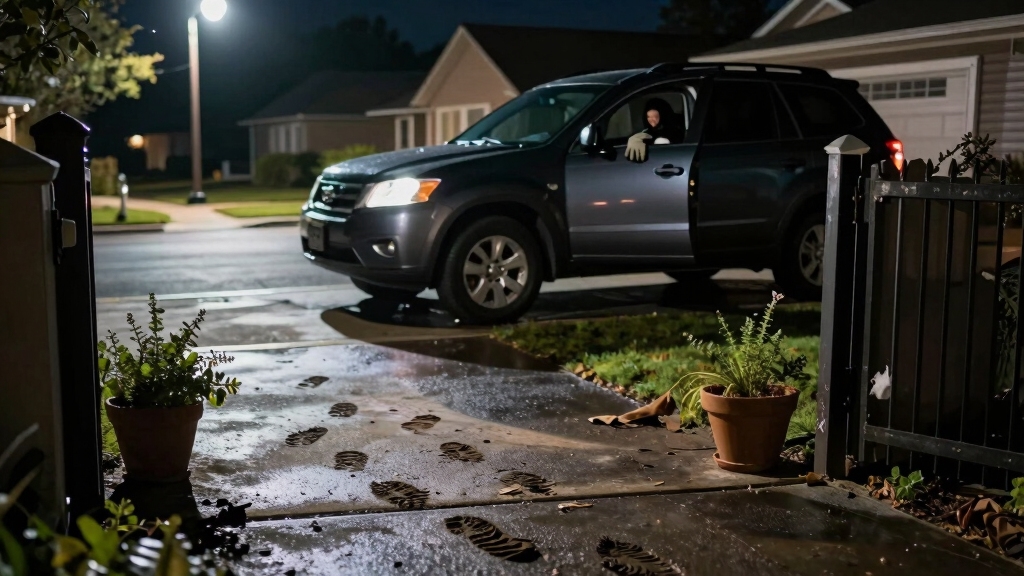
Keep an eye out for unfamiliar vehicles parked near your home, especially unidentified vans or cars lingering for extended periods. These often signal reconnaissance activity.
You should also monitor strangers loitering nearby, walking around your property, or taking photographs. These behaviors typically indicate casing.
Repeated instances of such lingering suggest ongoing surveillance. Pay attention to cars cruising past your residence frequently; this pattern often assesses potential robbery targets.
If you notice unfamiliar individuals parked for extended times without clear purpose, consider it a warning sign of monitoring. Document these occurrences promptly, noting times and descriptions.
Your vigilance in identifying suspicious vehicles and people is essential for early detection and prevention of break-in attempts. Act decisively by reporting suspicious activity to local authorities to enhance your property’s security.
Additionally, maintaining detailed logs of suspicious behaviors, timings, and locations helps identify surveillance patterns and strengthens your case when reporting.
Unusual Markings and Symbols on Your Property
Suspicious vehicles and people often accompany another subtle but telling sign: unusual markings on your property.
These symbols, including graffiti, chalk lines, or spray paint, serve as coded messages among intruders, indicating alarm systems or valuable assets.
Graffiti, chalk lines, and spray paint often reveal hidden messages about your home’s security or valuables.
Pay close attention to stickers on mailboxes or doors. They often carry secret meanings that communicate vulnerability or occupancy status.
Additionally, objects like oddly placed rocks or golf balls near your home can mark it for surveillance.
Repeated flyers left in visible spots test whether you promptly remove them, signaling if the house is occupied.
Recognizing and documenting these unfamiliar signs helps you act swiftly, notifying authorities or neighbors to prevent potential break-ins.
Always inspect your property regularly for these covert indicators to maintain security awareness.
Also, be aware that intruders may use hidden GPS trackers to monitor your movements and plan break-ins accordingly.
Spotting Tampering and When Intruders Test Your Security
Intruders often test your security by attempting to tamper with entry points. You should regularly inspect locks, door frames, and window screens for signs of interference.
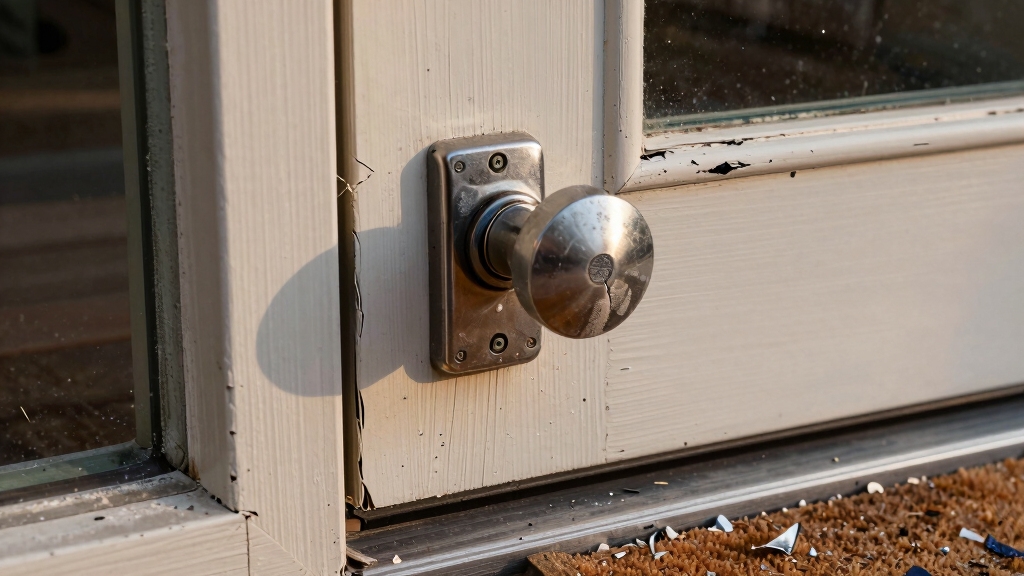
Look for scratches, dents, or tool marks on locks indicating forced entry attempts or lock picking. Check door frames for splintering or bending, as these suggest prying efforts.
Window screens may show cut or displaced sections signaling intrusion trials. Pay attention to broken outdoor lights or cut wiring, which intruders use to avoid detection.
Disturbed door mats or shifted garden items can hint at hidden key searches. Early detection of such tampering helps you reinforce weak points before actual break-ins occur.
This ensures your property remains secure against escalating threats. Professional locksmiths use non-destructive entry techniques to assess and address tampering without damaging your locks or doors.
Spotting Physical Signs of Break-In Attempts
Detecting physical signs of break-in attempts requires a thorough inspection of all access points and surrounding areas.
Check for altered or damaged locks, scratched or bent frames, and removed or tampered window screens, as these indicate forced entry or security testing.
Look for broken outdoor lighting fixtures or cut wiring, which intruders disable to avoid detection.
Examine door mats or garden areas for disturbed items or unusual footprints, signaling hidden key searches or trespassing.
Unfamiliar marks, such as graffiti or chalk symbols near entrances, often serve as coded messages among criminals identifying vulnerabilities.
Keep an eye out for displaced objects that might suggest casing activity.
Also, inspect the condition of reinforced strike plates and locks, as damage or misalignment can indicate attempts to force entry.
Property Neglect That Signals You’re Away
When you leave your property unattended for extended periods, visible signs of neglect immediately advertise your absence.
Overgrown yards, piled-up mail, newspapers, and unattended packages create clear signals that no one is home.
Overgrown yards and accumulated mail visibly signal an empty home, inviting unwanted attention from intruders.
Predictable routines, such as consistently leaving at the same time daily, further assist criminals in planning break-ins.
Additionally, the absence of visible security measures like cameras or alarm systems makes your property more attractive to intruders.
Valuable items left in plain sight through windows increase temptation, making your home a prime target.
To deter potential break-ins, maintain regular property upkeep, vary your schedule, and make certain security devices are prominently displayed.
Neglect directly compromises your property’s security by signaling vulnerability.
Addressing these factors is critical to reducing burglary risk.
Installing smart locks can enhance your home’s security by providing remote access control and real-time alerts to detect unauthorized entry attempts.
Frequently Asked Questions
How Can I Prevent Break-Ins During Vacation or Long Absences?
You can prevent break-ins during vacation by activating timers on lights and electronics to simulate occupancy.
Arrange for someone to collect mail and packages regularly to avoid signs of absence.
Secure all doors and windows with reinforced locks and install visible security cameras.
Notify trusted neighbors and consider professional monitoring services.
Avoid publicizing your absence on social media.
Maintain yard upkeep to eliminate neglect indicators that attract burglars.
What Are the Best Security Systems to Detect Break-In Attempts?
You should install a thorough security system combining motion detectors, door/window sensors, and surveillance cameras with real-time alerts.
Opt for systems integrating glass break sensors and tamper alarms to detect forced entry attempts.
Choose a monitored alarm service that contacts authorities immediately.
Consider smart locks with access logs and video doorbells for added control.
These layered technologies provide precise intrusion detection, ensuring you receive prompt notifications to respond effectively to break-in attempts.
How Should I Report Suspicious Activity to Local Authorities?
You should report suspicious activity to local authorities by calling the non-emergency police number or using their online reporting system.
Provide exact details: location, description of people or vehicles, time, and any markings or damage you observed.
Stay factual and concise. If you witness a crime in progress, call 911 immediately.
Keep a record of your report for follow-up and cooperate fully with law enforcement during their investigation.
What Immediate Steps Should I Take After Discovering a Break-In?
Like a storm ripping through calm seas, a break-in shatters your sanctuary.
First, don’t touch anything; preserve evidence. Call the police immediately and wait outside or in a safe place.
Document the scene with photos if safe. Notify your insurance company promptly.
Secure all entry points temporarily to prevent further intrusion.
Finally, review your security system for weaknesses and consider professional upgrades to fortify your home against future threats.
Can Neighborhood Watch Programs Reduce Break-In Risks Effectively?
Yes, neighborhood watch programs markedly reduce break-in risks.
By coordinating vigilance, you enhance detection of suspicious vehicles, unfamiliar markings, and unusual behaviors.
Sharing timely information about local criminal patterns and coordinating with law enforcement increases deterrence.
Your active participation helps identify vulnerabilities early, disrupts criminal surveillance efforts, and promotes rapid response.
Prevention Starts With You: Secure Today, Safe Tomorrow
You are the first line of defense against break-ins, like a vigilant lighthouse guarding your home’s shores.
By recognizing suspicious people, unusual markings, tampering signs, physical damage, and property neglect, you can act swiftly to protect your space. Stay alert and inspect regularly. Early detection is your most effective tool.
Don’t wait for damage; trust your instincts and secure your home before threats escalate. Your vigilance is your strongest security measure.