
You can tell which smoke alarm is going off by listening for its unique sound pattern.
Ionization alarms beep rapidly and intermittently, while photoelectric alarms give a steady, continuous beep.
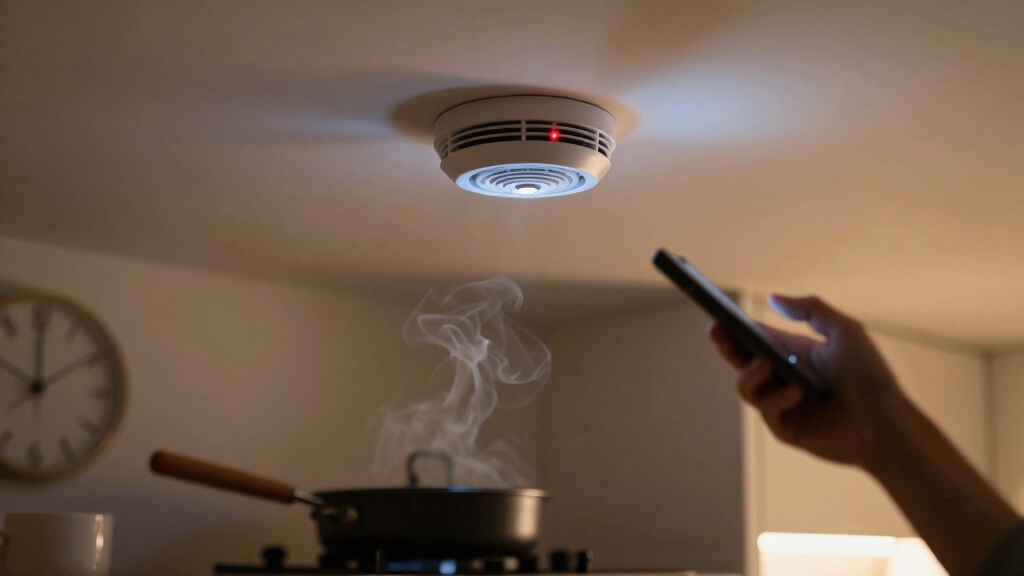
Look for flashing indicator lights on the alarm itself, as they blink in sync with the sound to pinpoint the source.
In interconnected systems, the first triggered unit often emits rapid beeps before others respond.
These clues make locating the alert faster and help you respond effectively.
More details can clarify how to identify different alarms and troubleshoot false signals.
Key Takeaways
- Listen for the alarm emitting a rapid, repeating series of beeps, as it usually identifies the first triggered unit in an interconnected system.
- Observe flashing indicator lights on alarms; the unit with blinking LEDs typically indicates the source of the alert.
- Note the alarm’s tone pattern: continuous steady beeps suggest smoldering fire, while sharp rapid beeps signal a fast-flaming fire.
- Check for location proximity; the alarm closest to smoke, heat, or gas source usually activates first.
- Use built-in test buttons or smart app notifications on advanced alarms to pinpoint the specific unit sounding the alert.
Identify Smoke Alarm Types by Their Sounds
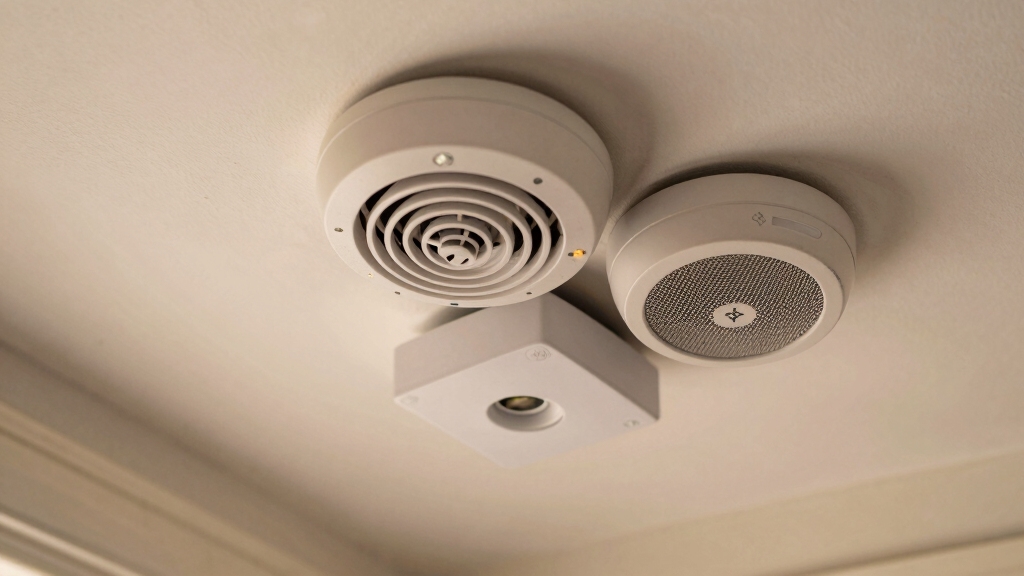
When a smoke alarm goes off, knowing how to tell which type is sounding can help you respond more effectively.
Photoelectric alarms use a light sensor and typically emit a steady, continuous beep that signals smoldering fires producing larger smoke particles. You’ll often find these in bedrooms or living rooms because they react quickly to slow-burning fires.
In contrast, ionization alarms, common in many homes, detect fast-flaming fires and often produce a sharper, more intermittent beep pattern. These alarms are sensitive to smaller smoke particles but can false alarm from cooking steam.
By recognizing these distinct sounds, you can quickly assess the likely fire type and take appropriate action. This improves safety and reduces unnecessary panic or delays.
Photoelectric alarms are especially valued for their early warning capability during smoldering fires, which helps occupants evacuate before flames develop.
This sound distinction is essential before moving on to understanding specific ionization alarm sounds.
Ionization Smoke Detector Alarm Sounds
Recognizing the distinct sounds of smoke alarms helps you identify the fire type quickly. Understanding the specific patterns of ionization alarms provides even more clarity.
Ionization smoke detectors emit a sharp, continuous beep that often sounds louder and more urgent than other alarms. This steady tone signals the presence of fast-flaming fires, triggered by small smoke particles disrupting ion flow inside the detector.
Here’s what you should know about ionization alarm sounds:
- They produce a high-pitched, rapid beep designed to catch your attention immediately.
- False alarms frequently occur from cooking smoke or steam, so assess context carefully.
- Their urgent tone indicates potentially fast-spreading flames, demanding prompt evacuation.
- Older ionization detectors are especially sensitive to steam-induced false alarms, which can cause confusion in identifying real fires.
Photoelectric Smoke Detector Alarm Sounds
Photoelectric smoke detectors typically emit a slower, pulsing beep that differs from the sharp, continuous tone of ionization alarms.
This distinct sound helps you identify a smoldering fire, often caused by slow-burning materials like cigarettes or synthetic fabrics.
When you hear this slower pulse, it signals that larger smoke particles have scattered the light beam inside the detector, triggering the alert.
You’ll find these alarms especially useful in bedrooms, living rooms, and hallways, where smoldering fires pose a significant risk.
Unlike ionization alarms, photoelectric detectors reduce false alarms from cooking or steam, so you won’t be startled unnecessarily.
Recognizing this unique beep pattern guarantees you respond appropriately and swiftly to the specific type of fire hazard present.
For optimal safety, it is essential to install smoke detectors inside every bedroom and outside each sleeping area to ensure early detection and alarm audibility.
Heat and Combination Alarm Signals
Heat and combination alarms alert you with distinct signals designed to minimize confusion and false alarms. Heat alarms activate when they detect a rapid temperature rise, making them ideal for kitchens or garages where smoke mightn’t be present but heat spikes quickly.
Heat alarms detect rapid temperature rises, ideal for kitchens or garages without smoke but quick heat spikes.
Combination alarms use smart algorithms to detect both flames and smoldering fires by analyzing multiple sensors, reducing false triggers. When you hear these alarms, keep in mind:
Heat alarms emit a steady, continuous beep signaling high temperature. Combination alarms often use a patterned tone, alternating between bursts for smoke and sustained sounds for heat.
Both types can interconnect so all alarms sound simultaneously for clear, building-wide alerts. Understanding these signals helps you respond quickly and appropriately. Unlike smoke detectors, sprinklers activate only when exposed to heat within a specific temperature range, not by smoke alone.
Dual-Sensor Smoke Detector Alerts
While heat and combination alarms use distinct signals to differentiate fire types, dual-sensor smoke detectors blend technologies to cover a broader range of fire threats. They combine ionization and photoelectric sensors, so you get fast alerts for both flaming and smoldering fires.
This integration means you won’t miss early signs whether a fire bursts into flames or smolders quietly. When the alarm sounds, it’s harder to pinpoint which sensor triggered it because the signals are unified, but that’s by design to maximize your safety.
Keep in mind, dual-sensor alarms may occasionally inherit false alarms from the ionization component, especially near kitchens. Still, these detectors meet many building codes requiring multi-technology coverage, making them a reliable choice for all-encompassing home fire protection.
Regular maintenance, including monthly testing and cleaning, helps ensure the reliability of smoke detectors over time.
Gas-Sensitive and Advanced Smoke Detector Sounds
Because gas-sensitive and advanced smoke detectors monitor more than just smoke particles, their alerts often differ from traditional alarms.
These devices detect combustion gases like carbon monoxide and volatile organic compounds, triggering distinct sounds or voice alerts to specify the hazard.
You might hear a continuous beep or a spoken warning rather than the typical high-pitched chirp.
Keep in mind these key points:
Gas-sensitive alarms often emit lower-frequency tones or verbal messages to differentiate from smoke alarms.
Advanced detectors, including smart models, may send notifications to your phone, providing precise information remotely.
Their unique sounds help you identify dangers like toxic gases that traditional smoke alarms won’t detect.
Recognizing these signals guarantees you respond appropriately to a broader range of fire and gas hazards.
It is critical to evacuate immediately when a CO alarm sounds to ensure safety and prevent poisoning.
Interconnected Smoke Alarm Trigger Identification
When interconnected smoke alarms go off, it can be pretty tricky to figure out which unit set them off. You know how it is—one moment everything’s quiet, and the next, you’re surrounded by that loud beeping.
So, it’s really important to pay attention to the signal patterns or any visual indicators that can help you identify the source of the alarm.
By understanding these clues, you’ll be able to respond quickly and effectively. After all, knowing where the danger is can make all the difference in keeping everyone safe.
Regular testing and maintenance of each unit can also help ensure the alarms function properly and make it easier to identify the triggering detector through its built-in test button.
Identifying Alarm Origins
Tracking down which alarm has gone off in an interconnected smoke alarm system can feel tricky, but understanding how these systems communicate helps you pinpoint the source quickly.
When one unit detects smoke or heat, it sends a signal to activate all alarms, creating a unified alert.
To identify the origin, focus on these key steps:
Listen closely for the first alarm’s unique pattern or volume difference, as it often indicates the source.
Check the location of each alarm; the one closest to the smoke or heat source usually triggered first.
Keep in mind that interconnected alarms maintain functionality even during power outages due to their battery backup systems.
Signal Patterns Explained
Identifying which alarm triggered first in an interconnected system becomes much easier once you understand the distinct signal patterns these devices use. Each smoke alarm emits unique beep sequences to indicate its status: a continuous tone signals a confirmed fire, while intermittent chirps often mean low battery or malfunction.
When alarms are interconnected, the first triggered unit usually emits a rapid, repeating series of beeps, alerting you to the origin point. Other alarms follow with synchronized but slightly delayed signals, confirming the network’s activation. By paying attention to these patterns, you can quickly identify the source alarm and respond appropriately.
Understanding these signals enhances your safety and helps you troubleshoot issues promptly. This ensures your interconnected system functions reliably. It is also important to recognize that low battery alerts typically present as single beeps every 60 seconds, prompting timely battery replacement to maintain alarm functionality.
Visual Clues to Find the Beeping Alarm
You know when a smoke alarm starts beeping, and it feels like a mini panic attack? One of the quickest ways to figure out which one it’s involves checking the flashing indicator lights.
Those lights often flash in tandem with the sound, making it easier to identify the source.
Also, don’t forget to pay attention to where the alarm is located. The pattern of the beeps can give you some valuable hints too.
Some alarms have distinct sequences that signal different issues. So, by combining these visual and auditory clues, you can pinpoint exactly which device is causing the ruckus without all the confusion.
Keep in mind that single-station fire alarms only alert occupants and do not automatically notify the fire department, so identifying the source quickly is crucial for safety.
Indicator Lights And Sounds
Often, the quickest way to pinpoint which smoke alarm is sounding comes down to observing its indicator lights and listening closely to its unique beeping pattern. Each alarm uses visual and auditory signals to help you identify it quickly.
Look for flashing LEDs; some blink steadily, while others pulse rapidly during an alert. Pay attention to the beeping rhythm. A continuous loud beep usually signals smoke detection, while intermittent chirps may indicate low battery or malfunction.
Use these clues to identify the alarm:
- Flashing light patterns differ by model and alarm type.
- Distinct beep sequences can indicate smoke, heat, or fault.
- Combined audio and visual alerts speed up locating the source.
Alarm Location And Patterns
Visual signals and sound patterns offer initial clues. Knowing where alarms are installed and recognizing their typical alert behaviors can help you zero in on the source quickly.
Smoke detectors are commonly placed in hallways, bedrooms, and near kitchens, areas prone to fire hazards. Ionization alarms often respond swiftly to flaming fires and tend to chirp intermittently during battery issues.
Photoelectric alarms usually emit a steady beep for smoldering smoke. Heat alarms, typically in kitchens, trigger only with rapid temperature rises, so their alarm pattern differs from smoke detectors.
Interconnected systems cause all alarms to sound simultaneously. However, the originating unit often flashes its LED or has a distinct beep pattern.
Troubleshooting False Alarms and Misidentifications
False alarms can frequently disrupt your routine and cause unnecessary concern, but identifying their source is key to minimizing these interruptions.
To troubleshoot false alarms and misidentifications, start by examining your smoke alarm type since ionization models often trigger from cooking steam or aerosols.
Next, consider environmental factors like humidity, dust, or insect interference that may falsely activate photoelectric detectors.
Finally, check the alarm’s placement; heat alarms near kitchens can reduce nuisance alerts.
Clean your alarms regularly to remove dust and debris.
Avoid placing alarms too close to bathrooms or cooking areas.
Replace batteries promptly and test alarms monthly.
Frequently Asked Questions
How Often Should I Replace My Smoke Alarm Batteries?
You should replace your smoke alarm batteries at least once a year to guarantee reliable operation.
Some models use long-life batteries that last up to 10 years, but it’s important to test alarms monthly and replace batteries immediately if you hear a low-battery chirp.
Always use the manufacturer’s recommended battery type.
Regular maintenance, including cleaning dust from sensors, helps prevent false alarms and keeps your smoke detectors functioning properly.
Can Smoke Alarms Detect Carbon Monoxide Gas?
Yes, some smoke alarms can detect carbon monoxide gas, but only if they’re combination models with built-in CO sensors.
These advanced alarms use semiconductor sensors to identify harmful gases like carbon monoxide alongside smoke.
If you want protection from both fire and CO, look for alarms labeled as “combination” or “dual-sensor” that specifically mention CO detection.
Regular smoke-only alarms won’t sense carbon monoxide, so don’t rely on them for gas detection.
What Is the Best Location to Install Each Type of Smoke Alarm?
Imagine placing a photoelectric alarm in your bedroom. It quickly senses smoldering fires from electronics or cigarettes.
You should install ionization alarms near kitchens or garages, where fast-flaming fires might start. Heat alarms best fit kitchens to avoid steam-triggered false alarms.
For full protection, use dual-sensor alarms throughout your home. Position alarms on ceilings or high walls, away from drafts, to ensure early fire detection and safety.
How Do I Maintain and Clean My Smoke Detectors Properly?
You should clean your smoke detectors at least twice a year.
Use a vacuum with a soft brush attachment to gently remove dust from vents and sensors.
Avoid spraying cleaners directly on the unit.
Test alarms monthly by pressing the test button.
Replace batteries yearly or when low battery alerts sound.
For ionization or photoelectric types, follow manufacturer instructions for sensor care.
Regular maintenance guarantees reliable detection and prevents false alarms.
Are There Smoke Alarms Suitable for People With Hearing Impairments?
When it comes to smoke alarms for people with hearing impairments, you’ve got several solid options.
You can rely on alarms with strobe lights or vibrating pads that alert you visually or physically.
Some smart alarms connect to your phone, sending notifications directly.
These devices make certain you’re not left in the dark, covering all bases.
Don’t put all your eggs in one basket. Combining these technologies offers the best protection.
Stay Calm: Identify the Right Smoke Alarm Quickly
Now that you know how to distinguish each smoke alarm by its unique sound and signals, you’re more prepared than ever to act quickly and confidently.
Don’t let confusion slow you down; remember, identifying the right alarm could be the difference between a minor scare and saving your life.
Trust your instincts, use visual clues, and troubleshoot wisely.
With this knowledge, you’re practically a smoke alarm whisperer, ready to protect your home at a moment’s notice.