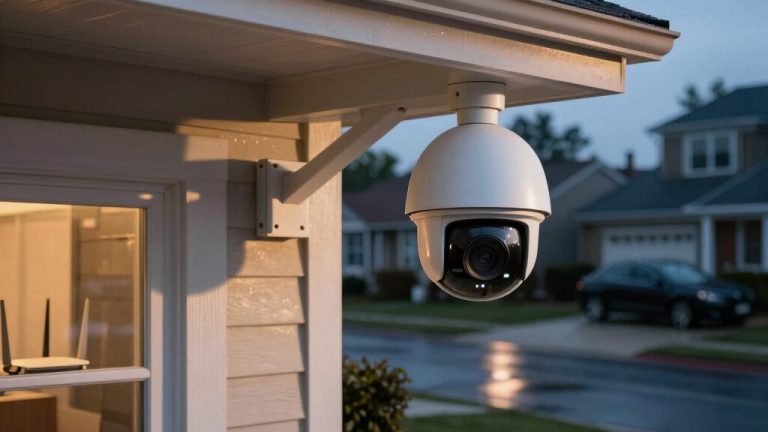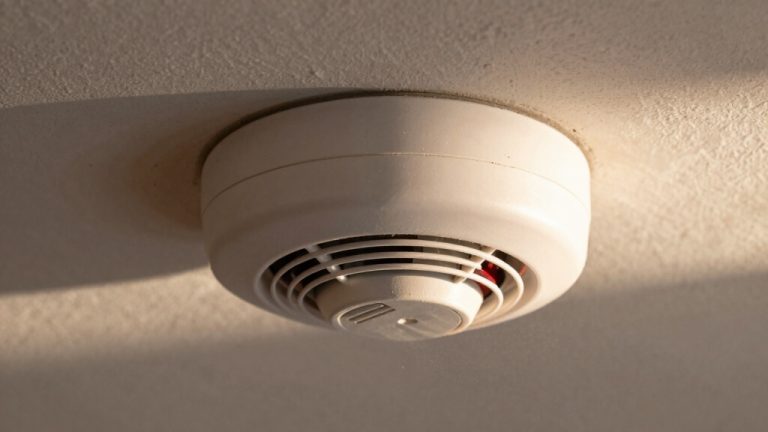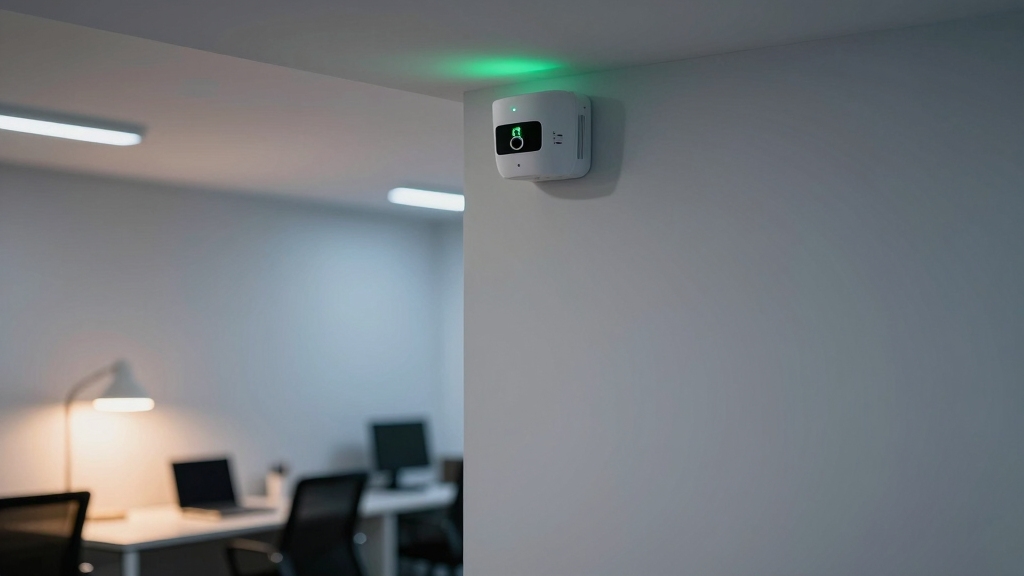

You’ll find occupancy sensors detect presence continuously, even when you’re still, by combining PIR, ultrasonic, microwave, thermal, and depth sensing. This reduces false vacancy signals.
Motion detectors rely mainly on detecting dynamic movement through PIR or ultrasonic waves. They respond immediately to motion but fail when occupants are motionless.
Occupancy sensors excel in energy savings and automation, while motion detectors outperform in security for swift alerts. Understanding these differences helps you select the right sensor for your environment and application.
Key Takeaways
- Occupancy sensors detect both motion and stationary presence using multiple technologies, while motion detectors rely solely on detecting active movement.
- Occupancy sensors support energy savings by maintaining activation during stillness; motion detectors often turn off without recent motion.
- Motion detectors provide immediate response ideal for security and transient zones; occupancy sensors excel in space utilization and automation.
- Occupancy sensors integrate with HVAC and lighting systems for efficient climate and light control; motion detectors have limited energy management capability.
- Occupancy sensors reduce false vacancy signals and improve comfort; motion detectors can fail to detect motionless occupants, causing premature shutoff.
Occupancy Sensor or Motion Detector: Key Differences at a Glance
| Feature | Occupancy Sensor | Motion Detector |
|---|---|---|
| Detection Type | Detects presence + stillness | Detects movement only |
| Technology Used | Multi-sensor (PIR, ultrasonic, microwave, thermal) | Single or limited tech (PIR, ultrasonic, microwave) |
| Response Behavior | Maintains activation even when still | Deactivates without motion |
| Energy Efficiency | High – ideal for lighting & HVAC automation | Moderate – may cause false shutoffs |
| Security Use | Limited for real-time alerts | Excellent for rapid security response |
| Accuracy | High – reduces false vacancy signals | Depends on motion; can miss still occupants |
| Best Applications | Offices, classrooms, smart homes | Entry points, corridors, security zones |
| Integration Capability | Advanced automation & smart system integration | Basic integration with alarms/cameras |
How Do Occupancy Sensors and Motion Detectors Detect Presence Differently?
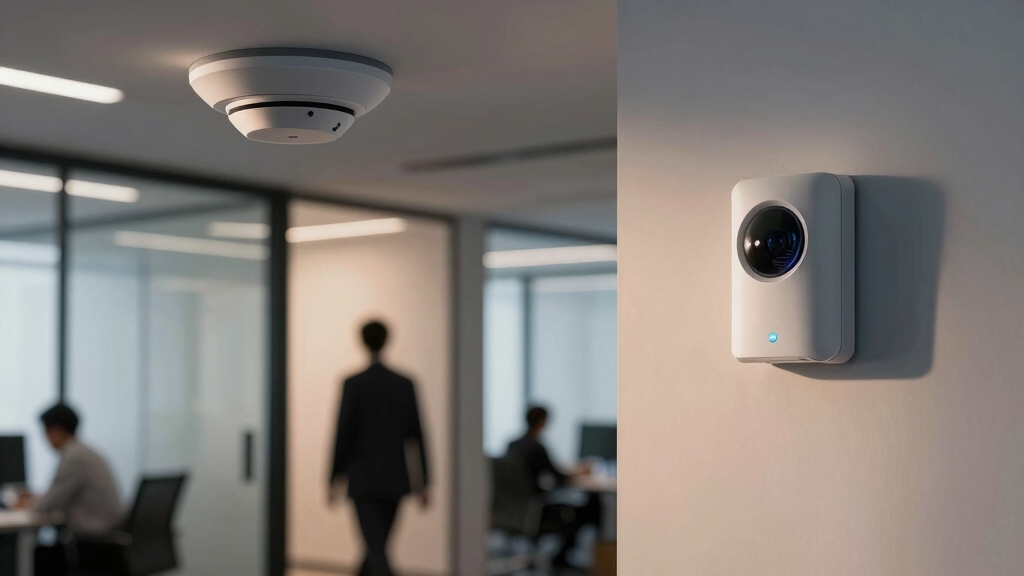
When it comes to detecting presence, occupancy sensors and motion detectors operate on fundamentally different principles.
Occupancy sensors and motion detectors detect presence using distinct, fundamentally different technologies.
Occupancy sensors detect presence by combining multiple technologies, such as passive infrared (PIR), ultrasonic, and thermal imaging. This allows them to sense both motion and stationary occupants through heat, sound, or radar signatures.
This capability enables them to maintain activation even when occupants remain still. In contrast, motion detectors rely primarily on PIR, ultrasonic, or microwave signals to identify active movement within their field of view.
They require continuous motion like walking or shifting to stay triggered. Occupancy sensors also adjust sensitivity to small motions without needing direct line-of-sight, enhancing accuracy in static environments.
Meanwhile, motion detectors react instantly to physical activity but fail to detect presence when occupants are motionless. Additionally, many occupancy sensors incorporate photocell sensor technology to optimize energy efficiency by controlling lighting based on ambient light conditions.
What Key Features Differentiate Occupancy Sensors From Motion Detectors?
You know, one of the main differences between occupancy sensors and motion detectors is how they detect presence. Occupancy sensors can track both movement and stillness, while motion detectors are only triggered by motion.
What’s interesting is that occupancy sensors use a mix of technologies, like PIR, ultrasonic, and thermal sensing. This means they can keep working even if someone is sitting still. On the other hand, motion detectors just focus on detecting when something is moving.
These differences really impact where you might use each type. For instance, occupancy sensors are great for managing energy in offices, making sure lights only come on when people are actually there.
Meanwhile, motion detectors are often used for security in areas where people might just be passing through. Passive alarm systems often incorporate motion detectors as part of their continuous perimeter monitoring to ensure constant security coverage.
Detection Mechanism Differences
Although both occupancy sensors and motion detectors rely on detecting presence in a space, their core detection mechanisms differ markedly in sensitivity and criteria.
Occupancy sensors detect stationary occupants by sensing heat, sound, or radar signals. This enables them to maintain activation even during stillness.
They integrate multiple environmental cues, allowing you to track presence without continuous motion. In contrast, motion detectors require active movement, using reflected infrared or ultrasonic waves to identify walking or shifting.
Their sensitivity focuses on rapid motion, often leading to immediate on/off responses. Occupancy sensors offer adjustable sensitivity for subtle motions and can operate without a direct line of sight.
Motion detectors depend on clear movement within their field of view. These fundamental differences define their suitability for energy management versus security applications.
For enhanced reliability in security setups, occupancy sensors can be integrated into systems leveraging wired alarm system diagnostics to detect tampering or signal loss.
Sensor Technology Types
Distinguishing occupancy sensors from motion detectors hinges largely on the sensor technologies they employ and how these technologies function.
Occupancy sensors integrate multiple technologies: PIR, ultrasonic, microwave, thermal imaging, and depth sensing to detect presence even without movement. They analyze heat signatures, sound waves, and radar reflections.
This multi-sensor approach enables them to confirm occupancy accurately, including stationary occupants. In contrast, motion detectors primarily rely on a single technology such as PIR, ultrasonic, or microwave, focusing exclusively on detecting dynamic movement within their field.
Their design prioritizes rapid response to motion but lacks the capability to sense stillness. Consequently, occupancy sensors offer tunable sensitivity for presence detection across zones.
Motion detectors emphasize immediate activation upon movement, limiting their effectiveness in static occupancy scenarios.
Additionally, motion detection typically involves continuous background scanning with sensors like PIR, while alerts are sent selectively based on user-defined thresholds in the motion alerts system.
Application and Usage
When selecting sensors for specific environments, understand that occupancy sensors excel in maintaining activation during periods of stillness. This makes them ideal for controlling lighting and HVAC systems in offices or classrooms where occupants may remain stationary.
Unlike motion detectors, which deactivate once movement ceases, occupancy sensors rely on multi-modal detection: heat, sound, or radar. This guarantees continuous presence recognition. This distinction informs their application:
- Energy management: Occupancy sensors maintain efficient lighting or climate control even when occupants are sedentary.
- Security response: Motion detectors trigger alarms or cameras immediately upon detecting movement in perimeter zones.
- Space analytics: Occupancy sensors provide accurate data on room usage and vacancy, enabling facility optimization.
You’ll find occupancy sensors superior for static environments, while motion detectors serve best in dynamic, security-focused contexts. Low voltage wiring, typically rated up to 50 V AC or 120 V DC, is commonly used to power these sensor systems safely and reliably.
Where Are Occupancy Sensors Commonly Used in Offices and Classrooms?
You’ll often find occupancy sensors in offices and classrooms. They help control lighting by making sure lights turn on only when someone is in the room. Pretty handy, right?
But that’s not all. These sensors also play a key role in managing HVAC systems. They adjust the climate based on who’s actually there, which can save a lot of energy.
And there’s more! They provide accurate data on how spaces are being used. This insight can really help you improve efficiency and allocate resources better. So, whether it’s for lighting, climate control, or space utilization, occupancy sensors are a smart choice!
For enhanced security, occupancy sensors can be integrated with control panels to provide real-time monitoring and alerts.
Lighting Control Efficiency
Although offices and classrooms often have fluctuating occupancy levels, occupancy sensors efficiently manage lighting by detecting actual presence rather than just motion. This precision guarantees lights remain on during periods of stillness, preventing premature shutoff and enhancing energy savings.
You’ll find occupancy sensors commonly deployed in:
- Individual offices, where occupants may remain stationary for long periods.
- Classrooms, where students and instructors often stay seated with minimal movement.
- Conference rooms, where intermittent use demands adaptive lighting control.
For optimal performance and reliability, it is important to consider maintenance and regular testing of occupancy sensors to ensure they function correctly over time.
HVAC Energy Management
Optimizing HVAC systems using occupancy sensors markedly reduces energy waste by adjusting heating, ventilation, and air conditioning based on actual room use rather than fixed schedules.
In offices and classrooms, these sensors are strategically installed in conference rooms, individual offices, lecture halls, and common areas to detect occupant presence continuously, even during periods of stillness.
This precise detection enables HVAC units to modulate airflow and temperature dynamically, preventing unnecessary conditioning of unoccupied spaces.
Unlike motion detectors, occupancy sensors integrate multiple detection methods, such as PIR and ultrasonic, to maintain system activation without requiring occupant movement.
Their design often incorporates low-noise amplification and signal processing techniques to enhance detection accuracy and reduce false activations.
Space Utilization Analytics
Occupancy sensors serve as critical data sources for space utilization analytics, providing precise insights into how offices and classrooms are used throughout the day.
They track presence continuously, even during stillness, enabling detailed analysis of space occupancy patterns.
You’ll find occupancy sensors commonly deployed in:
- Workstations and Conference Rooms: Monitoring desk and meeting space usage to optimize allocation.
- Lecture Halls and Classrooms: Evaluating seat occupancy rates and class attendance trends.
- Common Areas and Corridors: Measuring foot traffic flow and identifying underutilized zones.
Integrating occupancy sensors with monitored systems can enhance safety by providing real-time alerts when unusual occupancy patterns are detected.
How Do Motion Detectors Enhance Security in High-Traffic Areas?
Motion detectors play a critical role in enhancing security within high-traffic areas by rapidly identifying movement and triggering immediate alerts or responses.
Motion detectors enhance security by quickly detecting movement and activating alerts in busy environments.
You rely on their ability to detect dynamic changes in infrared or ultrasonic waves, enabling swift reaction to unauthorized access or unusual activity.
In crowded environments, motion detectors efficiently distinguish between normal traffic flow and suspicious behavior, minimizing false alarms through adjustable sensitivity settings.
Their rapid activation supports real-time surveillance integration, automatically activating cameras, lighting, or alarms to deter potential threats.
By focusing on movement rather than mere presence, motion detectors provide targeted security coverage, especially at entry points and corridors.
This precision helps you maintain continuous vigilance without overwhelming your monitoring resources, ensuring responsive security management in complex, busy spaces.
Regular maintenance and inspection, including cleaning and alignment, are essential for reliable sensor performance and minimizing false alerts, as outlined in best practices for sensor maintenance.
Which Technology Is Best for Energy Savings and Automation?
While motion detectors excel in security by swiftly responding to movement, their effectiveness in energy savings and automation is limited due to reliance on active motion.
Occupancy sensors outperform motion detectors in these domains because they detect presence even when occupants remain still. This capability guarantees continuous energy management and automation accuracy.
Consider these points for energy savings and automation:
- Occupancy sensors maintain lighting and HVAC control during stillness, preventing unnecessary shutdowns.
- They integrate multiple detection technologies (PIR, ultrasonic, thermal) for precise presence confirmation.
- Occupancy sensors reduce false vacancy signals common in motion detectors, optimizing energy consumption.
Where Do Motion Detectors Excel in Security and Rapid Response?
Because rapid detection of movement is critical in security settings, motion detectors offer unmatched responsiveness to sudden activity within their coverage area.
Rapid movement detection is essential in security, making motion detectors highly responsive to sudden activity.
You rely on their immediate activation to trigger alarms, cameras, and lighting, effectively deterring unauthorized access.
Their sensitivity to dynamic movement, rather than mere presence, guarantees prompt alerts in transient zones such as entryways or perimeters.
Unlike occupancy sensors, motion detectors don’t maintain activation during stillness, which minimizes false positives in security applications requiring real-time reactivity.
You’ll find PIR, ultrasonic, and microwave technologies excel in detecting rapid motion changes, enabling swift incident response.
To summarize, motion detectors excel where instantaneous detection and reaction to movement are paramount, particularly in safeguarding vulnerable access points and high-traffic security zones.
How to Choose Between Occupancy Sensors and Motion Detectors for Your Space?
When selecting between occupancy sensors and motion detectors, you must carefully assess your space’s specific functional requirements and user behavior patterns.
Consider these factors:
- User Activity Level: If occupants remain stationary for long periods, occupancy sensors detect presence without movement. This ensures consistent activation. Motion detectors may fail here due to lack of motion.
- Purpose of Detection: For security and rapid response, motion detectors excel by triggering alerts on immediate movement. For energy efficiency and environmental control, occupancy sensors provide accurate presence data.
- Environment Complexity: Occupancy sensors, often multi-technology, handle zones with obstacles or low visibility better.
Motion detectors require clear lines of sight and are prone to false vacancies in static settings.
Analyze these criteria against your operational goals to select the sensor type that optimally balances accuracy, responsiveness, and energy management.
Frequently Asked Questions
Can Occupancy Sensors Count the Exact Number of People in a Room?
Yes, occupancy sensors can count the exact number of people in a room, but it depends on the technology used.
Advanced occupancy sensors employ depth sensing, thermal imaging, or multi-sensor fusion to accurately track individual presence, even when occupants remain still.
If you need precise counts, choose sensors designed for people analytics. Basic PIR or ultrasonic types typically detect presence only, not exact numbers, limiting their effectiveness in headcount applications.
Do Motion Detectors Have Limitations in Detecting Pets or Small Animals?
Imagine you have a small dog constantly moving around your living room.
Motion detectors often struggle here because they rely on detecting movement above a certain size or heat signature.
They can miss small animals or pets if their motion is subtle or too low-energy.
So yes, motion detectors have limitations detecting pets, especially smaller or less active ones.
This can cause false negatives or inconsistent triggering in mixed-use spaces.
How Do Environmental Factors Affect the Accuracy of Occupancy Sensors?
Environmental factors like temperature fluctuations, airflow, and ambient noise can impact your occupancy sensor’s accuracy by causing false positives or missed detections.
For example, strong air currents may trigger ultrasonic sensors, while heat sources can interfere with PIR detection.
You can mitigate these effects by calibrating sensitivity, positioning sensors away from vents or direct sunlight, and choosing multi-technology sensors that combine inputs to enhance reliability in varied environments.
Are Occupancy Sensors Compatible With Smart Home Systems?
Yes, occupancy sensors are compatible with most smart home systems. They integrate via standard protocols like Zigbee, Z-Wave, or Wi-Fi, enabling seamless communication with hubs and automation platforms.
You can configure them to control lighting, HVAC, and security devices based on presence detection. Their multi-technology design guarantees reliable input for smart algorithms, improving energy efficiency and user comfort through precise occupancy data within your automated environment.
What Maintenance Is Required for Motion Detectors in Outdoor Settings?
To maintain motion detectors outdoors, you’ll want to regularly remove dirt, debris, and dust that dull detection.
Check connections carefully to combat corrosion caused by climate changes.
Calibrate sensitivity seasonally to counter environmental shifts like foliage or temperature changes.
Make certain the sensor’s sightline stays clear of obstructions.
Finally, test the system routinely to verify swift and seamless signal sensing, guaranteeing consistent and reliable performance in all weather conditions.
Occupancy Sensor Vs Motion Detector: Which One Do You Need?
When deciding between occupancy sensors and motion detectors, consider your space’s primary needs.
Occupancy sensors excel in energy savings and automation by detecting subtle presence. They are ideal for offices and classrooms. Motion detectors provide rapid, reliable security in high-traffic or vulnerable areas.
Understanding these distinctions guarantees you choose the right technology for efficiency or protection. Don’t assume one fits all; analyze your environment’s demands to optimize both comfort and safety effectively.