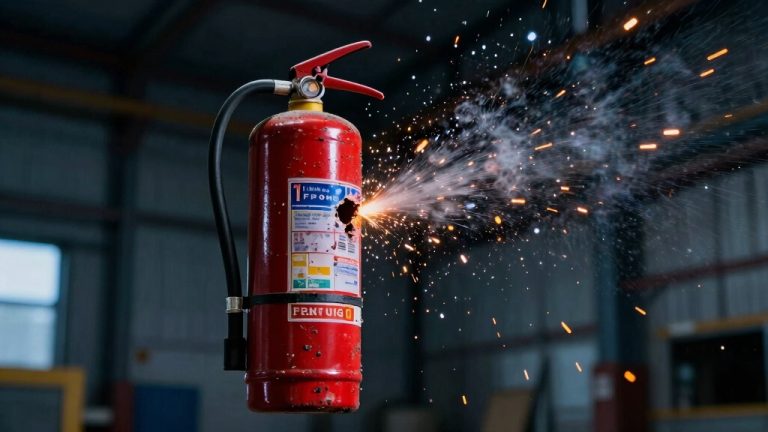
Dry chemical fire extinguishers are designed to quickly suppress fires by releasing a pressurized powder that smothers flames and interrupts the combustion process.
They coat fuel surfaces to block oxygen and chemically disrupt flame reactions, effectively fighting Class A, B, and C fires. You activate them by releasing nitrogen gas to disperse powder evenly over the fire’s base.
For safe and efficient use, understanding their specific chemical makeup and fire-class applications is essential. Explore further to grasp the full operational details.
Key Takeaways
- Dry chemical fire extinguishers release pressurized powder to smother flames and stop combustion rapidly.
- The powder coats fuel surfaces, cutting off oxygen and insulating materials to prevent fire spread.
- They chemically disrupt the combustion chain by scavenging free radicals like hydrogen and hydroxyl.
- Designed for multi-class fires, especially Class A, B, and C, without relying on water for suppression.
- Activation releases powder via high-pressure nitrogen, forming a cloud that blankets the fire’s fuel efficiently.
How do Dry Chemical Extinguishers Suppress Fires?
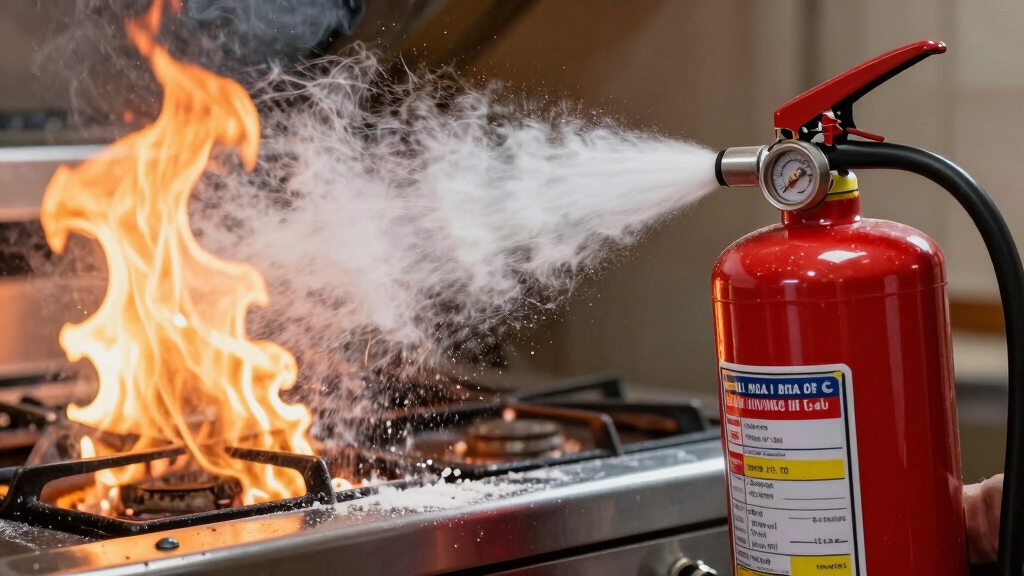
When you activate a dry chemical fire extinguisher, it immediately releases a pressurized powder that smothers the flames and halts combustion.
Activating a dry chemical extinguisher releases powder that swiftly smothers flames and stops combustion.
Opening a valve on the pressurized tank allows the powder to be expelled rapidly through nozzles by nitrogen or another inert gas.
This powder coats the fuel and flame surfaces, cutting off oxygen and disrupting the combustion chain reaction.
It scavenges free radicals like H and OH, which sustain the fire, thereby weakening flame propagation. The high discharge volume guarantees quick knockdown, minimizing fire spread and damage.
This method effectively suppresses Class A, B, and C fires without water, avoiding moisture-related damage. Activation can be manual or automatic, often linked to heat or smoke detectors, enabling rapid and reliable fire control.
Dry chemical systems are also valued for their minimal damage to electronic equipment and other assets compared to water-based systems.
Key Chemical Components and Their Roles
Understanding the chemical components in dry chemical fire extinguishers is crucial for grasping how they effectively combat various fire classes.
The primary active ingredient, monoammonium phosphate, constitutes 60-90% of ABC powders, disrupting combustion by coating fuels and interrupting chemical reactions. This powder separates fuel from oxygen and interrupts the chemical reaction of fire, enhancing its extinguishing capability.
This finely processed, siliconized powder guarantees free flow and effective application. Secondary components like ammonium sulfate and tricalcium phosphate enhance multi-class capability and physical stability.
Fillers such as barium sulfate and silica prevent clumping and improve powder flow, while polymer coatings increase moisture resistance and shelf life. BC-type powders rely on sodium or potassium bicarbonate, lacking Class A effectiveness.
These chemical formulations and coatings optimize powder cohesiveness, nozzle passage, and extinguishing efficiency. This ensures the extinguisher performs reliably across intended fire scenarios.
Types of Fires Suitable for Dry Chemical Extinguishers
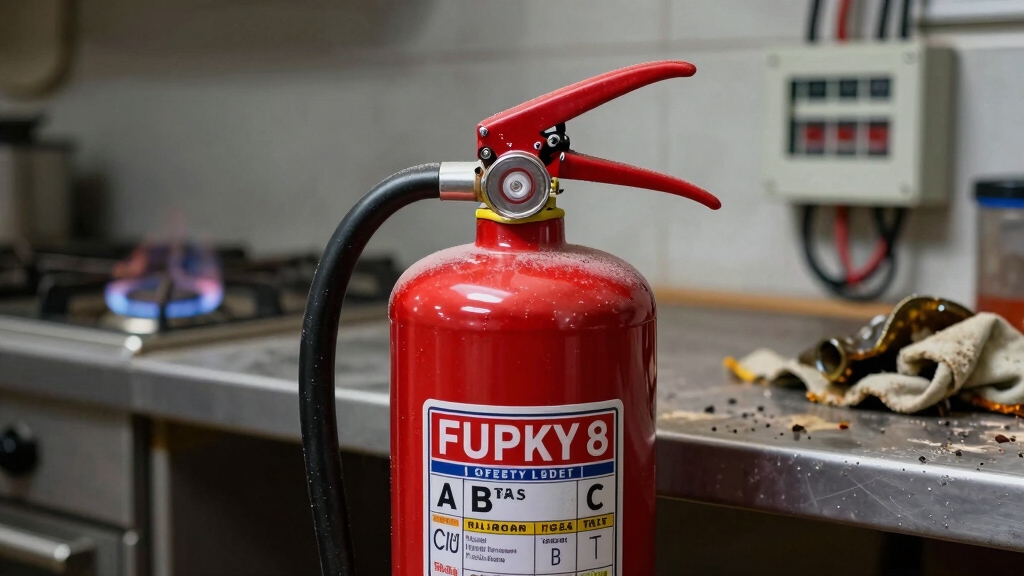
Since dry chemical fire extinguishers deploy powders that interrupt combustion and block oxygen, they effectively tackle multiple fire classes, including ordinary combustibles, flammable liquids, and energized electrical equipment.
Here’s what you should know:
- Class A Fires: Involve wood, paper, textiles; ABC powders smother and insulate to halt burning.
- Class B Fires: Include gasoline, oil, propane; powders like Purple-K cut oxygen and disrupt chemical reactions.
- Class C Fires: Electrical fires with energized equipment; non-conductive powders prevent electrocution while extinguishing. These extinguishers are often filled with foam and pressurized with nitrogen to ensure rapid deployment.
- Class D Fires: Combustible metals require specialized dry powders (e.g., sodium chloride-based), not typical dry chemical agents.
Understanding these categories helps you select the right extinguisher for your environment and fire risks, ensuring effective fire suppression.
Mechanism of Activation and Powder Dispersion
Knowing which fires dry chemical extinguishers can handle is only part of the equation; how they activate and disperse the extinguishing agent directly impacts their effectiveness.
When you remove the safety pin and squeeze the handle, the valve opens, releasing high-pressure nitrogen that propels the dry chemical powder through the nozzle. The valve controls release of the extinguishing agent to ensure safe and efficient operation.
Removing the safety pin and squeezing the handle releases nitrogen, propelling dry chemical powder through the nozzle.
In fixed systems, activation may be manual or electronic but follows the same principle.
The powder disperses rapidly, forming a cloud that blankets the fire’s fuel, interrupting combustion by separating oxygen and disrupting chemical reactions.
Nozzles assure even coverage to prevent reignition. The valve remains sealed under pressure until activation, assuring agent containment. Proper valve and nozzle function guarantee quick, controlled discharge and effective fire suppression.
Safety Tips and Best Practices for Use

Although dry chemical fire extinguishers are effective tools for specific fire classes, you must follow strict safety precautions to prevent health hazards and guarantee efficient use.
First, avoid inhaling the powder by maintaining an upwind position and ensuring proper ventilation. These extinguishers are particularly suitable for Class A, B, and C fires, including those involving flammable liquids and gases, making them versatile for varied fire risks multi-purpose use.
Proper placement and clear visibility of extinguishers enhance fire safety effectiveness. Second, always verify a clear escape route before attempting to extinguish the fire to allow rapid evacuation if conditions worsen.
Third, aim the nozzle at the fire base and apply a sweeping motion to extinguish evenly. Fourth, turn off electrical equipment if safe before use on electrical fires to avoid electrocution.
Additionally, wear protective gear if necessary, rinse immediately if exposed to chemicals, and ensure extinguishers are regularly maintained and certified. Following these practices ensures safety and maximizes extinguisher efficacy.
Frequently Asked Questions
How Long Does the Powder Residue From Dry Chemical Extinguishers Last?
The powder residue from dry chemical extinguishers can last on surfaces for several weeks or even indefinitely if you don’t clean it promptly. It won’t evaporate or dissipate naturally, so you’ll need to remove it physically.
Moisture exposure causes the residue to become corrosive, especially on metals, leading to damage over time. To prevent long-term contamination and corrosion, you should clean the residue thoroughly using appropriate methods soon after discharge.
Can Dry Chemical Extinguishers Be Reused After Discharge?
You might think once a dry chemical extinguisher goes off, it’s as useless as a deflated balloon. But you’re wrong.
You can reuse it, but only after a certified technician thoroughly inspects, cleans, recharges, and tests it. They’ll check pressure, integrity, and replace worn parts before refilling the exact agent.
If damaged or expired, it’s safer to replace it. Proper servicing guarantees it’ll work perfectly when you need it most.
What Maintenance Is Required for Dry Chemical Fire Extinguishers?
You need to perform monthly visual inspections checking for damage, corrosion, leaks, dents, and pressure gauge readings. Annually, a certified technician must conduct full maintenance, verifying mechanical integrity and operability.
Every six years, internal maintenance involves emptying, inspecting, and refilling the extinguisher. In conclusion, hydrostatic testing is required every 12 years to assess cylinder integrity.
Always rely on qualified professionals for servicing to guarantee compliance and operational readiness.
Are Dry Chemical Extinguishers Safe for Use in Food Preparation Areas?
You shouldn’t rely on dry chemical extinguishers in food prep areas because their powder residue is mildly corrosive and hard to clean, risking contamination. Studies show over 70% of kitchens avoid them to prevent equipment damage and food safety issues.
Instead, use CO2 or Class K extinguishers, which leave no harmful residue and are safer for cooking oil fires. Proper extinguisher choice and placement are critical to maintain hygiene and safety standards.
How Should Dry Chemical Powder Spills Be Cleaned Up Safely?
You should start by wearing PPE: dust mask or respirator, safety goggles, gloves, and long clothing to prevent irritation. Gently sweep the powder into a dustpan, avoiding dust clouds, or use a HEPA-filter vacuum.
Don’t use standard vacuums. Follow with wet wiping using damp cloths and mild detergents to neutralize residues. Ventilate the area well, inspect thoroughly, and dispose of collected powder as hazardous waste, following local regulations carefully.
Mastering Fire Safety: Knowledge That Puts You in Control
Now that you understand how dry chemical fire extinguishers expertly neutralize flames, you’re better equipped to handle unexpected heat with confidence. These devices quietly interrupt the fire’s chemistry, giving you a powerful edge against various fire classes.
Remember, using them correctly isn’t just smart; it’s essential for safety. Stay prepared, respect their capabilities, and you’ll turn potential chaos into controlled calm with just a simple squeeze.