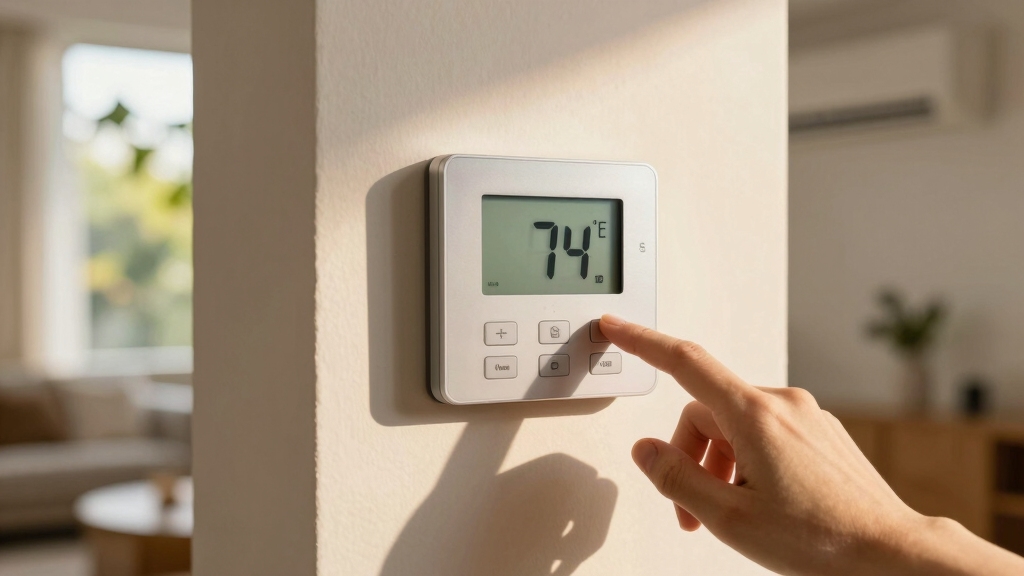

You should set your thermostat to around 78°F during summer for an ideal balance of comfort and energy savings. Each degree above can reduce cooling costs by about 3%. If you’re away, raise it to 85°F or higher to maximize savings.
Use ceiling fans to feel cooler without lowering the temperature and consider programmable settings to adjust automatically. Maintaining proper humidity and regular HVAC upkeep also boosts efficiency.
Explore these strategies further to enhance your home’s cooling performance and comfort.
Key Takeaways
- Set your thermostat around 78°F for optimal balance between comfort and energy savings during summer.
- Increase thermostat by 1–2°F gradually to acclimate to warmer indoor temperatures efficiently.
- Raise temperature to 85°F or higher when away to significantly reduce energy use and HVAC workload.
- Use ceiling fans to allow higher thermostat settings by simulating cooler conditions with improved air circulation.
- In hot, humid regions, keep thermostat between 74°F and 78°F to manage moisture and perceived heat effectively.
Recommended Thermostat Settings for Summer Comfort
When setting your thermostat for summer comfort, aiming for around 78°F during the day strikes an effective balance between cooling efficiency and indoor comfort. Depending on your regional climate and personal preference, you might opt for a slightly cooler range of 74°F to 76°F to enhance comfort.
If you’re home, setting the thermostat near 76°F can reduce energy use without compromising comfort. Using ceiling fans lets you raise the thermostat by up to 4°F while maintaining the same perceived coolness, thanks to increased air circulation.
Additionally, raising the temperature to 85°F or higher when away can significantly save energy and reduce utility bills due to decreased HVAC workload energy savings.
Gradually increasing the temperature by 1 to 2 degrees over time also helps you acclimate to warmer indoor conditions without discomfort. Your home’s insulation and your sensitivity to temperature will influence the ideal setting, so some trial adjustments may be necessary.
Energy Savings From Thermostat Adjustments
By optimizing your thermostat settings, you can achieve significant energy savings during the summer months. Research shows that increasing your thermostat setpoint by 1°F typically reduces cooling energy use by about 3%. A recent university study found that raising cooling setpoints by 2–3 degrees resulted in no decrease in occupant comfort perception.
Implementing programmable schedules that raise temperatures during absences or sleep can cut cooling energy consumption by 6% to 10%. Verified data from Massachusetts revealed average savings of nearly 20 kWh per thermostat over summer, with peak demand reductions accounting for 74% of savings.
Smart thermostats with adaptive learning optimize these adjustments further, saving families approximately $100 annually. Consistent temperature management not only lowers energy use but also reduces equipment wear.
Behavioral and Zoned Temperature Strategies
Dialing in behavioral and zoned temperature strategies can markedly enhance cooling efficiency and occupant comfort during the summer.
You can gradually raise thermostat settings by 1°F increments and use ceiling fans to simulate up to 4°F cooler conditions. Using ceiling fans strategically creates a wind-chill effect that allows you to increase thermostat settings without sacrificing comfort.
Zoned systems let you cool frequently used rooms to 74-76°F while keeping unused spaces above 80°F, reducing energy consumption. Smart thermostats with sensors automate these adjustments based on occupancy.
| Strategy Type | Key Action | Benefit |
|---|---|---|
| Behavioral | Incremental thermostat adjustments | Improved acclimation |
| Behavioral | Use of ceiling fans | Enhanced cooling effect |
| Zoned | Different setpoints per zone | Energy savings |
| Zoned | Smart thermostat automation | Occupancy-based efficiency |
| Behavioral + Zoned | Coordinated fan use and zoning | Maximize comfort and efficiency |
Regional and Climate Considerations
Adjusting thermostat settings effectively depends heavily on the regional climate and local environmental factors. In hot, humid regions like the southern U.S., set your thermostat between 74°F and 78°F to counteract moisture’s impact on perceived temperature.
In contrast, dry or milder climates tolerate higher settings, typically 78°F to 85°F, optimizing energy use without sacrificing comfort.
Coastal and urban microclimates may require localized adjustments. Areas with significant day-night temperature swings, such as deserts, benefit from cooler night settings near 67°F to leverage natural cooling. Using sleep mode on your thermostat can help gradually adjust temperature and fan speed overnight to maximize comfort and efficiency.
Smart thermostats calibrated to your climate can automate these variations for efficiency.
Additionally, managing humidity is critical. In humid zones, combine moderate cooling with dehumidifiers to avoid excessive AC strain and prevent condensation, maintaining both comfort and system longevity.
Best Practices for Health and Comfort
Consistently setting your thermostat around 78°F during summer optimizes both comfort and energy efficiency, as recommended by the U.S. Department of Energy.
This temperature balances indoor thermal comfort while reducing cooling costs approximately 3% per degree above 72°F.
At night, lowering the thermostat to between 72°F and 75°F improves sleep quality and comfort without excessive energy use. Using a ceiling fan with blades spinning counterclockwise in summer can create a cooler breeze and allow for higher thermostat settings.
Avoid setting temperatures below 66°F, which may cause discomfort or respiratory issues. Maintaining humidity below 60% is critical to prevent mold and allergic reactions.
Moderate, consistent indoor temperatures reduce heat-related health risks, particularly for vulnerable groups, and support cardiovascular and respiratory health.
Use programmable thermostats to maintain stable settings, minimizing large temperature swings that strain HVAC equipment and increase energy consumption.
Using Fans to Enhance Cooling Efficiency
When you pair ceiling fans with your thermostat settings, you unleash significant cooling efficiency gains that reduce both energy consumption and costs.
Using fans lets you raise your thermostat setpoint by about 4°F without sacrificing comfort, cutting cooling energy use by up to 11%.
Modern fans with DC motors consume just 15-30 watts, providing efficient airflow at 75 CFM per watt or more. Energy Star certified fans improve efficiency up to 44% over conventional models.
This enhanced air circulation increases convective heat transfer and skin evaporation, allowing indoor temperatures up to roughly 79°F to feel comfortable.
Integrating fans with thermostats can deliver median energy savings near 15% and compressor energy drops of 39% during cooling seasons.
To maximize benefits, run fans only when rooms are occupied and select medium speeds to balance comfort and efficiency. Avoid outdated or oversized models that waste energy.
Programmable and Smart Thermostat Benefits
Although many homeowners overlook them, programmable and smart thermostats offer substantial energy-saving benefits by optimizing HVAC operation according to occupancy and time of day.
Programmable thermostats can reduce heating and cooling energy use by 5% to 15% annually when correctly scheduled, potentially saving you $15 to $50 monthly. Programmable thermostats allow HVAC scheduling via manual setup or motion sensors to avoid heating or cooling unoccupied rooms.
Smart thermostats enhance this further, achieving 10% to 23% savings through adaptive learning and automatic adjustments that respond to your habits and home occupancy.
They eliminate manual programming errors and allow remote control via WiFi, increasing convenience and efficiency.
By minimizing unnecessary HVAC run times, these thermostats not only cut energy costs but also reduce system wear, potentially extending equipment lifespan. Proper use of these devices is essential to maximize their energy-saving potential.
HVAC System Efficiency and Maintenance Tips
Regular HVAC system maintenance plays a crucial role in maximizing efficiency and preventing costly breakdowns during the summer months.
Replace or clean your air filters every 1–3 months to maintain optimal airflow and reduce energy consumption.
Keep the outdoor condenser unit clear of debris and vegetation within a two-foot radius to guarantee proper heat transfer.
Inspect and seal ductwork leaks with foil tape or metal sealant to prevent cooled air loss, improving efficiency by up to 30%.
Test and calibrate thermostats, monitor refrigerant levels, and clean evaporator coils to sustain system performance.
Additionally, lubricate motors and bearings quarterly to avoid mechanical failure. Finally, schedule annual professional tune-ups to detect issues early and maintain peak operation, assuring your system runs efficiently throughout summer.
Balancing Humidity and Temperature for Comfort
Since maintaining both temperature and humidity directly affects indoor comfort and energy use, you should carefully balance these factors during summer.
Aim to set your thermostat around 78°F, as recommended by the DOE, while keeping indoor relative humidity between 30% and 50% to prevent mold and excessive moisture. Using AC with humidity control offers better indoor comfort during hot, humid months.
Proper placement of your thermostat can improve its accuracy and efficiency by aligning with the average line of sight. High humidity amplifies perceived heat, so controlling it with a dehumidifier or HVAC humidity settings lets you maintain comfort without lowering temperature excessively.
Use fans to enhance air circulation, and close window coverings during the day to reduce heat and humidity infiltration.
Monitor humidity levels with a hygrometer and adjust thermostat settings slightly upward during the day and lower at night, optimizing energy efficiency and comfort simultaneously. This integrated approach guarantees thermal comfort while minimizing energy consumption.
Frequently Asked Questions
How Does Thermostat Placement Affect Temperature Accuracy?
Thermostat placement directly impacts temperature accuracy because if you position it near heat sources, direct sunlight, or drafts, it will register false readings. This causes your system to cycle inefficiently, wasting energy and reducing comfort.
To guarantee precise measurements, place your thermostat on an interior wall, away from windows, appliances, and rarely used areas. Ideally, install it about five feet above the floor in a central, frequently used room for peak performance.
Can Thermostat Settings Impact Indoor Air Quality?
Yes, your thermostat settings directly impact indoor air quality (IAQ). By maintaining balanced temperature and humidity, you prevent mold growth and reduce airborne allergens.
Setting temperatures too high can increase volatile organic compounds (VOCs) and particulate matter, worsening IAQ. Utilizing smart thermostats helps optimize ventilation and air circulation, filtering pollutants effectively.
Accurate thermostat calibration and regular HVAC maintenance guarantee stable conditions, minimizing microbial proliferation and chemical pollutant release. This supports healthier indoor environments.
What Is the Effect of Thermostat Settings on Allergy Symptoms?
You’ll find that thermostat settings directly affect allergy symptoms. 22.4% of people with skin allergies report worsened symptoms during hot periods. High indoor temperatures increase allergen circulation, like dust mites and mold spores, especially with forced-air heating.
Keeping your thermostat cooler helps reduce these allergens’ activity and limits symptom flare-ups. Additionally, maintaining stable temperatures minimizes humidity fluctuations that can exacerbate nasal congestion and sneezing, improving your overall allergy management.
How Do Pets Influence Ideal Thermostat Settings in Summer?
Pets influence your ideal summer thermostat settings by requiring temperatures generally between 75°F and 78°F for comfort and safety.
You’ll need to adjust based on breed, size, age, and health. Thick-furred or elderly pets prefer cooler air, while smaller or young animals need warmth.
Avoid temperatures above 82°F to prevent heat stress. Use programmable thermostats to maintain consistent, pet-friendly indoor climates.
Ensure hydration and shaded resting areas complement temperature control effectively.
Are There Thermostat Settings Recommendations for Multi-Story Homes?
Think of your multi-story home as a layered cake that needs balanced temperatures. You should set the thermostat cooler upstairs: 78°F on the top floor, 79°F in the middle, and 80°F downstairs for three stories.
For two stories, keep upstairs at 78°F and downstairs at 80°F. This gradient counters heat rising, enhances comfort, and improves HVAC efficiency. Use fans to circulate air where thermostats aren’t installed for even cooling.
Find the Sweet Spot: The Ideal Summer Thermostat Setting
Setting your thermostat in summer is like tuning an instrument. Precision makes all the difference. Aim for around 78°F when you’re home to balance comfort and energy savings. Use fans to amplify cooling and consider programmable thermostats to fine-tune your environment effortlessly.
Don’t forget regular HVAC maintenance to keep your system humming efficiently. By adjusting settings thoughtfully, you’ll create a comfortable, cost-effective oasis, no matter the heat outside.