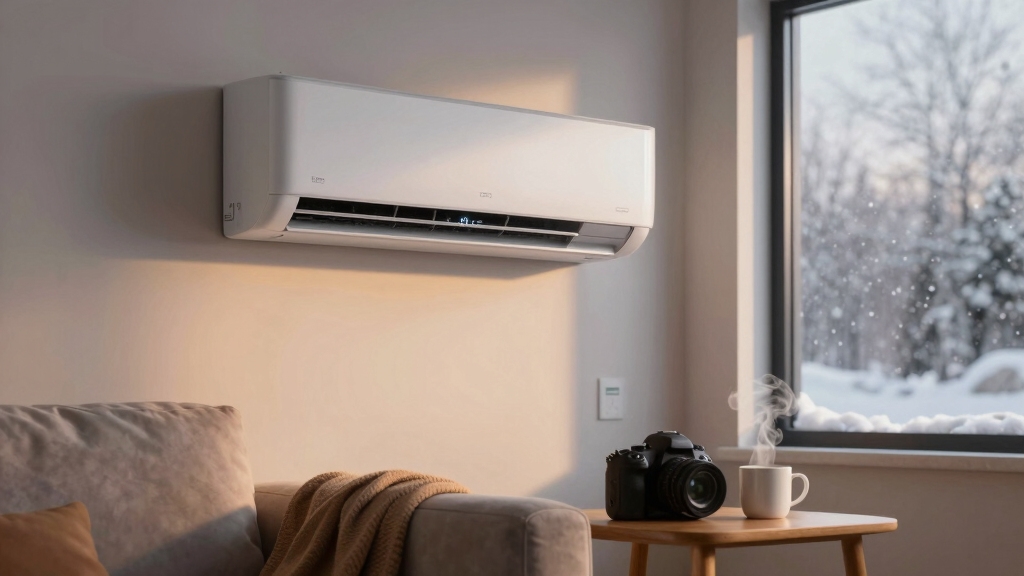

Set your air conditioner between 20ºC and 22ºC (68ºF–72ºF) in winter for ideal comfort and efficiency. Lowering the thermostat by 7–10ºF during absences or at night can save energy without risking frozen pipes.
Keep it above 60ºF to protect your system. Use programmable or smart thermostats to automate setbacks and maintain stable airflow for even heating. Adjust settings gradually by 1–2ºF for personal comfort.
Explore advanced tips to fine-tune your winter aircon setup effectively.
Key Takeaways
- Set aircon thermostat between 20ºC and 22ºC (68ºF–72ºF) for optimal winter comfort and energy efficiency.
- Lower temperature by 7–10ºF during absences or nighttime to save up to 10% on heating costs.
- Maintain minimum indoor temperature above 64.4ºF to protect health and prevent pipe freezing.
- Use programmable or smart thermostats for automated setbacks and remote temperature adjustments.
- Adjust temperature gradually in 1–2ºF increments to balance comfort, energy savings, and system efficiency.
Ideal Temperature Range for Winter Heating
Although individual preferences vary, setting your air conditioning thermostat between 20ºC and 22ºC (68°F) is widely recognized as the ideal range for winter heating.
Setting your thermostat between 20ºC and 22ºC ensures optimal comfort and efficiency during winter heating.
European guidelines and US experts like ENERGY STAR consistently recommend this range to balance warmth and energy efficiency. Maintaining 68°F prevents cold exposure without causing stuffiness or requiring extra layers. Using a programmable thermostat can further optimize energy use by adjusting temperatures based on occupancy and schedule.
This temperature minimizes heat loss through walls and windows, optimizing your system’s efficiency. While Australian advice leans slightly higher, starting at 22ºC to 24ºC, public buildings often limit heating to 19ºC for safety and regulation. These limits help to reduce greenhouse gas emissions and promote responsible energy use.
To protect health, indoor temperatures should never drop below 64.4°F. Adjustments of 1-2°F might suit your comfort, but staying within 20ºC to 22ºC guarantees stable, effective heating during colder months.
Balancing Comfort and Energy Efficiency
When you balance comfort with energy efficiency in winter heating, setting your thermostat around 68°F offers a best starting point.
This temperature effectively counters heat loss through building envelopes without causing overheating, aligning with ENERGY STAR guidelines for ideal comfort and cost savings. Many modern thermostats incorporate automatic activation features similar to dusk to dawn lighting that optimize energy use based on ambient conditions.
To enhance efficiency, lower the thermostat by 7-10°F during absences or nighttime to reduce heating expenses by up to 10%. Using a programmable thermostat can automate these temperature setbacks and make managing your home’s warmth effortless.
Utilize programmable thermostats to automate these setbacks and preheat before occupancy. Complement thermostat settings with home efficiency improvements like sealing drafts and upgrading insulation.
Avoid running the cooling compressor in winter to prevent wasted energy. Fine-tune settings in 1-2°F increments based on comfort needs. Employ behavioral measures such as layering clothing to maximize savings while maintaining adequate warmth.
Recommended Settings for Different Household Members
Since individual household members have varying thermal comfort and health requirements, you should tailor your air conditioning settings accordingly. For example, infants need warmer environments, so set thermostats up to 5°F higher and keep rooms above 64.4°F.
Use private heaters for closed spaces. This approach helps to balance safety needs while minimizing heating costs. Elderly members benefit from temperatures around 68-70°F, with layering recommended and zone heating for frequently used areas.
Ill or temperature-sensitive individuals require 68-70°F to avoid health strain and may need private heaters. Here are key recommendations:
- Set 68-70°F for general family comfort, lowering to 65°F during sleep.
- Increase up to 5°F for infants and ill members, maintaining minimum 64.4°F.
- Use zone heating to accommodate elderly and special needs areas efficiently.
Benefits of Using Programmable Thermostats
By programming your thermostat to adjust temperatures based on your daily routine, you can markedly reduce energy consumption and lower heating costs during winter.
The U.S. Department of Energy notes up to 10% savings by setting temperature setbacks of 7-10 degrees for 8 hours daily. This translates to average annual savings of $180, with ENERGY STAR smart thermostats providing an additional 8% reduction in bills.
Many programmable thermostats come with a one-time purchase cost but can offset this through energy savings over time.
Automated adjustments prevent unnecessary heating when you’re away, optimizing HVAC runtime and minimizing wear. This also extends HVAC system life by promoting efficient operation and reducing strain on your equipment.
Consistent temperature control improves comfort by eliminating fluctuations and allowing pre-warming before arrival.
Environmentally, this reduces your carbon footprint through decreased energy use. Advanced features like learning algorithms adapt to your habits, maximizing efficiency.
Properly programmed thermostats consequently offer cost-effective, comfortable, and sustainable temperature management throughout winter.
How Airflow Direction Affects Room Heating?
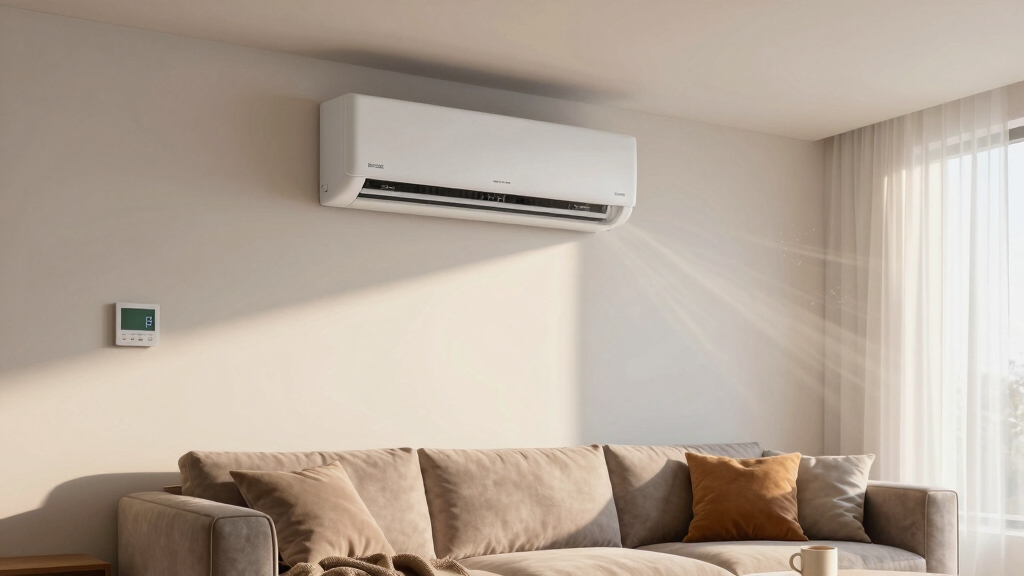
Optimizing your heating system’s performance involves more than setting the right temperature on your thermostat.
You need to adjust airflow direction to make certain warm air reaches all areas efficiently. Here’s how airflow impacts heating:
- Ceiling fans running clockwise pull cool air up and push warm air down gently. This avoids drafts and redistributes heat evenly. This seasonal fan setting helps maximize comfort and efficiency during winter months. Regular maintenance and inspection of airflow systems can prevent inefficiencies and improve energy consumption.
- AC vents should tilt louvers downward in heating mode to direct warm air toward the floor. This prevents heat loss upward and improves coverage.
- Mini-splits direct warm air upward, letting it settle naturally for uniform temperature without blowing directly on occupants.
Proper airflow reduces uneven heating, lowers energy consumption, and lessens equipment strain. This ensures faster, more consistent warmth throughout your room.
Nighttime Temperature Settings for Better Sleep
When you set your air conditioner for nighttime use, maintaining a bedroom temperature between 60 and 67°F (15-19°C) promotes ideal sleep quality. This range aligns with your core body temperature drop during sleep, optimizing circadian rhythm and sleep efficiency.
Avoid temperatures above 72°F as they disrupt sleep architecture. Sleeping in excessively warm rooms can lead to increased wakefulness and reduced slow-wave sleep, which is crucial for restorative rest, so keeping the temperature cool supports better sleep sleep efficiency.
Use appropriate bedding to stay comfortable without raising the thermostat.
| Temperature (°F) | Effect on Sleep | Recommended Action |
|---|---|---|
| 60 – 65 | Best for most adults | Set aircon here |
| 66 – 67 | Still effective, individual | Adjust per personal comfort |
| > 72 | Causes restless sleep | Avoid |
| < 60 | May cause discomfort | Add blankets instead |
Adjusting Temperature for When You’re Away
You should regularly lower your air conditioner temperature when you’re away to balance energy savings and home protection.
Setting your thermostat correctly prevents frozen pipes and reduces energy consumption. For shorter absences (8+ hours), lower the temperature by about 5°F from your usual setting. Proper maintenance of your HVAC system helps avoid premature failure during extreme temperature changes.
For longer trips, drop it 10°F or more, keeping it between 50-60°F depending on your region’s climate. In places like Burnsville, MN, experts recommend not setting the thermostat below 60 degrees during winter to avoid furnace issues.
Consider these key guidelines:
- Set 60-65°F if outdoor temps are below 30°F to avoid ice build-up in furnace exhaust.
- Use 50°F during extended vacations in cold climates to protect plumbing.
- Avoid turning the system off entirely to prevent pipe freezing and maintain home integrity.
Utilizing smart thermostats can simplify these adjustments remotely, ensuring optimal control and efficiency.
Tips to Maximize Heating Efficiency
Maintaining the right aircon temperature while away helps conserve energy, but maximizing heating efficiency at home requires additional steps.
First, replace or clean air filters monthly during peak heating to avoid airflow restriction and system strain. Using a high-efficiency pleated filter can trap more dust, allergens, and debris to keep your system running smoothly.
Seal drafts around windows, doors, and ductwork using weatherstripping and caulking to prevent heat loss. Proper sealing also helps maintain consistent airflow, which supports reliable system performance.
Optimize your thermostat by setting it between 68-70°F when home and lowering it 7-10°F at night, saving up to 3% energy per degree. Utilize ceiling fans on low, running them clockwise to push warm air downward and reduce HVAC runtime.
Finally, schedule annual HVAC inspections and clear outdoor units of debris to maintain system performance. These precise actions guarantee efficient heating, lower utility bills, and prolong equipment lifespan.
Using Technology to Optimize Winter Air Conditioning
By leveraging smart technology, you can markedly enhance your air conditioning system’s efficiency during winter months. Smart thermostats utilize geofencing and adaptive learning to tailor heating schedules, minimizing energy waste when you’re away.
Smart thermostats use geofencing and adaptive learning to customize heating, reducing energy waste when you’re not home.
These devices integrate seamlessly with your existing system, allowing remote adjustments via smartphone apps, so you can pre-warm your home efficiently. Lowering the thermostat by even one degree can save roughly 1% on heating costs.
Additionally, advanced sensors analyze environmental conditions to optimize temperature settings precisely. Key technological advantages include:
- Automated temperature control based on your location and habits, reducing unnecessary heating.
- Real-time energy monitoring and demand response programs that provide cost savings and billing credits.
- Integration with air quality and humidity sensors for all-encompassing climate management.
Implementing these technologies helps maintain ideal temperatures—typically 68°F when home and awake—while saving energy and lowering heating costs.
Frequently Asked Questions
Can Aircon Units Cause Dry Skin During Winter Heating?
Yes, your aircon unit can cause dry skin during winter heating.
Air conditioning and heat pumps reduce indoor humidity by removing moisture from the air, lowering it below healthy levels (30-50% RH).
This dry environment increases transepidermal water loss, weakening your skin barrier and causing flakiness, itching, and irritation.
To prevent this, you should use a humidifier and apply ceramide-rich moisturizers to maintain hydration and protect your skin’s integrity.
How Often Should Aircon Filters Be Cleaned in Winter?
You might think you only need to clean aircon filters occasionally, but in winter, you should check and clean them monthly.
The heater’s increased use means dust, pet hair, and debris accumulate faster, clogging filters and reducing airflow.
Neglecting this leads to longer runtimes, higher energy bills, and potential system strain.
Wash reusable filters with lukewarm water; replace disposable ones every 30 to 90 days, depending on usage and environment.
Is It Safe to Run Aircon Heating All Day Continuously?
You can run your aircon heating all day, but it’s not ideal.
Continuous operation strains components like compressors and motors, increasing wear and overheating risks.
Short cycling may occur, reducing system life.
To keep it safe and efficient, use built-in timers or set temperature breaks to allow cooling periods.
Regular maintenance, like filter cleaning and professional servicing, helps prevent failures and guarantees reliable, safe heating throughout the day.
Do Aircon Units Help Reduce Indoor Humidity in Winter?
Yes, your aircon unit can reduce indoor humidity in winter by removing moisture as air passes over its cold evaporator coil.
Even when cooling isn’t needed, variable-speed compressors run longer at lower speeds, enhancing dehumidification.
Maintaining indoor humidity between 30-50% prevents dryness issues. Using your AC alongside heating helps balance moisture effectively.
Just avoid continuous fan operation to prevent reintroducing condensate back into the air.
Can Using Aircon Heating Worsen Allergies or Asthma Symptoms?
Yes, using aircon heating can worsen your allergies or asthma symptoms if your HVAC system isn’t properly maintained.
Dust, mold, and allergens accumulate in ducts and circulate when heating activates, triggering respiratory irritation.
Poor filtration and moisture encourage mold growth, worsening asthma.
To reduce symptoms, regularly clean ducts, change filters, and use high-efficiency air cleaners.
Proper ventilation and maintenance prevent allergen recirculation and improve your indoor air quality.
Warm Smarter: Right Settings Make All the Difference
Setting your aircon to an ideal winter temperature is like tuning a finely crafted instrument. It guarantees comfort without wasting energy. By balancing warmth with efficiency, adjusting settings for different household members, and using programmable thermostats, you optimize your heating system’s performance.
Don’t forget to direct airflow properly and lower temperatures at night or when away. With these precise steps, you’ll maximize comfort and save on energy bills throughout the colder months.