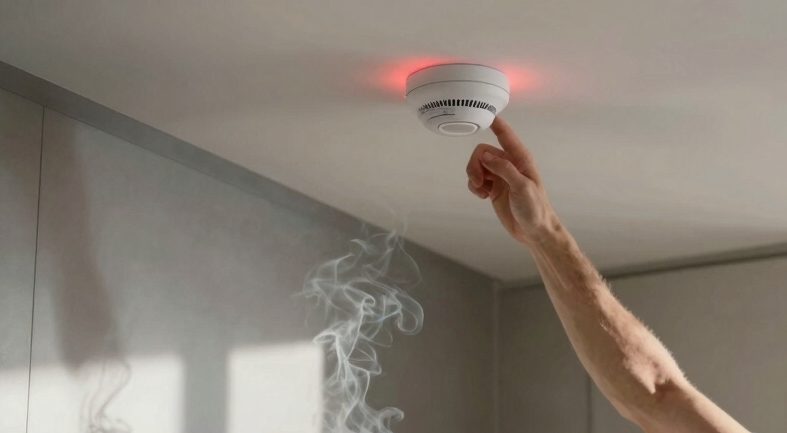

If your smoke detector keeps going off, first check for dust, steam, or cooking fumes triggering false alarms.
Clean the unit regularly, test it monthly, and replace batteries yearly or when low.
Avoid placing detectors near kitchens or bathrooms, and use the hush button to silence false alerts safely.
Persistent issues may mean the sensor’s faulty or the unit needs replacing every 10 years. Understanding these steps can help you regain control and keep your home safe.
Key Takeaways
- Press the silence or hush button to temporarily stop the alarm while ventilating the area to clear smoke, steam, or aerosols.
- Clean the detector regularly with a vacuum or compressed air to remove dust and debris causing false alarms.
- Replace batteries annually or immediately if low-battery warnings sound to prevent false activations.
- Relocate detectors away from kitchens, bathrooms, or heat sources to reduce environmental triggers.
- Replace the smoke detector every 10 years or sooner if false alarms persist or the unit fails testing.
Common Causes of False Smoke Alarms
Many false smoke alarms stem from faulty equipment and environmental factors you can often control.
Faulty equipment and controllable environmental factors are common causes of false smoke alarms.
Around 90% of false alarms arise from malfunctioning detectors or system problems.
Cooking smoke triggers 2.6% of activations, while steam from showers causes 3.7%.
Ionization detectors frequently react to cooking fumes, making them more prone to false alarms than photoelectric types.
Environmental triggers like smoke from fireplaces or aerosol sprays also set off alarms unnecessarily.
Additionally, improper placement near heat sources or high-traffic areas can cause frequent false activations.
Human errors like burnt food account for 50% of false alarms, and about 34% arise from fire alarm system faults.
Understanding these causes helps you identify why your smoke detector keeps going off and guides your next steps toward resolving it effectively.
Photoelectric smoke alarms are less likely to cause false alarms from cooking fumes or steam due to their light scattering detection method.
How to Maintain Your Smoke Detector to Prevent False Alarms?
Regularly maintaining your smoke detector markedly reduces the chance of false alarms and guarantees it functions properly when you need it most.
You should clean the detector routinely to remove dust and debris, which often cause erroneous alerts. Also, test the alarm monthly to make certain the sensor and battery work correctly.
Replace batteries annually or as soon as low battery warnings sound. Proper placement is essential; avoid installing detectors near kitchens, bathrooms, or heating sources to prevent environmental triggers.
Clean detectors with a soft brush or vacuum to prevent dust buildup. Test alarms monthly using the test button to confirm functionality.
Replace batteries yearly and after any false alarm to maintain reliability.
Stay proactive with maintenance to keep your smoke detector dependable and reduce nuisance alarms.
Using sealed 10-year lithium batteries can help reduce the frequency of battery replacements and prevent low-battery chirps.
How to Silence False Smoke Alarms Without Removing Batteries?
Occasionally, your smoke detector may sound a false alarm, but you don’t have to remove the batteries to stop the noise.
First, press the silence or hush button, designed to temporarily disable the alarm for 8-15 minutes while allowing the detector to remain operational.
This feature prevents the risk of disabling your safety device entirely. Next, ventilate the area by opening windows or using fans to clear any smoke, steam, or aerosols that might’ve triggered the alarm.
If the alarm persists, gently clean the detector with a vacuum or compressed air to remove dust or debris.
Avoid spraying aerosols near the unit and make certain it’s properly positioned away from kitchens and bathrooms to reduce false activations without compromising safety.
Regularly testing your alarm using the built-in test button ensures it functions properly and helps identify malfunctions early.
When to Replace Your Smoke Detector?
While silencing false alarms can provide immediate relief, understanding when to replace your smoke detector helps maintain long-term safety.
Smoke detectors don’t last forever, and worn-out units may fail when you need them most.
Typically, you should replace your detector every 10 years, but earlier replacement is necessary if you notice frequent false alarms or malfunctions.
Watch for these signs that indicate replacement:
Age over 10 years: Sensors degrade and lose sensitivity over time.
Frequent false alarms: Persistent false triggers often mean sensor failure or dust buildup.
Non-responsiveness: If the alarm doesn’t sound during testing, it’s time for a new unit.
Replacing your smoke detector promptly guarantees reliable protection and reduces the risk of undetected fires. It is also critical to maintain the backup battery to ensure the detector functions during power outages.
Why Does My Smoke Detector Keep Going Off for No Reason?
If your smoke detector keeps going off for no apparent reason, it’s usually signaling an underlying issue that needs your attention.
Common causes include dust buildup, low batteries, or faulty sensors. Ionization detectors often trigger false alarms from cooking smoke or aerosol sprays.
Environmental factors like steam from showers, fireplace smoke, or improper placement near heat sources can also cause frequent activations.
Additionally, system malfunctions account for about 34% of false alarms, so a thorough inspection is essential.
Regular maintenance, including cleaning and timely battery replacement, prevents most nuisance alarms.
Consider upgrading to smarter multi-sensor detectors with advanced algorithms; they reduce false alarms by detecting actual fire signatures more accurately.
Ignoring frequent false alarms risks safety since many disconnect their detectors, leaving you unprotected.
Using smoke detectors with sealed 10-year lithium batteries can help reduce maintenance and ensure consistent power supply, minimizing false alarms caused by low battery issues.
Frequently Asked Questions
Can Smart Smoke Alarms Connect to My Smartphone for Alerts?
Yes, smart smoke alarms can connect to your smartphone for alerts. They use Wi-Fi or Bluetooth to send real-time notifications about smoke, carbon monoxide, or false alarms directly to your device.
This feature lets you monitor your home’s safety remotely and respond quickly. Many models also offer app controls to silence alarms or check battery status. This provides greater control and peace of mind wherever you are.
How Do Multi-Sensor Detectors Differ From Standard Smoke Alarms?
Multi-sensor detectors combine smoke, heat, and carbon monoxide sensors, giving you more accurate fire detection than standard smoke alarms, which typically detect only smoke.
This reduces false alarms from cooking or steam, common in ionization alarms. You’ll get smarter detection that adapts to your environment, helping you catch real threats faster while avoiding nuisance alerts.
Choosing multi-sensors means better safety and fewer frustrating false alarms in your home.
Are There Specific Smoke Detectors Better for Kitchens?
You might think any smoke detector works in a kitchen, but ionization alarms often cause false triggers from cooking smoke.
Instead, you should choose photoelectric or multi-sensor detectors designed to reduce nuisance alarms. These detect smoldering fires better and ignore harmless cooking fumes.
Smart alarms with advanced algorithms also adapt to your kitchen’s environment, cutting false alarms while keeping you safe without constant interruptions.
What Environmental Factors Most Commonly Cause False Alarms?
You’ll find that steam from showers, cooking smoke, and burnt food are the top environmental triggers for false alarms.
Candles, fireplaces, and aerosol sprays also cause issues, especially with ionization detectors.
Placing detectors too close to heat sources or bathrooms increases false activations.
High electrical activity and heavy foot traffic can add to the problem, particularly during summer months.
Proper placement and the right detector type help minimize these false alarms.
Do Smoke Alarms Have a Warranty or Service Plan?
Think of your smoke alarm as a guardian with a warranty shield.
Most smoke alarms come with a 5 to 10-year warranty covering defects and malfunctions.
Some brands offer service plans or extended coverage for added peace of mind.
You should check your specific model’s manual or manufacturer website for details.
Keeping your alarm maintained guarantees this shield stays strong, protecting you from false alarms and failures alike.
Protect What Matters Most with a Working Smoke Detector
If your smoke detector keeps going off, check for common causes, clean it regularly, and silence false alarms properly. Don’t ignore the problem, don’t remove the batteries, and don’t delay replacing old units.
Staying proactive prevents unnecessary noise, guarantees your safety, and maintains peace of mind. Remember, a well-maintained smoke detector protects your home, safeguards your family, and saves lives.
Keep it clean, keep it functional, and keep it reliable.