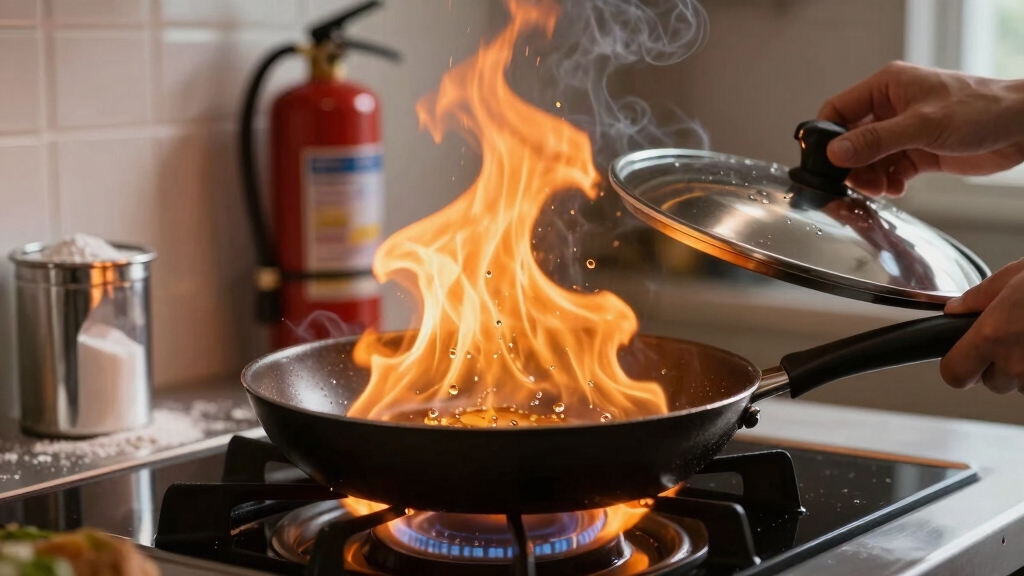

If you face a grease fire, don’t use water. It can spread flames dangerously.
Instead, turn off the heat and smother the fire quickly with a metal lid or baking sheet to cut off oxygen.
You can also toss a generous amount of baking soda or salt on small fires to suffocate them.
For larger fires, use a Class K extinguisher, aiming low and sweeping carefully.
Taking these steps can keep you safe and help you handle grease fires effectively, with deeper safety tips available.
Key Takeaways
- Smother flames with a metal lid or baking sheet to cut off oxygen and extinguish small grease fires safely.
- Use generous amounts of baking soda or salt to suffocate flames by displacing oxygen and absorbing heat.
- Never use water or flour on grease fires, as they cause dangerous splattering or worsen the fire.
- For larger fires, use a Class B or Class K fire extinguisher, following the PASS technique (Pull, Aim, Squeeze, Sweep).
- Always keep a clear exit and evacuate immediately if the fire grows beyond control or feels unsafe.
How to Safely Put Out a Grease Fire?
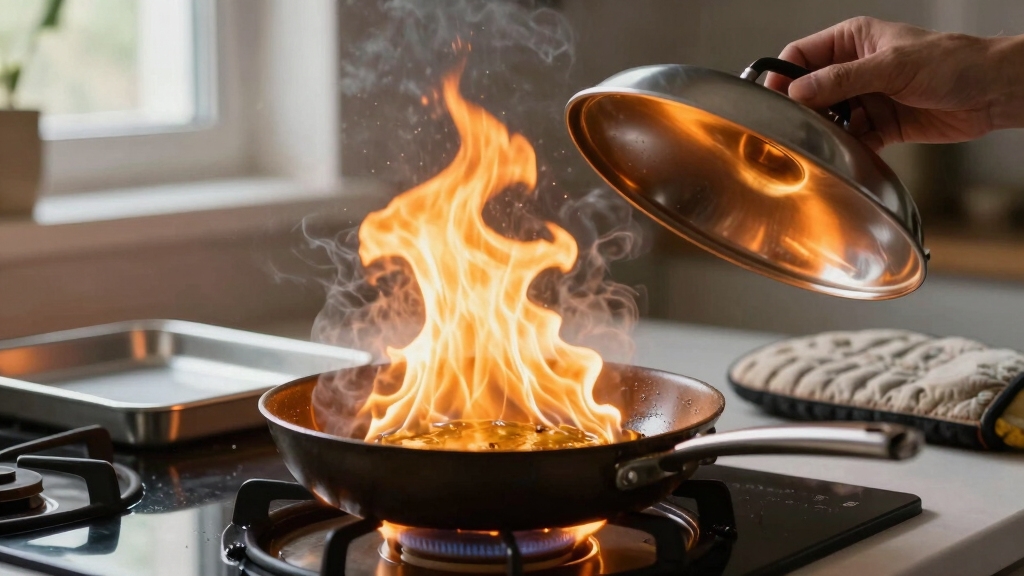
When faced with a grease fire, the first thing you should do is turn off the heat source if you can do so safely.
Next, slide a metal lid or a baking sheet over the pan to smother the flames and cut off oxygen.
Place a metal lid or baking sheet over the pan to quickly smother flames and cut off oxygen.
Avoid moving the pan, as hot oil can spill and spread the fire.
Never use water; it causes dangerous splattering and worsens the fire.
If the flames grow beyond control or you feel unsafe, evacuate immediately and call 911.
Keep in mind that smothering the fire is your best bet for small grease fires, so act quickly but cautiously.
Your priority is stopping the fire without risking injury or spreading it further.
Understanding that smothering works by cutting off oxygen helps ensure you apply the correct method safely.
Why Baking Soda and Salt Work on Grease Fires?
Although grease fires can spread rapidly, you can use common kitchen items like baking soda and salt to control small flames effectively.
Baking soda releases carbon dioxide when heated, which displaces oxygen around the fire, smothering the flames and stopping combustion.
Salt absorbs heat and helps suffocate the fire by blocking oxygen access. Both require generous amounts to work; a light dusting won’t cut it.
When using baking soda, aim carefully at the flames to avoid splashing hot oil, which could worsen the fire.
Salt works similarly but doesn’t release gas. Remember, these methods are only for small fires.
For anything larger or spreading, evacuate and call emergency services immediately. Knowing why these items work helps you respond quickly and safely during a grease fire.
Always position yourself with a clear exit behind you to ensure a quick escape in case the fire grows unexpectedly, a key part of fire extinguisher safety.
When and How to Use a Fire Extinguisher?
Small kitchen fires can often be controlled with baking soda or salt.
However, larger or spreading grease fires demand a more powerful response.
When you face such a fire, grab a Class B or Class K fire extinguisher immediately.
Remember the PASS method: Pull the pin to release it, Aim the nozzle at the fire’s base—not the flames, Squeeze the lever firmly, and Sweep side to side until the fire is out.
Keep a safe distance while extinguishing and avoid water-based extinguishers, which worsen grease fires.
If the fire grows or you feel unsafe, evacuate and call 911.
Having a proper extinguisher nearby and knowing how to use it can quickly stop a dangerous kitchen fire before it spreads.
Dry chemical extinguishers work by releasing pressurized powder that smothers flames and interrupts the combustion process.
What Not to Use on a Grease Fire?
Because grease fires behave differently from other fires, you must avoid using water or wet towels. These can cause the fire to spread rapidly by splattering burning oil.
Never use water or wet towels on grease fires—they spread burning oil and worsen the blaze.
Water instantly turns to steam, throwing burning oil droplets in every direction and worsening the blaze. Wet towels can flare up the flames or accidentally knock over the pan, spreading fire to other areas.
Don’t use flour or other powders either; they can ignite and make the fire uncontrollable. Ice or any frozen substance causes the same dangerous splattering as water.
Also, avoid glass lids as they can shatter under intense heat, risking injury and spreading flames. Stick to proven methods and never use anything that risks spreading the fire or causing injury.
For any fire involving gas lines, it is crucial to eliminate ignition sources immediately to prevent catastrophic explosions.
How to Prevent Grease Fires in Your Kitchen?
When you cook with oil, staying attentive is essential to preventing grease fires.
Never leave your kitchen unattended while heating oil, as it can quickly overheat and ignite. Use oils with high smoke points for high-temperature cooking to reduce the risk.
Always turn pot handles inward to avoid accidental spills. Keep your cooking surfaces clean to prevent grease buildup, which can easily catch fire.
Store a metal lid or a Class K fire extinguisher nearby for emergencies. Avoid overcrowding pans, which causes oil to splatter.
Regularly inspect and maintain your kitchen appliances to prevent grease accumulation. By following these steps, you minimize fire hazards and keep your kitchen safe, ensuring a secure cooking environment every time you use oil.
Note that sprinklers activate only when exposed to heat, not smoke, so early fire detection relies on smoke detectors rather than sprinklers.
Frequently Asked Questions
Can Grease Fires Occur With Other Cooking Oils Besides Vegetable Oil?
Yes, grease fires can happen with any cooking oil, not just vegetable oil. Oils like canola, olive, peanut, and even butter can ignite if they overheat and reach their smoke point.
You need to stay attentive when cooking with any oil. Once it gets too hot, it can catch fire quickly.
Always monitor your cooking temperature and keep safety tools nearby to handle unexpected grease fires effectively.
How Long Does It Take for Oil to Reach Its Ignition Point?
It usually takes just a few minutes for oil to reach its ignition point once it passes its smoke point, especially on high heat.
You need to watch closely because overheating can happen quickly, causing the oil to catch fire.
Different oils have varying ignition points, but staying attentive and controlling your heat will help you avoid dangerous flare-ups.
Never leave hot oil unattended to prevent grease fires.
Are There Specific Types of Metal Lids Best for Smothering Fires?
Imagine grabbing a flimsy, rusty lid that bends like paper. It won’t stop a fire, just invite disaster.
You want a sturdy, flat metal lid, like stainless steel or heavy-duty aluminum, that fits snugly over your pan. These metals don’t shatter or warp under heat, effectively cutting oxygen and smothering flames.
Avoid glass lids. They might look nice but can explode from the heat, turning your fire fight into chaos.
Can Grease Fires Start in Deep Fryers or Only on Stovetops?
Grease fires can absolutely start in deep fryers as well as on stovetops. Anytime oil overheats and reaches its ignition point, a fire can ignite, whether it’s in a pot, pan, or fryer.
You need to monitor the temperature closely and never leave frying oil unattended. Deep fryers often use large amounts of oil, increasing the risk.
Stay alert, keep a metal lid or extinguisher nearby, and always follow safety precautions.
Is It Safe to Reuse Oil After a Small Grease Fire Incident?
You shouldn’t reuse oil after a grease fire, even if it seems small.
The heat and flames degrade the oil’s quality, making it unsafe and potentially harmful when reheated.
Contaminants and residues from the fire can alter flavor and release toxins.
Always dispose of the burned oil properly and start fresh to guarantee safety and maintain the quality of your cooking.
Don’t risk using compromised oil.
Stay Ready, Stay Safe: Mastering Grease Fire Control
Remember, tackling a grease fire is like stopping a small spark before it becomes a wildfire.
Just last year, a study found that kitchens with baking soda nearby reduced fire damage by 40%.
So keep baking soda or salt close, avoid water, and know your extinguisher’s P-class rating.
By staying prepared and acting fast, you’re not just putting out flames; you’re protecting your home and loved ones.
Stay safe, and keep grease fires under control.