
You need fire drills because they train you to evacuate quickly and safely, preventing panic and injuries.
Drills expose hidden hazards like blocked exits and faulty alarms, helping you fix problems before a real emergency.
Regular practice builds muscle memory, boosts confidence, and guarantees roles and communication are clear.
They also keep your workplace compliant with safety regulations and improve alarm system reliability.
Keep exploring this topic to understand how drills enhance overall emergency preparedness.
Key Takeaways
- Fire drills improve evacuation speed and coordination, reducing injuries and saving lives during emergencies.
- Regular drills build muscle memory and confidence for calm, decisive responses under stress.
- They identify safety gaps like blocked exits and faulty alarms for timely corrective actions.
- Fire drills ensure compliance with safety regulations and document emergency preparedness efforts.
- Drills test alarm systems and emergency notifications, verifying system reliability and effectiveness.
What Happens During a Fire Drill in the Workplace?
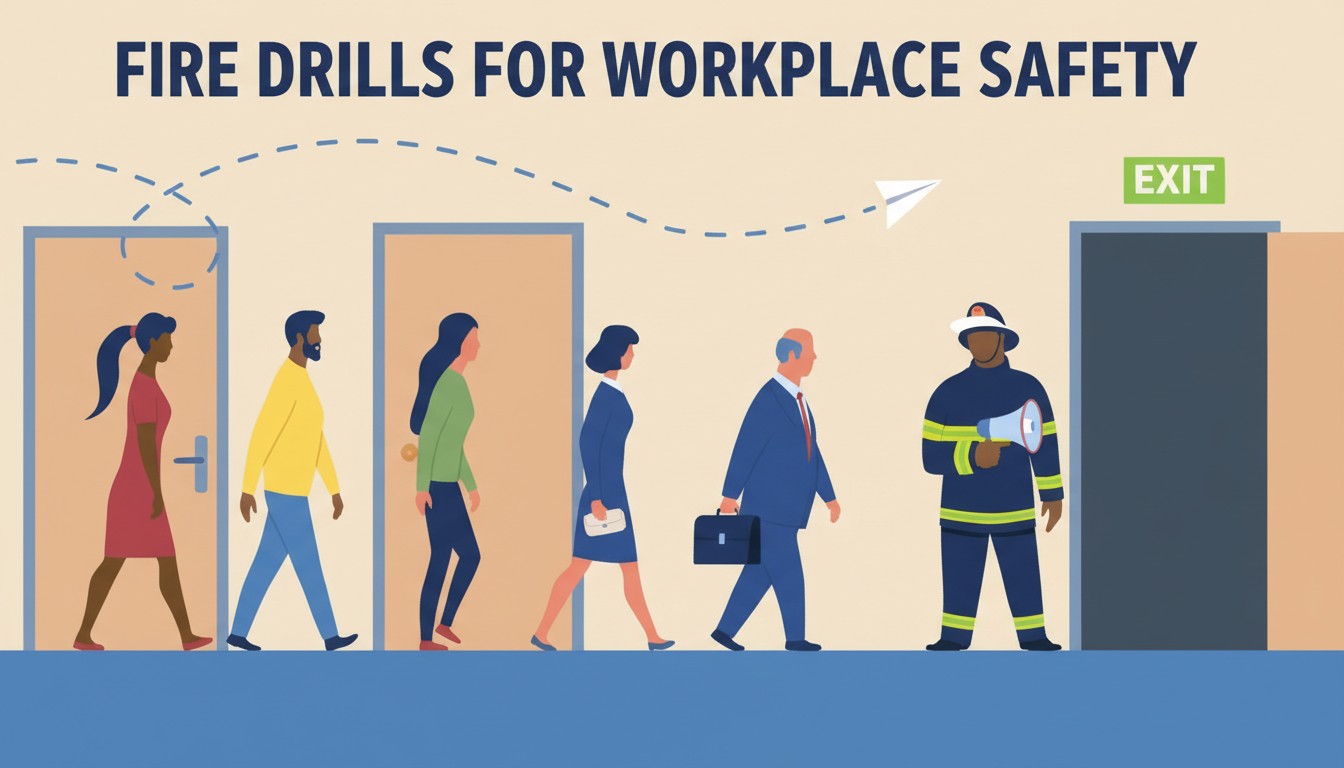
During a fire drill in the workplace, you’ll experience a carefully coordinated process designed to simulate an emergency evacuation.
When the alarm sounds, you’ll immediately stop what you’re doing and follow designated escape routes to the nearest exit.
At the alarm, promptly cease activities and proceed along marked escape paths to the closest exit.
Safety wardens will guide you, ensuring everyone moves swiftly and calmly. You’ll gather at pre-assigned assembly points for headcounts and further instructions.
The drill tests fire detection systems, alarm functionality, and evacuation procedures, revealing potential issues.
Observers record timing and behavior to evaluate efficiency and compliance. This hands-on practice reinforces your understanding of escape routes, emergency roles, and safety protocols.
By participating actively, you help identify hazards and improve overall preparedness without disrupting daily operations.
This structured exercise is essential for your safety and the workplace’s emergency readiness.
It also ensures that audible alarms, strobes, and voice evacuation messages activate properly to alert all occupants during an actual emergency.
How Fire Drills Save Lives and Reduce Injuries?
Participating in regular fire drills sharpens your ability to evacuate quickly and safely, directly reducing the risk of injuries and fatalities during real emergencies.
By practicing evacuation routes and emergency procedures, you develop muscle memory that helps you respond calmly and decisively when a fire occurs.
Fire drills also guarantee you know exactly where to find exits, assembly points, and firefighting equipment, minimizing confusion and delays.
This preparedness prevents panic, which often leads to accidents and injuries in chaotic situations.
Additionally, drills help you identify hazards like blocked exits or malfunctioning alarms before a real emergency strikes.
Ultimately, these rehearsals save lives by promoting swift, organized evacuations and reducing exposure to smoke and flames, making your workplace safer for everyone.
Ensuring that your fire alarm system is properly maintained and understood, especially knowing whether it is a monitored system, further enhances workplace safety during emergencies.
How Fire Drills Help Identify and Fix Safety Gaps?
When you conduct regular fire drills, you reveal hidden safety gaps that might otherwise go unnoticed until an emergency occurs.
Regular fire drills uncover hidden safety gaps before emergencies arise, enhancing preparedness and protection.
These drills expose issues like blocked escape routes, malfunctioning alarms, or unclear evacuation instructions.
You’ll spot areas where staff hesitate or get confused, signaling a need for clearer communication or additional training.
Observing drills closely lets you identify faulty equipment or poorly marked exits, so you can fix them promptly.
Addressing these gaps reduces risks, ensuring everyone can evacuate safely and quickly during a real fire.
Documenting findings from each drill helps you track improvements and maintain compliance with safety regulations.
Regular fire drills also reinforce understanding of the fire triangle, enabling staff to act confidently and safely in real fire situations.
Why Regular Fire Drills Boost Emergency Readiness and Safety?
Running fire drills regularly really helps boost evacuation speed and coordination. Each time you practice, everyone gets a clearer idea of where to go and what actions to take. It’s all about making sure everyone feels confident in an emergency.
Plus, these drills can uncover hidden safety issues. You might find blocked exits or unclear routes that you didn’t even notice before. Addressing these problems ahead of time is crucial for safety.
And let’s not forget, this ongoing practice really sharpens your team’s response skills. It’s a great way to keep your workplace safer overall.
So, the more you drill, the more prepared everyone becomes! Ensuring that everyone knows how to use a fire extinguisher properly with the PASS method can further enhance workplace safety during emergencies.
Enhancing Evacuation Efficiency
Although emergencies strike without warning, regular fire drills guarantee you and your team can evacuate swiftly and safely.
By practicing evacuation routes frequently, you’ll minimize confusion and hesitation during a real fire, ensuring every second counts.
Drills help you familiarize yourself with exit paths, emergency exits, and designated assembly points, so no one wastes time searching or backtracking.
You’ll develop muscle memory that speeds up movement and coordination under stress.
Fire drills also reinforce communication protocols, allowing you to clearly hear instructions and assist others efficiently.
Regular practice uncovers potential bottlenecks in evacuation flow, letting you address them proactively.
Ultimately, these rehearsals sharpen your instincts and build confidence, enhancing overall emergency readiness and markedly reducing risks during actual evacuations.
Integrating automatic triggers into safety protocols can further enhance emergency response efficiency and reliability.
Identifying Safety Weaknesses
Regular fire drills reveal critical safety weaknesses that often go unnoticed until an emergency strikes. By running drills, you identify blocked exits, malfunctioning alarms, or confusing evacuation routes before a real fire happens. This proactive approach lets you fix problems, improving overall safety and compliance with regulations.
Here’s how fire drills help you spot weaknesses:
| Safety Weakness | Drill Benefit |
|---|---|
| Blocked or locked exits | Guarantees clear, accessible escape routes |
| Alarm system failures | Confirms alarms function properly |
| Evacuation confusion | Highlights need for better signage or training |
Detecting these issues early during drills protects employees and minimizes risks. This makes your workplace safer and more prepared. Regular testing and maintenance of fire alarms, including cleaning and resetting, are essential to ensure alarms function reliably and prevent false alerts, which can be a distraction during emergencies fire alarm maintenance.
How Fire Drills Help You Meet OSHA Rules?
When workplace fire drills are conducted consistently, they play an essential role in helping you meet OSHA requirements for fire safety.
OSHA mandates written emergency action plans, hazard identification, and employee training, all of which fire drills support directly.
By running regular drills, you guarantee that employees understand evacuation routes, alarm signals, and their roles during emergencies, fulfilling OSHA’s training and preparedness standards.
Documenting these drills also demonstrates your commitment to continuous improvement in safety protocols, which OSHA values during inspections.
Additionally, frequent drills help you identify and correct issues with escape routes or procedures, guaranteeing compliance and reducing liability risks.
In short, consistent fire drills not only protect your employees but also keep your workplace aligned with federal safety regulations.
Integrating a central fire alarm system can further enhance workplace safety by providing automated emergency notification and faster response times during incidents.
How Fire Drills Foster Teamwork and Responsibility?
Fire drills bring your team together by clearly defining roles and responsibilities during emergencies. This ensures everyone knows exactly what to do and who to rely on.
When you participate regularly, you build trust and coordination, critical for fast, safe evacuations. Each person understands their duties, from fire wardens guiding others to employees staying calm and following procedures. This strengthens accountability and cooperation.
Regular practice also helps identify hazards like reduced daylight and ensures your team is prepared for fall season challenges.
| Role | Responsibility | Key Outcome |
|---|---|---|
| Fire Warden | Lead evacuation, check areas | Clear, safe exit routes |
| Employees | Follow directions promptly | Efficient, orderly exit |
| Supervisors | Monitor compliance | Ensure full participation |
| Safety Officer | Evaluate drill effectiveness | Improve future drills |
This teamwork boosts your workplace’s readiness. It reduces confusion and enhances safety during real incidents.
Best Practices for Scheduling and Running Fire Drills
Building on the teamwork and clarity developed through drills, you can maximize their impact by carefully planning when and how they take place. Schedule fire drills quarterly to maintain readiness and comply with safety standards.
Vary drill times to cover different shifts, ensuring everyone experiences realistic scenarios. Communicate drill schedules in advance but keep specific details confidential to simulate genuine emergencies.
During drills, assign clear roles, including fire wardens and observers who document performance and identify issues. After each drill, conduct thorough debriefings to review evacuation times, route effectiveness, and communication.
Use this feedback to improve procedures and training. By consistently applying these best practices, you’ll enhance preparedness, minimize risks, and foster a safer workplace environment that meets regulatory and safety expectations. Integrating smoke detectors with fire drills can enhance early warning and improve overall safety outcomes.
Frequently Asked Questions
How Often Should Fire Safety Training Be Refreshed for Employees?
You should refresh fire safety training for employees at least annually, with quarterly updates recommended to maintain readiness.
Monthly fire drills help keep everyone familiar with evacuation routes and procedures. Specialized training for fire wardens should occur more frequently.
If your workplace faces higher risks or after any incident, increase training frequency. Staying consistent guarantees compliance, improves response times, and helps prevent injuries and property damage.
What Percentage of Workplace Fires Are Caused by Electrical Issues?
About 25% of workplace fires are caused by electrical issues, meaning one in four fires stems from electrical faults.
You need to be especially vigilant about electrical hazards. Recognizing and addressing them early can prevent many fires.
Regular training and inspections help you spot and mitigate these risks, reducing fire incidents substantially.
Keeping electrical systems safe is a vital part of your overall fire prevention efforts.
How Do Fire Drills Impact Insurance and Repair Costs?
Fire drills help you reduce insurance premiums and repair costs by demonstrating proactive risk management to insurers.
When you conduct regular drills, you identify hazards early, preventing larger fires and extensive damage. This readiness lowers the likelihood of costly claims.
Additionally, insurers often offer discounts for workplaces with documented fire safety programs.
What Specialized Training Do Fire Wardens Require Beyond Regular Drills?
It’s no coincidence that fire wardens receive more specialized training beyond regular drills. You’ll get advanced instruction in hazard identification, extinguisher techniques, and leadership during evacuations.
You’ll also learn to conduct detailed safety inspections, coordinate communication with emergency services, and manage post-incident reports. This extra training guarantees you’re prepared to take charge effectively, minimizing risks and protecting everyone when seconds count in an emergency.
How Are Fire Detection Systems Maintained for Compliance?
You maintain fire detection systems for compliance by testing them monthly and servicing them annually.
Regular inspections ensure detectors, alarms, and control panels work flawlessly.
You document every test and maintenance action to meet OSHA and local fire codes.
Promptly replace faulty components and update system software if needed.
Staying proactive with these tasks keeps your workplace compliant, reduces risks, and guarantees early fire detection to protect lives and property.
Stronger Response Through Smarter Drill
When a fire alarm sounds, your swift, practiced response can mean the difference between chaos and safety.
Fire drills aren’t just routine; they’re your lifeline, revealing hidden risks and sharpening your readiness.
By regularly running drills, you build muscle memory, teamwork, and confidence, ensuring you act decisively if flames threaten.
Think of drills as your safety net, carefully woven to catch every gap and protect every life when it matters most.