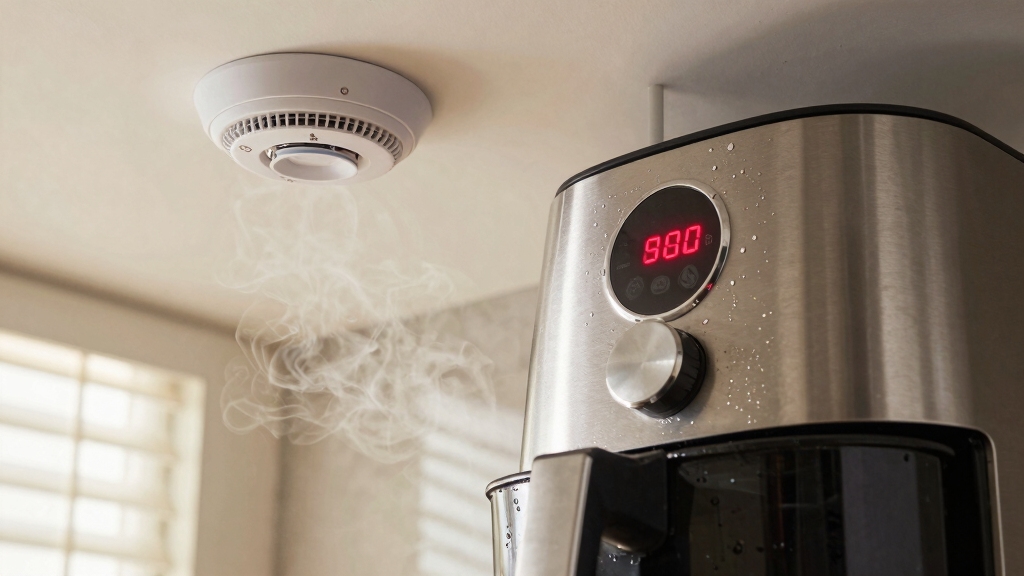

You can set off a smoke alarm using an air fryer, especially if you cook high-fat foods or use too much oil.
Fat dripping onto hot elements creates smoke and fine particles that sensitive photoelectric alarms quickly detect.
Poor ventilation and small kitchens worsen this by concentrating these particles faster. Regular cleaning and choosing the right oil help reduce smoke risks.
Managing grease wisely also prevents false alarms. Keep these factors in mind to avoid unexpected triggers and explore how to minimize them further.
Key Takeaways
- High-fat foods and excess oil in air fryers produce smoke and fine particles that can trigger sensitive photoelectric smoke alarms.
- Dripping grease onto heating elements causes visible white smoke, often mistaken for malfunction but it can set off alarms.
- Poor ventilation in small kitchens concentrates smoke and particles, increasing the likelihood of alarm activation during air frying.
- Regular cleaning of residue and controlled oil use reduce smoke production and help prevent false alarms from air fryer cooking.
- Using high smoke point oils and placing bread to catch grease can minimize smoke, lowering the chance of triggering smoke alarms.
How Air Fryers Trigger Smoke Alarms?
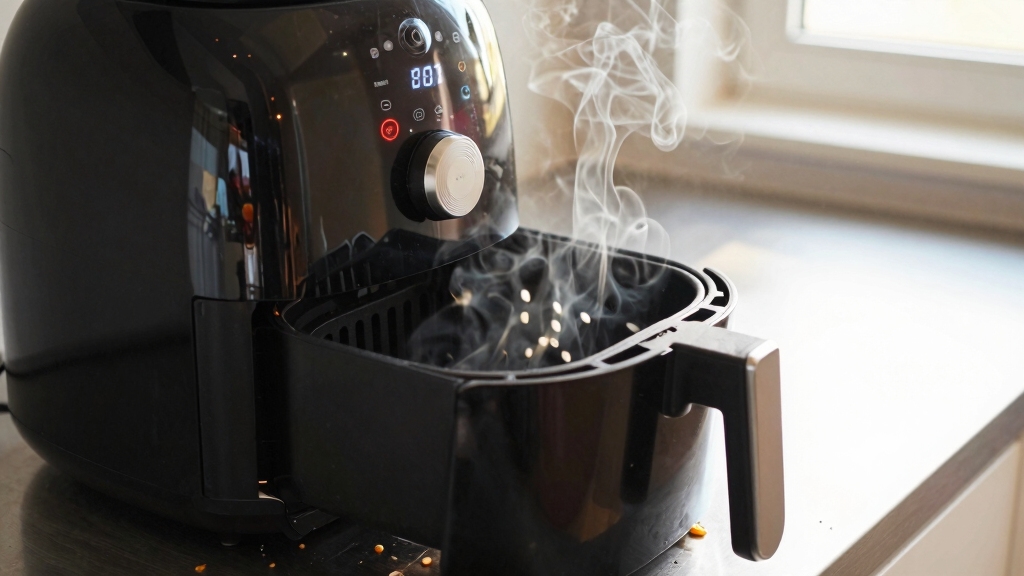
When you use an air fryer, it can set off smoke alarms primarily because of the fine particles and volatile compounds released during cooking.
These tiny particles, especially PM2.5, easily activate photoelectric smoke alarms, which are sensitive to suspended particles. The volatile organic compounds (VOCs) emitted during cooking lower the threshold for alarm activation, making it easier for your smoke detector to respond.
Often, white smoke you see isn’t a sign of malfunction but fat burning caused by grease dripping onto heating elements.
If you notice frequent alarms, it’s a sign to check for residue buildup.
Carbonized layers on heating surfaces release burnt particles at high temperatures.
Being cautious with cleaning and monitoring cooking conditions helps minimize these triggers.
Additionally, residue buildup on smoke detectors from repeated exposure to cooking particles can degrade sensor sensitivity and increase false alarms.
Why High-Fat Foods Cause More Smoke?
Grease dripping onto heating elements markedly increases smoke production during air frying, especially with high-fat foods. When you cook ingredients containing over 15% fat, the excess grease can burn at high temperatures, releasing fine particles and volatile organic compounds (VOCs).
These particles raise smoke levels considerably, often exceeding safe indoor air quality standards. You should be cautious when air frying fatty foods because the combination of burning grease and VOCs heightens the chance of visible white smoke, which signals fat combustion rather than device malfunction.
This smoke can trigger sensitive photoelectric alarms due to suspended particles. To reduce smoke, consider limiting fat content and managing oil use carefully. Understanding how high-fat foods contribute allows you to better control smoke production and prevent alarm activation. Using a Class K extinguisher is essential for safely managing fires related to cooking oils and fats. #air-fryer #smoke-alarm
How Grease Dripping Triggers Smoke Alarms?
When grease drips onto the heating elements of your air fryer, things can get a little heated—literally! That grease can reach combustion temperatures pretty quickly, and before you know it, you’ve got smoke that sets off those sensitive smoke alarms. It’s a bit of a domino effect, really.
So, what’s happening here? Well, when that fat burns, it releases fine particles and volatile compounds. These are the things that photoelectric alarms are designed to pick up, even at low levels. It’s kind of impressive, but also a bit annoying if you’re just trying to cook dinner!
To avoid this smoky situation, managing grease buildup is crucial. Keeping an eye on the fat content in your meals can really help, too. A little prevention goes a long way in keeping your cooking stress-free! Always remember to keep baking soda nearby as it can help you quickly smother small grease fires if needed.
Grease Drip Causes
Dripping fat from your food onto the air fryer’s heating elements often sparks the white smoke that sets off smoke alarms.
When grease accumulates on these hot surfaces, it rapidly heats and produces visible smoke, which photoelectric alarms detect as a fire hazard.
This happens especially if your food has high fat content or if you use excess oil.
Residue buildup from previous cooking sessions worsens the problem, as carbonized grease ignites more easily.
To prevent this, monitor oil amounts carefully and clean your fryer regularly, wiping inner walls after each use and deep cleaning heating elements weekly.
Using high smoke point oils and placing absorbent materials like bread in the basket can also reduce dripping.
Managing grease effectively minimizes smoke and avoids unnecessary alarm triggers.
Additionally, the rapid heat absorption and evaporation of grease contribute to smoke production through heat absorption and evaporation processes.
Fat Combustion Effects
Understanding how fat combustion contributes to smoke alarm activation helps you better manage air fryer use.
When grease drips onto the heating elements, it heats beyond its smoke point and begins to burn, releasing white smoke and fine particles.
These particles, known as PM2.5, can reach concentrations eight times higher than safe levels, triggering sensitive photoelectric alarms.
The volatile organic compounds released alongside these particles further lower the threshold for alarm activation.
To reduce fat combustion, control oil amounts and choose oils with high smoke points.
Also, avoid food residue buildup on heating parts, as accumulated grease burns more readily.
Additionally, placing smoke alarms away from humid areas like kitchens can help prevent false alarms caused by moisture and steam.
Smoke Alarm Sensitivity
Frequently, grease dripping onto an air fryer’s heating elements causes smoke alarms to activate. As the grease burns, it releases fine particles and volatile organic compounds (VOCs) that photoelectric smoke alarms detect with high sensitivity.
These suspended particles reduce the smoke trigger threshold, making alarms respond quickly even to small amounts of smoke. You should know that white smoke typically signals fat burning, not a malfunction.
To prevent false alarms, control oil use, select oils with high smoke points, and clean your air fryer regularly to avoid carbon buildup. This buildup increases smoke production.
Also, ensure proper ventilation since enclosed spaces amplify particle concentration, triggering alarms faster. Being cautious about these factors helps you enjoy air frying without setting off your smoke alarm unnecessarily.
#air-fryer #smoke-alarm
How Choosing the Right Oil Prevents Smoke?
If you want to keep your smoke alarms quiet, it’s all about picking the right oils. Oils with high smoke points are your best bet, especially when they match the food you’re cooking.
You know how some oils have lower fat content? Well, those can help too! They tend to burn less, which means less smoke in your kitchen.
And remember, it’s all about the food you’re preparing. Take a moment to think about what you’re cooking, and then choose the oil that fits best. This way, you can really minimize the risk of smoke. Happy cooking!
Also, cooking fumes like smoke from sizzling oil can trigger photoelectric detectors, so minimizing smoke is key to avoiding false alarms.
Oil Smoke Point
Choosing the right oil with a high smoke point plays a crucial role in preventing smoke during air frying. When oil reaches its smoke point, it begins to break down and emit visible smoke, which can trigger your smoke alarm.
Oils like avocado, refined olive, and peanut oil have higher smoke points, making them safer for air frying at typical temperatures. Avoid oils with low smoke points, such as unrefined walnut or flaxseed oil, as they burn easily.
Since grease dripping onto heating elements causes white smoke, selecting an appropriate oil reduces this risk. You should also consider the type of food; use spray oils for starches and high smoke point oils for meats.
Carefully choosing your oil helps maintain a smoke-free cooking environment and prevents unnecessary alarm triggers. Prolonged exposure to airborne particles from cooking smoke can cause respiratory irritation, so minimizing smoke is important for health. #air-fryer #smoke-alarm
Fat Content Impact
Managing fat content during air frying plays a critical role in reducing smoke production and preventing smoke alarms from going off.
When you choose oils with lower fat content or those with higher smoke points, you minimize fat burning and the release of particulate matter that triggers alarms.
High-fat ingredients, especially those exceeding 15% fat content, markedly increase airborne particles and volatile organic compounds, which photoelectric smoke alarms detect more sensitively.
To avoid white smoke caused by burning grease dripping onto heating elements, control the amount of oil you use and select oils suited to your food.
Keeping fat content in check not only prevents smoke but also maintains your air fryer’s efficiency.
Always measure oil carefully and opt for oils that withstand high temperatures without breaking down.
Using certified and high-quality products can also help reduce the risk of electrical faults that might cause additional smoke or fire hazards during cooking.
Food Type Compatibility
Although air fryers require less oil than traditional frying methods, selecting the right type of oil for the food you’re preparing markedly reduces smoke production.
You should use oils with high smoke points, especially when cooking meats, to prevent fat from burning and producing smoke.
For high-starch foods, opt for spray oils that distribute thin, even layers, minimizing excess grease.
Avoid overusing oil; keep it within 5ml per cycle to limit grease drip onto heating elements, which causes white smoke.
Matching oil type to food not only curbs smoke but also protects your air fryer and smoke alarm from false triggers.
Additionally, ensuring proper ventilation near your cooking area helps reduce steam and smoke buildup that can cause false alarms in smoke detectors.
How Cleaning Your Air Fryer Stops Smoke Alarms?
When you skip regular cleaning, carbonized residue builds up on frying baskets and heating elements, continuously releasing burnt particles that can easily trigger smoke alarms.
You need to wipe the inner walls immediately after each use to prevent this buildup.
Deep cleaning heating tubes weekly removes accumulated debris that could emit smoke during cooking.
Monthly descaling with a citric acid solution also maintains your air fryer’s peak condition, reducing the risk of smoke alarms activating.
Keep in mind, 43% of smoke alarm incidents relate to equipment neglected for cleaning more than three times.
By staying consistent with these cleaning routines, you minimize burnt particle emissions and avoid unnecessary smoke alarms.
Remember, clean equipment means safer, smoke-free air frying every time.
Additionally, regular maintenance such as cleaning detectors can help prevent false alarms triggered by environmental factors like cooking residues.
Temperature Controls That Reduce Smoke
Because temperature spikes cause fat to burn quickly, air fryers equipped with intelligent temperature controls play a pivotal role in reducing smoke.
Intelligent temperature controls in air fryers prevent fat burning and significantly reduce smoke during cooking.
These controls use NTC temperature sensors to monitor heat precisely, preventing localized hot spots that ignite fat and release smoke particles.
By dynamically adjusting power, the fryer maintains consistent heat, avoiding sudden surges that trigger smoke alarms.
Without this technology, fat may reach combustion temperatures more easily, setting off alarms.
Consider these features to visualize how temperature controls work:
- Real-time temperature sensing prevents overheating
- Dynamic power adjustment smooths out heat distribution
- Consistent temperature avoids rapid fat combustion
- Sensors reduce risk of smoke from grease drips
Understanding these controls helps you minimize smoke and alarm triggers safely.
How Poor Ventilation Triggers Smoke Alarms?
If you cook in a poorly ventilated kitchen, the concentration of fine particles from air frying rises quickly. This often reaches peak levels within just five minutes in spaces smaller than 10 square meters.
These fine particles, especially PM2.5 from high-fat ingredients, accumulate rapidly without adequate airflow. This buildup directly increases the sensitivity of photoelectric smoke alarms, which detect suspended particles and volatile organic compounds released during cooking.
Poor ventilation shortens the time it takes for your smoke alarm to respond, sometimes by as much as 30%. To avoid frequent false alarms, make sure your kitchen has proper ventilation, such as exhaust fans or open windows.
This helps disperse airborne particles, reducing both particle concentration and the likelihood of triggering your smoke detector unnecessarily.
How Small Kitchens Speed Up Smoke Alarms?
Although small kitchens maximize space efficiency, they also accelerate the triggering of smoke alarms during air frying. When you cook in a compact area, smoke and fine particles accumulate quickly, raising the concentration in the air much faster than in larger spaces.
This rapid buildup lowers the threshold for smoke alarms, making them more sensitive and prone to activation.
Cooking fumes concentrate rapidly in under 10 square meters. Limited airflow prevents smoke from dispersing quickly. Particles from fat combustion reach alarm sensors faster. Enclosed spaces intensify the effect of volatile organic compounds.
To avoid frequent alarms, you should be aware that your kitchen size directly influences smoke detection sensitivity. Managing this means paying close attention to ventilation and cooking practices.
#air-fryer #smoke-alarm
Grease Management Tips to Prevent Air Fryer Smoke Alarms
Managing grease effectively plays a key role in preventing your air fryer from setting off smoke alarms, especially in smaller kitchens where smoke accumulates quickly.
You should control oil usage and clean grease buildup frequently to reduce smoke caused by fat burning. Wiping the basket and heating elements after each use prevents residue accumulation, a common smoke trigger.
Here’s a quick reference to help you manage grease safely:
| Action | Frequency | Benefit |
|---|---|---|
| Wipe basket & walls | After each use | Prevents carbonized buildup |
| Deep clean heating tube | Weekly | Removes trapped grease |
| Control oil quantity | ≤ 5ml per cycle | Limits fat dripping & smoke |
Using Bread to Catch Grease and Reduce Smoke
By placing a slice of bread at the bottom of your air fryer basket, you can effectively catch dripping grease before it reaches the heating elements. This simple step reduces the risk of fat burning, which often triggers smoke alarms.
The bread absorbs grease, preventing smoke caused by oil combustion. However, you should change the bread slice after each use to avoid carbonization buildup, which itself can produce smoke.
- A golden slice soaking up excess oil
- Grease pooling into the bread, not on the basket floor
- Reduced smoke rising from the heating elements
- Easier cleanup with less burnt residue
Using bread as a grease catcher is a cautious, low-cost method to minimize smoke without compromising crispiness. Always combine this with regular cleaning and controlled oil use for best results.
Frequently Asked Questions
Can Air Fryers Cause False Smoke Alarms Without Producing Visible Smoke?
Yes, your air fryer can trigger a false smoke alarm even without visible smoke.
Fine particles and volatile organic compounds released during cooking can activate sensitive photoelectric alarms.
Poor ventilation and residue buildup in your fryer increase this risk.
To minimize false alarms, clean your appliance regularly, use oils with high smoke points, and control temperature settings.
Make certain there’s proper kitchen airflow.
These steps help reduce invisible particle emissions that set off alarms prematurely.
How Often Should Air Fryer Filters Be Replaced to Prevent Smoke Alarms?
You should replace your air fryer filters every 3 to 6 months, depending on usage frequency.
If you use the fryer daily or cook fatty foods often, consider changing filters closer to every 3 months.
Regular replacement prevents grease buildup and particle accumulation that can trigger smoke alarms.
Also, clean the filters weekly by wiping or washing to extend their effectiveness and reduce smoke production during cooking cycles.
Are Certain Air Fryer Brands Less Likely to Trigger Smoke Alarms?
Think of choosing an air fryer brand like picking a reliable ship to navigate smoky seas.
Yes, some brands with advanced temperature control and dynamic power adjustment technology make you less likely to trigger smoke alarms.
Models equipped with NTC sensors prevent hot spots that burn fat.
Does Altitude Affect the Likelihood of Smoke Alarms During Air Frying?
Yes, altitude can affect smoke alarm sensitivity during air frying.
Higher altitudes have lower air pressure, which can influence how particles and volatile compounds disperse.
You might notice smoke alarms triggering more easily due to thinner air concentrating PM2.5 particles faster.
To reduce false alarms, guarantee good ventilation, monitor oil use, and clean your air fryer regularly.
Adjusting cooking times and temperatures can also help manage smoke production at different elevations.
Can Using Fan Speed Settings on Air Fryers Influence Smoke Alarm Sensitivity?
Yes, adjusting your air fryer’s fan speed can influence smoke alarm sensitivity. Higher fan speeds improve airflow, dispersing smoke particles and VOCs faster, which may reduce alarm triggers.
However, if grease or burnt residues build up, even strong airflow mightn’t prevent alarms. To minimize false alarms, combine proper fan speed use with regular cleaning and good ventilation.
This ensures smoke particles don’t concentrate enough to activate sensitive photoelectric alarms.
From Crispy to Clean: The Right Way to Air Fry
You might think an air fryer is the smoke alarm’s best friend, given how often high-fat foods and grease set it off.
Ironically, this handy kitchen gadget demands your full attention. From picking the right oil to keeping it spotless and well-ventilated.
So, if you want to enjoy crispy meals without triggering alarms, don’t just rely on the air fryer’s magic. Manage grease and airflow carefully, or you’ll be cooking up a smoke show instead.