
No, a carbon monoxide (CO) alarm isn’t the same as a smoke alarm because each detects a different hazard using distinct sensors.
Smoke alarms identify smoke particles from fires using ionization or photoelectric sensors. CO alarms use electrochemical sensors to detect the odorless, invisible CO gas.
You need both to protect against fire and silent CO poisoning. Understanding their differences, placement, sounds, and maintenance can materially improve your home safety.
Key Takeaways
- Carbon monoxide alarms detect invisible, odorless CO gas, while smoke alarms detect visible smoke particles from fires.
- Smoke alarms use ionization or photoelectric sensors; CO alarms use electrochemical sensors to measure gas levels.
- Smoke and CO alarms serve distinct purposes and cannot replace each other for full hazard detection.
- Combination units include both smoke and CO sensors in one device for comprehensive protection.
- Proper installation and maintenance of both alarm types are essential for effective home safety.
Key Differences Between Smoke and Carbon Monoxide Alarms
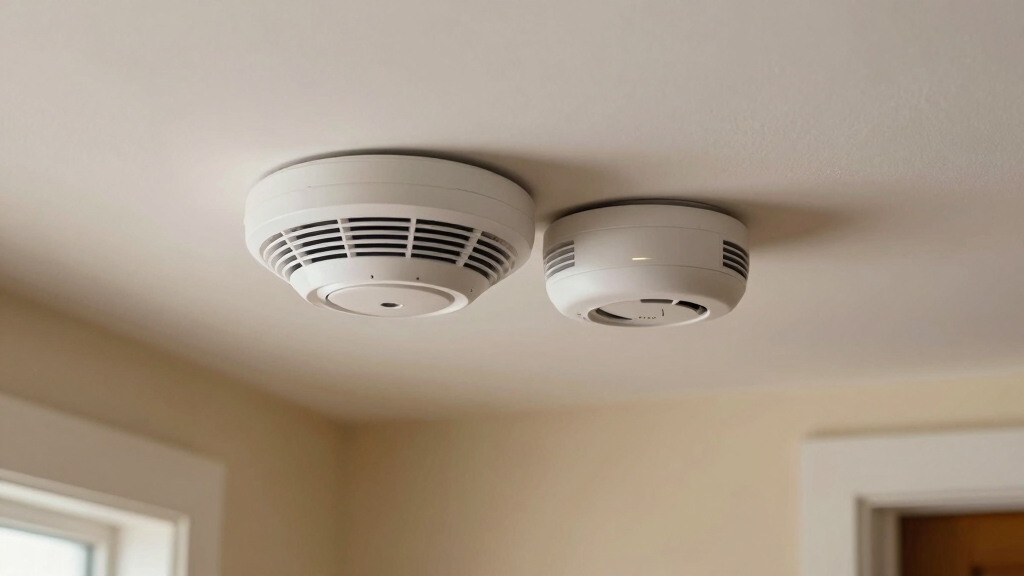
Although both smoke and carbon monoxide alarms serve to protect your home, they detect fundamentally different hazards: smoke alarms identify smoke particles from fires, while carbon monoxide alarms sense the presence of the odorless, invisible CO gas produced by incomplete combustion.
You’ll find smoke alarms designed to respond to visible fire indicators like flames or smoldering materials. CO alarms detect harmful gas generated by fuel-burning appliances.
Smoke detectors typically mount on ceilings or high walls because smoke rises. CO detectors can be placed near sleeping areas or lower on walls since CO gas distributes evenly or sinks slightly.
It is important to replace carbon monoxide detectors every 5 to 7 years due to sensor degradation that reduces their detection accuracy over time.
How Do Smoke and Carbon Monoxide Alarms Detect Hazards?
Smoke alarms detect hazards by sensing smoke particles produced during combustion. They typically use either ionization or photoelectric technology to identify the presence of smoke in the air.
Carbon monoxide alarms detect invisible, odorless CO gas generated by incomplete combustion of fuels. These alarms use electrochemical sensors to measure CO concentration levels and trigger alerts before poisoning occurs.
It is important to place carbon monoxide detectors near bedroom doors to ensure alarms are loud enough to wake occupants during sleep.
| Feature | Smoke Alarm |
|---|---|
| Detection Method | Ionization or photoelectric sensor |
| Target Hazard | Smoke particles |
| Alarm Sound | High-pitched, three beeps |
| Placement | Ceiling or high wall |
| Visual Indicator | No digital display |
| Feature | Carbon Monoxide Alarm |
| Detection Method | Electrochemical sensor |
| Target Hazard | Carbon monoxide gas |
| Alarm Sound | Lower-pitched, four beeps |
| Placement | Near sleeping areas, lower walls |
| Visual Indicator | Often digital PPM display |
Where Should You Install Smoke and Carbon Monoxide Alarms?
When it comes to smoke alarms, the best spot to install them is on ceilings or high walls. Why? Because smoke rises and gathers near the top of rooms.
So, having them up high ensures they can do their job effectively.
Now, let’s talk about carbon monoxide alarms. These work best near your sleeping areas or close to any fuel-burning appliances.
You’ll want to place them lower on the walls since carbon monoxide tends to settle closer to the ground.
By placing each alarm where it works best, you can make sure they detect their specific hazards and give you timely warnings.
It’s all about keeping you and your family safe!
For optimal safety, it is recommended to install smoke detectors inside every bedroom and outside each sleeping area to maximize early detection and alarm audibility.
Optimal Smoke Alarm Placement
When installing alarms, placing smoke detectors on ceilings or high walls is essential since smoke rises rapidly during a fire.
Mount smoke alarms at least 4 inches from the nearest wall if on ceilings, or 4 to 12 inches below the ceiling if on walls.
Avoid installing near windows, doors, or ducts where drafts might interfere with smoke detection.
Position alarms inside each bedroom, outside sleeping areas, and on every level of your home, including basements.
Do not install smoke alarms in kitchens or bathrooms, as cooking fumes or steam may cause false alarms.
For multi-level homes, place alarms at stairways to detect smoke rising from lower floors.
Proper placement guarantees early fire detection, maximizing your safety and providing critical escape time.
Hardwired smoke detectors should always have a battery backup installed to ensure continuous operation during power outages.
Best CO Alarm Locations
Just as proper placement matters for smoke alarms, locating carbon monoxide (CO) alarms correctly guarantees effective detection of this invisible hazard.
Since CO gas disperses evenly and can settle slightly lower, you should install CO alarms strategically to maximize safety. Here are four key locations to take into account:
- Near sleeping areas to alert you during the night when CO exposure is most dangerous.
- Outside each separate sleeping zone in multi-bedroom homes.
- Close to fuel-burning appliances such as furnaces, water heaters, or fireplaces.
- In attached garages where vehicle exhaust can accumulate.
Avoid placing CO alarms directly above stoves or in humid areas like bathrooms, as this can cause false alarms or sensor damage.
Following these guidelines secures timely detection and improves your household’s protection against carbon monoxide poisoning.
Ensure your CO detectors have UL 2034 certification to guarantee quality and reliability.
How Can You Identify Smoke Alarms vs. CO Alarms by Appearance?
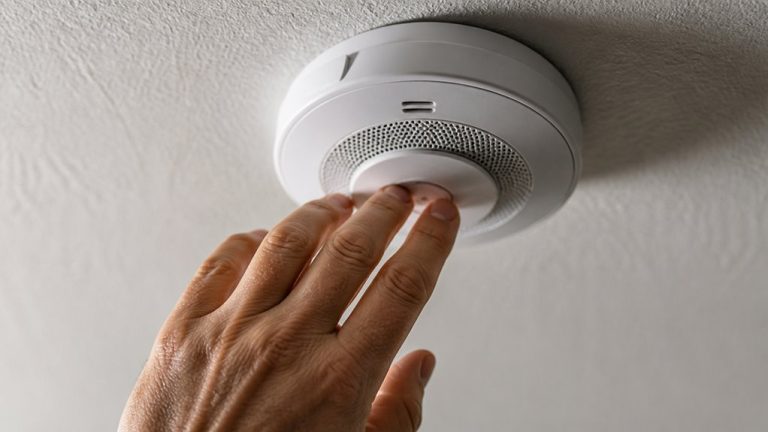
Visual characteristics provide clear clues to distinguish smoke alarms from carbon monoxide (CO) alarms. Smoke alarms are typically round, without digital displays, and mount on ceilings or high walls.
CO alarms often appear rectangular, include a digital PPM display, and mount near sleeping areas or CO sources. Labels clearly state “Smoke Alarm” or “CO Detector.”
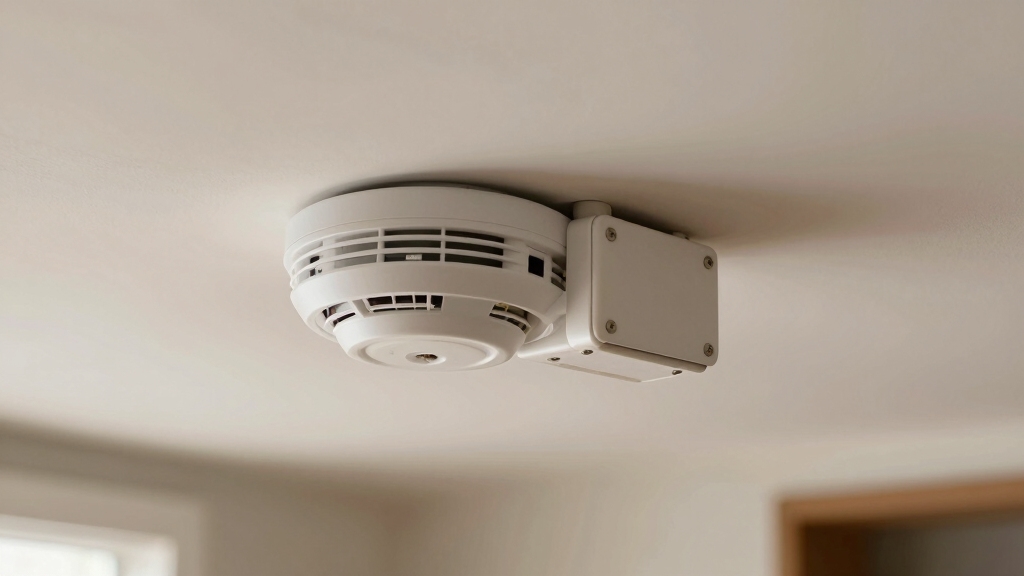
Combination units integrate features of both, usually ceiling-mounted and labeled accordingly.
| Feature | Smoke Alarm | CO Alarm |
|---|---|---|
| Shape | Round | Rectangular |
| Display | None | Digital PPM screen |
| Mounting Location | Ceiling/high walls | Near bedrooms/CO sources |
| Label | “Smoke Alarm” | “CO Detector” |
For optimal safety, proper placement and installation should follow NFPA standards to ensure maximum effectiveness and compliance.
What Are the Distinct Alarm Sounds for Smoke and CO Detectors?
You can easily tell smoke alarms apart by their high-pitched, piercing beeps. They usually beep three times in a row, which is hard to miss!
On the other hand, carbon monoxide alarms have a deeper tone, often sounding off with four beeps in a sequence when there’s danger.
If you have a combination unit, it gets even more interesting. These devices use different patterns to help you distinguish between smoke and CO threats. Sometimes, they even include voice alerts to make things clearer.
It’s all about keeping you safe and informed! Remember, the pattern of four short beeps followed by silence signals dangerous CO levels and requires immediate action.
Smoke Alarm Sound Patterns
Although both smoke and carbon monoxide detectors serve critical safety functions, their alarm sounds differ distinctly to help you quickly identify the type of hazard.
Smoke alarms emit sharp, high-pitched beeps that alert you to fire-related dangers. Recognizing these patterns guarantees you respond appropriately to smoke presence.
Here’s what you should know about smoke alarm sounds:
- Smoke alarms typically produce three rapid, high-pitched beeps per cycle.
- The sound is piercing and continuous until manually silenced or the hazard clears.
- Some models include flashing lights to enhance alerting during sleep.
- Combination alarms differentiate smoke warnings by this distinct high-frequency pattern.
Understanding these signals enables you to distinguish smoke threats from other hazards effectively. Proper maintenance, including regular testing alarm and cleaning, helps ensure these alerts function reliably when needed.
Carbon Monoxide Alarm Tones
When carbon monoxide detectors activate, they emit a series of distinct, lower-pitched beeps, typically four in sequence, to differentiate their alert from that of smoke alarms. Smoke alarms usually sound three high-pitched beeps in rapid succession.
This clear auditory difference helps you quickly identify the hazard type and respond appropriately. Some alarms also include voice alerts to specify the danger. Both alarms use flashing lights to enhance wake-up effectiveness.
It is important to note that low batteries can also cause carbon monoxide alarms to sound falsely as a preventive alert indicating replacement is needed, so regular maintenance is essential to avoid confusion with actual danger from low battery alerts.
| Alarm Type | Tone Pattern |
|---|---|
| Smoke Alarm | 3 high-pitched beeps |
| Carbon Monoxide Alarm | 4 low-pitched beeps |
| Combination Alarm | Distinct patterns |
| Voice Alerts | Specified hazard |
| Flashing Lights | Present in both |
Combination Unit Alerts
Understanding the distinct alarm sounds in combination units helps you recognize whether smoke or carbon monoxide triggers the alert.
These units contain separate sensors, each with unique warning signals to guarantee clear identification of hazards.
Here are key sound differences to note:
- Smoke detection emits a high-pitched, piercing beep, typically three quick bursts.
- Carbon monoxide detection uses a lower-pitched beep, often four in sequence.
- Some models include voice alerts announcing “fire” or “carbon monoxide” for immediate clarity.
- Both alarms feature flashing lights designed to awaken sleeping occupants.
Many combination units use dual-sensor technology to efficiently detect both smoke and carbon monoxide hazards within one device.
How Do Combination Smoke and CO Alarms Work?
Combination smoke and carbon monoxide (CO) alarms integrate distinct sensors to monitor both fire-related smoke particles and invisible CO gas simultaneously.
Combination alarms detect both smoke particles and invisible carbon monoxide gas simultaneously for enhanced safety.
The smoke sensor typically uses photoelectric or ionization technology to detect airborne particles from smoldering or flaming fires. Meanwhile, the electrochemical CO sensor measures CO concentration levels, triggering an alert if they exceed safe thresholds.
You’ll usually install the unit on the ceiling to optimize smoke detection, while the CO sensor functions effectively within the same housing. When triggered, the alarm differentiates hazards by emitting unique beep sequences or voice alerts—high-pitched for smoke, lower or patterned for CO.
Certified by UL or ETL, these combination alarms provide thorough, reliable detection, ensuring you’re warned promptly about either fire or carbon monoxide dangers within a single device.
Why You Need Both Smoke and CO Alarms in Your Home?
You really need both smoke and carbon monoxide alarms in your home. Here’s why: fire creates smoke, which is usually detected near the ceiling. On the other hand, carbon monoxide is a sneaky gas—it’s colorless and odorless. That’s why it’s important to place CO alarms near sleeping areas where you mightn’t notice it right away.
When you install these alarms properly, you ensure that each one does its job effectively. Smoke alarms will alert you to fire, while CO alarms will warn you about toxic gas exposure. Using both types together gives you comprehensive protection against these serious hazards in your home. It’s just a smart way to keep you and your loved ones safe!
Fire Versus Gas Risks
Although smoke alarms effectively detect fire hazards by sensing smoke particles, they can’t identify the invisible, odorless carbon monoxide gas produced by faulty fuel-burning appliances.
You need both alarms because fire and CO risks differ fundamentally in detection and danger.
Fires emit visible smoke that smoke alarms catch quickly, but CO gas arises silently from incomplete combustion, requiring specialized sensors.
Here’s why both matter:
- Smoke alarms alert you to immediate fire threats through particle detection.
- CO alarms detect dangerous gas levels that cause poisoning without visible signs.
- Fires often produce smoke but may not release enough CO for smoke alarms to detect.
- CO can accumulate unnoticed, causing fatal poisoning if only smoke alarms are installed.
Relying solely on one alarm type leaves gaps in your home safety.
Installation Location Importance
When placing alarms in your home, understanding the distinct behaviors of smoke and carbon monoxide is essential for effective detection.
Smoke rises, so you should mount smoke alarms on ceilings or high walls to detect smoke particles promptly.
Conversely, carbon monoxide gas distributes evenly or settles slightly lower, making placement near sleeping areas or low on walls ideal for CO detectors.
Installing both alarms in proper locations guarantees you detect fires quickly and identify invisible, odorless CO leaks from fuel-burning appliances.
Avoid positioning smoke detectors near floors or CO detectors far from potential sources like garages or furnaces.
Correct placement maximizes each alarm’s sensitivity to its specific hazard, improving your home’s overall safety and reducing the risk of undetected fire or CO exposure.
Complementary Safety Benefits
Because smoke alarms and carbon monoxide detectors identify fundamentally different hazards, relying on one type alone leaves your home vulnerable to undetected threats. You need both devices to guarantee complete protection against fire and toxic gas exposure.
Smoke alarms detect visible smoke particles from fires, while CO alarms sense invisible, odorless carbon monoxide produced by faulty combustion appliances. Using both provides early warning for distinct dangers.
Here’s why you should install both:
- Smoke alarms alert you to flames or smoldering fires that CO alarms can’t detect.
- CO alarms warn against deadly carbon monoxide buildup undetectable by smoke alarms.
- Combined, they cover fire and gas hazards, reducing fatality risks markedly.
- National safety standards recommend dual or combination alarms for full home protection.
How Fire and CO Risks Impact Alarm Choice?
Since fire and carbon monoxide present distinct threats, choosing the right alarm depends on the specific risks in your environment. Smoke alarms detect particulate matter from fires, alerting you to visible smoke or flames.
CO alarms sense the invisible, odorless gas from faulty combustion appliances. Understanding these differences guides optimal placement and selection.
| Risk Type | Hazard Detected | Placement Recommendation | Alarm Type Needed | Alert Sound Characteristics |
|---|---|---|---|---|
| Fire | Smoke particles | Ceiling or high wall | Smoke alarm | High-pitched, 3-beep sequence |
| Carbon Monoxide | CO gas | Near sleeping areas or CO source | CO alarm | Lower-pitched, 4-beep sequence |
| Combined Risk | Smoke and CO | Ceiling with dual sensors | Combination alarm | Distinct patterns for each hazard |
| Fuel Appliances Risk | CO gas | Near appliances, bedrooms | CO or combination | Specific CO alert signals |
| Open Fire Risk | Visible smoke | Ceilings, away from floors | Smoke or combination | Loud, piercing alarms |
What Safety Standards Certify Smoke and CO Alarms?
Choosing the right alarm for fire and carbon monoxide risks involves more than just understanding detection and placement. It requires making certain the devices meet recognized safety standards.
You should verify certification to guarantee reliability and performance under real conditions. In the U.S., look for these key standards:
- UL 217: Certifies smoke alarms for reliable smoke detection and timely alerting.
- UL 2034: Certifies carbon monoxide alarms, ensuring accurate CO level sensing.
- UL 268: Applies to smoke detectors using advanced sensing technologies, often in commercial settings.
- ETL Listing: An alternative certification indicating compliance with UL standards for both smoke and CO alarms.
Choosing alarms with these certifications ensures the units have passed rigorous testing for safety and functionality.
How to Maintain and Test Your Smoke and CO Alarms?
Regularly maintaining and testing your smoke and carbon monoxide alarms guarantees they function properly when you need them most.
Test each alarm monthly using the test button, which triggers the distinct alarm sound: three high-pitched beeps for smoke and four lower-pitched for CO.
Replace batteries annually or when low-battery chirps occur.
Clean alarms every six months by gently vacuuming vents and wiping surfaces to remove dust that impairs sensor accuracy.
For combination units, ensure both sensors are clear.
Replace alarms every 7–10 years per manufacturer guidelines, as sensor sensitivity degrades over time.
Avoid painting or covering alarms, which can block detection.
Regular maintenance minimizes false alarms and maximizes response reliability, protecting your home from fire and carbon monoxide hazards effectively.
Frequently Asked Questions
How Long Do Smoke and Carbon Monoxide Alarms Typically Last?
Smoke and carbon monoxide alarms typically last about 7 to 10 years. You should check the manufacturer’s instructions since lifespan varies by model.
After that, sensors degrade and may fail to detect hazards accurately. It’s vital to replace alarms promptly when they reach their end-of-life or if they emit warning signals indicating sensor failure.
Regular testing and maintenance help guarantee your alarms function correctly throughout their service life.
Can Carbon Monoxide Alarms Detect Smoke or Vice Versa?
You can’t rely on carbon monoxide alarms to detect smoke, nor can smoke alarms identify carbon monoxide.
Smoke detectors sense smoke particles from fires using optical or ionization sensors. CO alarms detect the invisible, odorless gas through electrochemical sensors.
Each device targets distinct hazards, so mixing their functions risks missing critical alerts.
To guarantee all-inclusive safety, you need both or a certified combination unit designed to monitor smoke and CO simultaneously.
Are There Battery-Only Versus Hardwired Smoke and CO Alarm Options?
Yes, you can find both battery-only and hardwired options for smoke and carbon monoxide alarms. Battery-only units offer easy installation and portability.
Hardwired alarms connect to your home’s electrical system with battery backup for reliability during outages.
Combination alarms also come in both types. When choosing, consider installation convenience, local code requirements, and whether you want interconnected alarms for all-encompassing safety.
What Should I Do if My Alarm Frequently Gives False Alerts?
Think of your alarm as a watchful guardian, signaling real danger, not false alarms.
If it frequently sounds falsely, first clean the sensor gently to remove dust or insects.
Check placement; avoid kitchens or bathrooms where steam or cooking fumes trigger alerts. Replace old batteries or units past their lifespan.
If false alerts persist, consult the manual or contact the manufacturer for troubleshooting. Consider upgrading to a more reliable model with advanced sensors.
Can Pets or Cooking Trigger Smoke or Carbon Monoxide Alarms?
Yes, pets can trigger smoke alarms if they stir up dust or pet dander near sensors, causing false alerts.
Cooking is a common cause of smoke alarm activation due to smoke or steam from burnt food.
However, carbon monoxide alarms rarely trigger from pets or cooking alone since they detect invisible CO gas, not particles.
Still, improper ventilation during cooking can raise CO levels and activate CO alarms, so make sure adequate airflow.
Smoke & CO Detectors: The Safety Duo Every Home Needs
You absolutely can’t afford to rely on just one alarm. Smoke and carbon monoxide detectors serve wildly different purposes.
Smoke alarms catch fire hazards, while CO alarms detect deadly, invisible gas. Installing both is not just smart; it’s life-saving.
Neglecting either puts you at extreme risk. Regularly test and maintain them to guarantee peak performance.
Your safety depends on understanding these vital differences and acting with precision. Don’t wait; protect your home thoroughly now!