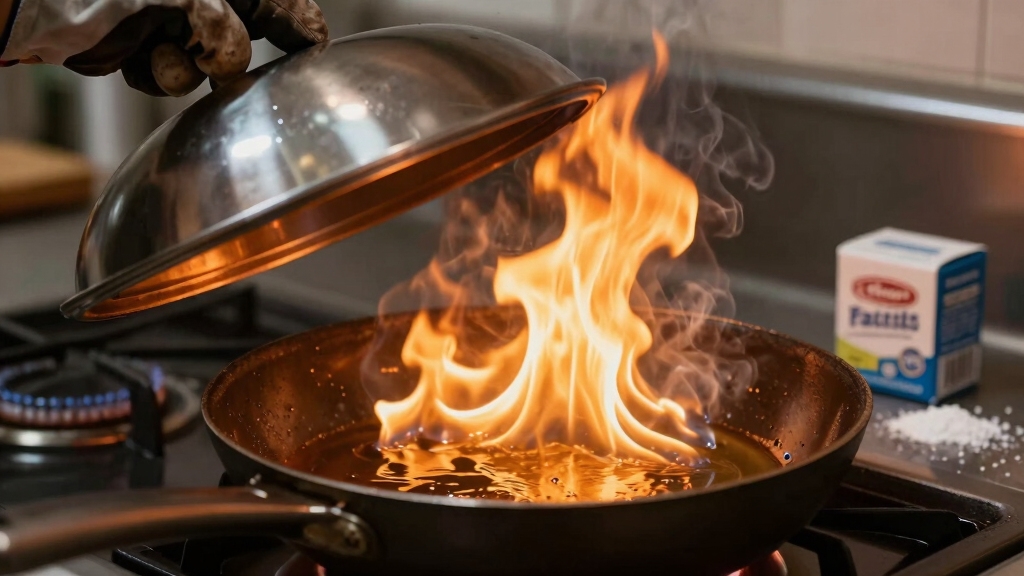

If you face a grease fire, turn off the heat immediately if safe and don’t move the pan to avoid spreading flames. Smother the fire by covering it with a metal lid or baking sheet and wait for it to cool.
Never use water, flour, or sugar; these make it worse. For small fires, pour salt or baking soda to extinguish flames quickly. Keep a Class K extinguisher handy and know how to use it.
Here’s how to handle and prevent grease fires effectively.
Key Takeaways
- Turn off the heat source immediately if it is safe to do so without moving the pan.
- Cover flames with a metal lid or baking sheet to cut off oxygen and keep it in place until cooled.
- Do not use water, flour, sugar, or baking powder as they can worsen the grease fire.
- Pour salt or baking soda generously to smother small grease fires by absorbing heat or releasing carbon dioxide.
- Use a Class K fire extinguisher or Class B dry chemical extinguisher and follow the PASS method to extinguish safely.
Immediate Actions for a Grease Fire
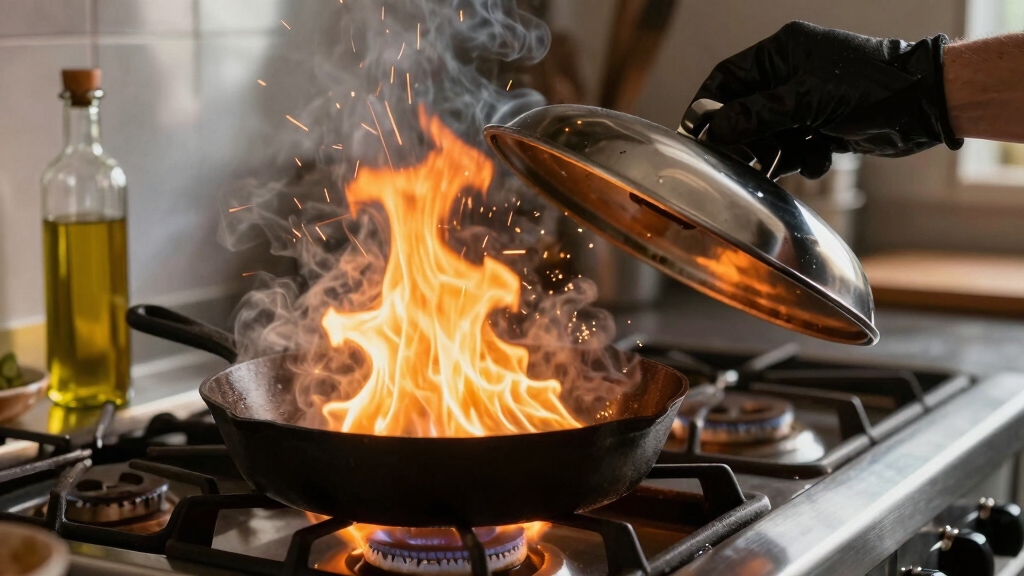
When you spot a grease fire, turn off the heat source immediately if it’s safe to do so.
Avoid moving the pan, as shifting it can spread the flames and make the fire worse.
Stay calm to assess the situation clearly, preventing panic-driven mistakes.
To smother the fire, cover the flames with a metal lid or a baking sheet, cutting off the oxygen supply.
Keep the lid securely in place and don’t remove it until the pan has completely cooled down.
This method effectively suffocates the fire and prevents re-ignition.
For small fires, applying a generous amount of baking soda or salt near the flames can help extinguish the fire safely.
Why Water and Kitchen Ingredients Fuel Grease Fires?
After you’ve taken immediate steps to contain a grease fire, it’s important to understand why certain common responses can make things worse.
Water and many kitchen ingredients react dangerously with burning grease, intensifying the fire instead of extinguishing it.
| Substance | Effect on Grease Fire |
|---|---|
| Water | Causes explosive spreading by instantly vaporizing |
| Flour | Ignites easily, worsening flames |
| Sugar | Fuels fire with added combustible material |
| Baking Powder | Contains chemicals that can ignite |
| Wet Towel | May flare flames or spill burning grease |
Avoid these to prevent rapid fire growth and dangerous flare-ups.
Knowing this helps you act wisely under pressure. Removing any element of the fire triangle is crucial to effectively stop a fire.
Using Salt and Baking Soda to Extinguish Small Grease Fires
You can quickly put out small grease fires by using common kitchen items like salt and baking soda. These items work by smothering flames and absorbing heat.
When a fire starts, act fast and follow these steps:
When a fire ignites, respond quickly and follow these essential steps to safely extinguish it.
- Turn off the heat source immediately if safe.
- Pour about one cup of salt over the fire to absorb heat and reduce flames.
- Sprinkle a generous amount of baking soda to release carbon dioxide, which smothers the fire.
- Avoid using flour, sugar, or baking powder, as they can worsen the fire.
Always evacuate the area and call emergency services if the fire cannot be controlled safely, as improper handling of fires can lead to dangerous situations involving ignition sources.
Choosing and Using the Right Grease Fire Extinguisher
Select the right fire extinguisher to tackle a grease fire effectively and safely. Class K extinguishers are specifically designed for cooking oils and fats, making them the best choice for kitchen grease fires.
If a Class K isn’t available, a Class B dry chemical extinguisher is a suitable alternative, while Class ABC extinguishers work but aren’t ideal. Keep your extinguisher easily accessible in the kitchen and make sure you know how to use it properly.
Follow the PASS method: pull the pin, aim at the fire’s base, squeeze the handle, and sweep side to side. Using the correct extinguisher promptly can prevent a small fire from escalating into a dangerous blaze, protecting you, your kitchen, and everyone around you.
It is important to note that standard extinguishing agents like water or foam are dangerous on certain fires, such as combustible metal fires, and can cause explosions or spread the fire further.
Preventing Grease Fires With Kitchen Safety Gear and Habits
When working in the kitchen, equipping yourself with proper safety gear and adopting smart habits can markedly reduce the risk of grease fires.
You need to be proactive in preventing emergencies before they start. Follow these four essential tips:
- Keep a Class K fire extinguisher within reach for grease and oil fires.
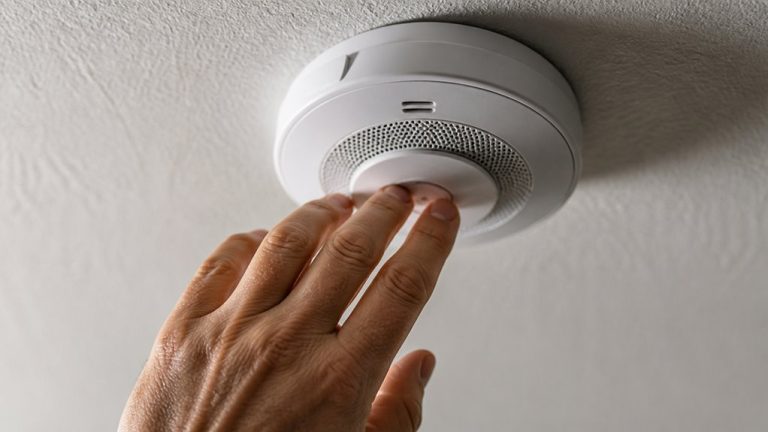
- Install smoke detectors and maintain good ventilation to catch hazards early.
- Use fire suppression blankets for quick response to small flare-ups.
- Avoid overheating oils and never leave cooking unattended to prevent ignition.
Always position yourself with a clear exit behind you when using any fire safety equipment to ensure quick escape in case the fire spreads, following the safety assessment guidelines.
Frequently Asked Questions
Can Grease Fires Occur With Solid Fats Like Butter or Lard?
Yes, grease fires can occur with solid fats like butter or lard once they melt and reach their ignition temperature.
When you heat these fats, they liquefy and behave like cooking oils, which can catch fire if overheated.
Always monitor solid fats closely while cooking and never leave them unattended.
Knowing this helps you stay prepared to act quickly and safely if a grease fire starts in your kitchen.
How Often Should Kitchen Fire Extinguishers Be Serviced or Replaced?
Think of your kitchen fire extinguisher as a vigilant guardian, ready to spring into action.
You should have it professionally inspected once a year to guarantee it’s battle-ready.
Replace or recharge it immediately after any use, even small discharges.
Also, check the pressure gauge monthly and look for physical damage or corrosion.
Keeping this protector in top shape means you won’t face a fiery enemy unarmed when it matters most.
What Are the Signs That a Grease Fire Has Caused Hidden Damage?
You’ll notice hidden damage from a grease fire if you smell lingering burnt odors or see discoloration on walls, ceilings, or cabinets.
Cracks or warping in painted surfaces and drywall often appear too.
Electrical outlets near the fire might malfunction, and metal surfaces could be warped or weakened.
If smoke stains or soot remain despite cleaning, it’s a clear sign you should get a professional inspection to uncover all hidden damage.
Are There Specific Cookware Materials Safer for Cooking With Oil?
Cooking with oil is like handling hot coals; you need the right gear.
You’ll find stainless steel and cast iron safer because they handle high heat evenly and won’t warp or release toxins.
Avoid non-stick pans at very high temperatures since their coatings can degrade, risking chemical release.
Using heavy, durable cookware helps you control oil temperature better, reducing fire risk and ensuring safer cooking overall.
Can Grease Fire Smoke Cause Health Problems or Require Special Cleanup?
Yes, grease fire smoke can cause health problems, especially respiratory irritation or worse if inhaled in large amounts.
You should ventilate the area well, using fans and open windows, and avoid lingering in smoky rooms.
Cleanup requires special attention since soot and oily residues can stain surfaces and harm your indoor air quality.
Use appropriate cleaners and protective gear to avoid skin or eye irritation during cleanup.
Protect Your Home by Knowing How to Handle Grease Fires
Now that you know how to act fast and what not to do, are you ready to handle a grease fire safely? Remember, never throw water on it, and keep salt or baking soda nearby for small flames.
Investing in the right fire extinguisher and practicing good kitchen safety habits can prevent disasters before they start. Stay prepared, stay calm, and protect your home and loved ones from grease fires effectively.