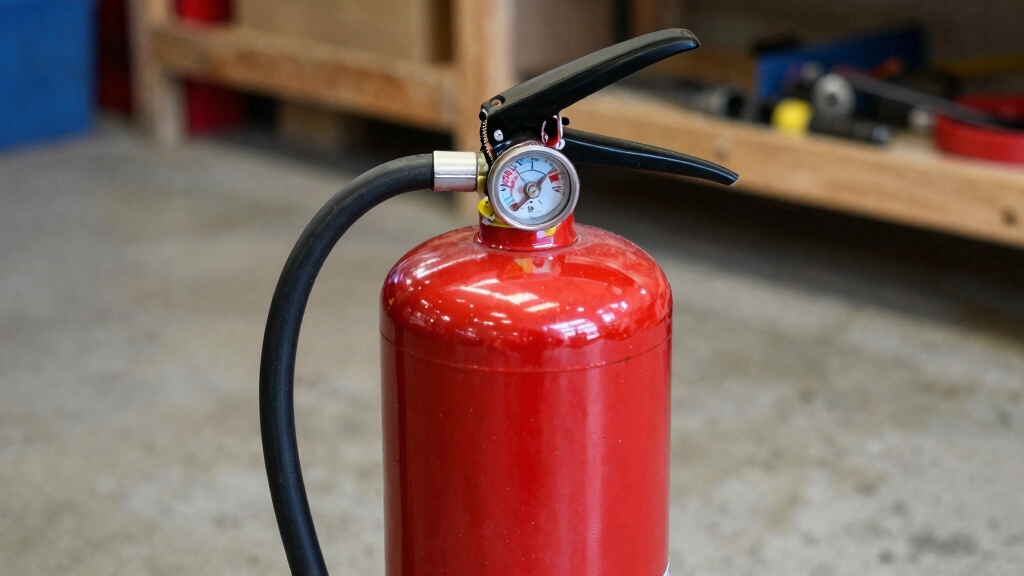

ABC fire extinguishers use monoammonium phosphate powder designed to fight Class A, B, and C fires: ordinary combustibles, flammable liquids, and energized electrical equipment.
This non-conductive agent melts to form insulating barriers for Class A fires and smothers liquid fuels in Class B fires.
Their stored-pressure design guarantees consistent, safe discharge even near live electrical sources. Durable construction and precise engineering make them reliable in critical situations.
Understanding their ratings, operation, and maintenance helps optimize safety and performance.
Key Takeaways
- ABC fire extinguishers use monoammonium phosphate powder effective on Class A, B, and C fires.
- They suppress fires by coating, smothering flames, and interrupting chemical reactions.
- The non-conductive agent safely extinguishes energized electrical fires (Class C).
- Ratings like 2A:10BC indicate effectiveness on ordinary combustibles and flammable liquids.
- Stored-pressure design ensures reliable discharge and easy operation with PASS technique.
What Are ABC Fire Extinguishers?
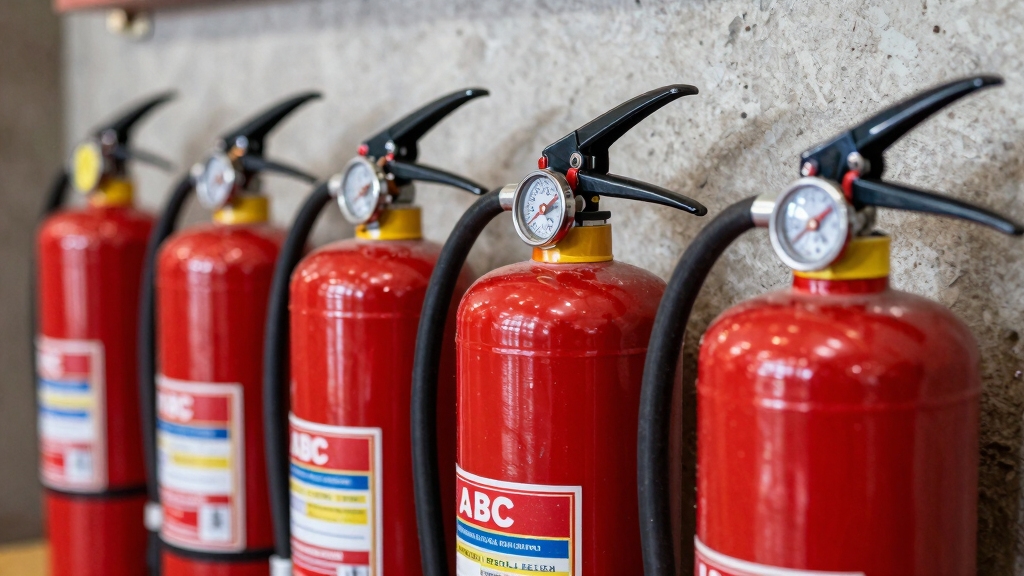
When dealing with multiple types of fires, ABC fire extinguishers provide a versatile solution by using a monoammonium phosphate-based dry chemical.
ABC fire extinguishers offer versatile protection with a monoammonium phosphate-based dry chemical formula.
This specially formulated powder, often combined with ammonium sulfate, is fluidized and siliconized to coat burning surfaces effectively.
You’ll find that ABC extinguishers are classified as multi-purpose because they suppress Class A (ordinary combustibles), Class B (flammable liquids), and Class C (energized electrical) fires.
The powder works by melting at approximately 350°F to insulate and cool materials, smothering flammable liquids and interrupting chemical chain reactions, all while remaining non-conductive for electrical safety.
Constructed from drawn steel with reliable stored-pressure designs, these extinguishers guarantee rapid deployment across diverse fire scenarios.
This makes them essential for all-encompassing fire protection.
Understanding ABC Fire Extinguisher Ratings and Sizes
Although ABC fire extinguishers come in various sizes, their ratings provide critical information about their extinguishing capacity for different fire classes.
You’ll see ratings like 2A:10BC, where the number before “A” reflects effectiveness on Class A fires. The number before “B” indicates square footage coverage on Class B fires.
Class C fires have no numerical rating, as the agent’s non-conductive property is the key factor. Common extinguisher sizes range from 2.5 to 20 pounds, with higher weights generally offering longer discharge times and greater reach.
Typically, extinguishers can project 10 to 15 feet over 45 seconds. When selecting an ABC extinguisher, you should match its rating and size to the specific fire risks present, ensuring peak suppression capability for your environment.
How ABC Fire Extinguishers Fight Class A Fires?
Understanding extinguisher ratings helps you select the right tool. Knowing how ABC extinguishers combat specific fire classes enhances effective use.
For Class A fires, involving ordinary combustibles like wood and paper, these extinguishers deploy monoammonium phosphate powder that melts at approximately 350°F. This creates an insulating layer, cutting off oxygen and preventing re-ignition.
When you use an ABC extinguisher on Class A fires, you benefit from:
- A chemical coating that isolates fuel from oxygen, stopping combustion.
- A dry agent that inhibits heat transfer by forming an insulating barrier.
- A numerical rating system that translates to water equivalency, helping gauge extinguisher capacity for effective suppression.
Employing these features guarantees you suppress Class A fires rapidly and safely.
Why ABC Fire Extinguishers Work on Class B Fires?
ABC fire extinguishers combat Class B fires by smothering flammable liquid flames and interrupting their chemical chain reactions.
You rely on the monoammonium phosphate powder, which fluidizes and coats the burning surface, effectively cutting off oxygen and halting combustion.
When you apply the extinguisher with a sweeping motion, the powder spreads evenly, creating a barrier that prevents fuel vapors from sustaining the fire.
The dry chemical also disrupts the exothermic reactions at a molecular level, stopping the fire’s propagation.
Its non-conductive nature guarantees safety around flammable liquids without causing sparks or secondary hazards.
The numerical rating guides you on the coverage area, allowing effective suppression of spills or pools up to that size.
This precise mechanism makes ABC extinguishers versatile and dependable for Class B fire emergencies.
How ABC Fire Extinguishers Handle Electrical (Class C) Fires?
When it comes to handling electrical fires, you really want to rely on the non-conductive monoammonium phosphate powder found in ABC fire extinguishers. This stuff is a game changer! It suppresses electrical fires without putting you at risk of electric shock. Pretty cool, right?
What’s great about this agent is that it effectively interrupts combustion on energized equipment. So, while you’re putting out the fire, you can do so knowing you’re staying safe.
Understanding how this works is super important for responding to Class C fire scenarios properly. It’s all about keeping yourself and others safe while tackling those tricky situations!
Non-Conductive Extinguishing Agent
Containing a non-conductive dry chemical agent, ABC fire extinguishers are engineered to safely combat energized electrical fires without risking shock to the operator. They utilize monoammonium phosphate powder, which effectively interrupts combustion without conducting electricity.
This guarantees you can approach electrical fires confidently. Key technical aspects include:
The agent’s dielectric properties prevent electrical current flow during discharge. The powder coats energized surfaces, disrupting the chemical reaction sustaining the fire.
No numerical rating exists for Class C, as effectiveness depends on safely isolating the electrical source.
Safe On Energized Equipment
When dealing with energized electrical equipment, you need a fire extinguisher that won’t conduct electricity or cause shock.
ABC fire extinguishers use a non-conductive monoammonium phosphate dry chemical, making them safe to apply directly on live electrical fires classified as Class C.
This agent effectively suppresses flames caused by short circuits or overloaded outlets without risking electrical conduction through the powder.
Unlike water or foam, the powder interrupts combustion chemically while providing an insulating barrier.
Since these extinguishers have no numerical rating for Class C fires, their safety and effectiveness rely on the inherent non-conductivity of the chemical composition.
You can confidently use an ABC extinguisher on energized equipment, knowing it minimizes risk to both operator and equipment during electrical fire suppression.
Preventing Electrical Shock Risk
Although electrical fires pose unique hazards, ABC fire extinguishers effectively prevent electrical shock risk by employing a non-conductive monoammonium phosphate dry chemical agent.
This agent safely interrupts electrical fires without conducting electricity, protecting you during use. When handling Class C fires, ABC extinguishers:
Utilize a finely fluidized, siliconized powder that coats surfaces, disrupting the combustion chain reaction without conducting current.
Maintain a stored pressure design ensuring reliable, immediate discharge to quickly suppress energized electrical equipment fires.
Operate safely within a broad temperature range (-65°F to 120°F), maintaining non-conductivity under various conditions.
Why ABC Fire Extinguisher Construction Ensures Safety?
You rely on the robust construction of ABC fire extinguishers to guarantee dependable performance during emergencies.
Their drawn-steel cylinders withstand high internal pressures and environmental stresses, ensuring structural integrity.
The all-metal valve assembly crafted from chrome-plated brass or anodized aluminum provides corrosion resistance and precise flow control.
Stored-pressure design maintains consistent discharge rates within a wide temperature range (-65°F to 120°F), preventing malfunction in varied climates.
The specially treated monoammonium phosphate powder resists clumping and adheres evenly, maximizing fire suppression efficiency.
This meticulous engineering minimizes risks of leakage, valve failure, or powder degradation, which could compromise safety.
By integrating durable materials and proven manufacturing standards, ABC extinguishers deliver reliable, safe operation.
They protect you effectively from Classes A, B, and C fires under critical conditions.
When to Use an ABC Fire Extinguisher?
You should grab an ABC fire extinguisher when you’re dealing with fires that involve ordinary combustibles, like wood or paper, flammable liquids, or even energized electrical equipment. It’s super important to identify the type of fire you’re facing.
That way, you can effectively put it out without risking electrical shock or letting the fire spread.
The cool thing about ABC fire extinguishers is their multi-purpose design. This makes them suitable for a variety of common fire situations.
Identifying Fire Classes
Fire classification determines the appropriate extinguishing method. ABC fire extinguishers are designed for versatility across multiple fire types. You need to identify the fire class to select the right tool quickly and effectively. ABC extinguishers cover:
Class A: Ordinary combustibles like wood, paper, and cloth. The extinguisher’s monoammonium phosphate powder melts at 350°F, creating an insulating barrier.
Class B: Flammable liquids such as gasoline and oil. Its powder smothers flames and interrupts the chemical reaction.
Class C: Energized electrical equipment fires. The non-conductive agent prevents shock hazards while suppressing flames.
Electrical Fire Safety
Electrical fires often occur unexpectedly due to short circuits, overloaded outlets, or faulty wiring in energized equipment.
When facing such fires, you must use an ABC fire extinguisher because it contains a non-conductive monoammonium phosphate powder that prevents electrical shock.
This extinguisher interrupts the combustion process without damaging energized devices, making it safe and effective for Class C fires involving live electrical sources.
Remember, ABC extinguishers don’t have a numerical rating for electrical fires but are specifically designed to suppress these hazards without conducting electricity.
You should only deploy an ABC extinguisher on electrical fires when power remains active; otherwise, de-energize the equipment if possible.
Using water or conductive agents risks shock and equipment damage, so always rely on the ABC’s dry chemical for electrical fire safety.
Flammable Liquid Fires
Many flammable liquid fires result from spills or leaks of substances like gasoline, oil, or paint, which ignite rapidly and spread if not contained.
When you encounter such fires, an ABC fire extinguisher is your best option. It uses monoammonium phosphate powder to smother flames and disrupt the chemical chain reaction.
You should apply a sweeping motion to cover the entire spill area, ensuring complete suppression.
Remember, the numerical rating reflects the square footage the extinguisher can cover, guiding your choice.
Avoid using water, which can spread flammable liquids and worsen the fire.
For grease fires specifically, it is recommended to use a Class K extinguisher, as water or standard extinguishers can exacerbate the flames.
Tips for Using and Maintaining ABC Fire Extinguishers
Make sure you inspect your ABC fire extinguisher regularly to maintain its readiness and effectiveness.
Check the pressure gauge to confirm it’s in the operable range and verify the tamper seal is intact.
Inspect the cylinder for dents, corrosion, or leaks.
Keep the extinguisher accessible and unobstructed.
When using, remember the PASS technique: Pull the pin, Aim low at the fire base, Squeeze the handle, and Sweep side to side.
After discharge, have a certified technician recharge or replace it immediately, regardless of the amount used.
Store the extinguisher within the manufacturer’s recommended temperature range (−65°F to 120°F) to prevent damage.
Conduct full maintenance, including hydrostatic testing and valve inspection, every six years or as required by regulatory standards to guarantee operational integrity.
Using the correct technique and targeting the fire base maximizes the extinguisher’s effectiveness in removing heat and stopping combustion.
Frequently Asked Questions
Can ABC Extinguishers Be Used on Kitchen Grease Fires?
You shouldn’t use ABC fire extinguishers on kitchen grease fires because they’re designed for Class A, B, and C fires.
Grease fires require a Class K extinguisher specifically made for cooking oils and fats.
Using an ABC extinguisher might spread the grease, worsening the fire.
Instead, rely on a Class K extinguisher or smother the fire carefully with a metal lid or baking soda to safely extinguish kitchen grease flames.
How Often Should ABC Fire Extinguishers Be Professionally Inspected?
You should have your ABC fire extinguisher professionally inspected annually to guarantee optimal performance.
According to NFPA standards, 95% of extinguishers fail due to neglect or improper maintenance.
During inspection, technicians check pressure, mechanical parts, and condition, guaranteeing readiness.
Monthly visual inspections by you complement this, but only a certified professional can provide a comprehensive evaluation.
Staying compliant with inspection schedules maximizes safety and extinguisher reliability in emergencies.
Are ABC Fire Extinguishers Safe for Use Around Children and Pets?
Yes, ABC fire extinguishers are generally safe to use around children and pets when operated correctly. The monoammonium phosphate powder is non-toxic but can cause mild irritation if inhaled or contacted directly.
You should make sure children and pets are removed from the immediate area during discharge to avoid respiratory discomfort. Always follow safety guidelines and ventilate the area afterward to minimize any residue exposure.
What Is the Environmental Impact of the Dry Chemical Powder?
You might think the dry chemical powder is as harmless as fairy dust, but it does have environmental consequences.
The monoammonium phosphate powder can contaminate soil and waterways if not cleaned promptly, affecting aquatic life and vegetation.
While it’s non-toxic to humans in typical use, improper disposal leads to chemical buildup.
You should always follow local hazardous waste guidelines to minimize environmental impact and avoid long-term ecological damage.
Can ABC Extinguishers Be Refilled or Must They Be Replaced?
You can have ABC extinguishers refilled, but only by certified professionals following strict inspection and maintenance protocols.
Refilling involves replacing the dry chemical powder, checking the valve and seals, and recharging the cylinder to manufacturer specifications.
If the extinguisher is damaged, corroded, or past its service life, replacement is necessary.
Always make certain refilling complies with NFPA standards and local regulations to maintain reliability and safety.
Reliable Response Starts with ABC Extinguishers
You can confidently control common combustibles, flammable fuels, and electrical emergencies with ABC fire extinguishers. Their carefully constructed components combine to create consistent, exhaustive chemical combat, cutting chaos quickly.
By choosing the correct extinguisher and consistently checking its condition, you’ll stay safe and secure. Remember, readiness requires regular review, responsible replacement, and reliable response.
Trust in the technical toughness of ABC extinguishers to tackle threats timely and thoroughly.