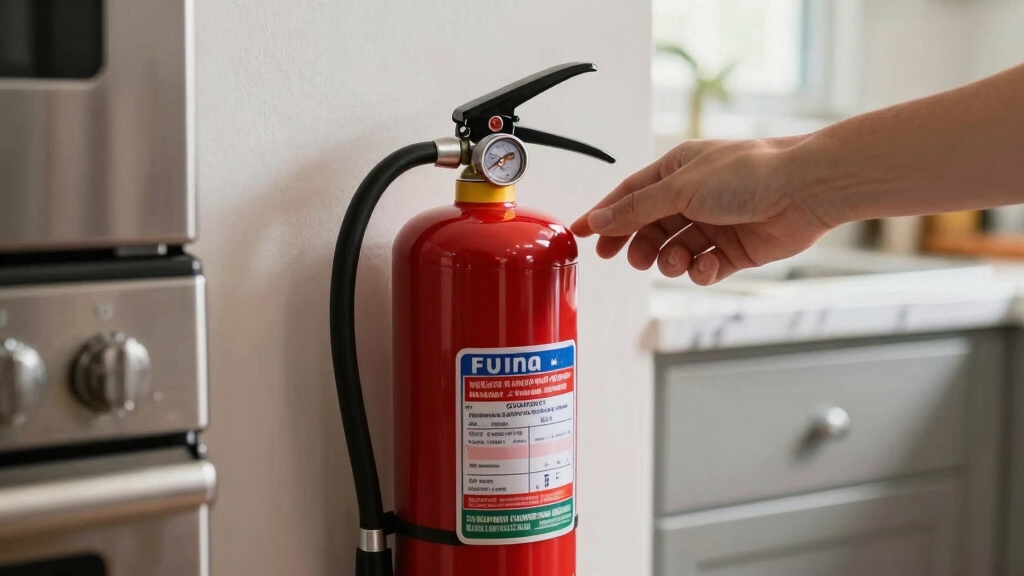

You should choose a 5 lb ABC fire extinguisher for your home because it balances fire-fighting power with ease of use.
It covers common risks like wood, flammable liquids, and electrical fires, with a UL rating such as 2A:10B:C indicating effective coverage.
For kitchens, a 5 lb unit or a Class K extinguisher works best, while larger areas may need heavier models. Proper placement and maintenance make certain you’re ready if a fire starts.
Discover how to pick the right extinguisher size and keep it accessible.
Key Takeaways
- A 5 lb ABC fire extinguisher with a 2A:10B:C rating is generally recommended for most residential homes.
- Choose a 5 lb unit for kitchens, living rooms, and general home use to balance capacity and ease of operation.
- For garages or areas with flammable liquids, a larger 10 lb ABC extinguisher provides better coverage.
- Smaller 2 to 2.5 lb extinguishers suit vehicles or small spaces but have limited capacity for home fires.
- Mount extinguishers near fire-prone areas and exits, ensuring they are visible, accessible, and within 3 to 5 feet reach.
How To Choose The Right Fire Extinguisher Size For Your Home?
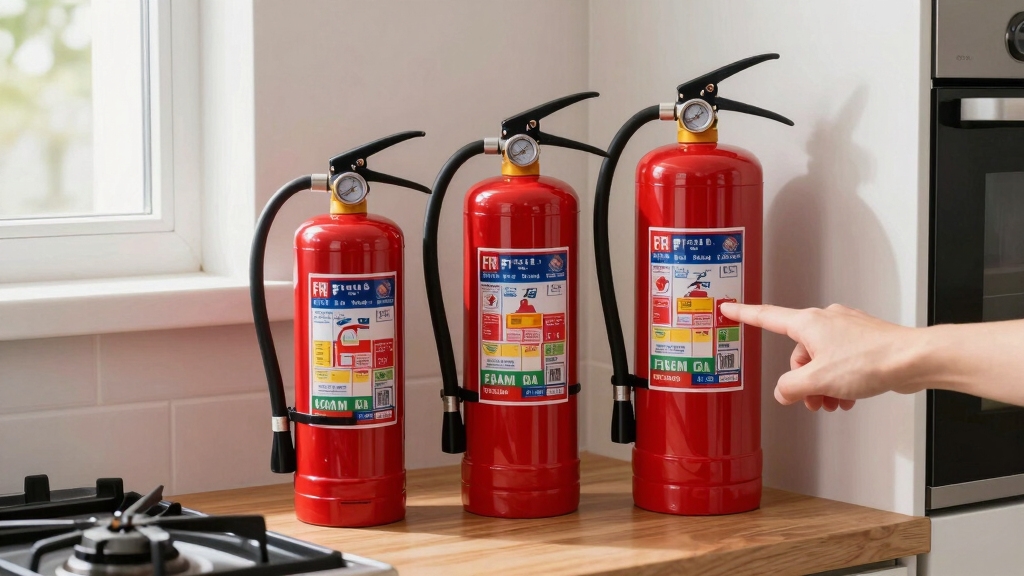
When choosing the right fire extinguisher size for your home, you’ll want to balance effectiveness with ease of use.
A 5 lb ABC extinguisher is generally recommended because it’s powerful enough to handle common residential fires, like those involving ordinary combustibles, flammable liquids, and electrical equipment.
This size offers a rating equivalent to 2.5 gallons of water for Class A fires, providing adequate coverage without being cumbersome.
Smaller units may be easier to carry but often lack sufficient capacity, and larger ones can be difficult to operate quickly in emergencies.
Ultimately, pick a size you can comfortably lift and deploy, ensuring you’ll be ready to act confidently when a fire breaks out at home.
Additionally, consider the discharge time of the extinguisher, typically around 45 seconds, to ensure you have enough time to effectively suppress the fire.
How UL Ratings Help You Pick The Right Fire Extinguisher Size?
To choose the right fire extinguisher size for your home, it’s super helpful to understand those UL fire ratings. These ratings tell you how much fire each unit can tackle, depending on the types and sizes of fire hazards you might encounter. Knowing the fire triangle elements that extinguishers target can help you select the most effective unit for your specific risks.
Understanding UL Fire Ratings
Although choosing the right fire extinguisher size might seem intimidating, understanding UL fire ratings simplifies the process. These ratings clearly indicate the extinguisher’s effectiveness against different types of fires.
The ratings show you how well the extinguisher handles Class A (ordinary combustibles), Class B (flammable liquids), and Class C (electrical) fires. The number before “A” relates to the amount of water equivalent for Class A fires.
The number before “B” indicates the square footage it can cover for flammable liquid fires. The “C” confirms it’s safe for electrical fires. Use the table below to quickly interpret these ratings:
| UL Rating | Meaning |
|---|---|
| 2A | Equivalent to 2.5 gallons water |
| 10B | Covers 10 sq ft flammable liquid |
| C | Safe for electrical fires |
This helps you pick an extinguisher size that matches your home’s fire risks. Regular inspection and maintenance are essential to ensure your extinguisher remains effective when you need it most.
Matching Ratings To Risks
Since every home faces different fire risks, matching the UL ratings of your fire extinguisher to those specific hazards guarantees peak protection.
The numbers before the A and B ratings indicate how much fire the extinguisher can handle. The A rating shows water equivalency for ordinary combustibles, while the B rating covers the square footage of flammable liquid fires it can extinguish.
The C rating confirms safety on energized electrical equipment. For most homes, a 5 lb ABC extinguisher with a 2A:10B:C rating balances effectiveness and usability.
In kitchens, consider a Class K extinguisher for grease fires, supplemented by an ABC unit nearby. Always select an extinguisher you can comfortably operate, ensuring you can react swiftly and effectively during an emergency.
Keep in mind that modern extinguishers include pressure relief valves and sturdy construction that prevent explosive failures, ensuring safe operation even if damaged.
How To Choose The Right Extinguisher Size For Kitchen Fires?
When choosing the right extinguisher size for kitchen fires, it’s important to focus on both effectiveness and ease of use.
A 5 lb ABC extinguisher is the minimum recommended size for handling common kitchen fires, including grease and stovetop flare-ups. This size balances sufficient extinguishing power with manageable weight, so you can operate it quickly and confidently.
A 5 lb ABC extinguisher offers the right balance of power and ease for common kitchen fires.
For cooking areas, consider a Class K wet chemical extinguisher, which is specifically designed to combat grease fires effectively. Avoid smaller units like 2 lb extinguishers, as they often lack the capacity to control larger kitchen fires.
Position your extinguisher within easy reach but away from the stove to guarantee quick access without risking proximity to flames. Prioritizing usability and proper rating helps you respond safely and effectively in kitchen emergencies.
Additionally, it is crucial to follow the PASS method when using an extinguisher to ensure safe and effective operation during a fire.
How To Decide On Larger Or Smaller Fire Extinguisher Sizes For Home Risks?
Deciding on larger or smaller fire extinguisher sizes depends on the specific risks and spaces within your home. You want an extinguisher you can comfortably handle but powerful enough to tackle likely fires.
For general living areas, a 5 lb ABC unit balances size and effectiveness. In high-risk spots like garages, consider 10 lb models. Smaller 2.5 lb units suit compact spaces or vehicles but aren’t ideal for large fires.
| Area | Recommended Size | Reason |
|---|---|---|
| Living Room | 5 lb ABC | Covers ordinary combustibles |
| Kitchen | 5-10 lb ABC/K | Grease/fire risk |
| Garage | 10 lb ABC | Flammable liquids, larger area |
| Vehicle/Small | 2.5 lb ABC | Compact, limited space |
Choose size based on fire risk and your ability to operate it safely. Remember that fire extinguishers typically provide a continuous spray duration of around 21 seconds, so selecting the right size helps ensure you have enough agent to effectively control a fire.
Where To Place Fire Extinguishers For Quick Access And Safety?
You should definitely think about where to mount fire extinguishers. Placing them in strategic spots like kitchens, garages, and near exits is key for quick access during emergencies. It’s all about being prepared!
Make sure they’re visible and easy to reach. You don’t want anything blocking your path when every second counts.
Proper placement guarantees you can grab them fast and use them safely when you need to. Remember, being proactive can make a huge difference!
Knowing the methods to stop fires helps you choose the right extinguisher and placement for maximum effectiveness.
Strategic Mounting Locations
Although having the right fire extinguisher size is essential, placing it strategically throughout your home guarantees you can access it quickly and safely during an emergency.
Mount extinguishers near potential fire sources like kitchens, garages, and workshops, where fires are more likely to start. Position them close to exits so you can grab one while moving toward safety.
Keep units within a manageable throw range but not so close they’re inaccessible if a fire blocks your path. In larger homes, install extinguishers every 30 to 50 feet to assure coverage.
Avoid placing them in cluttered or hard-to-reach spots. It’s vital they’re mounted at an appropriate height for quick grab-and-go action.
Thoughtful placement enhances your ability to respond promptly and effectively to fires. Maintain clear, unobstructed pathways to ensure compliance with maximum travel distance regulations and enable quick extinguisher access.
Visibility And Accessibility
When placing fire extinguishers, ensuring they remain clearly visible and easily accessible can make all the difference during an emergency.
Mount your extinguisher near exits, kitchens, or garages where fires are most likely to start, but never so close that a fire blocks your access.
Position it within a manageable reach, typically 3 to 5 feet off the ground, and avoid hiding it behind furniture or doors.
Make sure nothing obstructs the view so you can quickly spot and grab it when needed.
Check that the extinguisher’s location allows a safe throw distance, keeping you out of immediate danger.
Always position with clear exit behind for safe escape.
How To Check Certification And Maintain Your Fire Extinguisher?
Since a fire extinguisher’s reliability depends heavily on its certification and condition, checking these regularly is essential for safety.
First, verify it carries a valid UL, ULC, CSA, FM, or ETL certification label with the correct A:B:C rating for your home risks.
Ensure your fire extinguisher has a valid certification label and the correct A:B:C rating for your home risks.
Inspect the extinguisher monthly for visible damage, corrosion, or a low pressure gauge.
Make certain the pin and tamper seal are intact.
Clean dust and debris from the nozzle and body to avoid malfunction.
Annually, have a professional service or recharge your extinguisher as needed.
Conduct quarterly drills to familiarize yourself with proper use and placement.
Maintaining certification and performing routine checks keeps your extinguisher ready to protect you when you need it most.
Always position your extinguisher near a clear exit to ensure a quick and safe escape during use, following the Safety Assessment guidelines.
Frequently Asked Questions
Can I Use a Fire Extinguisher on a Car Fire at Home?
Yes, you can use a fire extinguisher on a car fire at home, but you need the right type.
A 5 lb ABC extinguisher works well for small car fires since it handles flammable liquids and electrical components.
Always approach cautiously, aiming at the base of the fire.
If the fire grows quickly or involves fuel leaks, evacuate immediately and call emergency services for safety.
How Long Does a Typical Fire Extinguisher Last Before Replacement?
Don’t wait until the cows come home to check your extinguisher’s health. A typical fire extinguisher lasts about 5 to 15 years, depending on the type and manufacturer.
You should inspect it monthly for pressure, damage, or corrosion. Get it professionally serviced annually.
Replace it if it fails inspection or after use. Staying on top of maintenance guarantees your extinguisher is ready when you need it most.
Are Rechargeable Fire Extinguishers More Cost-Effective for Home Use?
Yes, rechargeable fire extinguishers can be more cost-effective for home use over time.
You’ll pay more upfront, but you can refill and service them multiple times instead of replacing disposable units after use or expiration.
Just remember, they require annual professional maintenance to stay reliable.
If you want long-term savings and don’t mind routine inspections, rechargeable models are a smart choice for your home’s safety.
Can Multiple Small Extinguishers Replace One Larger Unit?
You can use multiple small extinguishers, but they don’t fully replace one larger unit.
Smaller extinguishers weigh less and are easier to handle, but they’ve limited capacity and may run out before putting out a bigger fire.
A larger extinguisher offers more firefighting power and longer discharge time.
For home safety, balance size with usability.
Having several small units is good, but at least one properly sized (like 5 lb ABC) is essential.
What Is the Safest Way to Dispose of an Old Fire Extinguisher?
The safest way to dispose of an old fire extinguisher is to first make certain it’s completely empty.
You can discharge it outdoors in a safe area, following manufacturer instructions.
Then, take it to a local hazardous waste disposal facility or fire department that accepts extinguishers.
Don’t throw it in regular trash, as it contains chemicals and pressurized gas.
Proper disposal protects you and the environment from potential hazards.
Stay Prepared: Choosing the Right Fire Extinguisher for Home Safety
Choosing the right fire extinguisher size for your home is essential for safety and effectiveness. Did you know that having the correct extinguisher can increase your chances of putting out a small fire before it spreads by up to 70%?
By understanding UL ratings, kitchen risks, and proper placement, you’ll be ready to act quickly and confidently. Don’t forget to check certification and maintain your extinguisher regularly for peace of mind.