
You’ll know your smoke detector needs a new battery when it emits a distinct chirping sound every 30 to 60 seconds or a high-pitched beep that repeats rapidly, signaling immediate replacement.
Press and hold the test button for about 30 seconds. If the alarm sounds weak or not at all, it’s time for fresh batteries. Also watch for flashing lights or irregular beeps.
Keep batteries fresh and replace them promptly to stay safe; more tips will help you maintain your alarm properly.
Key Takeaways
- A distinct chirping sound every 30–60 seconds indicates the smoke detector battery is low and needs replacement.
- Flashing lights or slow steady blinks every 30–60 seconds signal the battery is running low.
- Press and hold the test button for 30 seconds; a weak or no beep means the battery is dead or malfunctioning.
- Frequent false alarms or failure to sound during monthly tests suggest battery weakness or battery replacement is needed.
- Replace batteries immediately when low-battery warnings like chirping or intermittent beeps occur to maintain safety.
How To Recognize Low Battery Chirping In Smoke Detectors
You’ll often hear a distinct chirping sound from your smoke detector when its battery is running low.
A distinct chirping sound from your smoke detector signals its battery is running low.
This chirp typically occurs every 30 to 60 seconds, signaling it’s time to replace the battery.
If the chirp is high-pitched and happens every few seconds, the battery needs immediate replacement.
Even if you recently changed the battery, don’t ignore these sounds; they indicate the battery is failing.
The chirping can happen any time, day or night, often disrupting sleep.
One beep followed by a 15- to 60-second pause also points to a low battery or trouble condition.
Recognizing these patterns helps you act promptly, ensuring your smoke detector remains reliable and keeps you safe.
Ignoring chirps compromises your home’s safety.
To stop persistent chirps, replace the battery with a fresh, manufacturer-recommended battery and ensure correct installation to maintain proper detector function.
How To Test Your Smoke Detector Battery With The Test Button?
To check if your smoke detector battery is working, just press and hold the test button for about 30 seconds. If you hear a loud, clear beep, that’s a good sign—the battery is in good shape! But if the sound is weak or there’s no sound at all, it might be time to replace that battery.
It’s a good idea to test your smoke detector every month. This way, you can catch any battery issues early on and make sure your alarm will work when you really need it. Remember, it’s better to be safe than sorry!
Also, be sure to replace batteries annually or immediately when you get a low-battery warning to keep your smoke detector reliable.
Test Button Procedure
Press the test button on your smoke detector for about 30 seconds to check if the battery is still strong.
When you hold the button, listen for a loud, clear beep that confirms the battery is functioning properly.
If the alarm sounds weak or doesn’t respond, it’s time to replace the battery immediately. Regular testing helps you catch a dying battery before it fails.
Keep these points in mind during the test:
Test your smoke detector monthly to confirm reliable operation.
If no sound occurs, replace the battery and retest.
Always test after battery replacement to verify the unit works.
Following this procedure keeps your smoke detector ready to alert you in an emergency.
For best results, follow the testing and maintenance guidelines to ensure ongoing battery and alarm reliability.
Interpreting Test Sounds
Once you’ve tested your smoke detector by holding the test button, pay close attention to the sounds it makes. A loud, clear beep means the battery is working well. If the sound is weak or absent, replace the battery immediately.
Chirping or beeping at intervals signals battery issues or unit trouble. Use the table below to interpret common sounds:
| Sound Pattern | Meaning | Action Needed |
|---|---|---|
| Loud continuous beep | Battery good | No action |
| Chirp every 30-60 seconds | Low battery | Replace battery promptly |
| Weak or no sound on test | Dead battery or malfunction | Replace battery or alarm |
Regularly testing helps you catch battery problems early and guarantees your detector functions properly. Proper battery maintenance and regular cleaning can prevent false alarms and ensure your smoke detector remains reliable.
Visual Signs Your Smoke Detector Battery Is Running Low
These signals are pretty much designed to grab your attention, even if it’s the middle of the night. So, if you catch those visual or audible cues, it’s a good idea to replace the battery soon. Trust me, you don’t want to wait until the alarm fails and you’re in a panic!
Regular maintenance, including timely battery replacement, helps ensure your smoke detector remains reliable and functional at all times, reducing device downtime.
Flashing Light Alerts
Frequently, smoke detectors use flashing lights as a clear visual indicator that their battery is running low. When you notice these blinking signals, don’t ignore them; they’re telling you it’s time to replace the battery. Different models flash lights in unique patterns, so understanding these can help you respond promptly.
Look for these common flashing light alerts:
- A slow, steady blink every 30-60 seconds, signaling low battery.
- Rapid flashes combined with chirping sounds, indicating immediate replacement needed.
- Inconsistent or irregular blinking, which may suggest battery weakness or sensor issues.
Pay attention to these visual cues to make certain your smoke detector stays reliable. Replacing the battery promptly keeps your home safe and your alarm functioning properly. Most smoke detectors use 9V alkaline batteries, which typically last 6 to 12 months before needing replacement.
Chirping Sound Patterns
Smoke detectors often chirp to alert you when their battery is running low, using distinct sound patterns you should recognize.
Typically, a chirp every 30-60 seconds means the battery is weak and needs replacing. A high-pitched chirp every few seconds signals immediate replacement is necessary.
Some models emit one beep followed by a 15-60 second pause, indicating either a trouble condition or low battery. Ignoring these sounds risks your safety, so act promptly.
| Sound Pattern | Meaning | Action Needed |
|---|---|---|
| Chirp every 30-60 seconds | Low battery | Replace battery soon |
| High-pitched chirp often | Battery critically low | Replace battery immediately |
| One beep + long pause | Trouble or low battery | Inspect and replace battery |
| Chirping at night | Battery near end of life | Replace battery promptly |
Regular maintenance, including monthly testing and annual battery replacement, is essential to keep your smoke detector functioning reliably and to avoid failures caused by battery issues.
When To Replace Smoke Detector Batteries?
Regularly replacing your smoke detector batteries guarantees your home stays protected without interruption. You should replace batteries at least every six months, or immediately if you hear a chirping sound signaling low power.
Replacing smoke detector batteries every six months ensures continuous home safety without interruption.
Testing your smoke detector monthly helps you catch dying batteries early, so don’t skip it. Always replace all batteries in your home simultaneously to avoid gaps in protection.
Change batteries during daylight saving time clock changes to keep a consistent schedule. If the test button produces a weak or no sound, replace the battery right away.
Backup batteries in hardwired alarms also require replacement every six months. Following these steps makes certain your smoke detectors stay fully operational and ready to alert you when needed. Many hardwired detectors include backup batteries that automatically activate during power outages to maintain operation.
When To Replace Your Smoke Detector Unit (Not Just The Battery)?
Although replacing batteries keeps your smoke detector functioning, you need to replace the entire unit every 10 years. Over time, the sensors inside wear out, and even new batteries won’t guarantee reliable performance.
Check the manufacturing date on the back of your detector; if it’s older than 10 years or missing, replace the unit immediately. Hardwired alarms also require full replacement after a decade. Ignoring this can leave you vulnerable since older detectors may fail silently.
Additionally, if your detector emits two beeps followed by a pause, that’s a clear sign to replace the entire alarm. Don’t rely solely on battery changes. Prioritize replacing the whole smoke detector unit to make certain your home stays safe and protected.
For continuous operation during power outages, it is critical that hardwired detectors always have a battery backup installed and maintained properly.
How To Properly Change And Maintain Smoke Detector Batteries?
Replacing the entire smoke detector every ten years is essential, but keeping the batteries fresh guarantees your alarm works day-to-day.
Replace your smoke detector every ten years and keep batteries fresh for daily safety.
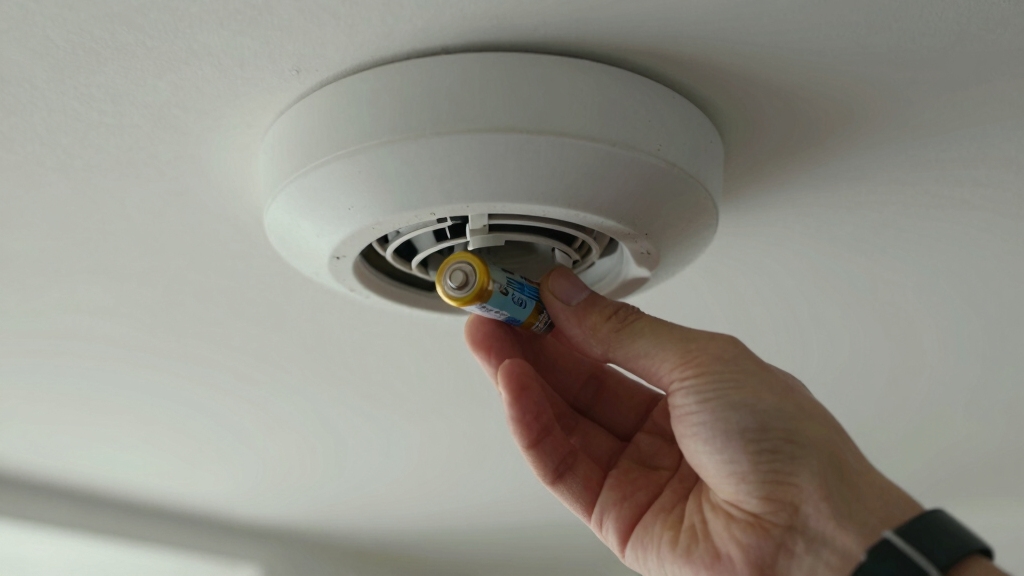
To properly change and maintain smoke detector batteries, start by removing the old battery carefully and installing a new one with the correct polarity. Always use high-quality batteries and replace them at least once a year or when you hear chirping sounds.
Don’t forget to test your alarm monthly by pressing the test button to make certain it’s working correctly.
Replace batteries during daylight saving time changes for consistency. Vacuum around the detector regularly to prevent dust buildup.
Replace backup batteries in hardwired alarms every six months. Following these steps helps keep your smoke detector reliable and your home safe.
Consider using sealed 10-year lithium batteries to ensure consistent power and reduce the frequency of battery replacements.
Frequently Asked Questions
Can I Use Rechargeable Batteries in My Smoke Detector?
You generally shouldn’t use rechargeable batteries in your smoke detector.
Rechargeables often have lower voltage than standard alkaline batteries, which can cause your alarm to malfunction or chirp frequently.
They also discharge faster when idle, reducing reliability.
Stick to the manufacturer’s recommended battery type, usually 9-volt alkaline or sealed lithium.
This guarantees your detector works properly and alerts you when needed, keeping your home safe.
Why Does My Smoke Detector Beep After Battery Replacement?
Your smoke detector beeps after battery replacement because it’s resetting or detecting an improper battery connection. Make sure you install the battery correctly, matching positive to positive terminals.
Sometimes residual charge or dust causes false chirps. Clean the unit and press the test button for 30 seconds to confirm functionality.
If it keeps beeping, the battery might be faulty or the detector could be nearing its 10-year lifespan and need full replacement.
How Do I Dispose of Old Smoke Detector Batteries Safely?
It’s easy to overlook, but disposing of old smoke detector batteries safely matters.
You should never toss them in regular trash because they contain harmful chemicals.
Instead, take them to a local battery recycling center or household hazardous waste facility.
Check your community’s guidelines online; they often have special drop-off events.
By doing this, you protect the environment and keep your home safe.
Don’t just throw them away; recycle responsibly.
Do All Smoke Detectors Chirp When Battery Is Low?
Not all smoke detectors chirp when their battery is low.
Many models do emit a chirping sound every 30-60 seconds to alert you, but some older or hardwired units might show a flashing light instead.
To be sure, test your alarm monthly using the test button; if it’s weak or silent, the battery might be dead.
Regular maintenance guarantees you catch low batteries before the alarm fails.
Can Environmental Factors Affect Smoke Detector Battery Life?
Absolutely, environmental factors can affect your smoke detector’s battery life.
Just like a steam engine struggles in a rainstorm, extreme temperatures, humidity, and dust can drain batteries faster or interfere with the device’s function.
You should keep your detector clean and dry, vacuum away cobwebs, and avoid placing it in overly hot or damp areas.
Regular testing guarantees your alarm stays reliable despite environmental challenges.
A Small Beep Today Prevents Big Risks Tomorrow
Think of your smoke detector as a silent guardian. Its low battery chirp is a warning bell, signaling it’s time for care.
Don’t ignore these subtle signs; they’re the flicker before the flame. Regularly test and replace batteries to keep this protector ready.
Just as a lighthouse needs its light to guide safely, your smoke detector needs fresh power to shield your home. Stay vigilant and let it guard you without fail.