
You need at least one portable fire extinguisher rated 5 B:C for your semi truck to comply with federal regulations. Hazmat carriers require a minimum 10 B:C rating due to increased fire risks.
A properly rated 5 lb or 10 lb ABC extinguisher guarantees effective suppression and legal compliance. Secure mounting and clear accessibility are essential.
Understanding the specifics of extinguisher ratings, sizes, and state rules will help you choose and maintain the right equipment for your truck.
Key Takeaways
- Semi trucks require a minimum 5 B:C rated fire extinguisher for compliance with federal regulations (49 CFR §393.95).
- Hazmat semi trucks must carry at least a 10 B:C rated extinguisher for enhanced fire suppression.
- Common extinguisher sizes are 5 lb ABC (2A:10B:C rating) for general semi trucks and 10 lb ABC (4A:80B:C rating) for hazmat.
- Extinguisher selection should prioritize fire rating over weight to ensure adequate coverage and legal compliance.
- Extinguishers must be securely mounted and easily accessible inside the cab or on the truck body for quick use.
Fire Extinguisher Ratings for Semi Trucks
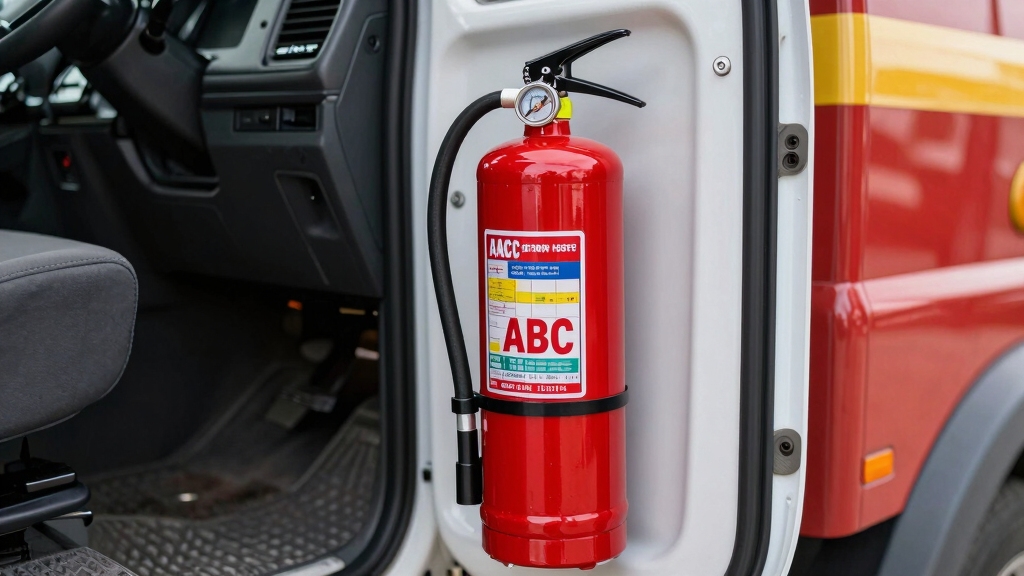
Although you might see various fire extinguisher sizes marketed for semi trucks, you must focus on the official ratings to guarantee compliance and effectiveness.
Federal regulations under 49 CFR §393.95 require commercial motor vehicles to carry at least one portable fire extinguisher with a minimum rating of 5 B:C. Alternatively, you may carry two extinguishers rated 4 B:C each.
The rating indicates the extinguisher’s capacity to suppress specific fire classes: B for flammable liquids and C for electrical fires. Weight alone doesn’t determine adequacy; for example, a 2.5-pound unit mightn’t meet the 5 B:C requirement.
Additionally, make certain the extinguisher is securely mounted and readily accessible to meet regulatory standards. Proper label verification before purchase and inspection is essential to maintain legal compliance and operational readiness.
Regular maintenance and inspections following NFPA 10 standards ensure the extinguisher remains effective when needed.
Why Hazmat Semi Trucks Need Higher Fire Extinguisher Ratings?
You definitely need a higher fire extinguisher rating on hazmat semi trucks. Why? Well, these vehicles face more severe fire risks, so they require enhanced fire suppression capabilities.
Plus, there’s regulatory compliance to think about. The law mandates a minimum 10 B:C rating for these trucks, and that really reflects the increased hazards involved.
Meeting these standards isn’t just about following the rules; it’s also about ensuring safety. Nobody wants to deal with costly violations during inspections, right? So, having the right fire extinguisher is crucial for both compliance and safety.
Due to the presence of flammable liquids and electrical components, a 10 lb ABC extinguisher is recommended to provide better coverage and longer discharge time.
Enhanced Fire Suppression
When transporting hazardous materials, semi trucks face markedly higher fire risks that demand more robust suppression capabilities.
You need a fire extinguisher with a minimum rating of 10 B:C to effectively tackle potential fires involving flammable liquids, gases, or reactive chemicals.
This higher rating ensures greater extinguishing agent capacity and coverage, vital for quickly controlling intense flames before they escalate.
Standard 5 B:C extinguishers lack the suppression power required for hazardous cargo, putting you at significant risk.
The enhanced fire suppression capacity of a 10 B:C unit provides the necessary assurance that you can respond effectively to complex fire scenarios.
Prioritizing the proper extinguisher rating isn’t optional; it’s essential for safety and operational readiness when handling hazardous materials.
ABC fire extinguishers use a monoammonium phosphate based dry chemical that effectively smothers and interrupts the chemical reactions in flammable liquid and electrical fires.
Regulatory Compliance Importance
Because hazardous materials pose elevated risks, regulatory agencies mandate higher fire extinguisher ratings for hazmat semi trucks to guarantee adequate fire suppression capability.
You must equip these vehicles with at least a 10 B:C rated extinguisher, doubling the minimum for standard commercial trucks. This higher rating assures greater agent capacity and effectiveness against fires involving flammable liquids and electrical equipment common in hazmat loads.
Compliance with 49 CFR §393.95 and equivalent state regulations requires secure mounting and immediate accessibility of the extinguisher.
Failure to meet these standards exposes you to legal penalties and endangers safety. Always verify extinguisher labels—not just weight—to confirm the rating.
Meeting these precise requirements protects your cargo, personnel, and the public from catastrophic fire incidents associated with hazardous material transport.
For best practice, ensure the extinguisher is mounted within easy reach at a height between 3½ and 5 feet to facilitate quick and safe access during emergencies.
Choosing the Right Fire Extinguisher for Your Truck
Picking the right fire extinguisher for your semi truck hinges on matching the unit’s rating to your vehicle’s specific needs and regulatory requirements.
You must make certain the extinguisher meets federal standards; at least a 5 B:C rating for general commercial trucks or 10 B:C for hazmat carriers.
Verify the label rating rather than relying solely on the cylinder weight. The extinguisher should be securely mounted in an accessible location to guarantee quick deployment during emergencies.
Avoid units that don’t comply with your jurisdiction’s mandates, such as California’s stricter 10 B:C minimum.
Selecting a correctly rated extinguisher assures adequate fire suppression capacity and regulatory compliance, reducing risks and potential fines.
Always inspect the extinguisher’s condition regularly to confirm it remains fully charged and operational.
Professional servicing, including inspection and recharging by licensed technicians, ensures the extinguisher remains compliant and ready for use.
Common Fire Extinguisher Sizes and Ratings
When it comes to fire extinguishers for semi trucks, you’ll often see them weighing anywhere from 2.5 to 10 pounds. But here’s the thing: weight isn’t the only factor that matters. You really need to pay attention to the fire rating, which is measured in B:C classes. This rating tells you how effective the extinguisher will be in putting out different types of fires. It’s also important to regularly check the extinguisher’s pressure gauge and inspection tag to ensure it is still in proper working condition.
Typical Extinguisher Weights
Understanding typical fire extinguisher weights helps you select the right unit for your semi truck while guaranteeing compliance with regulatory standards.
Extinguisher weight alone doesn’t guarantee adequate fire suppression. You must focus on the label rating (B:C rating) to meet legal and safety requirements.
Here are common weights and their typical ratings:
- 2.5 lb extinguishers often fall short of the 5 B:C minimum for commercial trucks.
- 5 lb ABC extinguishers usually carry a 2A:10B:C rating, suitable for most semi trucks.
- 10 lb ABC extinguishers provide a higher 4A:80B:C rating, ideal for hazmat transport.
- Choose based on fire rating, not cylinder weight, to guarantee proper protection and compliance.
Always verify extinguisher ratings before purchase and mounting, and remember that the right extinguisher selection is key to effective fire suppression.
Fire Rating Importance
Although extinguisher weight provides some guidance, the fire rating on the label is the critical factor you must consider when selecting a fire extinguisher for your semi truck.
The rating, expressed in numbers and letters like 5 B:C or 10 B:C, indicates the extinguisher’s effectiveness against specific fire classes.
For commercial trucks, federal regulations require at least a 5 B:C rating, while hazmat vehicles demand a minimum of 10 B:C.
You’ll find common sizes such as 5 lb ABC extinguishers rated 2A:10B:C and 10 lb ABC models rated 4A:80B:C, but never confuse weight with fire rating.
Prioritize the label’s rating to guarantee compliance and adequate fire suppression capability.
This precision safeguards your vehicle, cargo, and safety on the road.
Additionally, ensuring equipment has proper weatherproof features helps maintain reliable performance in varying environmental conditions.
Weight vs Rating
Fire extinguisher weight alone doesn’t determine its fire suppression capability or compliance. Instead, focus on the labeled fire rating, which quantifies effectiveness against specific fire types.
When choosing an extinguisher for your semi truck, consider these key points:
- A 2.5 lb extinguisher often lacks the federally required 5 B:C rating for commercial trucks.
- A 5 lb ABC extinguisher typically offers a 2A:10B:C rating, meeting minimum standards.
- A 10 lb ABC extinguisher provides a 4A:80B:C rating, suitable for hazmat loads.
- Ratings reflect suppression capacity; weight only indicates cylinder size, not effectiveness.
Verify extinguisher ratings on the label rather than relying on weight to assure compliance and adequate fire protection. Proper extinguisher selection is critical because different types use specific mechanisms of extinguishment targeting fire triangle components for effective fire control.
How to Mount Fire Extinguishers on Your Semi Truck?
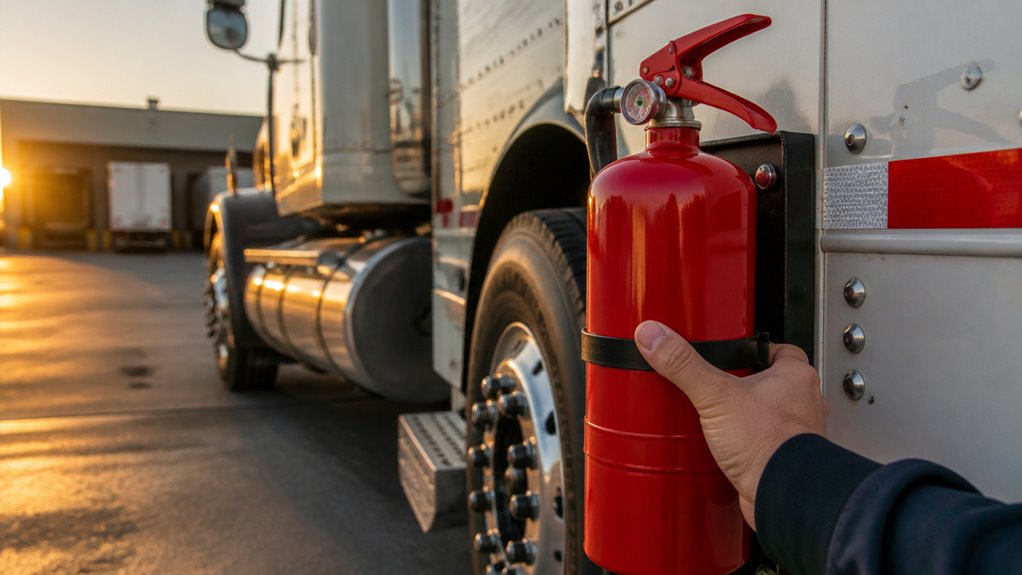
When mounting a fire extinguisher on your semi truck, you must make certain it’s securely fastened to prevent movement during transit. It should remain readily accessible in an emergency.
Use a sturdy bracket designed specifically for your extinguisher’s size and rating. Position the extinguisher within easy reach, commonly inside the cab or on the truck body, without obstructing controls or emergency exits.
Avoid loose storage or covering the unit, as this hinders quick access and violates safety regulations. Regularly inspect the mounting hardware for corrosion or wear to ensure the extinguisher remains firmly in place.
Proper mounting not only complies with federal mandates but also guarantees the extinguisher will perform effectively when you need it most, protecting your rig and cargo from fire hazards. Additionally, maintaining clear visibility by avoiding obstructions and using proper signage supports quick emergency response and accessibility.
What State Rules Mean for Your Fire Extinguisher?
Since state regulations can vary substantially, understanding your specific location’s fire extinguisher requirements is crucial to maintaining compliance and safety.
State fire extinguisher rules differ widely; knowing your local requirements ensures safety and compliance.
Different states may impose stricter standards than federal rules, affecting extinguisher size, rating, and placement. For example, California mandates a minimum 10 B:C rating, exceeding the federal 5 B:C baseline.
To ensure compliance, you should:
- Verify your state’s minimum fire extinguisher rating and type requirements.
- Confirm extinguisher placement and mounting rules specific to your state.
- Check for prohibitions on certain extinguisher chemicals or models.
- Review any additional mandates for transporting hazardous materials within state lines.
Adhering to these points prevents violations and guarantees your semi truck’s fire protection meets all legal standards.
Maintaining and Inspecting Your Semi Truck Extinguisher
Understanding your state’s specific fire extinguisher requirements is only part of maintaining compliance on the road. You must regularly inspect your semi truck’s extinguisher to ensure it remains fully charged, accessible, and securely mounted.
Check the pressure gauge monthly; a needle outside the green zone signals the need for service or replacement. Verify the tamper seal is intact and that the extinguisher shows no signs of physical damage, corrosion, or leakage.
Confirm the label rating matches your vehicle’s requirements, typically 5 B:C for general semi trucks or 10 B:C for hazmat loads. Clean the extinguisher to prevent dirt buildup that might hinder operation.
Document inspections and maintenance to support regulatory compliance and safety audits. This ensures your extinguisher will function effectively during emergencies.
Frequently Asked Questions
Can I Use a Rechargeable Fire Extinguisher in My Semi Truck?
Yes, you can use a rechargeable fire extinguisher in your semi truck, provided it meets federal and state requirements.
Make sure it has the correct rating: at least 5 B:C for general trucks or 10 B:C for hazmat loads.
It should be serviced regularly to remain fully charged and operational.
Proper mounting and accessibility are critical.
Always verify label ratings and maintenance records to maintain compliance and safety standards on the road.
How Often Should I Replace My Semi Truck’s Fire Extinguisher?
You should replace your semi truck’s fire extinguisher every 5 to 12 years, depending on the manufacturer’s guidelines.
Inspect it monthly for pressure, corrosion, and damage. Recharge immediately after any use, even partial discharge.
Always verify the extinguisher is full, securely mounted, and accessible. If the extinguisher fails inspection or shows damage, replace it promptly to maintain compliance and guarantee reliable fire suppression capability.
Are There Specific Fire Extinguisher Brands Recommended for Semi Trucks?
You don’t need to scour the ends of the earth for a fire extinguisher brand, but choosing reputable ones like Kidde, Amerex, or Ansul guarantees reliability and compliance.
These brands meet DOT regulations and offer robust B:C rated units suitable for semi trucks. Focus on certified ratings and durability rather than flashy names.
Always verify the extinguisher’s rating matches your needs to maintain safety and regulatory adherence.
Can Multiple Smaller Extinguishers Replace One Larger Unit Legally?
Yes, you can legally replace one larger fire extinguisher with two smaller ones if they meet the required combined rating.
For example, two extinguishers rated 4 B:C each satisfy the minimum 5 B:C requirement under federal regulations.
Just make sure both are securely mounted, fully charged, and readily accessible.
Always verify extinguisher labels and comply with specific state or hazmat regulations that may mandate higher ratings or single-unit requirements.
What Types of Fires Are Most Common in Semi Trucks?
You’ll most commonly face Class B and Class C fires in semi trucks. These include flammable liquids like diesel or oil, and electrical fires from wiring or batteries.
Engine compartment fires often involve combustible liquids or energized electrical components.
Knowing this helps you choose an extinguisher rated for B and C fires, like a 5 B:C or 10 B:C unit.
Being prepared for these fire types guarantees you can act quickly and effectively in emergencies.
Keep Your Fire Extinguisher Inspected and Ready
You can’t afford to skimp on your semi truck’s fire extinguisher. One small spark can turn your rig into a blazing inferno in seconds.
Choosing the right size and rating isn’t just a checkbox; it’s your frontline defense against catastrophic loss.
Mount it securely, know your state’s rules, and inspect it regularly.
With the proper extinguisher, you’re not just complying; you’re commanding control over fire risks on every mile you drive.