
You should refill fire extinguishers through licensed fire protection services or certified fire equipment companies.
These professionals inspect pressure gauges, seals, and cylinder integrity. They then safely depressurize and recharge your extinguisher following NFPA standards.
Mobile services even offer on-site refilling with full maintenance and hydrostatic testing. Avoid refill attempts at local fire departments or general hardware stores, as they typically lack necessary certifications and equipment.
For detailed inspection protocols and refill options, keep exploring the essential steps involved.
Key Takeaways
- Fire extinguishers should be refilled by licensed fire protection service providers with certified technicians and proper equipment.
- Mobile refill services offer on-site inspection, depressurization, and refilling, ensuring compliance with NFPA standards.
- Local hardware stores may provide basic refills but often lack full inspection and certification capabilities.
- Disposable or non-rechargeable extinguishers must be replaced rather than refilled.
- Comprehensive refilling includes hydrostatic testing and internal examination every 6 to 12 years for safety compliance.
How to Know When Your Fire Extinguisher Needs Refilling?
You should regularly check your fire extinguisher to determine if it needs refilling.
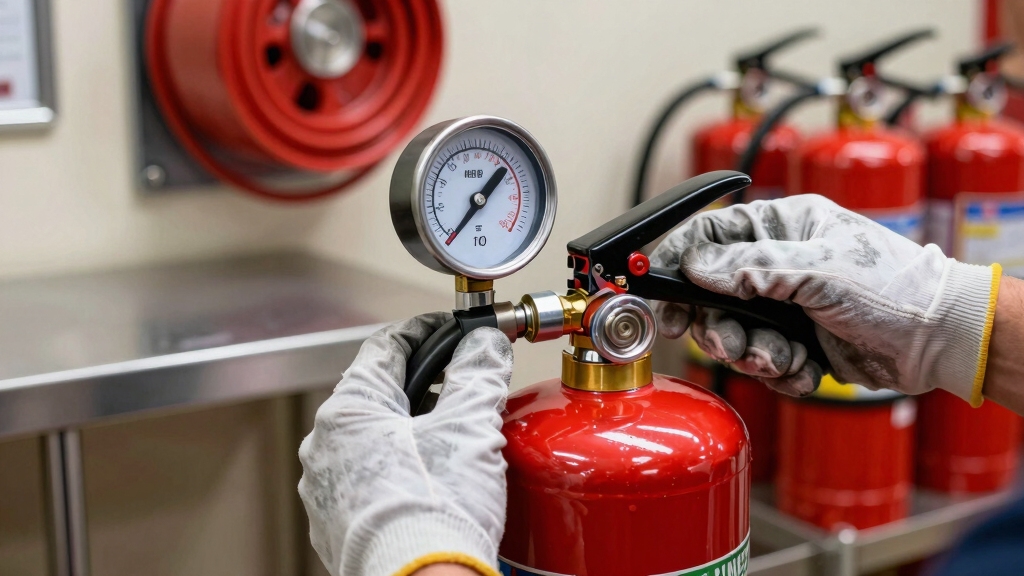
Begin by inspecting the pressure gauge: if the needle falls outside the green zone, the extinguisher requires immediate recharge.
Start by checking the pressure gauge; a needle outside the green zone signals the need for immediate recharge.
Examine the safety pin and tamper seal; any damage or removal signals possible discharge.
Look for physical damage, corrosion, or leaks on the cylinder body, which compromise integrity and performance.
Note that any use, even partial discharge, mandates prompt refilling.
Additionally, NFPA standards require a thorough internal examination and recharge every six years from the manufacture date to maintain compliance and functionality.
Be aware that disposable extinguishers labeled “non-rechargeable” must be replaced, not refilled.
Consistent, precise inspections guarantee your extinguisher remains fully operational and code-compliant.
Always have a certified technician perform inspections and servicing to ensure safety and reliability.
Licensed Fire Protection Services for Fire Extinguisher Refill
When fire extinguishers require refilling, licensed fire protection service providers ensure the process is conducted safely and to code.
You’ll rely on their trained technicians to inspect key components like the pressure gauge, hose, and safety pin before recharging.
These specialists have the proper equipment to depressurize and refill extinguishers while ensuring all procedures comply with NFPA standards.
They also verify the extinguisher’s body condition to confirm it’s safe for reuse.
Using licensed services guarantees proper handling of pressurized cylinders and environmentally responsible recycling of metal shells.
By choosing certified fire protection providers, you ensure your extinguishers receive thorough maintenance, functional testing, and safe refilling.
This keeps your fire safety equipment fully operational and code-compliant.
Regular hydrostatic testing is performed to maintain the structural integrity of the extinguisher cylinder and ensure safe operation.
Fire Equipment Companies for Inspection & Refill
Licensed fire protection services set the standard for thorough extinguisher maintenance. Fire equipment companies also play a key role in inspection and refilling.
When you choose these specialized businesses, you gain access to technicians trained in regulatory compliance and operational safety. They conduct detailed inspections, checking pressure gauges, seals, hoses, and body integrity before refilling extinguishers with the proper extinguishing agent.
These companies possess the necessary tools and certifications to perform safe depressurization and recharge procedures. This guarantees your extinguisher meets NFPA standards.
Proper maintenance and timely refilling ensure that extinguishers are effective in interrupting the chemical reaction or other fire suppression mechanisms when needed.
Mobile Fire Extinguisher Refill Services
Mobile fire extinguisher refill services frequently bring expert technicians directly to your location, simplifying inspection and maintenance tasks.
These mobile units perform thorough checks, recharge extinguishers, and conduct hydrostatic testing, guaranteeing compliance with safety codes without requiring you to transport heavy, pressurized equipment.
You get professional service that meets NFPA standards while minimizing downtime.
| Service Aspect | On-site Benefit | Compliance Outcome |
|---|---|---|
| Inspection | Immediate condition assessment | Detects damage or leaks |
| Refilling | Eliminates transport risks | Restores full pressure |
| Hydrostatic Testing | Guarantees structural integrity | Confirms safe operational status |
Using mobile refill services, you keep your extinguishers fully functional and code-compliant efficiently and safely. These services also ensure the extinguisher’s pressure relief valves are intact and functioning, which is crucial for preventing dangerous ruptures.
Hardware Stores Offering Fire Extinguisher Refills
You can often check with local hardware and home improvement stores to see if they offer fire extinguisher refill services.
Local hardware and home improvement stores may provide fire extinguisher refill services—contact them to confirm availability.
Availability varies widely, so contacting the store directly is essential. Some retailers provide basic refill services, but these may be limited compared to specialized fire equipment companies.
Hardware stores typically lack the full range of inspection and maintenance capabilities required to guarantee compliance with NFPA standards.
If a store does offer refilling, verify that certified technicians perform thorough inspections, including pressure gauge, hose, and valve checks before recharging.
Keep in mind that many locations only handle non-pressurized or disposable models.
For comprehensive service, especially for rechargeable extinguishers, relying on licensed fire protection providers remains the safest and most reliable option.
Regular inspection and maintenance ensure extinguisher functionality and compliance with safety standards.
Why Local Fire Departments Don’t Refill Extinguishers?
Although local fire departments play a critical role in emergency response and fire safety education, they don’t refill fire extinguishers themselves. This is because refilling requires specialized equipment, trained technicians, and strict safety protocols.
Here’s why you won’t get this service at your fire station:
- Fire departments lack the certified equipment needed to safely depressurize and recharge extinguishers.
- Handling pressurized cylinders demands expertise only licensed fire protection service providers have.
- Firefighters focus on emergency response and public safety education, not maintenance tasks.
- Most departments refer you to professional companies that guarantee compliance with NFPA standards and proper testing.
- Additionally, maintaining clear fire extinguisher accessibility and proper signage is crucial for safety and compliance.
Understanding Rechargeable vs. Non-Rechargeable Fire Extinguishers
When selecting or maintaining a fire extinguisher, it’s essential to distinguish between rechargeable and non-rechargeable types. Their service and lifespan requirements differ markedly.
Rechargeable extinguishers are designed for multiple refills and feature durable metal valves and clear service labels. Non-rechargeable units are disposable after discharge and must be replaced to ensure safety and compliance.
| Feature | Rechargeable Extinguishers | Non-Rechargeable Extinguishers |
|---|---|---|
| Serviceability | Can be refilled and inspected | Single-use, no refilling allowed |
| Lifespan | Long-term with maintenance | Limited, replaced after use |
| Cost Efficiency | Higher initial cost, lower over time | Lower initial cost, recurring replacement |
Proper inspection and maintenance, including checking pressure gauges and corrosion, are crucial to ensuring the stored-pressure design functions reliably.
Understanding these differences ensures you maintain fire safety equipment properly and comply with regulations.
What Happens During a Professional Fire Extinguisher Refill
When you take your fire extinguisher in for a professional refill, the first thing the technicians do is a thorough inspection. They want to make sure that all the components meet safety standards. It’s an important step to ensure your extinguisher is working properly.
Once that’s done, they safely depressurize the unit. They use specialized equipment to do this, which helps prevent any hazards during the servicing process. It’s all about keeping things safe while they work.
This careful approach not only keeps the extinguisher’s integrity intact but also sets the stage for an accurate refill. You can feel confident knowing that your extinguisher is being handled with care!
Additionally, technicians check for signs of chemical degradation to ensure the extinguishing agent is still effective before refilling.
Inspection And Testing
Before refilling your fire extinguisher, a certified technician conducts a thorough inspection and testing process to guarantee reliable operation. This secures your extinguisher performs optimally during emergencies.
The technician will:
- Examine the pressure gauge to confirm it’s within the operational range.
- Inspect the hose and nozzle for cracks, blockages, or wear.
- Check the safety pin and tamper seal to verify integrity.
- Assess the extinguisher’s body for corrosion, dents, or leaks.
Each step follows strict regulatory standards to maintain compliance and safety. This meticulous inspection detects any damage or malfunction before refilling, preventing failures when you need the extinguisher most.
Rechargeable units must be serviced and refilled promptly after any use to ensure continued readiness and effectiveness, as outlined in inspection, maintenance, and after-use actions.
Safe Depressurizing Process
Although depressurizing a fire extinguisher involves handling high-pressure contents, licensed technicians follow strict protocols to guarantee safety throughout the process.
First, they secure the extinguisher in a designated depressurizing chamber or use specialized valves to release pressure gradually, preventing sudden gas expulsion.
They monitor pressure gauges continuously to confirm controlled depressurization.
Once fully depressurized, technicians inspect the container for structural integrity and remove residual extinguishing agents safely.
This step prepares the unit for refilling or maintenance without risk of accidental discharge or injury.
You can trust that only certified professionals possess the equipment and expertise necessary to manage this process, ensuring compliance with NFPA standards and maintaining the extinguisher’s reliability and safety for future use.
Proper maintenance also includes hydrostatic testing every 12 years to assess cylinder integrity before reuse.
Finding Reliable Fire Extinguisher Refill Services Near You
When you’re looking for reliable fire extinguisher refill services, it’s really important to choose licensed fire protection service providers and local fire equipment companies. This ensures that your extinguisher gets refilled and inspected according to code, keeping you safe.
Now, if convenience is what you’re after, mobile refill options can be a great choice! They come right to your location, which is super handy. Just make sure to check that they comply with all regulatory requirements.
Oh, and one last thing—always verify the technician’s certification and make sure the provider meets NFPA standards before you move forward. It’s a small step that can make a big difference!
Licensed Service Providers
Locate licensed fire protection service providers to guarantee your fire extinguishers receive expert inspection, refilling, and testing.
These specialists possess the necessary certifications, equipment, and trained technicians to handle pressurized cylinders safely and ensure conformity with NFPA standards.
Before recharging, they verify pressure gauges, hoses, pins, and cylinder integrity. When choosing a licensed provider, consider these factors:
- Certification and licensing credentials for fire extinguisher servicing
- Availability of thorough inspection, refill, and hydrostatic testing
- Use of proper equipment to depressurize and recycle metal shells safely
- Proven experience with regulatory compliance and maintenance documentation
Engaging licensed professionals ensures your extinguishers remain fully functional, code-compliant, and ready for emergency use.
Mobile Refill Options
Mobile fire safety service providers bring expert inspection and refilling directly to your location, eliminating the need to transport heavy, pressurized extinguishers.
These specialized technicians conduct thorough checks of pressure gauges, hoses, pins, and cylinder integrity before safely recharging your extinguishers on-site.
They also perform mandated 6-year maintenance and hydrostatic testing to guarantee compliance with NFPA standards.
Utilizing mobile services saves you time and reduces risk associated with moving pressurized units.
However, not all providers offer this convenience, so you should verify service availability with local mobile companies.
By choosing certified mobile refill services, you assure your extinguishers remain fully functional, code-compliant, and ready for emergency use without logistical hassles.
This on-site approach enhances safety and regulatory adherence efficiently.
Local Fire Equipment
Fire equipment companies specialize in the inspection, maintenance, and refilling of fire extinguishers. They guarantee your safety devices meet regulatory standards.
When seeking local refill services, prioritize licensed providers with trained technicians who:
- Inspect pressure gauges, hoses, pins, and body condition before recharging.
- Use proper equipment to safely depressurize and refill extinguishers.
- Perform hydrostatic testing and verify compliance with NFPA maintenance schedules.
- Recycle metal shells and dispose of non-rechargeable units responsibly.
You can locate these companies by searching “fire extinguisher refill near me” or contacting local fire safety businesses.
Avoid relying on fire departments or general retailers; they often lack necessary certifications and equipment. Selecting a certified service guarantees your extinguishers remain fully functional, code-compliant, and ready for emergency use.
Frequently Asked Questions
How Long Does a Fire Extinguisher Refill Service Usually Take?
A fire extinguisher refill service usually takes about 30 to 60 minutes per unit. During this time, the technician inspects components like the pressure gauge, hose, and pin.
They depressurize the extinguisher safely, refill it with the appropriate agent, and perform necessary testing. Complex services like hydrostatic testing or valve replacement may extend the time.
Mobile service providers might streamline this process on-site, minimizing downtime and ensuring compliance with safety standards.
Can I Refill a Fire Extinguisher Myself at Home Safely?
You shouldn’t attempt to refill a fire extinguisher yourself at home. Handling pressurized extinguishers requires specialized equipment and training to safely depressurize, inspect, and recharge.
Incorrect refilling risks malfunction or injury. Instead, rely on licensed fire protection service providers or certified companies with proper tools and expertise.
They guarantee compliance with safety standards and NFPA regulations, ensuring your extinguisher functions effectively when needed. Your safety depends on professional servicing.
What Types of Fire Extinguishers Require Hydrostatic Testing?
Oh sure, just skip hydrostatic testing and see if your extinguisher bursts like a soda can left in the sun.
Rechargeable fire extinguishers with metal shells, like stored-pressure water, foam, and dry chemical types, demand hydrostatic testing every 5 or 12 years, depending on the model.
This test checks the cylinder’s integrity under pressure, ensuring it won’t fail catastrophically during use.
Don’t gamble; follow NFPA codes strictly to stay safe and compliant.
Are Fire Extinguisher Refills Covered by Insurance or Warranties?
Fire extinguisher refills typically aren’t covered by standard insurance policies or warranties.
You’ll need to check your specific warranty terms, as some manufacturers may cover defects but exclude maintenance like refills.
Insurance usually covers damage or loss, not routine servicing.
To stay compliant and effective, you must budget for regular refilling and maintenance costs separately, ensuring your extinguishers are properly inspected and recharged by certified professionals.
How Much Does a Typical Fire Extinguisher Refill Cost?
A typical fire extinguisher refill costs between $20 and $75, depending on the extinguisher type, size, and service provider.
Specialized companies or mobile services may charge more for thorough inspections and maintenance.
You’ll also pay extra if hydrostatic testing or valve replacement is needed.
Always choose licensed technicians to guarantee compliance with NFPA standards and maintain extinguisher reliability.
This protects you from costly fines or safety risks.
Protect What Matters with Proper Fire Extinguisher Maintenance
When your fire extinguisher runs dry, don’t let safety slip through the cracks. You’ll want to rely on licensed fire protection services or specialized fire equipment companies for refilling and inspection.
Mobile refill services and some hardware stores also offer convenient options. Remember, local fire departments typically don’t provide refills. Knowing the difference between rechargeable and non-rechargeable units ensures you choose the right service.
Treat your extinguisher like a lifeline; it’s your last line of defense.