
You connect cellular cameras via embedded SIM or eSIM modules that link directly to 4G LTE or 5G cellular towers, bypassing Wi-Fi or Ethernet.
Their onboard SoC captures, encodes (H.264/H.265), and compresses video, optimizing data with event-driven uploads and adaptive bitrate streaming.
Power management and duty cycling extend battery life for off-grid use, while encrypted streams transmit securely to cloud services.
Signal variability and data limits affect performance, but deeper insights reveal how hardware and network protocols guarantee operational reliability.
Key Takeaways
- Cellular cameras connect directly to 4G LTE or 5G networks using embedded SIM or eSIM modules for wireless communication without routers.
- Onboard processors capture, encode (H.264/H.265), and package video locally before transmitting data over cellular networks.
- Power management and event-triggered uploads optimize battery life and minimize cellular data usage during off-grid operation.
- Cameras establish secure IP-based uplink channels for remote access, cloud storage, and real-time notifications.
- Adaptive bitrate streaming and automatic network switching enhance connectivity and data efficiency in variable signal conditions.
What Is a Cellular Camera?

Cellular cameras tap into mobile networks via embedded SIM or eSIM modules, enabling direct communication with 4G LTE or 5G cellular towers without relying on Wi-Fi or Ethernet connections.
You’ll find a cellular communication module integrated tightly with the camera’s control board, functioning akin to a smartphone modem. This allows your device to authenticate with carrier networks, leveraging protocols like LTE-M or NB-IoT for optimized power consumption in remote deployments.
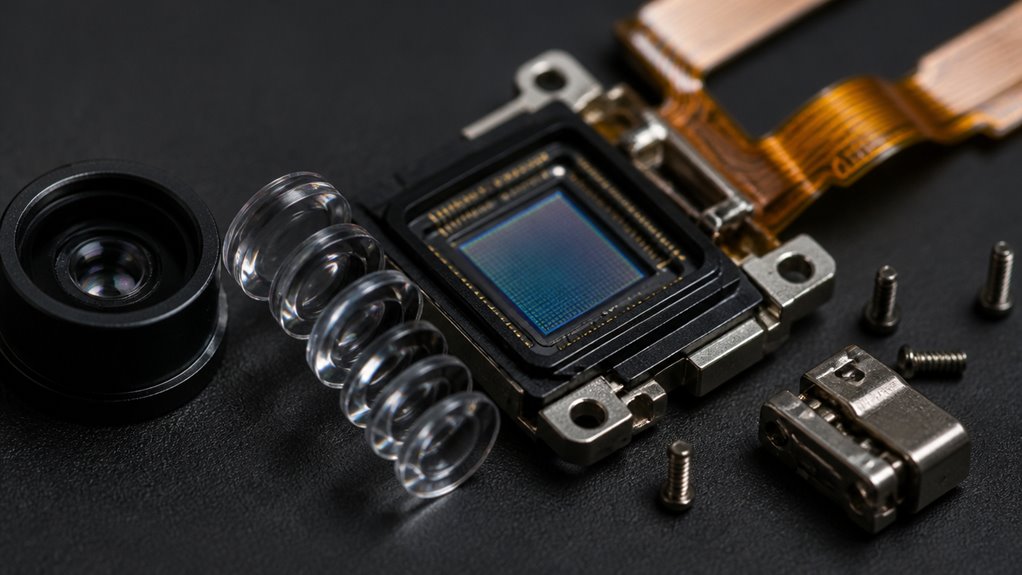
The camera’s image sensor and onboard processor capture and encode video locally, then packetize and transmit it over cellular data channels.
Since no fixed internet infrastructure or router is needed, you can deploy the camera in remote or off-grid locations, provided cellular signal strength is sufficient.
Cellular data plans are essential to maintain connectivity and support real-time alerts and media upload.
Many cellular cameras also feature edge computing to reduce latency and minimize data loss during network outages.
How Does a Cellular Camera Connect?
To connect a cellular camera, you rely on its integrated cellular communication module paired with a SIM or eSIM card provisioned for a compatible mobile network, such as 4G LTE or 5G.
Connecting a cellular camera requires its built-in module and a SIM or eSIM for 4G LTE or 5G networks.
The module functions as a modem, authenticating with carrier base stations via radio frequency protocols. This enables IP-based data transmission without reliance on local Wi-Fi or Ethernet.
Once registered on the cellular network, the camera establishes secure uplink channels to cloud servers or mobile apps. This facilitates remote access and notifications.
Connectivity depends on signal strength and network compatibility. Some models leverage LTE-M or NB-IoT for low-power, extended-range operation.
You don’t need a physical router; your camera communicates directly with cellular towers. This ensures deployment flexibility in locations lacking fixed internet infrastructure.
Optimizing signal strength by testing cellular reception before installation is critical for consistent camera performance.
How Do Cellular Cameras Capture and Process Video?
Motion detection or scheduled triggers activate the image sensor, capturing raw video or still frames inside the camera’s embedded system. The sensor converts photons to electrical signals, producing a digital bitstream representing each frame.
This data flows to the onboard image signal processor (ISP), which performs demosaicing, noise reduction, and compression using codecs like H.264 or H.265 to optimize bandwidth. The internal processor packages encoded video into transport streams or segmented clips, ready for transmission.
Cellular cameras buffer data locally to manage intermittent network latency and guarantee frame integrity. The device’s firmware prioritizes event-driven uploads over continuous streaming to minimize cellular data consumption while maintaining real-time alert responsiveness.
This tightly integrated capture-to-encoding pipeline balances power efficiency with video fidelity for remote surveillance. Many cellular cameras use 4G LTE connectivity with preactivated SIM cards to transmit data independently of Wi‑Fi, enabling reliable off-grid monitoring.
What Hardware Powers Cellular Cameras?
Embedded within these cameras is a sophisticated communication module that functions as the cellular modem, enabling direct interaction with mobile networks like 4G LTE and 5G.
This module integrates a baseband processor, RF transceiver, and SIM or eSIM interface, allowing seamless carrier authentication and network registration.
The camera’s onboard SoC orchestrates image capture, encoding (typically H.264/H.265), and data packetization for cellular transmission.
Antenna design, often MIMO-enabled, optimizes signal reception and uplink throughput, vital for stable connectivity in variable environments.
Memory components buffer video frames before transmission, while power management ICs regulate energy for cellular radio bursts.
Many devices support LTE-M or NB-IoT, leveraging narrowband protocols for enhanced range and reduced power consumption.
Together, these hardware elements guarantee reliable, low-latency video streaming over cellular infrastructure without relying on local network hardware.
Additionally, some cameras feature an embedded e‑SIM that simplifies carrier integration and eliminates the need for manual SIM swaps.
How Do Cellular Cameras Manage Power and Data?
Cellular cameras are pretty smart when it comes to managing power and data. They use advanced power management algorithms along with low-power system-on-chips (SoCs) to help extend battery life, especially in off-grid setups. This means you can rely on them for longer periods without needing to recharge.
When it comes to data usage, these cameras really shine with their event-driven recording and adaptive bitrate streaming. This approach helps to minimize cellular bandwidth consumption, which is a big plus if you’re in an area with limited connectivity. So, by balancing power efficiency and data management, these cameras can operate effectively while still giving you real-time monitoring capabilities. It’s a win-win!
Additionally, proper power management impacts the frequency of maintenance visits and overall camera performance.
Battery Efficiency Techniques
Typically, cellular cameras optimize battery life by implementing duty cycling and event-driven recording protocols that minimize power-intensive wireless transmissions.
You rely on low-power microcontrollers to manage sensor polling intervals, waking the main processor only upon motion detection or scheduled events.
Adaptive power scaling dynamically adjusts radio transmission strength based on signal quality to reduce energy drain.
Additionally, onboard flash memory buffers media locally, enabling batch uploads during peak network conditions, thereby conserving battery.
Deep sleep modes deactivate non-essential modules, and intelligent firmware algorithms prioritize critical tasks while deferring background processes.
For LTE-M or NB-IoT variants, you benefit from inherently lower power consumption due to optimized cellular standards.
These combined techniques allow you to extend operational longevity in off-grid deployments, balancing real-time responsiveness with stringent energy budgets.
Using external power sources like a 12V DC auxiliary jack can markedly extend operation time without frequent battery swaps.
Data Usage Optimization
Cellular cameras frequently leverage adaptive bitrate streaming and event-triggered data transmission to optimize data consumption and power efficiency. You’ll find these devices dynamically adjust video resolution and frame rates based on network conditions, minimizing bandwidth use without compromising critical footage quality.
Motion sensors trigger short video clips rather than continuous streaming, which conserves both data and battery life. Internally, compression codecs reduce payload size before upload over 4G or 5G networks. Many models also implement automatic network switching to select the strongest available connection, ensuring consistent monitoring with minimal interruptions.
| Strategy | Function | Benefit |
|---|---|---|
| Adaptive Bitrate | Alters stream quality in real-time | Reduces data spikes |
| Event-Triggered Upload | Sends footage only when activity detected | Saves power and data |
| Efficient Compression | Encodes video to minimize file size | Lowers cellular use |
Where Are Cellular Cameras Most Effective?
Cellular cameras really shine in places where there isn’t a reliable internet connection. They take advantage of LTE or 5G networks, allowing them to operate independently.
This makes them perfect for temporary setups, especially in remote or off-grid areas where you need to get things up and running quickly.
Plus, if you find yourself in a situation where Wi-Fi isn’t available or just isn’t cutting it, these cellular modules step in to ensure that data keeps flowing. You’ll get real-time alerts and continuous transmission thanks to mobile networks, which is pretty handy!
Many models, like the Trueview Mini 4G, come with pre-activated SIM cards to simplify initial setup and get you connected faster.
Remote Location Advantages
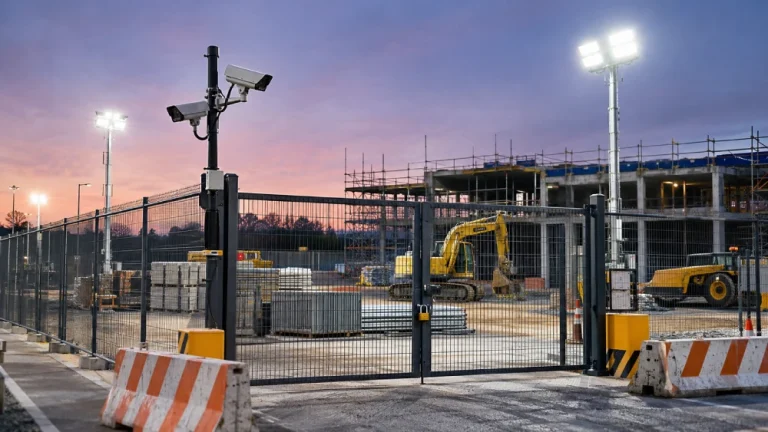
In environments lacking fixed broadband infrastructure, such as agricultural fields, construction zones, and remote vacation properties, cellular cameras deliver unparalleled operational autonomy by leveraging mobile network connectivity.
You gain installation flexibility without relying on Wi-Fi or Ethernet, as these cameras embed cellular modules compatible with 4G LTE, 5G, or low-power variants like LTE-M.
This independence enables seamless deployment where terrestrial internet is unreliable or absent. You’ll benefit from real-time remote monitoring, event-triggered alerts, and direct cloud uploads via cellular data, eliminating the need for local network resources.
However, performance hinges on signal integrity and carrier coverage, so site surveys are critical.
The technology’s self-contained communication stack, combined with adaptive data transmission protocols, optimizes power consumption and bandwidth use. This makes cellular cameras ideal for persistent surveillance in remote, infrastructure-poor settings.
Additionally, combining cellular connectivity with local storage ensures continuous recording even when network access is intermittent or unavailable.
Temporary Installation Benefits
For deployments demanding rapid setup and minimal infrastructure, leveraging mobile network connectivity offers unmatched operational agility.
You can deploy cellular cameras in transient sites like construction zones, event venues, or emergency response locations without tethering to fixed internet or power grids.
The integrated cellular modem eliminates reliance on Ethernet or Wi-Fi, streamlining plug-and-play installation.
Battery-powered options further enhance situational flexibility, enabling uninterrupted surveillance despite power constraints.
You’ll benefit from motion-activated recording and compressed data transmission protocols that optimize cellular bandwidth and minimize latency.
These systems excel in environments lacking stable wired infrastructure or where temporary security oversight is paramount.
By circumventing extensive network configuration and cabling, cellular cameras enable you to maintain continuous remote monitoring with rapid redeployment capabilities.
This maximizes operational efficiency in dynamic, short-term applications.
Combining battery and solar power can also extend runtime and reduce the need for frequent recharging in truly wire-free cellular camera setups.
Areas Without Wi-Fi
When deploying surveillance in areas lacking Wi-Fi infrastructure, cellular cameras stand out by leveraging mobile network connectivity to maintain continuous data transmission.
You’ll find these devices most effective in environments where fixed internet is absent or unreliable, such as farms, construction sites, vacation homes, and remote outbuildings.
Their integrated cellular modules utilize SIM or eSIM to connect via 4G LTE, 5G, or LTE-M networks, eliminating dependency on routers or Ethernet.
By capturing video locally and transmitting motion-triggered clips over the cellular network, these cameras optimize bandwidth and power consumption.
However, you must guarantee adequate cellular signal strength and account for data-plan costs.
Their independent operation and rapid deployment capabilities make them ideal for off-grid or temporary surveillance, especially when quick installation outweighs high-bandwidth streaming demands.
How Do Cellular Cameras Send Alerts and Enable Remote Access?
Cellular cameras leverage integrated cellular modules to transmit real-time alerts and enable remote access via secure mobile networks.
When motion triggers recording, the onboard processor compresses and encrypts video streams.
It then transmits data packets using LTE or 5G protocols through the embedded SIM module. Bi-directional communication allows you to remotely access live feeds or recorded clips via proprietary mobile apps or cloud platforms.
This employs TLS/SSL encryption for data integrity and confidentiality. Push notifications are generated by event-driven firmware and sent over the cellular network to your device, guaranteeing low latency alert delivery.
Authentication mechanisms and secure APIs safeguard remote control operations. This enables you to configure settings, initiate recordings, or share footage without physical interaction.
This architecture guarantees constant connectivity independent of local internet infrastructure. It supports mission-critical surveillance in off-grid environments.
Which Cellular Networks Do These Cameras Use?
Which mobile networks do these cameras rely on to maintain seamless connectivity?
Cellular cameras typically leverage 4G LTE and emerging 5G networks, utilizing embedded SIM (eSIM) or physical SIM cards to authenticate and connect with carrier infrastructure.
Some models support legacy 3G, but network decommissioning has shifted focus to LTE variants such as LTE-M and NB-IoT, optimized for low-power, low-bandwidth IoT applications.
These networks maintain robust uplink throughput essential for transmitting video data packets while managing power consumption.
The integrated cellular modem negotiates with proximal cell towers, employing standard mobile protocols (e.g., LTE Cat M1) for reliable data transmission.
You’ll find these cameras operating independently from local Wi-Fi, ensuring deployment flexibility in remote or infrastructure-deficient environments, provided cellular signal strength and carrier coverage meet operational thresholds.
What Are the Limitations and Challenges of Cellular Cameras?
Despite leveraging advanced mobile networks like 4G LTE and 5G for connectivity, these cameras face inherent constraints tied to cellular signal variability and network infrastructure.
You’ll encounter fluctuating bandwidth, latency issues, and coverage gaps, especially in remote or obstructed locations.
Power consumption is another critical factor; wireless transmission demands energy, challenging battery longevity.
Data plan costs and cellular data caps limit continuous streaming capabilities, forcing reliance on event-triggered uploads.
Additionally, network handoffs may cause temporary interruptions in video transmission.
| Limitation | Impact |
|---|---|
| Signal Variability | Reduced video quality, dropouts |
| Power Consumption | Shorter battery life |
| Data Plan Constraints | Limited continuous streaming |
| Network Infrastructure | Coverage gaps, latency spikes |
Understanding these factors helps you optimize deployment and operational parameters effectively.
Frequently Asked Questions
How Do Cellular Cameras Handle Security and Data Encryption?
You rely on cellular cameras to implement robust security protocols like AES-256 encryption for data at rest and in transit.
The device’s onboard processor encrypts video streams before transmission via the cellular module, using secure VPN tunnels or TLS to safeguard data over mobile networks.
Authentication mechanisms, including SIM-based network validation and app-level multi-factor authentication, guarantee only authorized access. This mitigates interception risks inherent in wireless cellular communications.
Can Cellular Cameras Integrate With Existing Home Security Systems?
Certainly, cellular cameras can seamlessly synchronize with your existing home security systems through standardized protocols like ONVIF or RTSP streaming.
You’ll leverage APIs and integration hubs to facilitate firmware interoperability, ensuring encrypted data transmission across platforms.
While cellular connectivity offers network independence, you must configure bridging gateways or cloud-based management consoles for unified monitoring.
What Maintenance Is Required for Cellular Cameras?
You’ll need to routinely verify SIM card activation and data plan status to avoid connectivity lapses.
Firmware updates must be applied promptly to guarantee security patches and protocol optimizations.
Battery-powered units require periodic recharging or replacement, depending on usage cycles.
Antenna integrity and cellular signal strength should be monitored to maintain peak data throughput.
Additionally, sensor lenses need cleaning to prevent image degradation.
Storage capacity checks guarantee uninterrupted local recording functionality.
Are Cellular Cameras Weatherproof and Suitable for Extreme Conditions?
Yes, many cellular cameras feature IP65 to IP68 ingress protection ratings. This ensures dust-tight enclosures and water resistance against jets or immersion.
You’ll find ruggedized models with reinforced housings and corrosion-resistant coatings. They’ve operating temperature ranges from -30°C to 60°C or beyond.
These specs make them suitable for harsh environments like agricultural fields or construction sites. Exposure to UV, moisture, and temperature fluctuations is routine, guaranteeing reliable performance under extreme conditions.
How Does Cellular Camera Installation Differ From Traditional Cameras?
Imagine mounting a camera without crawling behind routers or dragging Ethernet cables through walls.
You’ll install a cellular camera by first securing a strong 4G/5G signal at your site, then slotting in a SIM or eSIM and activating the data plan.
Unlike traditional setups tethered to fixed internet, you’ll rely on carrier towers, ensuring placement flexibility.
Powering considerations, like battery life, become essential since you’re off-grid, emphasizing modular, wireless deployment.
How Do Cellular Cameras Work? Final Insights
When you deploy cellular cameras, you harness cutting-edge LTE and 5G modems that effortlessly transmit encrypted video streams through robust SIM-based networks.
These devices optimize power via advanced low-energy SoCs and adaptive bitrate encoding, ensuring seamless remote monitoring anywhere. It’s like having a satellite’s eye in your pocket.
Despite signal attenuation and latency challenges, their unparalleled mobility and instant alert systems make them indispensable for dynamic security and surveillance scenarios where wired solutions simply can’t compete.